Custom Splined Shaft Machining | Non-Standard Shaft Manufacturer
Custom splined shaft, non-standard spline shaft machining, custom shaft manufacturer, spline shaft supplier, precision spline shaft, custom machined parts
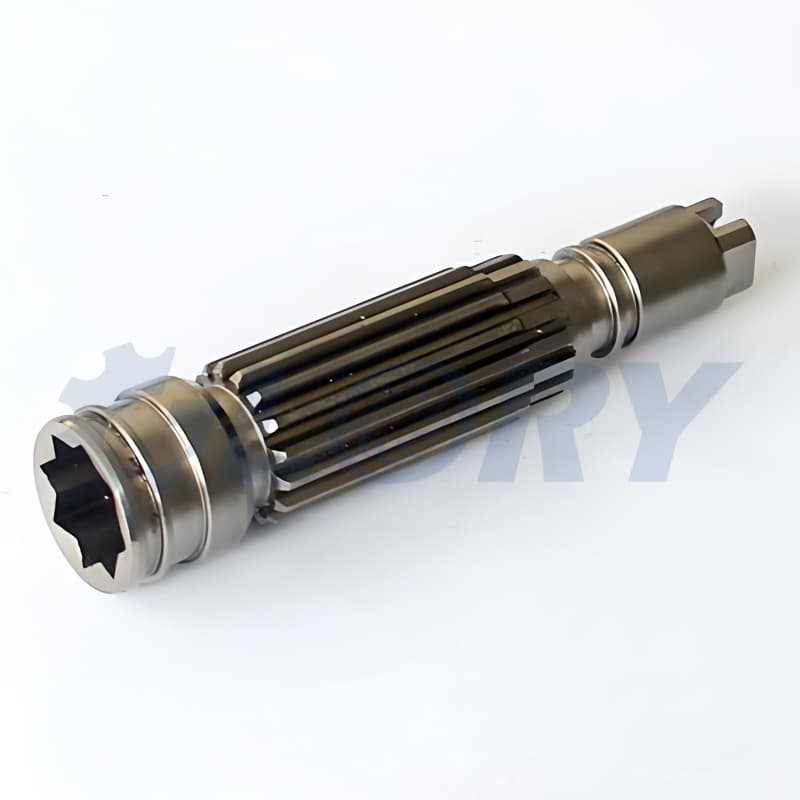
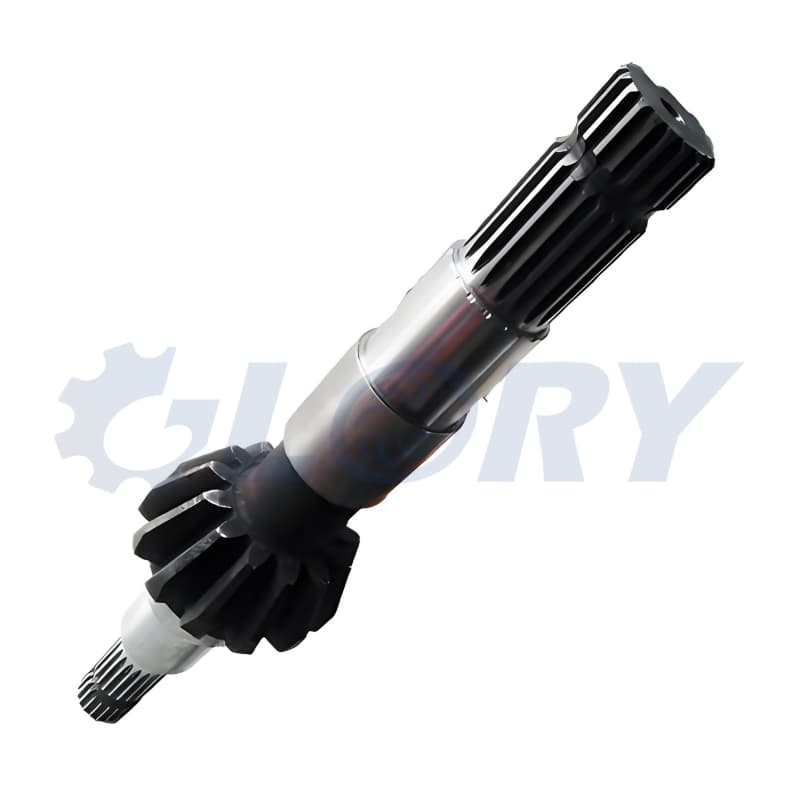
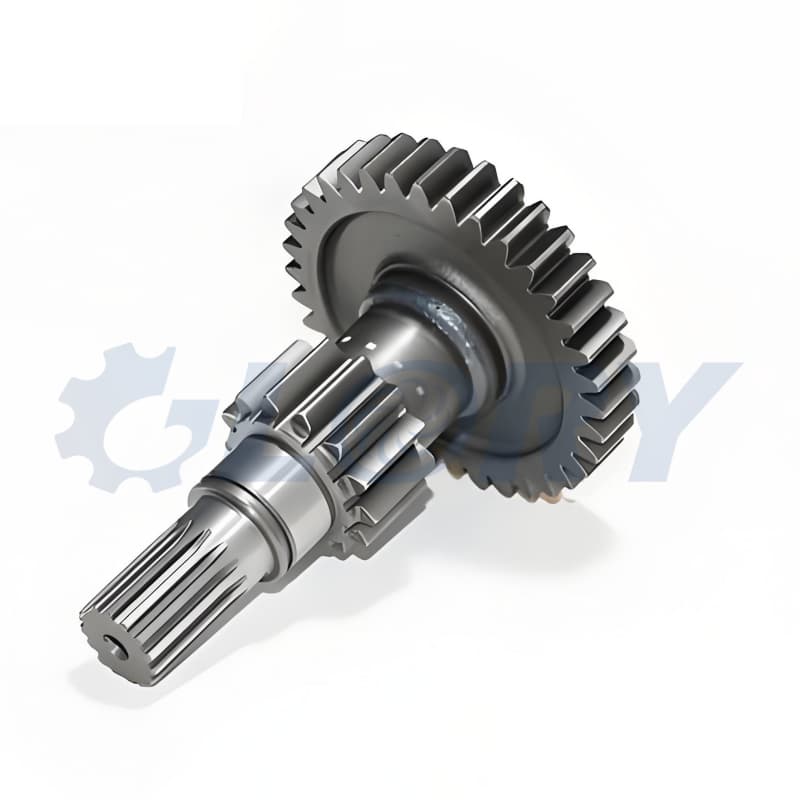
In modern mechanical power transmission systems, the custom splined shaft is an indispensable core component. It transmits torque, allows axial sliding, and enables precise positioning through evenly spaced spline teeth that engage with mating parts. Because different industries have different requirements for load, speed, precision, material, corrosion resistance, and installation space, standard splined shafts often cannot fully meet real working conditions. Our company specializes in non-standard custom machined parts, and we can manufacture custom splined shafts of various specifications based on customer drawings, samples, or application requirements — from single-piece prototyping to small and medium batch production.
Why a Custom Splined Shaft Is Necessary
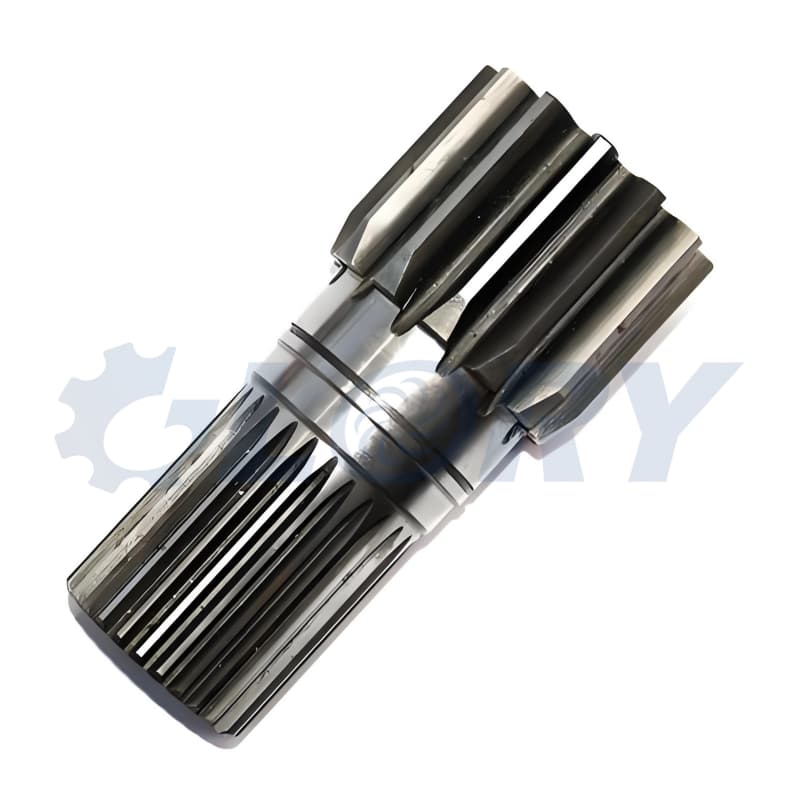
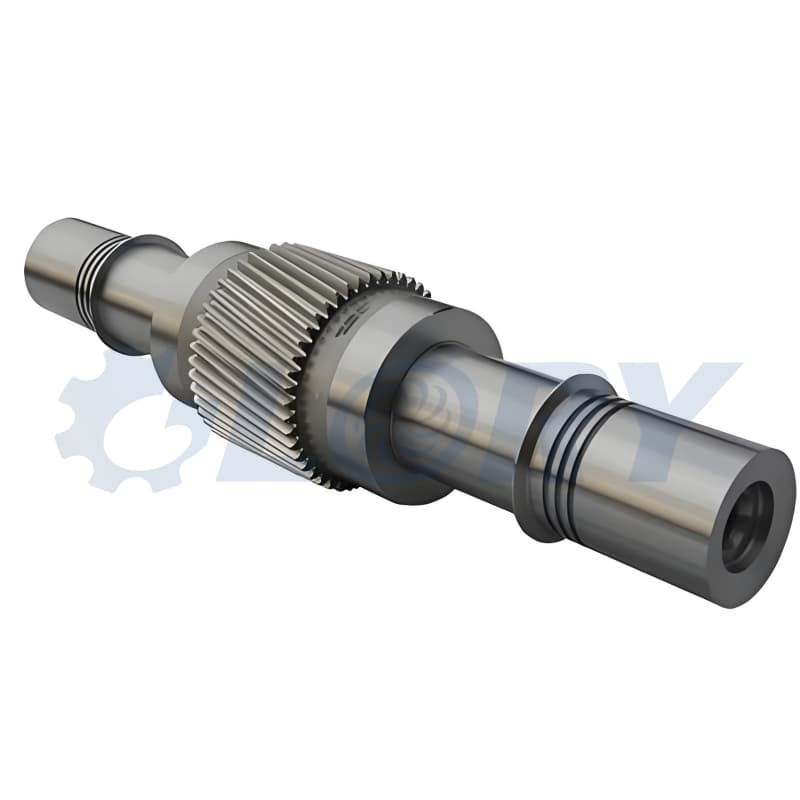
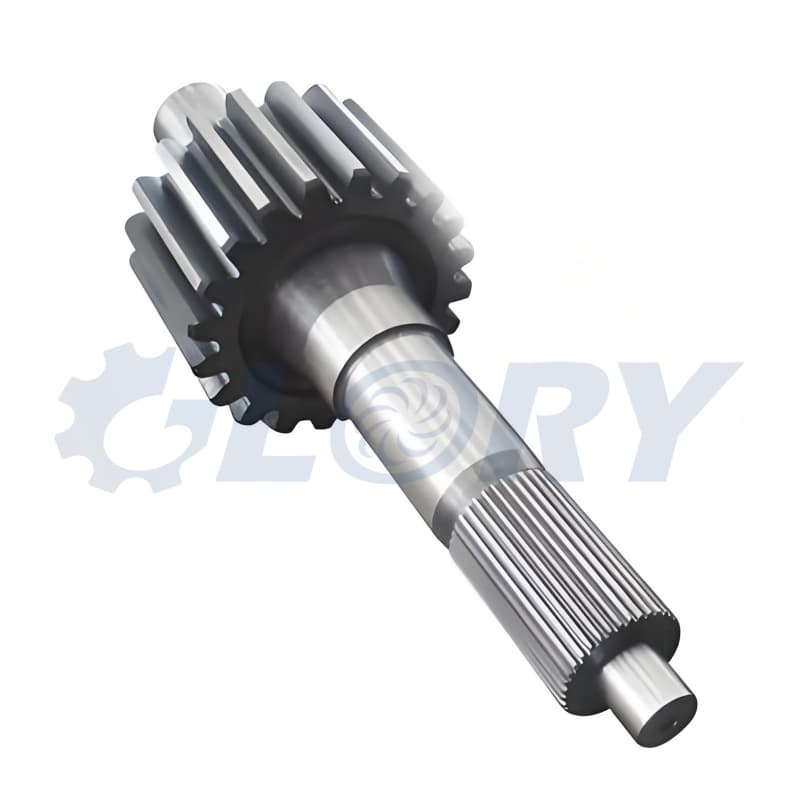
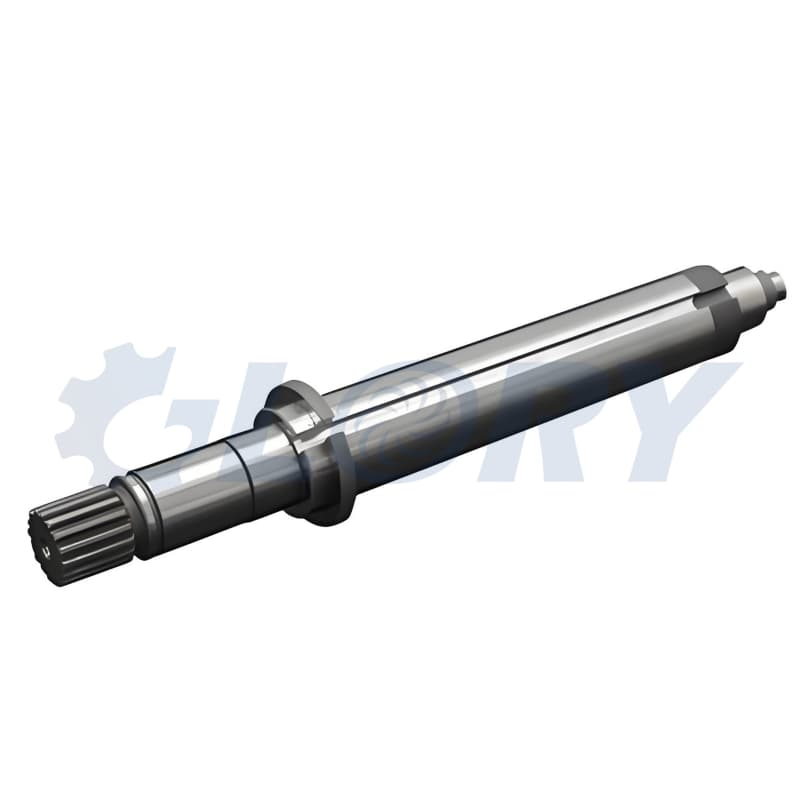
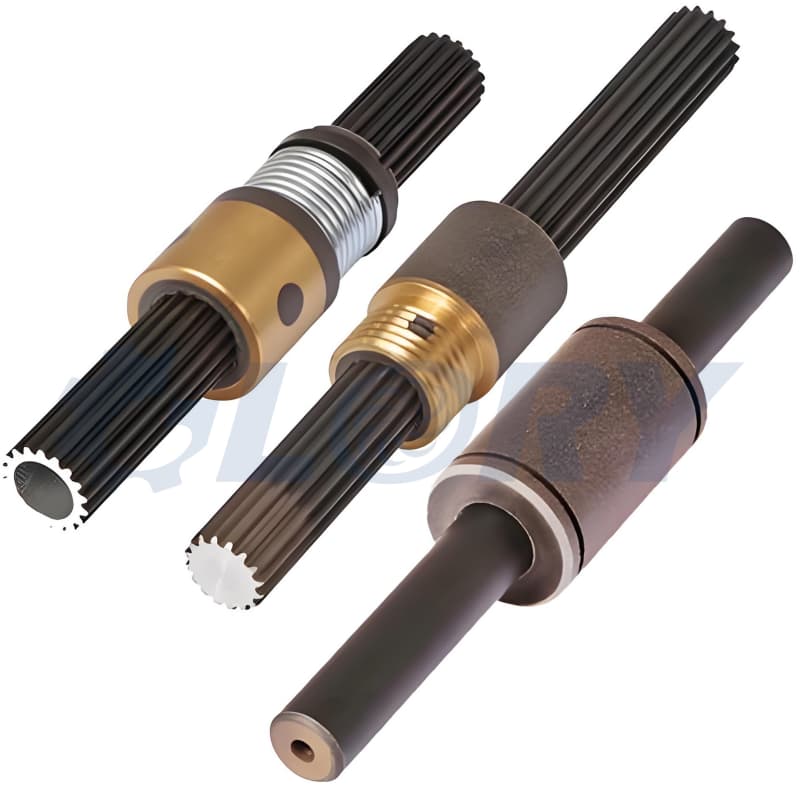
A custom splined shaft can have different tooth profiles, including rectangular splines, involute splines, and triangular splines. Standard splined shafts are usually produced according to DIN, ANSI, JIS, or GB standards, but in actual equipment, installation space, mating dimensions, material strength, heat treatment requirements, and interface forms often differ. Non-standard custom machining allows flexible selection of tooth profile, module, pressure angle, number of teeth, shaft length, steps, keyways, threaded holes, relief grooves, center holes, and other features. This ensures every custom splined shaft perfectly matches the complete machine.
For example, a 30 mm diameter splined shaft in an automotive gearbox may require an involute spline for high-speed operation, while a splined shaft in a food filling machine may need stainless steel with a smooth, easy-to-clean surface. This difference determines that a custom splined shaft must be produced through non-standard customization rather than simply selecting a standard part.
Material Selection and Heat Treatment for Custom Splined Shafts
Material selection directly affects the service life and reliability of a custom splined shaft. Our company commonly uses the following materials:
-
Carbon steel: 45# steel, suitable for general load and low-speed applications.
-
Alloy steel: 40Cr, 42CrMo, 20CrMnTi, 20CrMo — suitable for medium to high loads and heat-treated transmission shafts.
-
Stainless steel: 304, 316, 17-4PH, duplex stainless steel — suitable for food, medical, marine, and chemical environments requiring corrosion resistance.
-
Aluminum alloy: 6061, 7075 — suitable for lightweight and low-load applications.
-
Copper alloy, titanium alloy, high-temperature alloy: for special wear resistance, high temperature, aerospace, and other high-end fields.
Depending on load and wear requirements, a custom splined shaft can undergo quenching and tempering, induction hardening, carburizing and quenching, nitriding, carbonitriding, and other heat treatments. For example, heavy-duty custom splined shafts often use carburizing and quenching to achieve a surface hardness of HRC 58–62 while maintaining good core toughness. In food or medical industries, stainless steel is often selected and then polished, passivated, or electrolytically polished. During machining, we strictly control heat treatment deformation and correct dimensions in subsequent grinding processes to ensure the accuracy and life of every custom splined shaft.
Machining Processes for Custom Splined Shafts
Manufacturing a high-precision custom splined shaft usually requires multiple operations. A typical process flow includes:
-
Turning — machining center holes, outer diameters, steps, relief grooves, and threads.
-
Spline cutting — hobbing, shaping, milling, broaching, or CNC spline milling depending on batch size.
-
Heat treatment — selecting the appropriate process based on material and requirements while controlling distortion.
-
Grinding — cylindrical grinding, spline grinding, and face grinding to ensure dimensional and geometric tolerances.
-
Surface treatment — black oxide, phosphating, zinc plating, chrome plating, nickel plating, anodizing, Dacromet, etc.
-
Inspection — CMM, gear measuring center, hardness tester, roughness tester, magnetic particle inspection, ultrasonic testing, etc.
For non-standard custom machined parts, the process route must be flexibly adjusted according to the structure of each custom splined shaft. Our company has multiple CNC lathes, machining centers, gear hobbing machines, gear shaping machines, cylindrical grinders, and spline grinders. We also integrate stable heat treatment and surface treatment partners to complete the entire process from raw material cutting to finished product packaging.
Different Roles of Custom Splined Shafts in Different Industries
Although a custom splined shaft is fundamentally a transmission component, its role varies greatly from industry to industry. Below are common application scenarios our company serves:
1. Automotive Manufacturing
In gearboxes, drive shafts, steering systems, and differentials, custom splined shafts transmit engine torque and require high precision, high wear resistance, and fatigue strength. Non-standard customization can meet the requirements of new energy vehicle electric drive systems for lightweight, high speed, and low noise.
2. Construction Machinery
In excavators, loaders, cranes, and other equipment, custom splined shafts in travel mechanisms, swing mechanisms, and hydraulic pump connections withstand high torque and impact loads. High-strength alloy steel and surface hardening are usually adopted to improve impact resistance and wear resistance.
3. Agricultural Machinery
PTO shafts, rotary tiller blade shafts, and harvester drive shafts need custom splined shafts that can adapt to harsh field environments, resist mud and water, withstand wear, and allow quick connection of implements. These shafts often require high strength and certain corrosion resistance.
4. Marine and Offshore Engineering
In propulsion systems, steering gears, deck machinery, and winches, custom splined shafts must resist seawater corrosion. Stainless steel or special anti-corrosion treatments are often selected. High concentricity and dynamic balance are also required to reduce vibration and noise.
5. Industrial Automation and Robotics
In servo motors, reducers, robot joints, and linear modules, custom splined shafts provide precise positioning and torque transmission. Dimensional tolerances can reach micrometer level, surface roughness requirements are extremely high, and lightweight design is sometimes needed.
6. Aerospace
In landing gear, flight control systems, and engine accessory drives, custom splined shafts have extremely strict requirements for lightweight materials, fatigue resistance, and reliability. Titanium alloys and high-temperature alloys are commonly used, and strict non-destructive testing and traceability management are required.
7. Medical Devices
In surgical robots, CT scanning equipment, and rehabilitation devices, custom splined shafts require stainless steel, low noise, non-magnetic or weakly magnetic properties, and easy cleaning and disinfection. Some products also need to pass biocompatibility testing.
8. Food and Packaging Machinery
In filling machines, conveyor lines, mixing equipment, and packaging machines, custom splined shafts must meet food-grade hygiene standards. Stainless steel is mostly used, with smooth surfaces and no dead corners to avoid contamination, while also balancing wear resistance and corrosion resistance.
9. Renewable Energy and Wind Power
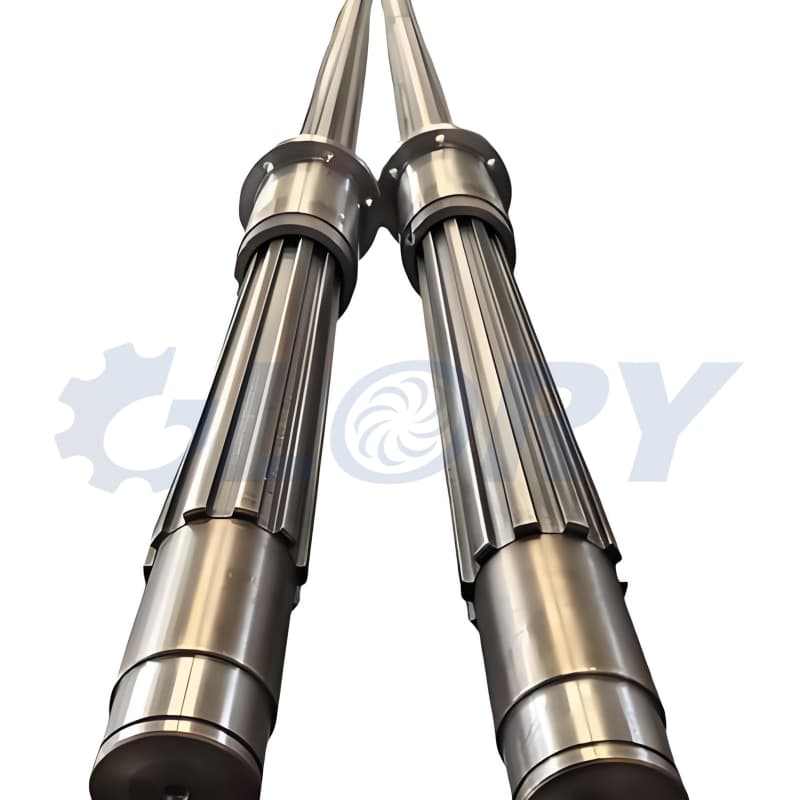
In wind turbine yaw systems, solar tracking brackets, and energy storage equipment, custom splined shafts need good weather resistance for long-term outdoor operation, as well as strength and rust prevention. Some large splined shafts are machined in sections and then assembled.
10. Oil and Petrochemical
In pumps, compressors, and valve actuators, custom splined shafts need corrosion resistance, high temperature and high pressure resistance. Duplex stainless steel or nickel-based alloys are often selected, with strict requirements for dimensional stability and sealing fit.
As can be seen, even for the same custom splined shaft, design, materials, processes, and inspection standards can be completely different depending on the industry. This is exactly the value of non-standard custom machining: not simply producing a shaft, but providing a transmission solution for specific industries and working conditions.
Service Process for Custom Splined Shaft Manufacturing
Our company has many years of experience in non-standard custom machined parts. For custom splined shafts, we provide one-stop service from design to delivery:
-
Requirement communication — customer provides drawings, samples, or operating conditions; we evaluate manufacturability and cost.
-
Process design — determine material, heat treatment, machining route, and inspection plan.
-
Prototype verification — rapid prototyping with dimensional reports, material certificates, and heat treatment reports.
-
Batch production — strictly implement process documents and quality control plans to ensure batch consistency.
-
Surface treatment and packaging — anti-rust treatment, marking, and export packaging according to customer requirements.
We support various tooth profiles and non-standard dimensions, with flexible minimum order quantities and short prototyping lead times. We can also cooperate with customers in drawing optimization, localization substitution, and cost reduction.
Why Choose Us for Custom Splined Shafts?
-
Complete equipment — turning, milling, grinding, and gear cutting equipment are fully matched, reducing outsourcing.
-
Strong engineering capability — we can handle complex stepped shafts, slender shafts, hollow splined shafts, and special-shaped splined shafts.
-
Controllable quality — full dimensional inspection, with material certificates, heat treatment reports, and CMM reports.
-
Stable delivery — rich experience in non-standard custom machined parts, skilled in coordinating multiple processes.
-
High cost performance — in-house machining capability reduces overall cost and benefits customers.
-
Good confidentiality — confidentiality agreements can be signed to protect customer drawings and business information.
About Us
 We provide custom machined parts, 5-axis linkage CNC machining, and the design, production, and assembly of machinery and equipment.