Abrasion and Wear Resistance
PU withstands sliding and repeated contact better than many conventional rubbers, which suits wear pads, guide strips and scraper components.

Polyurethane (PU and TPU) combines elasticity with strong wear resistance, which makes it useful for rings, gaskets, positioning plates, pads, rollers and custom tooling components. CNC machined PU parts in China are produced directly from solid sheet, rod, tube or block stock, so custom geometries become available without mold cost and without the long lead time of cast polyurethane.
We supply OEM custom CNC machined PU parts in China for customers who need a defined durometer, controlled dimensions and repeatable small batches. Each part is cut from selected PU stock, machined with sharp tooling and stable fixturing, and checked against the drawing before packing. Because polyurethane behaves very differently from metal, tool paths, feeds and work-holding are planned around the material's spring-back rather than copied from a metal program.
The value of custom CNC machined PU parts comes from a combination of properties that few engineering materials share. The six characteristics below explain why PU is selected for wear, sealing and positioning work.
PU withstands sliding and repeated contact better than many conventional rubbers, which suits wear pads, guide strips and scraper components.
The material flexes under load and returns to shape, helping rings and positioning elements absorb shock instead of cracking.
Machined edges and thin lips resist tearing under repeated compression, an important point for gaskets and sealing rings.
Polyester-based PU performs well around mineral oils, fuels and lubricants in industrial machinery environments.
Polyether-based PU is preferred in damp, water-contact or humid settings where polyester types age more quickly.
PU absorbs impact and quiets metal-to-metal contact in fixtures, stops and mounting components.
Machining polyurethane is a specialist process: heat, clamping force and cutter geometry all change the finished dimension. Custom CNC machined PU parts in China are therefore produced with methods tuned to elastomer stock.
Pockets, profiles, holes and shaped faces are milled from sheet or block. Sharp tooling and light finishing passes keep edges clean instead of smeared or melted.
Rings, sleeves, washers, rollers and gasket blanks are turned with controlled chip flow so soft stock does not deflect away from the cutter.
Internal grooves, sealing profiles, O-ring-style channels and locating steps are produced to custom cross-sections that catalog seals cannot match.
Repeat orders run from saved programs and fixturing notes, keeping later batches of custom CNC machined PU parts consistent with the first approved sample.
Two decisions drive most PU part performance: the hardness (durometer) and the chemistry family (polyester or polyether). Both should be written into the drawing or purchase specification.
Polyurethane is specified more often by chemistry family, durometer and commercial grade than by one global grade number. The table below shows how common PU material types are described across major standards systems and which trade-name families are typically seen on the stock material used for CNC machined PU parts in China. Trade names remain the property of their respective owners and appear here only as material references.
| Material type | Common commercial grade families | ASTM references | ISO references | DIN / EN references | Typical machined form |
|---|---|---|---|---|---|
| Polyester-based TPU | Elastollan, Desmopan and Estane product families (polyester lines) | ASTM D412 (tensile), ASTM D2240 (hardness) | ISO 37 (tensile), ISO 868 (hardness) | DIN 53504 (tensile), DIN 53505 (hardness) | Sheet, rod and block |
| Polyether-based TPU | Elastollan polyether grades and Pellethane-type product families | ASTM D412 (tensile), ASTM D2240 (hardness) | ISO 37 (tensile), ISO 868 (hardness) | DIN 53504 (tensile), DIN 53505 (hardness) | Rod, tube and sheet |
| Cast thermoset polyurethane (CPU) | Adiprene- and Vibrathane-type systems, plus custom-poured blanks | ASTM D2000 line-callout style, ASTM D2240 hardness | ISO 1856 compression set, ISO 868 hardness | DIN ISO 34 tear methods, DIN 53505 hardness | Near-net cast blank, then CNC machined |
| Hard PU boardstock (Shore D range) | Rigid polyurethane semi-finished boards from various stock makers | ASTM D2240 (Shore D hardness) | ISO 868 (Shore D hardness) | DIN 53505 (Shore D hardness) | Thick plate and tooling block |
Durometer and its test method (Shore A or Shore D) should always appear on the drawing. Commercial names describe the stock family, while the purchase specification follows the agreed test values.
Representative custom CNC machined PU parts produced from solid polyurethane stock to customer drawings.
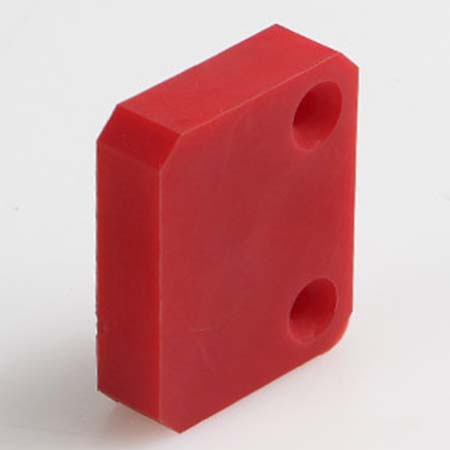
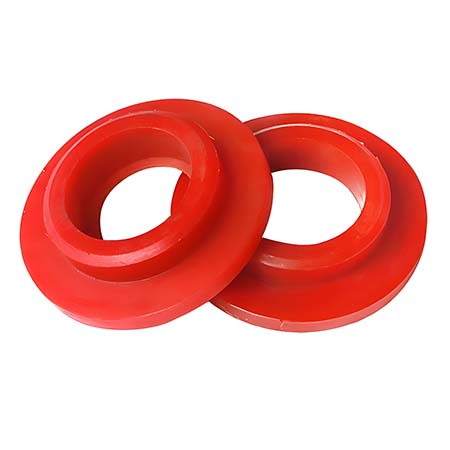
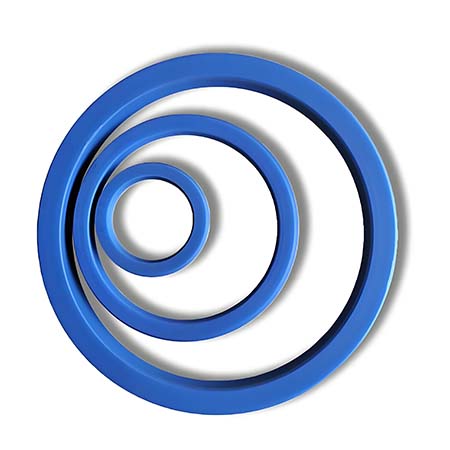
Polyurethane machining shares the same CNC equipment family as plastic machining, but uses cutters, speeds and clamping methods tuned to elastic stock.
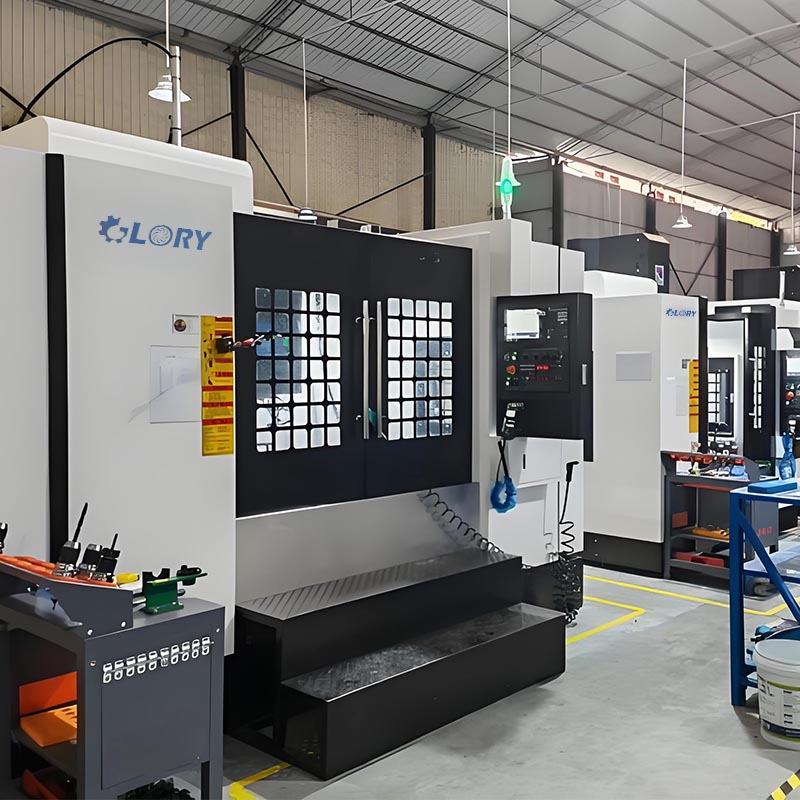
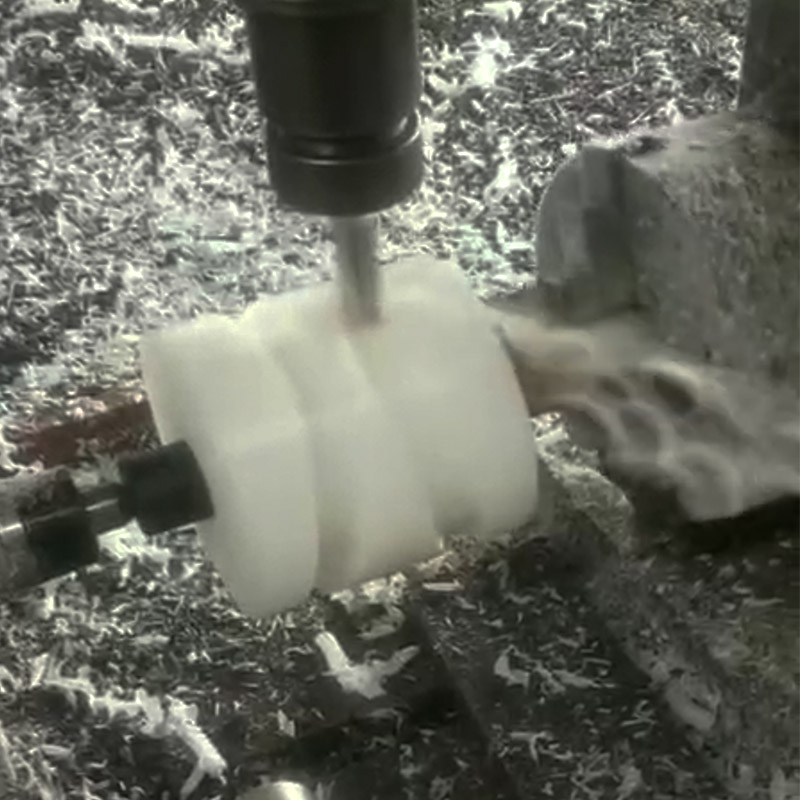
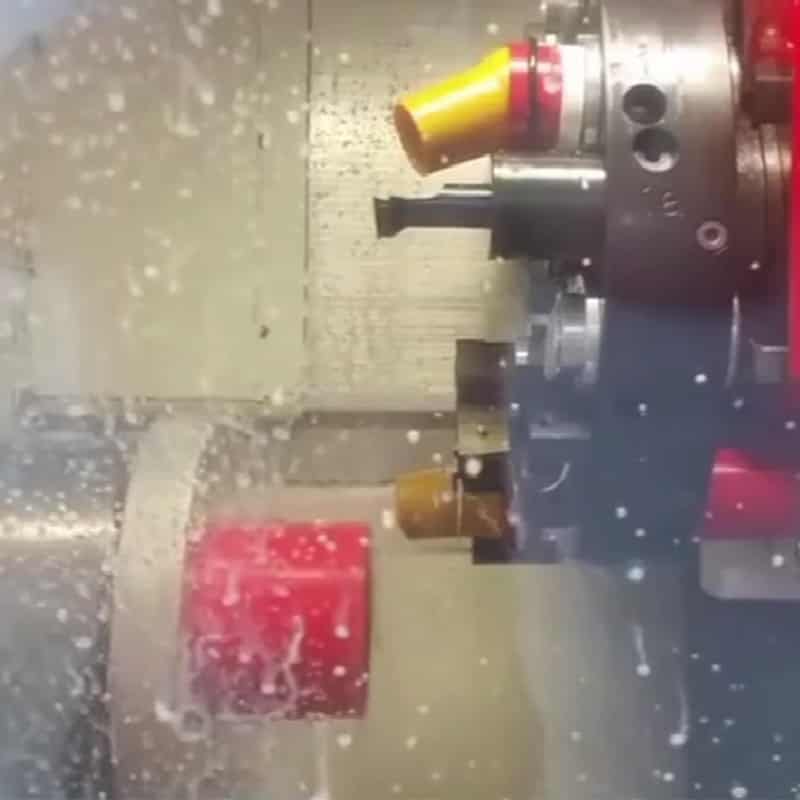
CNC machined PU parts in China appear wherever equipment needs a component that is softer than metal yet tougher than ordinary rubber.
Custom cross-sections for pumps, cylinders and equipment flanges where standard catalog sizes do not fit.
Soft-faced locating elements that hold metal parts without scratching contact surfaces during assembly.
Sliding wear components for conveyors, lifts, machine ways and handling equipment.
Turned PU rollers and drive wheels with controlled outer diameter, bore and running surface.
Impact-absorbing stops, buffers and mounting pads that protect both equipment and product.
Flexible lips that wipe rods, belts and guide surfaces while tolerating repeated flexing.
A drawing planned around polyurethane behavior machines more accurately and survives service longer than one copied directly from a metal part.
Small radii reduce tearing at the junction of a lip and its body; razor-sharp internal corners are avoided on soft PU.
Elastic material shifts slightly when released from clamping, so tolerances are agreed with PU behavior in mind rather than copied from metal drawings.
Very thin sealing lips need support during machining; uniform wall thickness helps the part hold dimension after unclamping.
Parts are nested into sheet or rod stock with enough clamping allowance, and oversized blanks prevent clamping marks on visible faces.
Common questions from buyers evaluating custom CNC machined PU parts in China.
Yes. Custom CNC machined PU parts are routinely milled or turned from solid sheet, rod or block, which removes mold cost and makes one-off and small-batch parts economical.
Shore 85A to 95A covers most industrial rings and gaskets. Softer 70A–80A material conforms better to uneven faces, while firm grades suit load-bearing positioning parts. The final choice depends on compression, fluid and temperature.
Sharp polished cutters, light finishing passes, controlled spindle speed, air or coolant cooling and dedicated soft jaws reduce spring-back and heat distortion; critical dimensions are measured after the part relaxes from clamping.
A single prototype piece can be made. Most OEM customers then move to small repeat batches, where saved programs and the same stock source keep dimensions and hardness consistent.
CNC machining is the practical route when a PU part is custom-shaped, needed in low quantity, or must match an existing metal assembly. Compared with waiting for a casting mold, machined PU lets engineers test a ring, gasket or positioning plate in the real durometer, revise a groove or radius, and rerun the part quickly. For buyers sourcing custom CNC machined PU parts in China, it is useful to state durometer, PU family, working environment and critical dimensions at the inquiry stage.
Repeatability comes from controlled stock selection, fixed programs and stable machining parameters rather than from hand work. Each batch of OEM CNC machined PU parts is cut from stock matching the agreed hardness, machined with the saved tool path and measured at the same critical points. When a design evolves, older versions are clearly identified so production never mixes revisions.
 We provide custom machined parts, 5-axis linkage CNC machining, and the design, production, and assembly of machinery and equipment.