
OEM CNC Machined 303 Stainless Steel in China
We manufacture OEM CNC machined 303 stainless steel parts in China for equipment builders, engineering firms, and industrial distributors worldwide. AISI 303 is the free-machining grade of the 18-8 austenitic stainless family: a controlled sulfur addition forms small manganese-sulfide inclusions that break chips cleanly at the cutting edge, so turned, drilled, and tapped features can be produced at higher speeds, with shorter cycle times and more consistent surface finishes than is practical on 304. For components dominated by shafts, threads, holes, and close-tolerance machined geometry, CNC machined 303 stainless steel from a China workshop is often the most economical material choice.
- AISI / ASTM 303
- UNS S30300
- JIS SUS303
- EN 1.4305
- X8CrNiS18-9
- GB Y12Cr18Ni9
Every program of CNC machined 303 stainless steel in China starts from the customer drawing: dimensioning, tolerances, thread callouts, surface requirements, bar condition, and order quantity are reviewed before the first chip is cut. Round, hex, and square 303 bar stock is then routed through CNC turning, multi-axis milling, drilling, and tapping cells, with deburring and dimensional inspection completed in-house. Single prototypes, repeat batches, and high-volume production runs all follow the same documented process flow.
This page explains the material behind the parts: how 303 is designated under American, Japanese, European, Chinese, and other national standards, what its chemistry and mechanical properties look like, which characteristics make it behave differently from 304, and which machining and inspection processes are used to turn bar stock into finished OEM components. It also shows representative products and the workshop, machining, and measuring equipment used on a typical CNC machined 303 stainless steel production order.
Representative CNC Machined 303 Stainless Steel Parts
A selection of typical 303 stainless components produced on our turning and milling equipment.
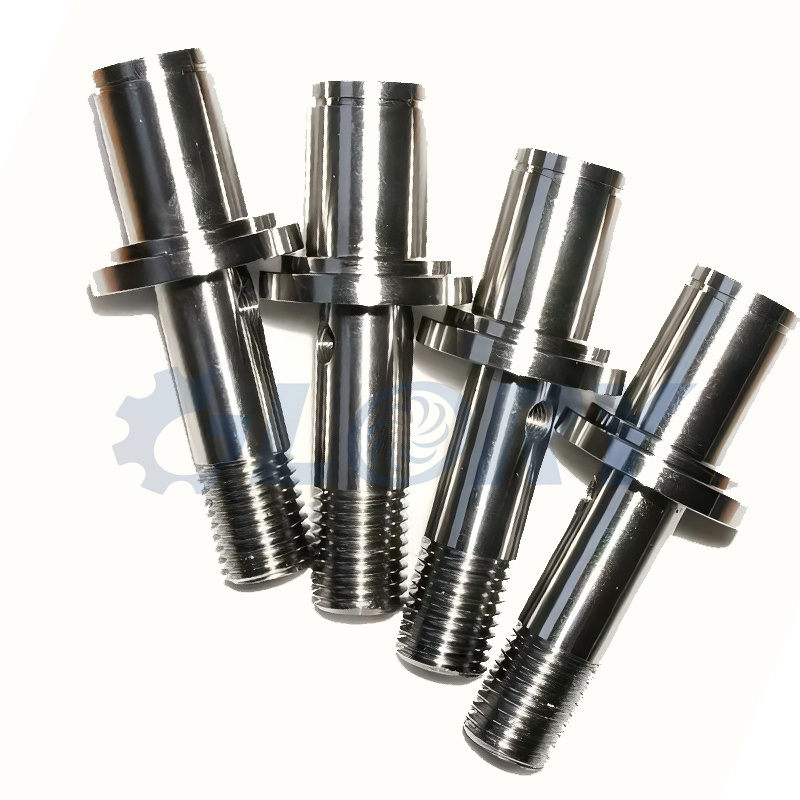

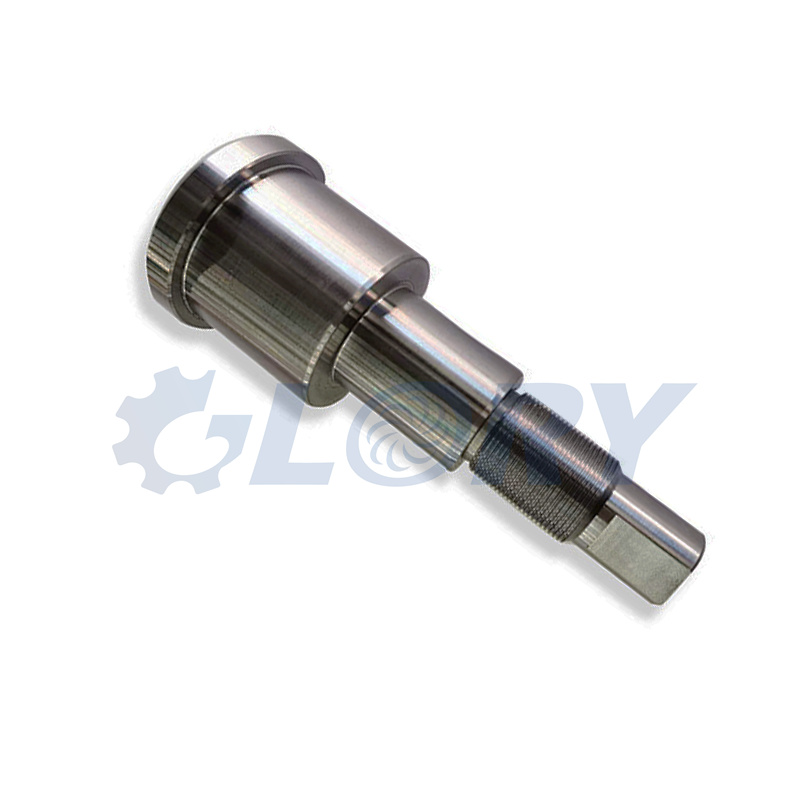
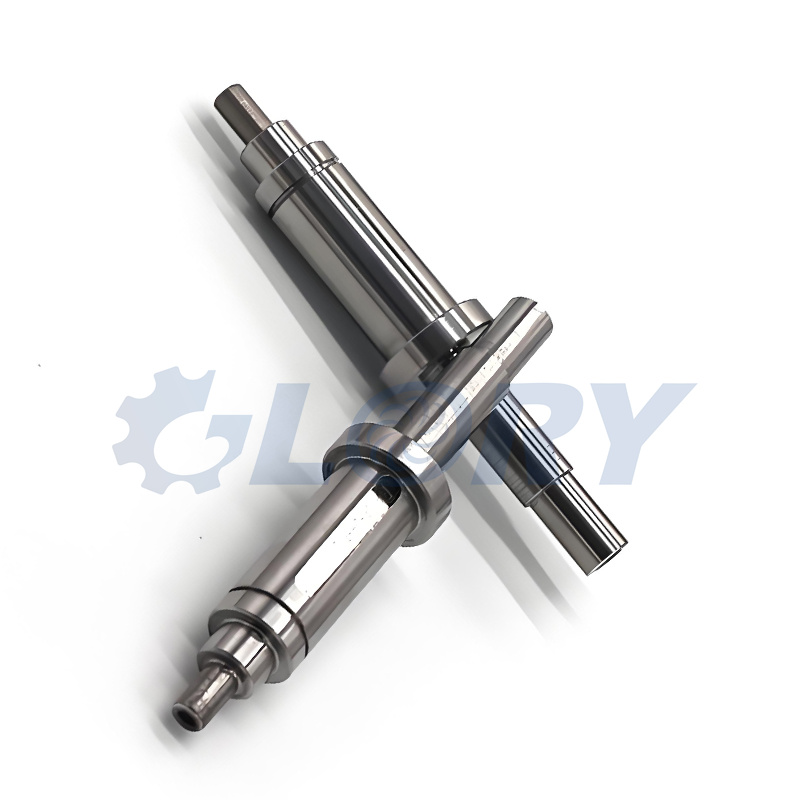
303 Stainless Steel Grade Designations Across Standards
Drawings marked 303, SUS303, 1.4305, or Y12Cr18Ni9 describe the same free-machining austenitic material under different national standard systems.
| Standard System | Region | Designation | Notes |
|---|---|---|---|
| AISI / ASTM | United States | 303 | Baseline free-machining austenitic grade; bar commonly supplied to ASTM A582 or A276. |
| UNS | United States | S30300 | Unified Numbering System code used on material datasheets and export paperwork. |
| JIS | Japan | SUS303 | Stainless bar and wire designation defined in the JIS G4303 series. |
| GB | China | Y12Cr18Ni9 | Current GB/T 20878 designation; older Chinese drawings may show Y1Cr18Ni9. |
| EN | European Union | 1.4305 | European material number for semi-finished and finished bar per EN 10088-3. |
| EN | European Union | X8CrNiS18-9 | Named European grade; older literature may list X10CrNiS18-9. |
| DIN / W-Nr. | Germany | X8CrNiS18-9 / 1.4305 | Traditional German Werkstoff designation widely used across European drawings. |
| BS | United Kingdom | 303S31 | British BS 970 designation for free-machining austenitic bar. |
| AFNOR | France | Z10CNF18-09 | French national designation still encountered on legacy equipment drawings. |
| KS | South Korea | STS303 | Korean standard designation, chemically and mechanically aligned with SUS303. |
A selenium-bearing variant, 303Se (UNS S30323), substitutes selenium for sulfur to obtain similar chip-breaking behavior with slightly different cold-forming characteristics; it is specified far less often than standard sulfurized 303.
Key Characteristics of 303 Stainless Steel
The properties below explain why designers select 303 for precision machined parts instead of general-purpose 304 or 316.
Free-Machining Chemistry
Sulfur combines with manganese to form dispersed MnS inclusions that act as internal chip breakers, producing short, manageable chips instead of long, stringy swarf.
Best Machinability in the 18-8 Family
Among common austenitic stainless steels, 303 offers by far the highest machinability, allowing higher cutting speeds and feeds than 304 while reducing built-up edge on the tool.
Good General Corrosion Resistance
It resists atmospheric exposure, fresh water, mild detergents, and many everyday chemical environments. Corrosion performance sits slightly below 304 because of the sulfur addition.
Not Hardenable by Heat Treatment
As an austenitic grade, 303 cannot be strengthened by quench hardening; strength levels are set through annealing or cold drawing of the bar stock before machining.
Essentially Non-Magnetic When Annealed
The annealed austenitic structure shows negligible magnetism. Cold-worked surfaces may display a weak magnetic response, which is a structural effect rather than a material defect.
Balanced Strength and Ductility
Annealed bar typically reaches 500-750 MPa tensile strength with 35-40% elongation, providing useful toughness for shafts, fittings, spacers, and fastener-class components.
Ideal for Automatic and Swiss-Type Lathes
Short chips and stable cutting behavior make 303 the default stainless grade for Swiss-type machines, multi-spindle automatics, and unattended high-volume turning.
Limited Welding and Severe Forming
The high sulfur content raises hot-cracking risk during welding and reduces deep-drawing capability. Choose 304 or 304L when a component must be welded or severely cold formed.
Chemistry and Property Reference for Machined 303 Bar
Typical reference data used when quoting and programming CNC machined 303 stainless steel parts in our China workshop.
Chemical Composition (wt %, ASTM A582 type 303)
Cast analysis ranges; sulfur is the defining free-machining element.
| Element | Content |
|---|---|
| Carbon, C | 0.15 max |
| Silicon, Si | 1.00 max |
| Manganese, Mn | 2.00 max |
| Phosphorus, P | 0.20 max |
| Sulfur, S | 0.15 min (typically 0.15-0.35) |
| Chromium, Cr | 17.0 - 19.0 |
| Nickel, Ni | 8.0 - 10.0 |
| Molybdenum, Mo | 0.75 max (optional) |
| Iron, Fe | Balance |
Mechanical Properties, Annealed Bar
ASTM and EN minimum values differ slightly; the drawing standard always governs.
| Property | Typical Value |
|---|---|
| Tensile strength Rm | 500 - 750 MPa (ASTM minimum 515 MPa) |
| Yield strength Rp0.2 | 205 MPa min (ASTM) / 190 MPa min (EN) |
| Elongation A5 | 35 - 40% min |
| Brinell hardness | 228 - 230 HB max |
| Supply condition | Annealed or cold drawn |
Physical Properties at Room Temperature
Reference values for thermal and structural planning.
| Property | Typical Value |
|---|---|
| Density | approx. 8.0 g/cm³ |
| Elastic modulus | approx. 193 GPa |
| Thermal conductivity | approx. 16 W/(m·K) |
| Electrical resistivity | approx. 0.72 µΩ·m |
| Melting range | approx. 1400 - 1420 °C |
| Microstructure | Austenitic |
Figures above are general reference ranges for commercially supplied 303 bar. Exact values vary with heat lot, bar diameter, and cold-work condition; final acceptance follows the tolerances and specifications stated on each customer drawing.
In-House Processes for CNC Machined 303 Stainless Steel
Turning, three- to five-axis milling, drilling, and tapping are combined under one roof so that a CNC machined 303 stainless steel part can be completed without routing work between vendors.
CNC Turning
Fixed-head and Swiss-type CNC lathes turn 303 round and hex bar into shafts, pins, bushings, standoffs, and threaded fittings. Facing, grooving, knurling, profiling, and single-point threading are completed in a single setup wherever possible.
3-Axis CNC Milling
Vertical machining centers produce flats, pockets, slots, keyways, and straightforward three-dimensional geometry on prismatic 303 workpieces with repeatable vise fixturing and short, predictable cycle times.
4-Axis CNC Milling
A rotary fourth axis indexes or rotates the workpiece to machine cross-holes, radial slots, and features on multiple faces, removing the tolerance stack-up caused by repeated manual refixturing.
5-Axis CNC Milling
Simultaneous five-axis movement reaches compound angles and contoured surfaces in fewer setups, which suits complex 303 components with tightly related positional and angular tolerances.
Drilling
Precision hole making covers through and blind holes, cross-holes, stepped holes, counterbores, and controlled-depth drilling, with feeds and peck cycles tuned to the short-chip behavior of 303.
Tapping
Internal threads are cut or form-rolled from miniature sizes upward, in metric and unified systems. The free-machining nature of 303 supports clean thread flanks, consistent gaging, and reduced tap breakage.
From a Single Piece to High-Volume Production
The same CNC machined 303 stainless steel tooling and inspection logic scales across every order size we handle in China.
Single Pieces & Prototypes
One-off and first-article components for design verification, machine spares, jigs, and repair work, programmed and inspected with the same discipline as series production.
Low-Volume Runs
Tens to a few hundred pieces for new product introductions, pilot builds, specialized equipment, and aftermarket spare programs where flexibility matters more than unit price.
Repeat Batch Production
Scheduled releases built from retained programs, tooling lists, and first-article records, keeping part dimensions and surface characteristics stable across every reorder.
High-Volume Mass Production
Thousands to hundreds of thousands of pieces on dedicated fixturing and bar-fed machines, with optimized cycle times and in-process checks for price-sensitive ongoing programs.
Workshop, Machining and Inspection Capabilities
A look at the production floor and the machining and measuring equipment behind every CNC machined 303 stainless steel order.
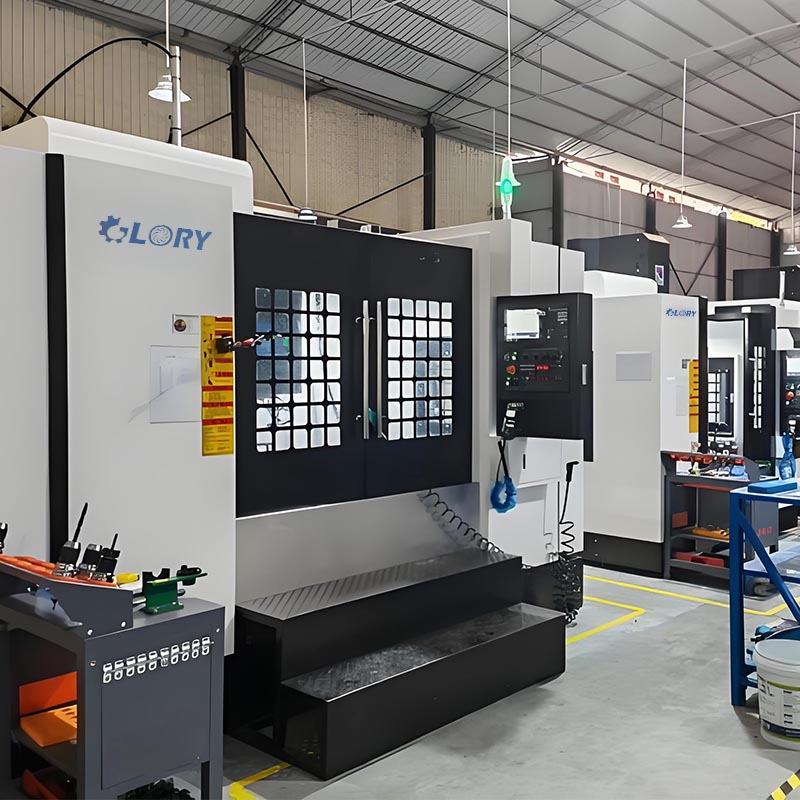
Workshop
Turning and milling cells, bar feeders, deburring stations, and inspection areas are arranged for a steady, repeatable flow of 303 components from raw bar to packed finish.
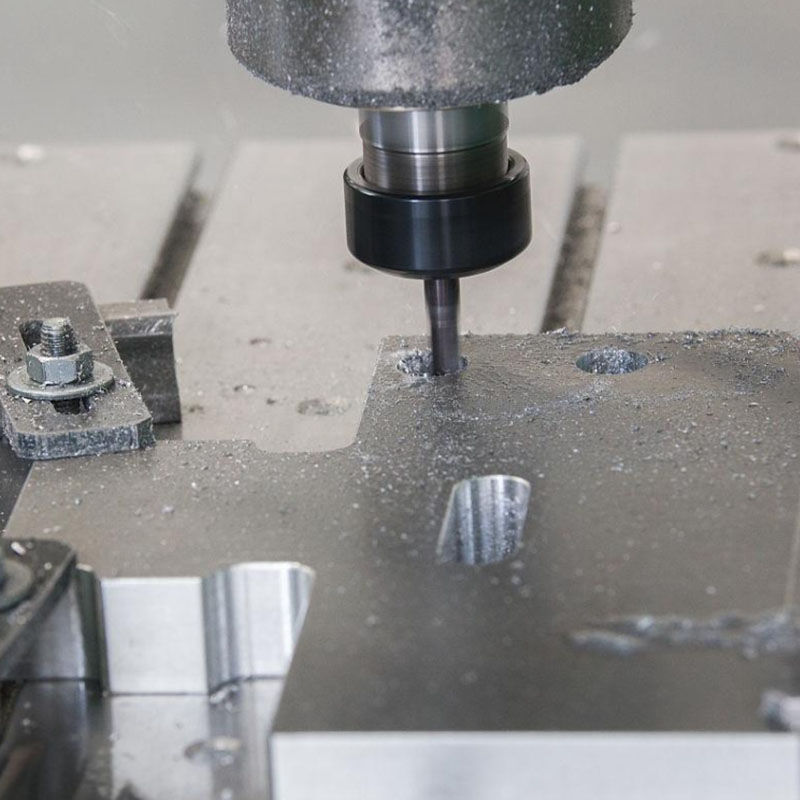
CNC Milling
Three- and four-axis milling cells produce prismatic features, milled flats, cross-holes, and drilled and tapped patterns on fixtured 303 stainless workpieces.
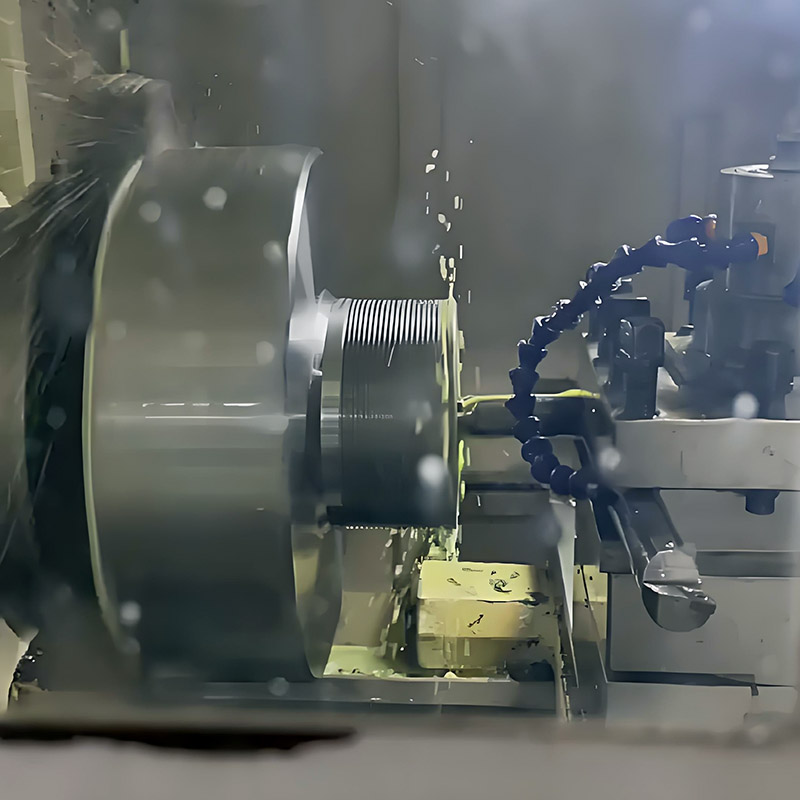
CNC Turning
CNC lathes turn 303 bar stock into shafts, pins, bushings, and threaded fittings, taking advantage of the grade's short chips to hold fine surface finishes at speed.
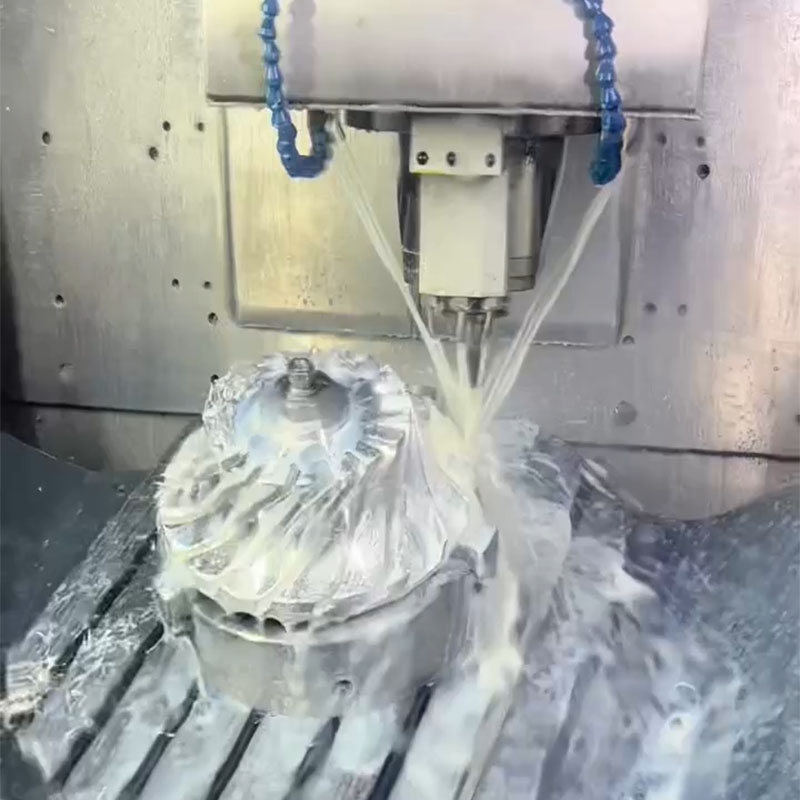
5-Axis Milling
Five-axis centers handle complex angled and contoured 303 components in compact setups, reducing refixturing and preserving relationships between critical features.
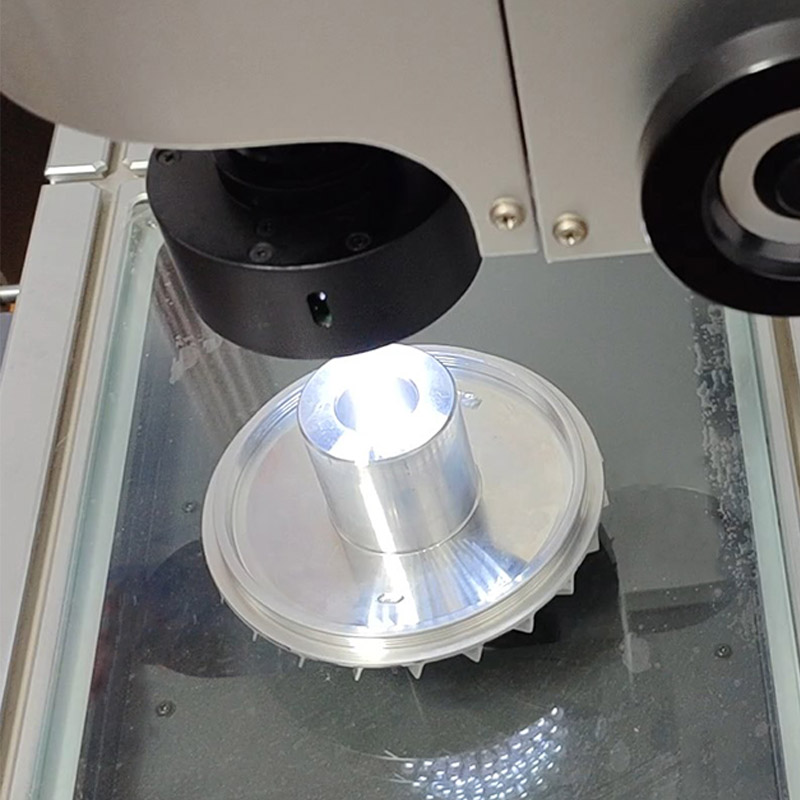
2D Measuring
Optical profile projectors and vision systems verify two-dimensional dimensions, radii, angles, thread profiles, chamfers, and edge conditions without contact stress.
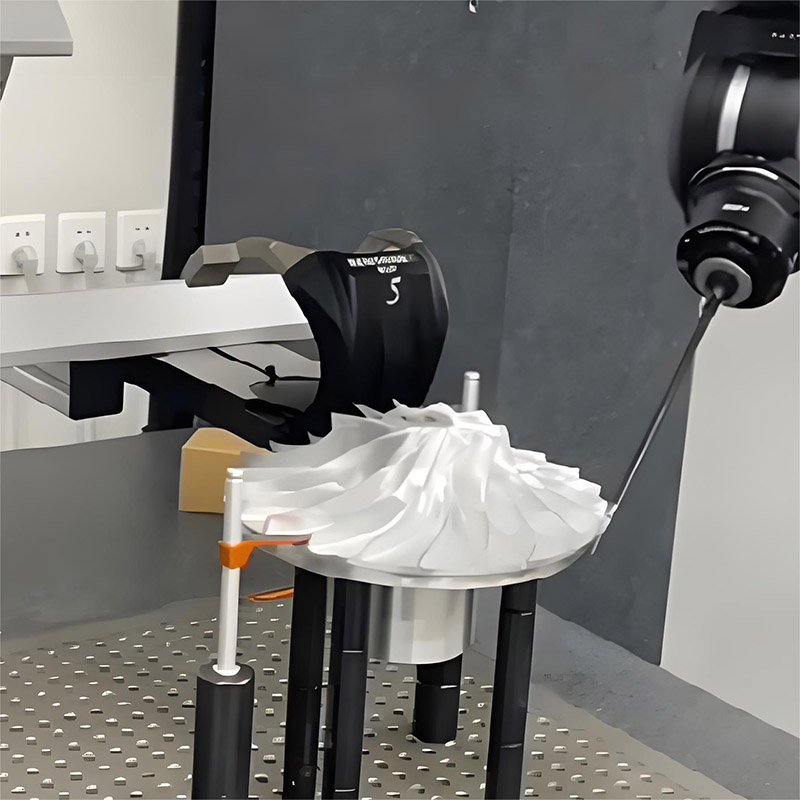
3D Measuring
Coordinate measuring machines check three-dimensional positional, geometric, and profile tolerances on finished 303 parts, recording measured values against drawing limits.
How 303 Is Machined Well: Shop-Floor Guidelines
These practices convert the free-machining behavior of 303 into tight tolerances and stable surface finishes on production parts.
Tooling and Cutting Parameters
Sharp carbide or high-speed-steel tooling with positive rake geometry is used to keep cutting forces low. 303 tolerates noticeably higher surface speeds than 304, while a constant, positive feed prevents rubbing and the local work hardening that occurs when a tool dwells on the cut.
Chip Control and Coolant
Flood coolant or through-tool coolant evacuates the short sulfur-broken chips, removes heat from the cutting zone, flushes tapped holes, and supports fine, consistent finishes on turned bores and thread flanks.
Workholding and Bar Strategy
Bar feeders on lathes and stable vise or custom fixture setups on mills keep dimensional variation low over long runs. Round, hex, and square 303 bar are stocked to cover shafts, fittings, and fastener-style components without extra shaping operations.
Deburring and Surface Finish
Controlled hand and mass-finish deburring removes sharp edges, while brushing, polishing, or optional passivation treatment can refine appearance and cleanliness without altering the machined dimensional geometry of the part.
Typical Applications for Machined 303 Components
303 is chosen wherever substantial machining, threading, or close-tolerance hole work meets a need for general stainless corrosion resistance.
Fasteners, Nuts, Bolts and Studs
High-volume threaded hardware where clean threads and short machining cycles are essential.
Shafts, Pins and Spacers
Rotating and locating components for motors, pumps, drives, and precision assemblies.
Connector and Electrical Fittings
Machined bodies, inserts, and contact hardware for electrical and electronic equipment.
Bushings and Threaded Inserts
Turned sleeves, ferrules, and inserts with precise bores and internal or external threads.
Valve and Pump Components
Stems, adapters, and fittings for mild-environment fluid handling equipment.
Instrumentation Hardware
Small precision parts for sensors, laboratory devices, and measurement equipment.
Food and Dairy Equipment Fittings
Machined accessories for non-critical contact zones where regular washdown is expected.
Machine and Equipment Fittings
Brackets, adapters, couplers, and custom hardware for industrial machinery builds.
Sourcing CNC Machined 303 Stainless Steel in China
CNC machined 303 stainless steel in China is a practical solution when a design combines many machined features, threaded connections, and moderate corrosion demands with pressure on unit cost. Our process begins with an engineering review of each drawing, selects the matching 303 bar form and condition, and then routes the part through turning, three- to five-axis milling, drilling, and tapping with first-article and in-process measurement along the way.
Because the same programs, fixturing, and inspection records are retained, single prototypes can mature smoothly into repeat batches and, when required, into high-volume mass production without redesigning the manufacturing route.
What a 303 Machining Review Typically Covers
- Grade and standard confirmation: AISI 303, SUS303, EN 1.4305, or GB Y12Cr18Ni9 equivalents
- Bar form selection: round, hex, or square stock in annealed or cold-drawn condition
- Process routing across turning, 3/4/5-axis milling, drilling, and tapping
- Tolerance and surface-finish assessment for every critical feature
- Thread system selection, gaging logic, and deburring requirements
- Order quantity strategy, from one-off pieces to ongoing mass production
- 2D and 3D measurement planning aligned with the drawing's inspection points
- Material comparison with 304 or 316 when corrosion demands exceed what 303 should carry
About Us
 We provide custom machined parts, 5-axis linkage CNC machining, and the design, production, and assembly of machinery and equipment.