Custom CNC machined titanium alloy in China for OEM buyers, engineering teams and equipment manufacturers that need dependable, dimensionally stable parts made from difficult-to-cut titanium grades.
We are a China-based custom machining workshop focused on titanium and titanium alloys. Every order is produced to customer drawings, from a single prototype component to repeat batch production of flanges, bushings, impellers, fittings and structural parts.
As a supplier of CNC machined titanium alloy in China, we combine CNC turning, multi-axis milling, drilling and tapping in one controlled production flow. Raw bar, plate or forging enters the workshop and leaves as a finished, dimensionally checked component, without repeated hand-offs between separate vendors.
Titanium machines differently from ordinary steel: it conducts heat slowly, work-hardens quickly and generates high cutting forces at the tool edge. Our tool paths, fixturing, coolant pressure and feed strategy are selected around those characteristics rather than copied from a standard steel program.
Regularly machined materials include commercially pure TA1 / TA2 / TA3, TC4 (Ti-6Al-4V), TA9 palladium-bearing titanium, TA15, TC11 and their ASTM, ISO, EN, JIS and GOST commercial equivalents.
In-House Titanium Machining Capabilities
Four core processes run under one roof, so a CNC machined titanium part can be turned, milled, drilled and threaded in a single, traceable production route.
CNC Turning
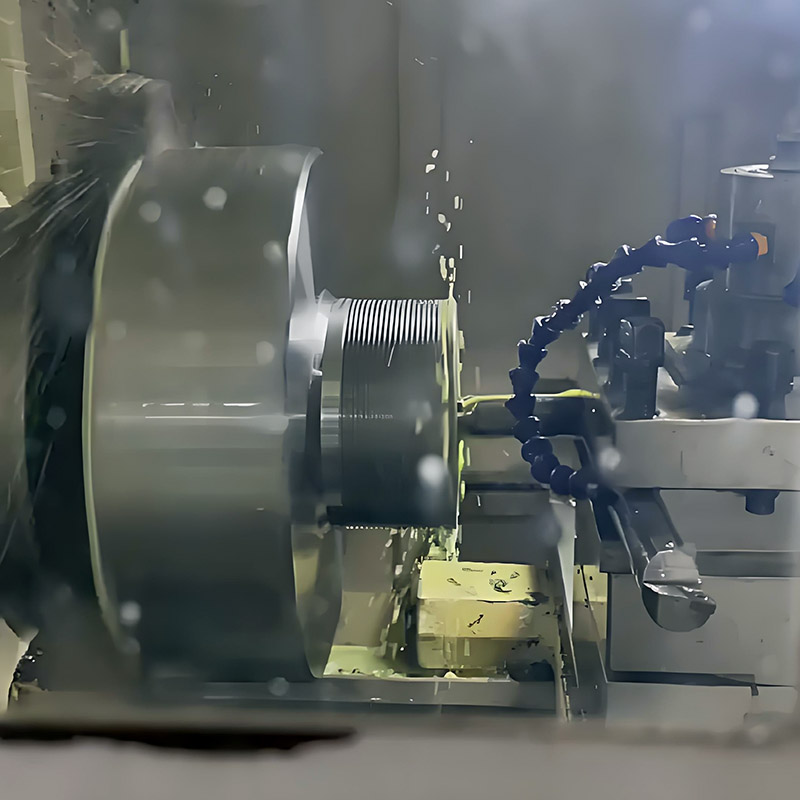
Slant-bed and precision lathe work on titanium bar, tube and forgings, including external and internal profiling, facing, grooving, cut-off and single-point threading.
Bushings, sleeves, spacers and threaded connectors
Controlled concentricity for rotating and sealing surfaces
Fine surface finishes on sealing diameters and seats
Small precision runs and repeating batch orders
CNC Milling
3-axis4-axis5-axis
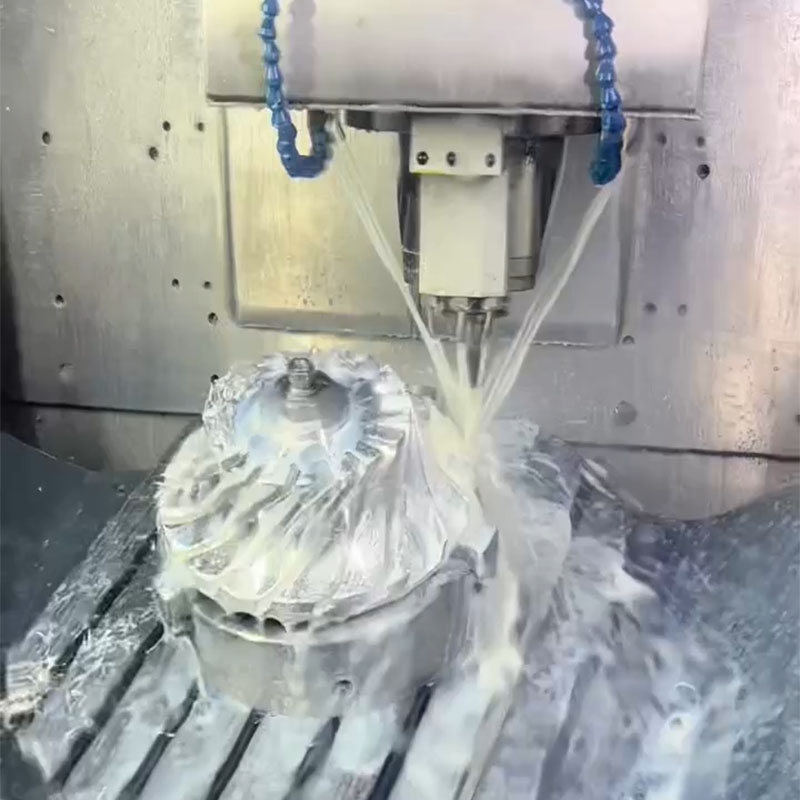
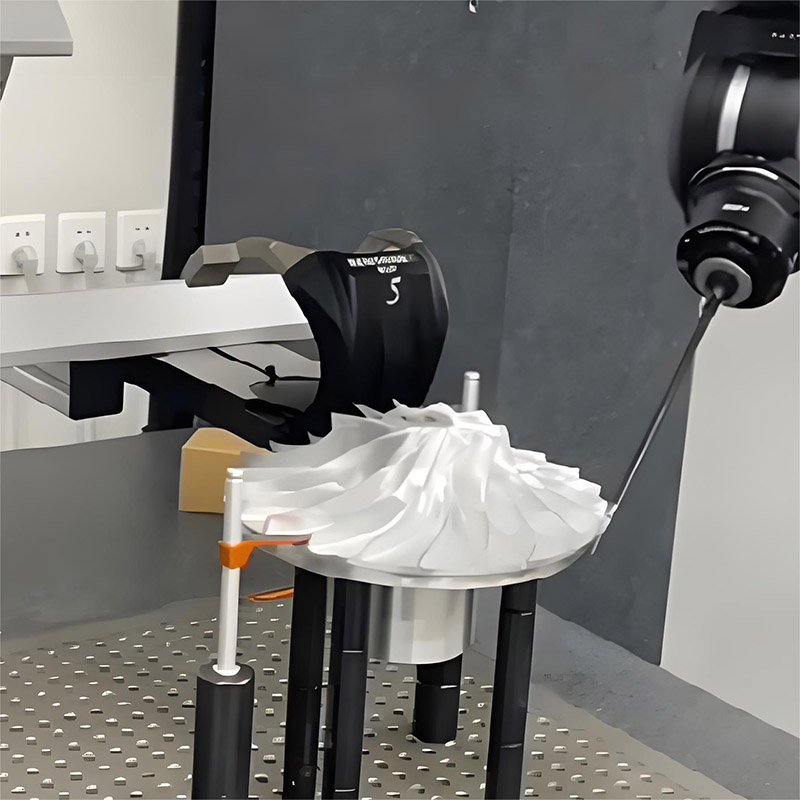
Multi-axis milling covers everything from simple prismatic blocks to simultaneous five-axis curved surfaces such as centrifugal vane wheels and impellers.
3-axis for plates, blocks, pockets and flat features
4-axis indexed work for radial holes and wrap-around geometry
5-axis simultaneous machining of blades and flow paths
Rigid fixturing and sharp tooling to limit work hardening
Drilling
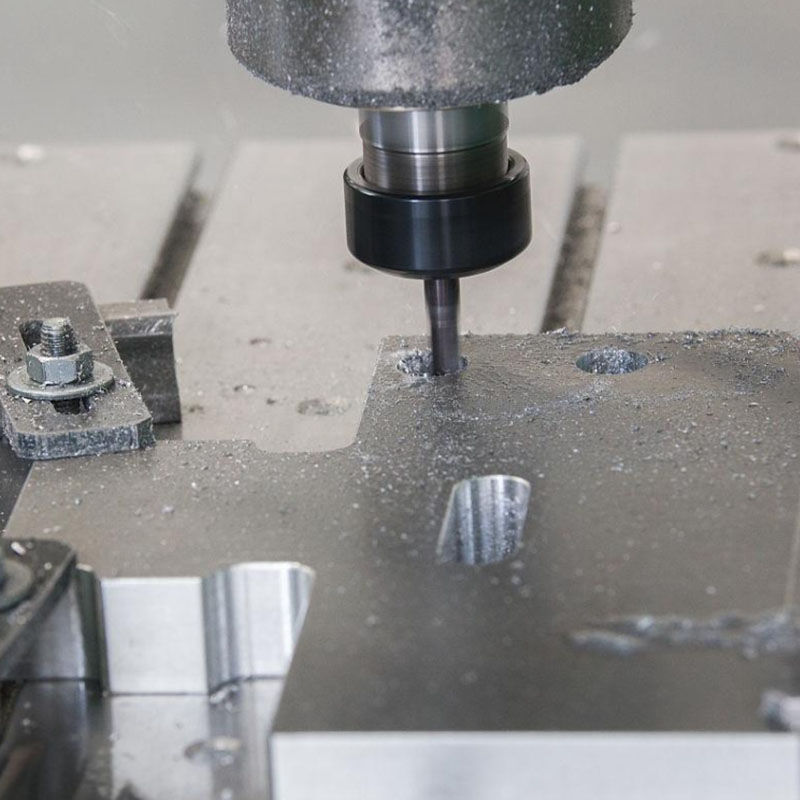
Precision hole-making in solid titanium, including pilot holes, through holes, cross holes, angled holes and controlled deep-hole operations.
Peck cycles tuned to long-chipping titanium chips
High-pressure coolant directed straight to the cutting edge
Bolt circles, fluid ports and tightly positioned hole patterns
Hole preparation sized for downstream tapping or reaming
Tapping & Threading
Internal and external threads produced by tapping, thread milling or turning, selected according to thread size, wall thickness and titanium grade.
Metric, unified and customer-specified thread forms
Thread milling for thin walls where tap breakage is a risk
External threads by single-point turning on the lathe
Thread gauging before parts leave the machining cell
Titanium Grades We Machine Across Standards
Customers ordering CNC machined titanium alloy in China often reference different national standards on their drawings. The commercial designations below are routinely cross-referenced during material selection.
CHINA · GB/T NATIONAL STANDARDS
Chinese Commercial Grades
TA1 / TA2 / TA3 — commercially pure titanium in ascending strength levels; TA2 is the everyday workhorse for marine and industrial parts.
TC4 — Ti-6Al-4V alpha-beta alloy, the most frequently machined structural titanium grade.
TA7 — Ti-5Al-2.5Sn alpha alloy for welded and cryogenic-duty components.
TA9 — Ti-0.2Pd palladium-bearing grade for improved corrosion resistance.
ISO pure grades 1–4 — commercially pure titanium groups aligned with the ASTM grade ladder.
Ti-6Al-4V — the ISO-recognized alpha-beta grade matched to TC4 and ASTM Grade 5.
Ti-Pd family — palladium-bearing corrosion grades aligned with TA9 and Grade 7.
Ti-3Al-2.5V — medium-strength alloy aligned with ASTM Grade 9.
Drawing call-outs — we machine to whichever ISO grade number is written on the customer drawing.
EUROPE · EN MATERIAL NUMBERS
European Commercial Grades
EN 3.7025 / 3.7035 — commercially pure titanium, broadly aligned with ASTM Grades 1 and 2 and TA1 / TA2.
EN 3.7055 / 3.7065 — stronger commercially pure groups aligned with Grades 3 and 4.
EN 3.7165 — Ti-6Al-4V, the European material number commonly matched with TC4 / Grade 5.
EN 3.7235 — palladium-bearing titanium aligned with Grade 7 / TA9.
EN-form stock — bar, plate and forging forms ordered to the material number stated by the buyer.
JAPAN · JIS H4600 / H4650
Japanese Commercial Grades
TR270 (Class 1) — soft, highly formable commercially pure titanium close to Grade 1 / TA1.
TR340 (Class 2) — general-purpose pure titanium close to Grade 2 / TA2.
TR480 (Class 3) — higher-strength pure titanium close to Grade 3 / TA3.
TR550 (Class 4) — highest-strength commercially pure class.
60V / 60E series — JIS commercial forms of Ti-6Al-4V matched with TC4 / Grade 5.
RUSSIA · GOST DESIGNATIONS
GOST Commercial Grades
VT1-0 — commercially pure titanium, most often cross-referenced with TA2 / ASTM Grade 2.
VT5 — alpha alloy used in welded structural components.
OT4 / OT4-1 — titanium-aluminum-manganese alpha alloys for formed and welded parts.
VT6 — Ti-6Al-4V-family alpha-beta alloy, the GOST counterpart of TC4 / Grade 5.
VT14 / PT-7M — specialized structural and corrosion-service alloys.
Equivalents shown are commercial cross-references used to support material selection. Chemistry, mechanical properties and acceptance criteria always follow the standard and specification named on the customer purchase drawing; when a drawing names two standards at once, the stricter requirement is treated as the governing one.
From One Single Part to High-Volume Production
There is no forced minimum order quantity. The same tooling discipline and dimensional checks apply whether the order is a one-off CNC machined titanium alloy part from China or a scheduled multi-batch program.
1 piece · prototype
One-Off & First Articles
Single machined components, first-article samples and design-iteration parts. Tool access, clamping and thin-wall behavior are proven on the real titanium grade before any repeat run.
small lots
Low-Volume Runs
Small lots for spares, maintenance stock, validation builds and custom machinery. Setup data and inspection records are kept so reorders repeat the same dimensions, not an approximate remake.
recurring batches
Batch Production
Repeating batches in the hundreds. Fixtures are optimized, operations are balanced and cycle times are stabilized to keep unit cost predictable as quantities grow.
scheduled release
High-Volume & Blanket Orders
Serialized repeat production with planned releases, dedicated fixturing and locked machining parameters, so every delivered batch matches the first approved sample.
Industries Served with Machined Titanium Parts
Titanium is selected where strength-to-weight ratio, seawater and chloride corrosion resistance, or high-temperature stability decide the design.
Marine & Offshore
Seawater-exposed flanges, valve internals, shaft components and mounting hardware made from TA2 and other commercially pure grades chosen for saltwater endurance.
Chemical Processing
Pump and valve bodies, nozzles, fittings and agitator parts for chloride and acidic environments where palladium-bearing grades such as TA9 or Grade 7 are specified.
Aerospace & Defense
Brackets, supports, actuator components and structural machined parts in TC4 / Ti-6Al-4V, where consistent material removal and tight feature control are essential.
Energy & Power
Centrifugal vane wheels, impellers, compressor-related components and fluid-system parts that combine complex curved surfaces with demanding rotational balance.
Automotive & Motorsport
Lightweight fasteners, suspension and valvetrain-related components, intake and exhaust-system hardware where titanium reduces reciprocating mass.
General Industrial Machinery
Locating bushings, sleeves, threaded fittings, custom shafts, jigs and machine sub-assembly parts built to customer drawings across all common titanium grades.
How a Custom Titanium Order Progresses
A fixed four-stage route keeps every CNC machined titanium alloy in China project predictable, from the first drawing review to protective packing.
1
Drawing & DFM Review
Tolerances, thin walls, deep pockets, tool reach and thread specifications are reviewed against titanium machining behavior. Points that could distort the part are raised before metal is cut.
2
Material Planning
The grade and standard named on the drawing are matched to bar, plate or forging stock in the right size, with heat and lot information recorded against the order for full traceability.
3
Machining Operations
Turning, 3/4/5-axis milling, drilling and tapping run in controlled setups with staged material removal, stress-relief-friendly sequencing and in-process dimension checks.
4
Inspection & Packaging
Finished parts go through 2D and 3D measurement, deburring, cleaning and protective packaging that guards precision threads and sealing surfaces in transit.
Sample CNC Machined Titanium Products
A selection of representative titanium components produced on customer drawings.
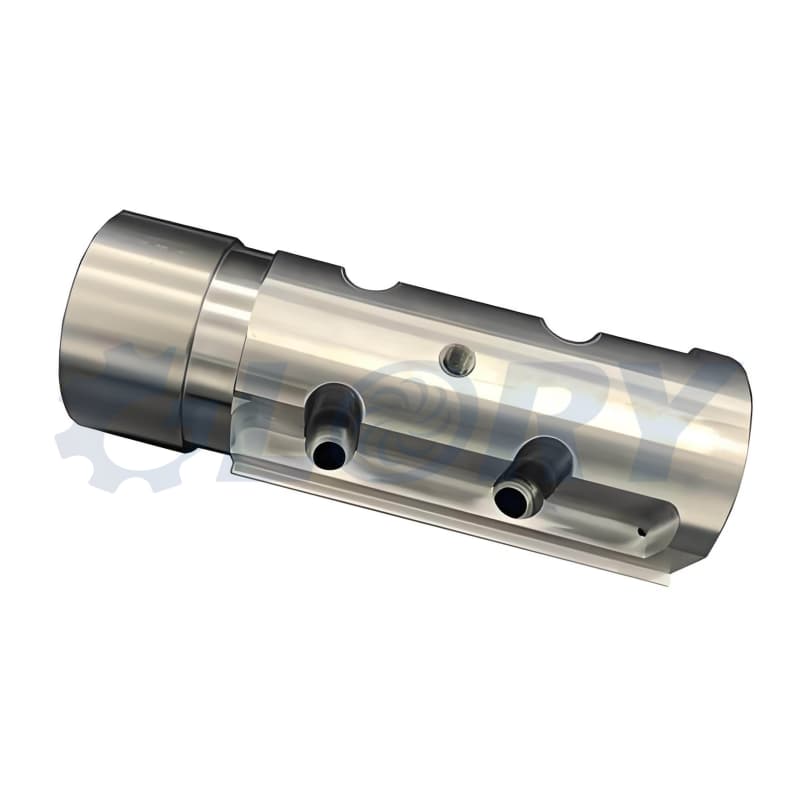
Locating Bushing
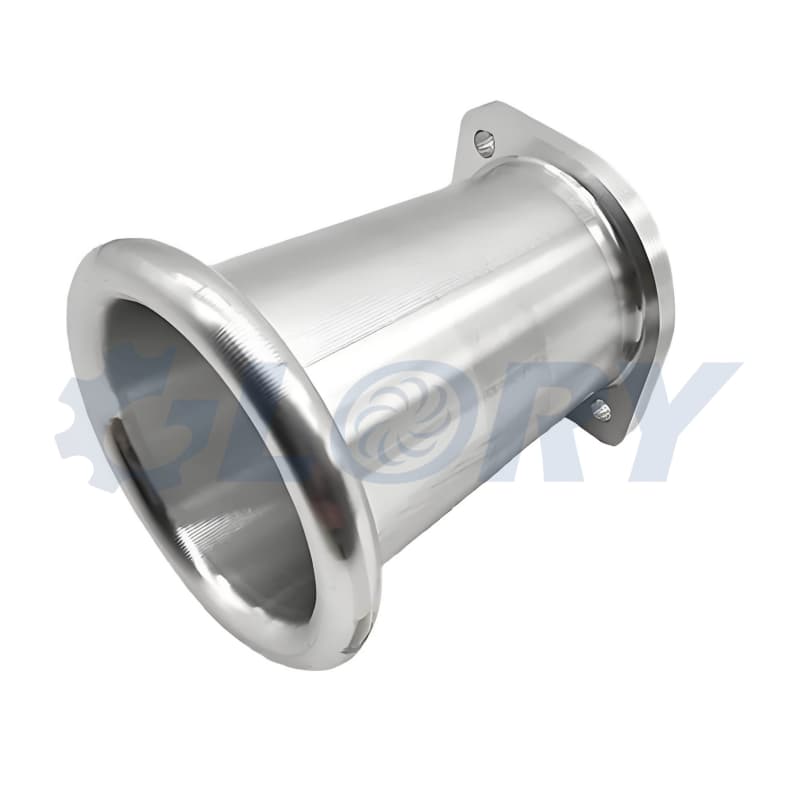
Titanium Pipe Fitting
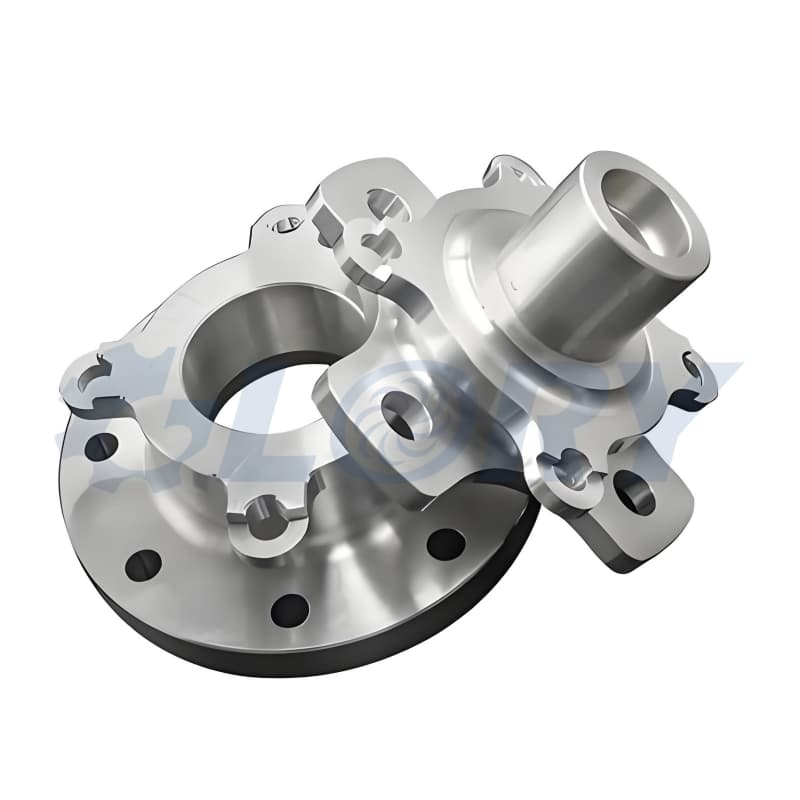
TC4 Machinery Flange
Machining and Inspection On the Shop Floor
Production cells and measuring equipment used to turn titanium stock into verified finished components.
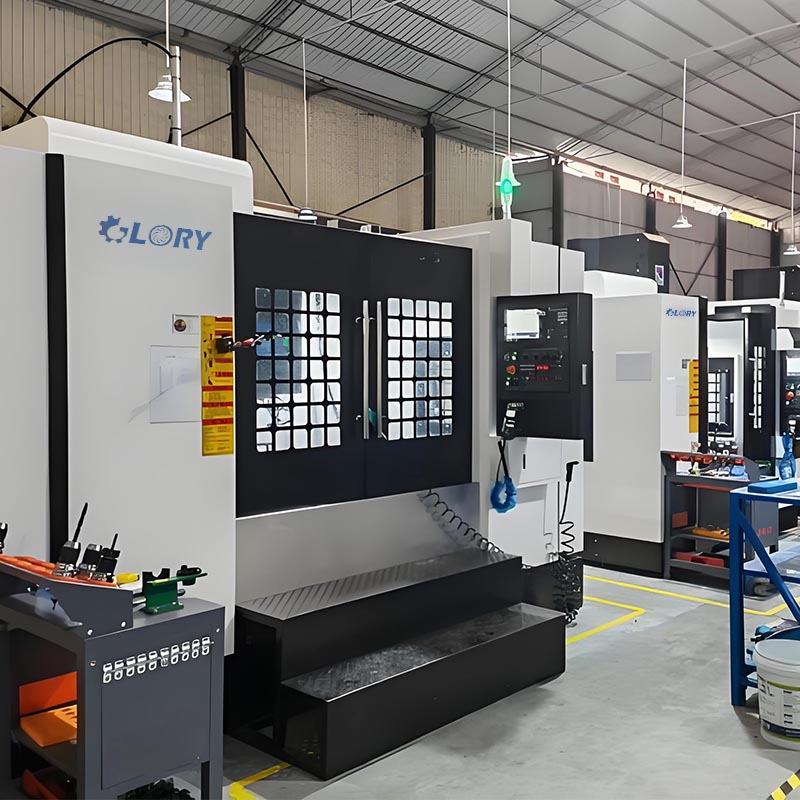
Workshop
Organized production floor with dedicated titanium machining cells and controlled workholding.
Precision lathe work for round titanium components with controlled diameters and threads.
5-Axis Milling
Simultaneous five-axis machining for impellers, vane wheels and continuous curved surfaces.
2D Measuring
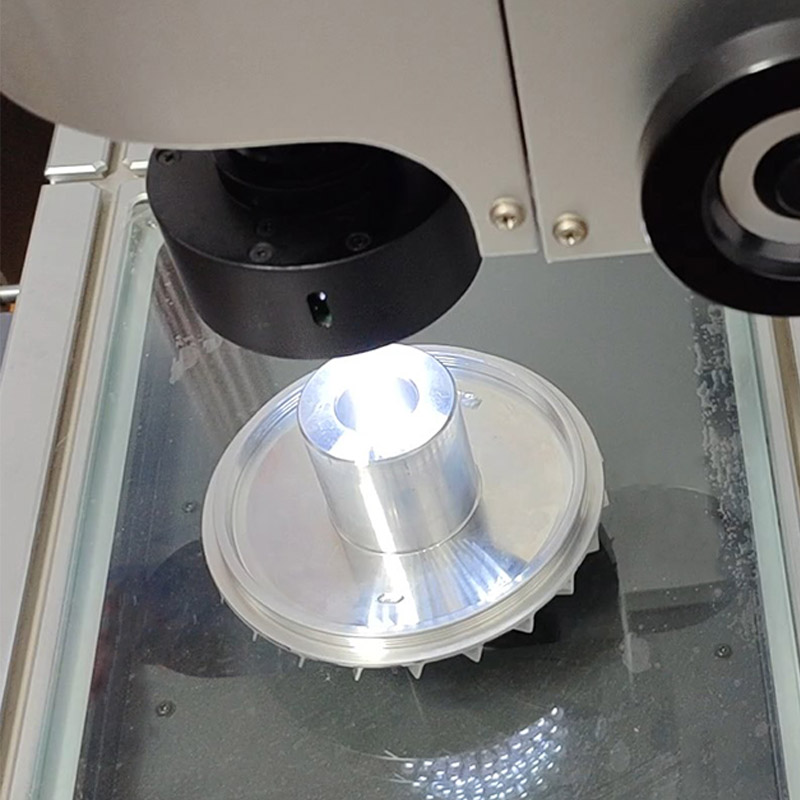
Optical profile projector for 2D dimensions, radii, angles and profile comparison.
3D Measuring
Coordinate measuring machine verification of spatial dimensions, positions and true position.
A Custom Workshop for CNC Machined Titanium Alloy in China
Every part is produced strictly to the customer drawing and the accepted tolerance stack. Material grade, machine setup, cutting strategy and measurement results are recorded against the order, so a component ordered today can be reproduced identically in a repeat batch months later.
Whether the project is a single precision titanium pipe fitting or a recurring program of TC4 machinery flanges, the same engineering discipline applies: understand the geometry, respect how titanium cuts, verify the dimensions and protect the finished surface before shipment.
For buyers sourcing OEM CNC machined titanium in China, this combination of multi-process capability, cross-standard grade knowledge and volume flexibility is what turns a difficult titanium drawing into a stable, repeatable supplied component.
Titanium Alloy Materials for CNC Machining
Titanium Alloy Materials for CNC Machining
A comprehensive reference guide for material properties, processing methods, and applications of common titanium alloy grades used in CNC machining
Alloy Grade
Material Properties
Processing Methods
Surface Treatment
Typical Applications
Cost
Machining Tips
Commercially Pure Titanium (Grade 1)
Commercially Pure
Composition: 99.5% Ti min Tensile Strength: 240-370 MPa Hardness: 120-200 HB Common Name: CP Ti Grade 1
Highest purity and corrosion resistance
Excellent ductility and formability
Lowest strength among titanium grades
Excellent biocompatibility
Good weldability
CNC Machining
Sheet Metal Forming
Welding
Deep Drawing
Spinning
Passivation (to boost corrosion resistance)
Electropolishing
Anodizing
Chemical Etching
Chemical processing equipment
Medical implants
Heat exchangers
Desalination plants
Architectural applications
High
Soft material; Use sharp tools to avoid work hardening; Low cutting forces; Good chip control needed
Commercially Pure Titanium (Grade 2)
Commercially Pure
Composition: 99.2% Ti min Tensile Strength: 345-480 MPa Hardness: 150-220 HB Common Name: CP Ti Grade 2
Excellent corrosion resistance (especially in oxidizing environments)
Good ductility
Lower strength than alloys
Excellent biocompatibility
Good weldability
CNC Machining
Sheet Metal Forming
Welding
Forging
Extrusion
Passivation (to boost corrosion resistance)
Electropolishing
Anodizing
Chemical Etching
Chemical processing equipment
Heat exchangers
Desalination plants
Marine hardware
Medical devices
High
Soft material; Use sharp tools to avoid work hardening; Low cutting forces; Good for complex shapes
Ti-5Al-2.5Sn
Alpha Alloy
Composition: Al 4.5-5.5%, Sn 2.0-3.0% Tensile Strength: 790-860 MPa Hardness: 280-320 HB Common Name: Cryogenic Titanium
Good strength at cryogenic temperatures
Excellent toughness
Stable in low-temperature environments
Good weldability
Moderate creep resistance
CNC Machining
Forging
Welding
Hot Forming
Grinding
Chrome Plating (for wear resistance)
Thermal Spraying
Anodizing
Passivation
Cryogenic storage tanks
Rocket engine components
Spacecraft structures
Liquid hydrogen containers
Superconducting magnet structures
Very High
Machining similar to Grade 5; Ensure tool rigidity for precision; Use sharp carbide tools; Coolant essential
Ti-6Al-4V (Grade 5)
Alpha-Beta Alloy
Composition: Al 5.5-6.75%, V 3.5-4.5% Tensile Strength: 895-930 MPa Hardness: 330-380 HB Common Name: Workhorse Titanium
High strength-to-weight ratio
Excellent corrosion resistance
Good fatigue strength
Good creep resistance up to 300°C
Moderate weldability
CNC Milling
CNC Turning
Forging
Welding (TIG preferred)
Hot Forming
Anodizing (for color coding/protection)
Plasma Spraying
Chemical Etching
Passivation
Aerospace components
Medical implants
Marine hardware
Chemical processing equipment
High-performance automotive parts
Very High
Use carbide tools; High cutting speeds with low feed rates; Coolant essential to reduce heat; Rigid setups required
Ti-6Al-2Sn-4Zr-2Mo (Grade 5)
Alpha-Beta Alloy
Composition: Al 5.5-6.5%, Sn 1.8-2.2%, Zr 3.6-4.4%, Mo 1.8-2.2% Tensile Strength: 895-1035 MPa Hardness: 340-400 HB Common Name: High-Temperature Titanium

 We provide custom machined parts, 5-axis linkage CNC machining, and the design, production, and assembly of machinery and equipment.