We are a China-based precision machining workshop dedicated to producing
CNC machined aluminum alloy in China for OEM buyers, engineering companies
and equipment manufacturers around the world. From a single first-article
prototype to repeating high-volume batches, every aluminum component is
built directly from your drawings, 3D models and technical requirements.
Our floor combines CNC turning, 3-axis, 4-axis and 5-axis CNC milling,
precision drilling and thread tapping under one roof, which allows complex
aluminum parts to flow through material preparation, metal removal,
deburring, surface finishing and dimensional inspection without being
passed between disconnected vendors. We work across the full family of
wrought and cast aluminum grades, and we can source material to Chinese GB,
American AA/ASTM, European EN or Japanese JIS designations according to the
standard named on your drawing.
This page explains our machining processes, the aluminum grades and
international equivalents we work with, the batch sizes we support, the
products we regularly produce, and the workshop and measuring equipment
behind every shipment of CNC machined aluminum alloy in China.
Material Range
1xxx to 7xxx wrought series plus common cast grades, sourced to GB, AA, EN and JIS standards
Process Range
CNC turning, 3/4/5-axis milling, drilling, boring, reaming and tapping
Batch Range
One-off prototypes, pilot lots and sustained mass production orders
Drawing Control
Feature tolerances, threads and surface finishes followed drawing by drawing, including fine Ra finishes
Our Aluminum Machining Capabilities
Every process below is performed in-house on aluminum alloy bar, plate, block,
tube and extrusion, so multi-operation parts keep one consistent datum chain
from the first cut to the final dimension.
01 / PROCESS
CNC Turning
Bar-fed CNC lathes and turn-mill centers produce rotationally symmetric
aluminum parts such as shafts, sleeves, bushings, spacers, fittings,
pistons, rings and threaded connectors.
Outer and inner diameter turning, facing, profiling and grooving
Bar work and billet chuck work across small and medium diameters
Turn-mill combination cuts secondary milling in the same setup
Concentricity, runout and cylindricity controlled to the drawing
02 / PROCESS
CNC Milling: 3-Axis, 4-Axis & 5-Axis
Prismatic and contoured aluminum parts are routed to the most suitable
axis configuration instead of forcing every job onto one machine type.
3-axis: planes, pockets, slots and hole patterns on housings and plates
4-axis: indexed or continuous rotary work for side features and helical geometry
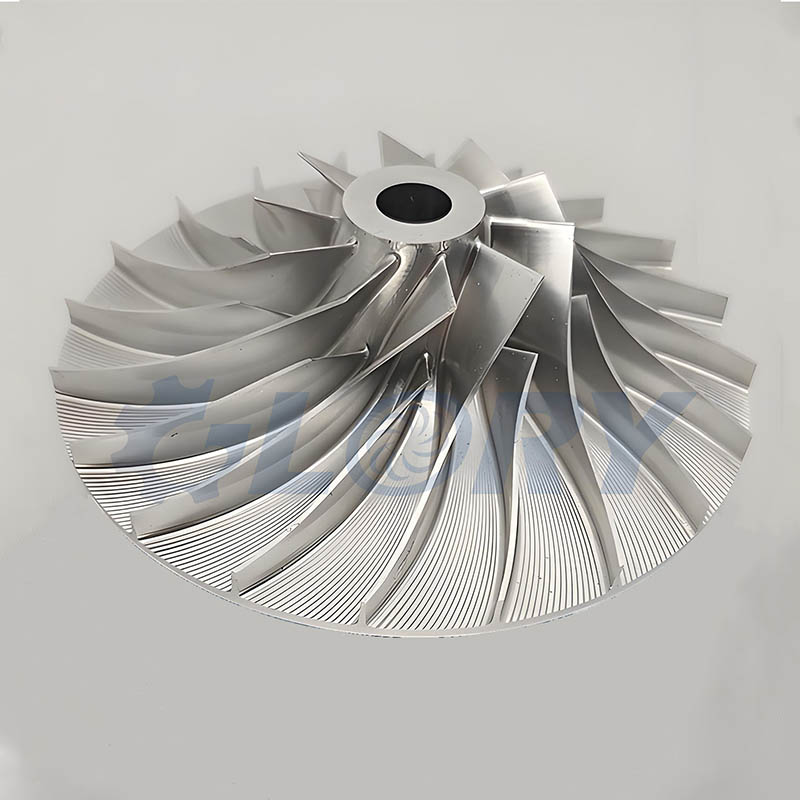
5-axis simultaneous: impellers, curved blades and compound-angle surfaces
Fewer setups mean less re-fixturing error on tight-tolerance parts
03 / PROCESS
Drilling & Hole Making
Hole systems in manifolds, plates, blocks and enclosures are produced with
controlled position, diameter and wall quality rather than simple point
drilling alone.
Through, blind, cross, stepped and deep-hole drilling
Reaming and fine boring for precise round holes
Spot facing, countersinking and counterboring for screw seats
Position-controlled hole patterns aligned to the part datum scheme
04 / PROCESS
Tapping & Threading
Internal and external threads are cut, formed or thread-milled to match the
thread standard called out on each drawing, then checked with the matching
gauges.
Metric coarse and fine threads (M / MF)
Unified UNC / UNF and pipe threads such as G, BSP and NPT
Cut taps, forming taps and thread milling for high-strength series
Thread depth, chamfer and breakout controlled for clean assembly
Aluminum Alloy Grades & International Equivalents
CNC machined aluminum alloy in China can be specified under several national
standards. The same chemistry often carries a different commercial grade name
in China (GB/T), the United States (AA / ASTM), Europe (EN AW) and Japan (JIS).
The table below lists the grades we machine most often and their nearest
cross-standard equivalents.
Alloy Series
China (GB/T)
USA (AA / ASTM)
Europe (EN AW)
Japan (JIS)
Typical Machined Application
1xxx / Pure Al
1060, 1100
AA1060, AA1100
EN AW-1050A, AW-1100
A1060, A1100
Conductive parts, trim plates, corrosion-exposed covers
2xxx / Al-Cu
2A11
AA2017
EN AW-2017A
A2017
Medium-high strength machined components and fastener parts
2xxx / Al-Cu
2A12
AA2024
EN AW-2024
A2024
High-strength structural parts, wheels, arms and brackets
2xxx / Al-Cu
2014
AA2014
EN AW-2014
A2014
Frames, mold plates and high-load machined shapes
3xxx / Al-Mn
3A21
AA3003
EN AW-3003
A3003
Formed and welded housings, nameplates and shallow parts
5xxx / Al-Mg
5A02, 5052
AA5052
EN AW-5052
A5052
Welded brackets, enclosures, marine and sheet-metal parts
5xxx / Al-Mg
5A05, 5A06
AA5083
EN AW-5083
A5083
Thick structural plates, ship and chemical-equipment parts
6xxx / Al-Mg-Si
6A02, 6061
AA6061
EN AW-6061
A6061
General-purpose machined parts, blocks, flanges and fixtures
6xxx / Al-Mg-Si
6063
AA6063
EN AW-6063
A6063
Extruded frames, heat sinks and architectural profiles
6xxx / Al-Mg-Si
6082
AA6082
EN AW-6082
A6082
Higher-strength beams, hubs and structural machined parts
7xxx / Al-Zn-Mg
7A04, 7075
AA7075
EN AW-7075
A7075
Top-strength stressed parts, tooling and lightweight structures
7xxx / Al-Zn-Mg
7050
AA7050
EN AW-7050
A7050
Thick-section, high-stress parts requiring good stress balance
Cast / Al-Si
ZL101, ZL101A
A356.2
EN AC-42100
AC4C
Cast housings then CNC machined on sealing and mating faces
Cast / Al-Si-Cu
YL113
A383 / ADC12-type
EN AC-46500
ADC12
Die-cast boxes and covers with post-machined bores and faces
Cross-standard pairs are nearest commercial equivalents rather than guaranteed
identical chemistry. The exact grade, temper and standard are always confirmed
against the drawing and purchase specification before material is cut.
Tempers We Routinely Machine
Aluminum behavior during cutting depends heavily on temper, so we match the
temper named on the drawing instead of substituting blindly:
O (annealed) and H-series strain-hardened tempers for 3xxx/5xxx sheet
T4 natural-aged and T5 cooled-aged stock for 6xxx extrusions
T6 fully heat-treated stock, the most common state for 6061/6063/7075
T651 / T7351 stress-relieved and stretched plate for stable machining
F as-fabricated stock for non-heat-treated structural shapes
Raw Material Supply Forms
Blanks are cut from the form that minimizes waste and keeps the part stable:
Rolled sheet and plate, saw-cut block and precision tooling plate
Solid round, square and hexagonal drawn or extruded bar
Seamless and welded tube in various outer and inner diameters
Custom extruded profiles and open-section shapes
Forging stock and cast blanks for parts that start near-net shape
From a Single Piece to High-Volume Production
Buyers looking for CNC machined aluminum alloy in China usually arrive at
different stages of a product lifecycle. We support all four stages with the
same drawing discipline, so a validated prototype can move straight into
serial production without changing supplier.
STAGE 01
Single Pieces & Prototypes
One-off and very small quantity parts for design verification, fit checks,
exhibition samples or replacement spares. Material is cut from stock plate
or bar, and first-article dimensions are recorded against the drawing.
STAGE 02
Pilot & Low-Volume Batches
Small repeat lots for market testing, pre-series assembly and early field
trials. Soft-fixture solutions keep setup cost reasonable while process
notes from the prototype run are carried forward.
STAGE 03
Recurring Serial Batches
Repeating orders in the hundreds to low thousands. Dedicated clamping
solutions, stable tooling paths and in-process dimension checks keep each
new batch interchangeable with the previous one.
STAGE 04
High-Volume Production
Sustained orders in the tens of thousands and above benefit from optimized
cycle times, multi-part fixtures, planned tool life and batch records that
trace every part to its material lot and production run.
Featured CNC Machined Aluminum Products
A selection of representative aluminum components produced on our floor.
A look at the production floor and measuring equipment that carry each batch of
CNC machined aluminum alloy in China from raw blank to inspected, packed part.
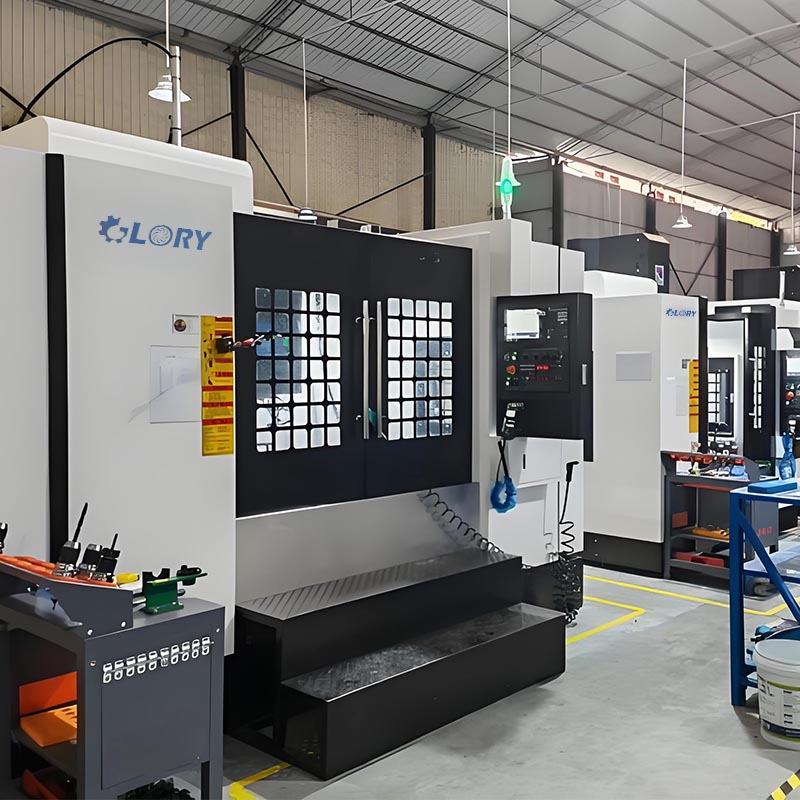
Workshop
Organized CNC production floor with grouped turning, milling and inspection areas.
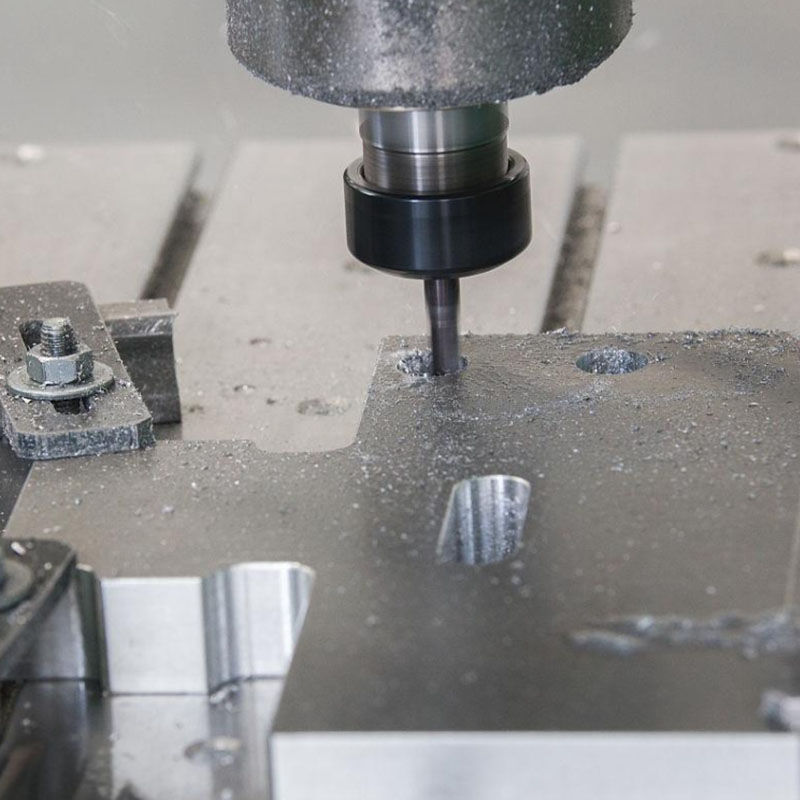
CNC Milling
Vertical machining centers handling planes, pockets, contours and hole patterns.
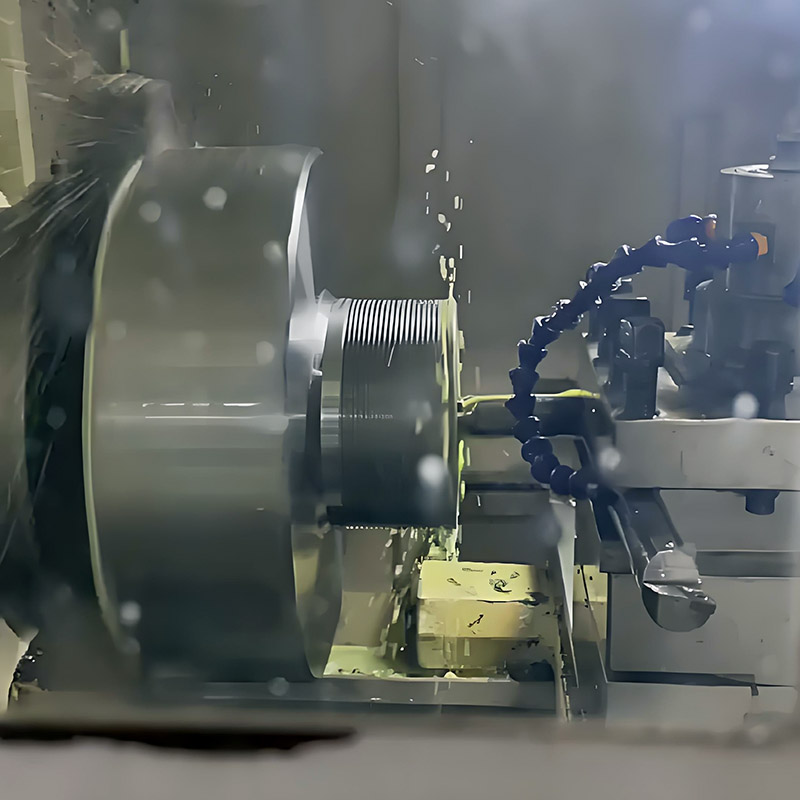
CNC Turning
Lathe and turn-mill work for round aluminum components with controlled runout.
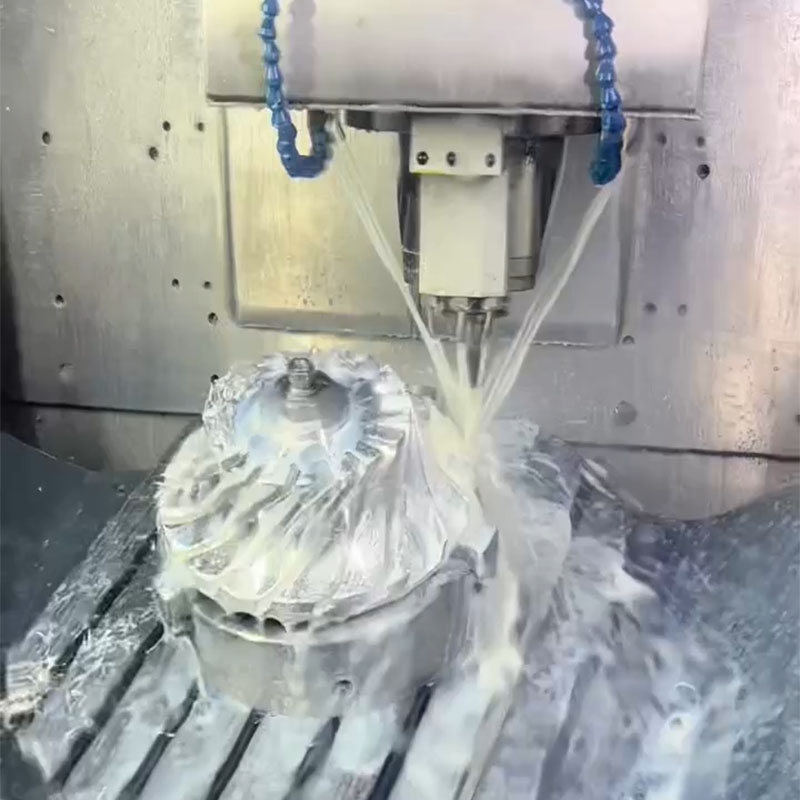
5-Axis Milling
Simultaneous five-axis machining for impellers, blades and compound surfaces.
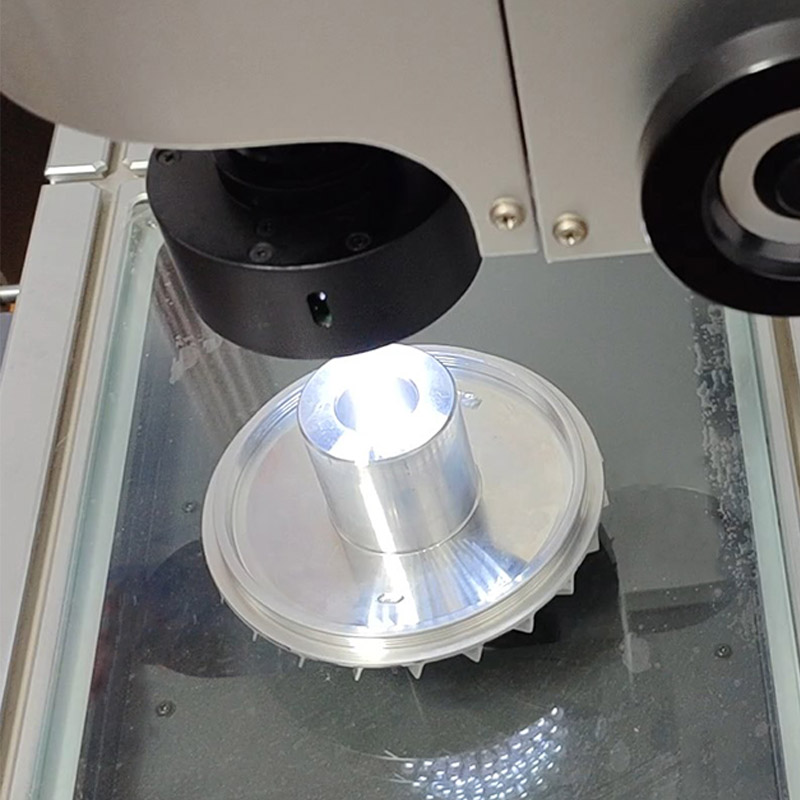
2D Measuring
Profile projector and optical comparison for profiles, radii and edge features.
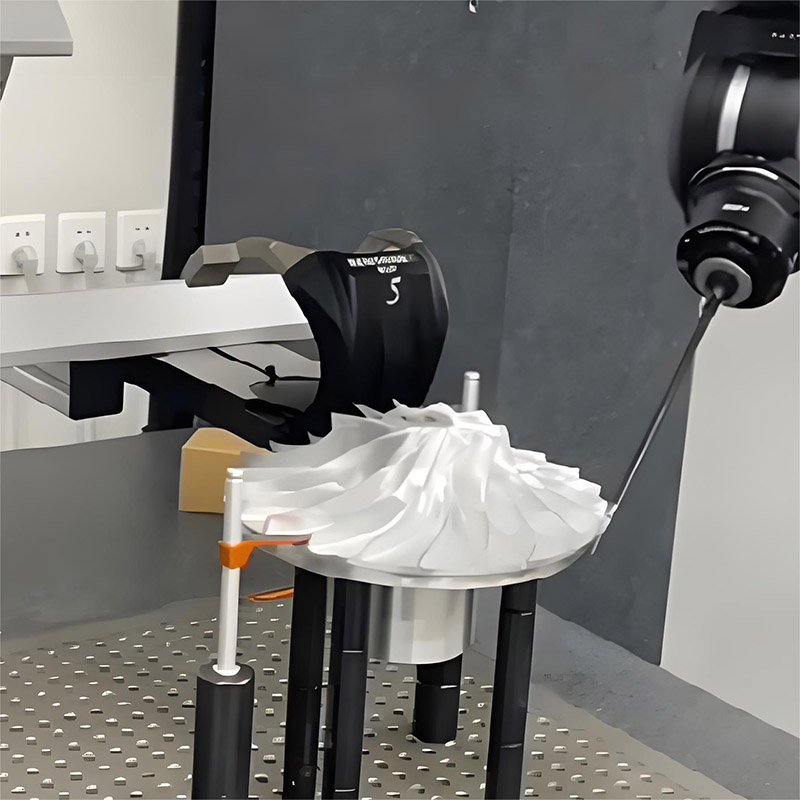
3D Measuring
Coordinate measuring for spatial dimensions, position and geometric tolerances.
Industries That Use Our Machined Aluminum Parts
Aluminum is chosen wherever low weight, heat transfer, corrosion resistance and
clean appearance matter together. The sectors below account for most of the
CNC machined aluminum alloy in China that leaves our workshop.
Aerospace & Defense Structures
High-strength 2xxx and 7xxx brackets, mounts and lightweight load-bearing components.
Automotive, EV & Mobility
Motor mounts, adapter plates, heat exchangers and lightweight chassis parts.
Electronics & Telecommunications
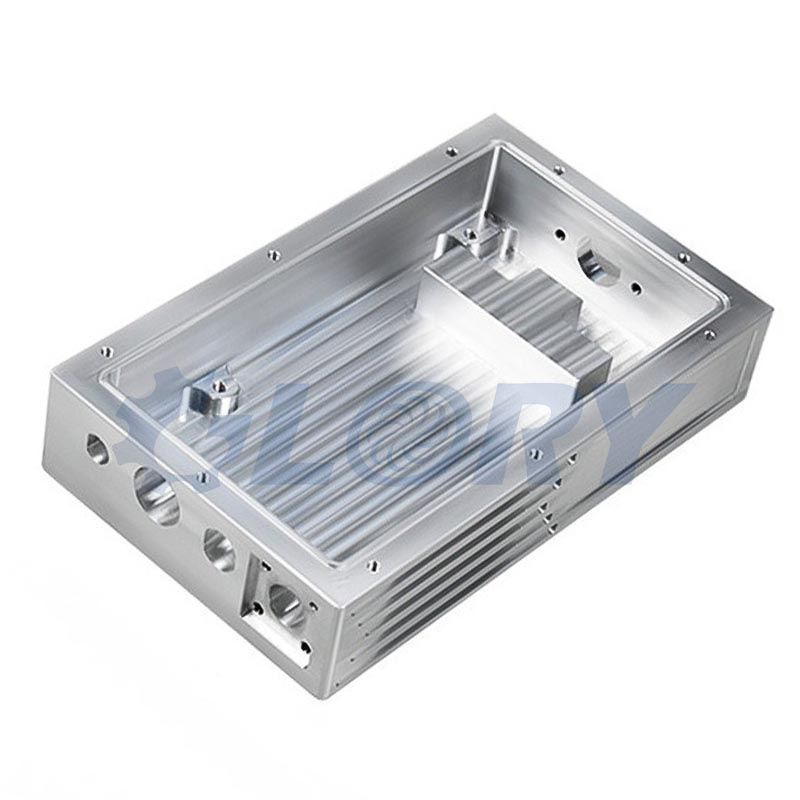
Shielded boxes, front panels, chassis frames and precision heat-dissipating parts.
Fluid Power & Hydraulic Systems
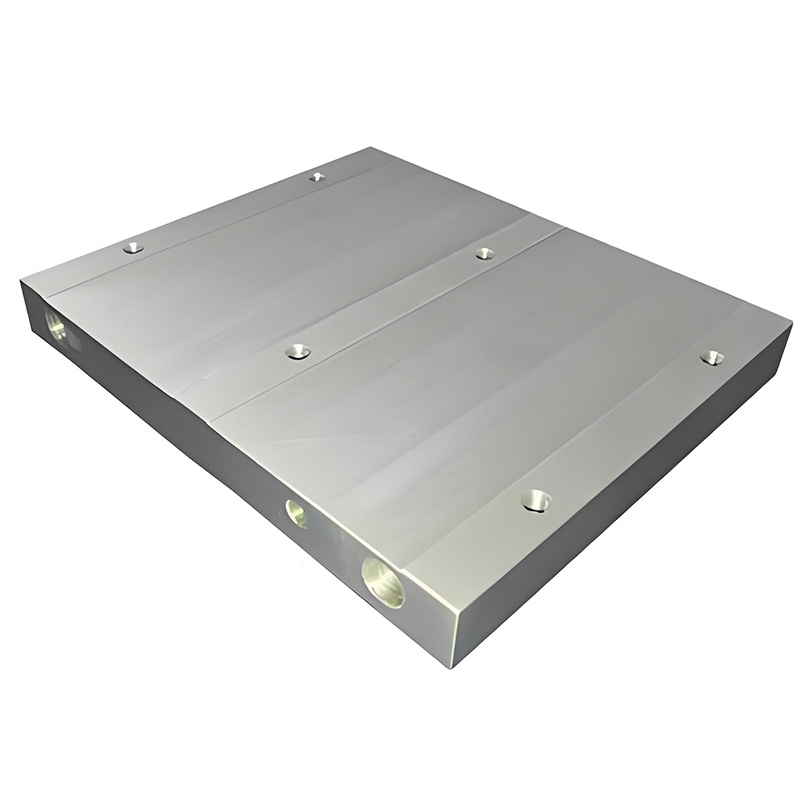
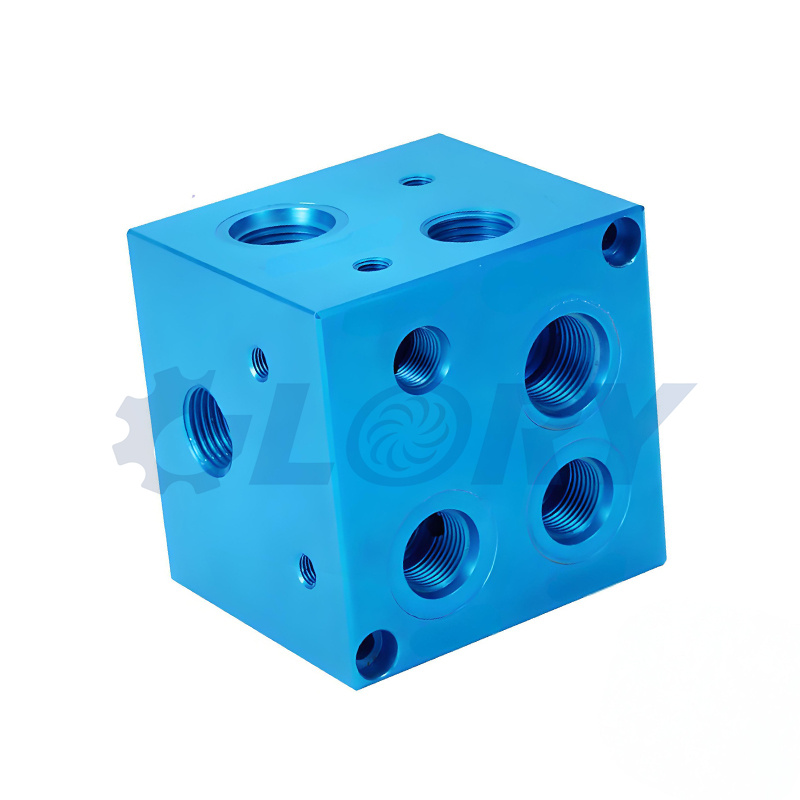
Aluminum valve blocks, manifolds, connector bodies and fluid-distribution plates.
Industrial Automation & Robotics
Robot arm sections, jig plates, sensor mounts and motion-system structural parts.
Marine & Offshore Equipment
5xxx-series fittings, deck hardware and salt-air exposed structural components.
Renewable Energy & Power Electronics
Cooling plates, inverter housings, battery-tray components and converter parts.
Medical & Scientific Instruments
Instrument frames, stages, housings and clean-finish precision mechanism parts.
Surface Finishing Options for Aluminum Parts
Machining is followed by the finish named on your drawing. Finishes are
coordinated with trusted local treatment lines so parts arrive ready for
assembly, with consistent color, edge quality and appearance across batches.
As Machined
Clean machined finish with controlled tool marks, deburred edges and cleaned surfaces.
Bead Blasting
Uniform matte texture that hides tool marks and prepares the surface for anodizing.
Anodizing
Clear or color decorative anodizing, plus thick hard anodizing for wear-resistant faces.
Powder Coating
Durable colored films for outdoor, equipment and enclosure applications.
Brushing & Polishing
Directional brushed lines, buffed highlights and cosmetic decorative surfaces.
Chromate Conversion
Thin conductive conversion film used to stabilize surfaces before painting.
Electrophoresis
Even, thin deposited finish for complex shapes that need consistent coverage.
Laser Marking & Engraving
Permanent part numbers, revision marks, logos and alignment references.
How an Aluminum Machining Order Flows
A fixed, repeatable workflow keeps communication clear and protects the
technical intent of the drawing at every handover.
01
Drawing & RFQ Review
STEP, IGES, X_T, DWG, DXF and PDF files are reviewed for geometry,
dimensions, threads, tolerances and annual demand.
02
DFM Feedback & Quotation
Practical manufacturability notes cover thin walls, deep pockets, tool
access, corner radii and datum choices before production is priced.
03
Material Preparation
The confirmed grade and temper are sawn or sheared into blanks, with the
material lot recorded against the order for traceability.
04
CNC Machining
Turning, milling, drilling and tapping follow the planned operation sequence,
with staged in-process checks on key dimensions.
05
Deburring & Surface Treatment
Edges are broken, chips and oils removed, and the selected blasting,
anodizing, coating or marking treatment is applied.
06
Inspection & Export Packaging
Finished dimensions are verified with 2D and 3D measuring equipment, then
parts are separated, cushioned and packed for long-distance transport.
Engineering Notes for Sourcing Machined Aluminum in China
Drawing-Driven Accuracy and Process Control
Aluminum is forgiving to cut but unforgiving of poor datum strategy. For
every batch of CNC machined aluminum alloy in China that we produce, the
drawing decides the clamping scheme, the operation order and which features
are machined in one setup to protect position and parallelism.
General tolerances follow the medium-grade tolerance tables commonly used on engineering drawings, with tighter limits applied wherever a dimension is explicitly marked.
Critical mating faces, bores and sealing surfaces can be held to fine surface finishes such as Ra 0.8 when the drawing requires it.
First-article inspection records, in-process measurements and material lot records travel with the order so repeat batches remain interchangeable.
Thin walls, deep cavities and large flat plates are machined with staged material removal to reduce internal-stress deformation.
Why OEM Buyers Build a Long-Term China Aluminum Partner
Sourcing CNC machined aluminum alloy in China works best when the workshop
understands both the part and the product behind it. A stable partner keeps
tooling, fixturing and process notes alive between orders, which is where
repeat buyers recover time and cost.
One workshop covers turning, multi-axis milling, drilling, tapping, finishing and inspection, removing finger-pointing between vendors.
Material can be ordered to GB, AA/ASTM, EN or JIS grade names, simplifying drawings written for different end markets.
Prototypes, bridge lots and mass production share the same process baseline, so scaling up does not redesign the part.
Parts are cleaned, individually separated and packed in cushioning and sturdy outer cases suited to export freight, with English packing marks when required.
Aluminum Alloy Materials for CNC Machining
Aluminum Alloy Materials for CNC Machining
A comprehensive reference guide for material properties, processing methods, and applications of common aluminum alloy grades used in CNC machining
Alloy Series
Material Properties
Processing Methods
Surface Treatment
Typical Applications
Cost
Machining Tips
1100
Non-Heat-Treatable
Composition: 99.0% Al min Tensile Strength: 75-110 MPa Hardness: 23-32 HB Common Name: Commercial Pure Aluminum
Pure aluminum (high purity)
Excellent formability
Low strength
Excellent corrosion resistance
High electrical and thermal conductivity
CNC Milling
CNC Turning
Stamping
Deep Drawing
Spinning
Anodizing (for decoration and protection)
Laser Marking (for identification)
Protective Oil Coating
Chemical Brightening
Electrical conductors
Decorative trim
Chemical containers
Food processing equipment
Heat exchangers
Low
Soft material, use light cuts; Prone to scratching, mind tool sharpness; Use sharp tools with positive rake angles
2024
Heat-Treatable
Composition: Cu 3.8-4.9%, Mg 1.2-1.8%, Mn 0.3-0.9% Tensile Strength: 425-470 MPa Hardness: 120-130 HB Common Name: Aircraft Aluminum
High strength
Good fatigue resistance
Poor corrosion resistance (needs coating)
Excellent machinability
Good toughness
CNC Milling
CNC Turning
Riveting (in aerospace)
Forging
Drilling
Anodizing (must be done, combined with primer for enhanced protection)
Chromate Conversion Coating
Powder Coating
Alodining
Aerospace skin panels
Aircraft structures
Military vehicle components
High-stress structural parts
Racing car components
High
Use coated tools; Control machining temperature to prevent deformation; Sharp tools with positive rake angles recommended
3003
Non-Heat-Treatable
Composition: Mn 1.0-1.5% Tensile Strength: 110-200 MPa Hardness: 40-55 HB Common Name: General Purpose Alloy
Good formability
Moderate strength
Excellent corrosion resistance
Good weldability
Moderate strength
CNC Milling
CNC Turning
Brazing
Stamping
Spinning
Anodizing (simple process works)
Chemical Polishing (improves appearance)
Passivation
Painting
Kitchenware
Chemical equipment
Heat exchangers
Storage tanks
Decorative trim
Low to Moderate
Low cutting forces needed; Ideal for thin-walled parts, handle gently; Use standard cutting tools

 We provide custom machined parts, 5-axis linkage CNC machining, and the design, production, and assembly of machinery and equipment.