
OEM CNC Machined 420 Stainless Steel in China
420 stainless steel is a straight-chromium martensitic stainless grade, unified under UNS S42000, valued for combining moderate corrosion resistance with high hardness after heat treatment and dependable wear behavior. Our China workshop delivers CNC machined 420 stainless steel in China for engineers, equipment makers and industrial buyers who need dimensionally accurate parts cut from bar, plate, block or forging stock.
Every order of CNC machined 420 stainless steel in China is handled as a custom manufacturing project: drawings are reviewed for manufacturability, tool paths are programmed around the actual delivery condition of the raw material, heat-treatment sequencing is planned in advance, and critical dimensions are verified before parts leave the workshop. The sections below summarize the grade itself, its commercial designations under different national standards, its performance and machining behavior, the processes we offer, and the full quantity range we support, from a single piece to high-volume production.
420 Stainless Steel Commercial Designations by National Standard
AISI 420 is not expressed as one single chemistry worldwide. National standards divide the same 12–14% chromium martensitic family into narrower carbon bands, so purchase orders for CNC machined 420 stainless steel in China may arrive under several different grade names. The table lists the commercial designations most frequently seen on drawings.
| Country / Region | Standard | Commercial Grade Designation | Carbon Band / Selection Note |
|---|---|---|---|
| United States | AISI; ASTM A276 / A240; UNS | 420 / UNS S42000 | Parent grade; ASTM sets a carbon minimum of 0.15%, with the upper end defined by the ordered sub-grade and product form. |
| China | GB/T 20878, GB/T 1220 | 20Cr13 (formerly 2Cr13); 30Cr13 (3Cr13); 40Cr13 (4Cr13) | Three stepped carbon bands, roughly 0.16–0.25%, 0.26–0.35% and 0.36–0.45%; the old 2Cr13 / 3Cr13 / 4Cr13 names still appear on older drawings. |
| Japan | JIS G4303 / G4305 | SUS420J1; SUS420J2 | J1 covers roughly 0.16–0.25% C; J2 the higher 0.26–0.40% C band with greater as-quenched hardness. |
| Germany | DIN 17440 / DIN EN 10088 | X20Cr13 (1.4021); X30Cr13 (1.4028) | The five-digit material number is shown in parentheses; 1.4021 tracks the lower-carbon band, 1.4028 the higher. |
| European Union | EN 10088-2 / -3; ISO 15510 | X20Cr13; X30Cr13 | Harmonized European names used across EU member states in place of legacy national grades. |
| United Kingdom | BS 970 / BS EN 10088 | 420S29, 420S37; 420S45 | Legacy BS designations: 420S29 / 420S37 sit in the lower carbon band, 420S45 in the higher-carbon, harder band. |
| France | AFNOR NF EN 10088 | Z20C13; Z30C13-type naming | Traditional AFNOR names; modern French drawings normally cite the EN X20Cr13 / X30Cr13 designation instead. |
| Russia / CIS | GOST 5632 | 20Kh13, 30Kh13, 40Kh13 (20Х13 / 40Х13) | Carbon-stepped equivalents frequently encountered on drawings from CIS markets. |
Equivalence is approximate: grades share the same chromium family but not always identical carbon, sulfur or manganese limits. The exact named standard on the drawing governs the stock we procure.
How to Read This Table
These grades are near-equivalent rather than interchangeable. AISI 420 defines only a carbon floor, while JIS, EN and GB split the family into fixed carbon ranges. When a drawing names SUS420J2, X30Cr13 or 40Cr13, the higher carbon band must be respected because it raises achievable hardness, increases abrasive tool wear and changes the response to tempering.
Grade Selection for Machined Parts
For components that will be hardened and tempered to a defined HRC window, the drawing should name the exact national grade plus the target hardness range. We machine every designation in the table and source stock to the named standard. When a customer writes only “420”, we confirm the intended carbon band and heat-treatment condition before cutting any material.
Chemistry, Physical and Mechanical Reference Values
The figures below are typical reference values for AISI / ASTM Type 420 (UNS S42000). Exact chemistry and properties vary with the ordered sub-grade, product form and heat-treatment condition; the values supplied with the purchased heat always take precedence.
Typical Chemical Composition (wt %, ASTM Type 420)
| Element | Range / Limit | Element | Range / Limit |
|---|---|---|---|
| Carbon, C | ≥ 0.15 (upper limit by sub-grade) | Phosphorus, P | ≤ 0.040 |
| Chromium, Cr | 12.0 – 14.0 | Sulfur, S | ≤ 0.030 |
| Manganese, Mn | ≤ 1.00 | Nickel, Ni | ≤ 0.75 |
| Silicon, Si | ≤ 1.00 | Molybdenum, Mo | ≤ 0.50 |
Carbon drives hardening response, while chromium provides stainless behavior. The free-machining variant 420F carries deliberately elevated sulfur and is not the same stock as standard 420.
Typical Physical and Mechanical Reference Values
| Property | Reference Value | Property | Reference Value |
|---|---|---|---|
| Density | Approx. 7.75 – 7.80 g/cm³ | Thermal conductivity (100 °C) | Approx. 24.9 W/m·K |
| Melting range | Approx. 1450 – 1510 °C | Mean CTE (0 – 100 °C) | Approx. 10.3 µm/m·°C |
| Elastic modulus | Approx. 200 GPa | Magnetic behavior | Ferromagnetic in all conditions |
| Annealed condition | Roughly 650 – 860 MPa; about 200 – 230 HB | Hardened + tempered | Roughly 1550 – 1900 MPa; about 48 – 56 HRC |
Hardening runs from roughly 980 – 1065 °C with air or oil quenching followed by tempering; thicker sections generally require oil quenching.
Performance Characteristics of 420 Stainless Steel
Understanding what the grade does in service is the first step to designing CNC machined 420 stainless steel in China that performs consistently. Six characteristics define most engineering decisions.
Hardenable Martensitic Structure
420 transforms into hard martensite when quenched from approximately 980 – 1065 °C and then tempered. Unlike austenitic 304 or 316, which cannot be through-hardened by heat treatment, 420 reaches a defined HRC level, commonly around 48 – 52 HRC at low tempering temperatures, so a part can be engineered to stay hard in service.
Wear and Abrasion Resistance
Controlled carbon supported by 12–14% chromium gives hardened 420 good resistance to sliding wear, scoring and edge dulling. It is a recurring choice for blades, shear edges, guide rails, cam tracks, small gears and contact surfaces that see repeated friction without lubrication.
Corrosion Resistance in Mild Environments
The grade resists atmospheric exposure, fresh water, steam, weak oxidizing acids and routine wash-down conditions. It is not intended for chloride-rich or strongly acidic service, where a 316-type grade would be the better fit; smooth, clean surfaces and proper post-machining cleaning help it reach its corrosion-resistance potential.
High Mechanical Strength
In the quenched and tempered condition the tensile strength climbs well above 1500 MPa, with yield strength around 1400 – 1500 MPa in the harder tempers. Shafts, pins, plungers, valve spindles and load-bearing fittings gain load capacity in compact cross-sections as a result.
Predictable Magnetic Response
420 is ferromagnetic in both the annealed and hardened conditions. Its magnetic behavior is therefore predictable where sensors, magnetic actuation or assembly fixturing depend on it, in contrast to austenitic grades that are essentially non-magnetic when annealed.
Polishability and Surface Quality
A fine, homogeneous microstructure — especially in well-worked or remelted stock — takes an excellent fine-turned, ground or polished finish. The grade is widely used for plastic mold cavities and cosmetic hardware where a uniform, high-luster surface matters.
Machining Characteristics of 420 Stainless Steel
420 is a routine but unforgiving grade to cut: it rewards sharp tooling, rigid setups and correct heat-treatment sequencing, and it punishes rubbing, dull edges and insufficient coolant. The six points below describe how the material behaves on the machine.
Moderate Machinability
420 is commonly rated at roughly 55–60% of a free-machining mild-steel baseline (B1112 = 100%), with ratings varying by supplier and condition. Annealed stock machines somewhat like a medium-carbon steel with strong, occasionally stringy chips, but it is noticeably less “gummy” than 304. Above roughly 30 HRC, tool wear accelerates markedly.
Work Hardening and Built-Up Edge
Although less prone to severe work hardening than austenitic grades, 420 hardens locally when a dull tool rubs instead of shearing. Sharp edges, positive rake geometry, continuous engagement and no dwelling in the cut prevent a cold-worked skin that would make the next pass harder and damage surface finish.
Tooling Strategy
Coated carbide grades with TiN / TiAlN-type coatings are the workhorse for annealed stock; high-speed steel remains useful at conservative speeds for reaming and tapping. Above roughly 50 HRC, conventional carbide gives way to CBN or ceramic finishing tools, or to surface and cylindrical grinding for final geometry.
Speeds, Feeds and Coolant
Surface speeds stay below those used for plain carbon steel, feeds remain steady, and the depth of cut is set deeper than any work-hardened surface layer. Flood coolant — commonly a 5–8% water-based emulsion, or a heavier sulfo-chlorinated cutting oil for holes and threads — controls heat and flushes chips out of deep features.
Drilling and Tapping Behavior
Deep holes rely on short, rigid drills, peck cycles and through-tool cooling wherever possible. Tapping 420 demands sharp spiral-flute or spiral-pointed taps, a slightly generous tap-drill diameter, proper relief and a dedicated tapping fluid; cold-form taps are selected case by case on annealed stock only.
Heat-Treatment Sequencing
The standard route is to rough machine in the annealed condition while leaving finish stock, stress-relieve unbalanced or thin-walled geometry, harden and temper, then finish-grind or hard-turn the critical surfaces. This absorbs the small dimensional movement of martensitic transformation and protects final tolerances instead of fighting distortion after finishing.
CNC Machining Capabilities for 420 Stainless Steel
Turning, milling across three, four and five axes, drilling and tapping run under one roof, so a typical CNC machined 420 stainless steel in China part can move between processes without multi-vendor hand-offs.
CNC Turning
Slant-bed CNC lathes turn 420 bar and tube into shafts, pins, bushings, spindles, stepped profiles and threaded fittings. Operations cover facing, OD and ID turning, grooving, single-point threading, taper turning and part-off, while driven tooling completes cross-holes and flats in the same setup to protect concentricity.
3-Axis CNC Milling
Vertical machining centers mill prismatic 420 blocks, plates and housings: pockets, open profiles, slots, bolt-hole patterns, sealing faces and engraved markings. Three-axis milling is the economical route whenever all features are reachable from one or a small number of straightforward setups.
4-Axis CNC Milling
A rotary fourth axis machines around a 420 workpiece in fewer setups: indexed holes around a flange, helical grooves, cross-drilled bodies and contoured shafts. Fewer refixturings tighten feature-to-feature relationships, reduce handling cost and remove alignment errors between separate operations.
5-Axis CNC Milling
Simultaneous five-axis centers handle complex 420 geometry — angled ports, impeller-style forms, mold surfaces and tightly related compound angles. The cutter reaches the work in short, stiff orientations, which improves wall finish and dimensional control on semi-hard or hardened stock that would deflect long tools.
Precision Drilling
Drilling covers bolt circles, cross-holes, deep holes, reamed precision bores, counterbores and spotfaces in 420 workpieces. Pilot holes, peck cycles, rigid short drills and through-tool cooling manage chip evacuation and hole straightness in this martensitic alloy.
CNC Tapping
Internal threads from coarse machine threads to fine pitches, including common parallel and taper thread forms, are cut with material-specific taps and lubrication that protects the thread flanks from tearing. Finished threads can be checked against the drawing’s thread class with ring and plug gauges as required.
From a Single Piece to High-Volume Production
CNC machined 420 stainless steel in China through our workshop is not tied to a minimum order quantity. The same programming discipline and inspection routine scale across four production modes.
Single Piece / Prototype
Production starts from one single part. Engineering samples, design prototypes and emergency spares are programmed and cut without dedicated tooling investment, and first-article dimensions can be recorded for design confirmation.
Low-Volume Batches
Batches from a handful to a few hundred pieces suit design-validation runs, machinery spares and custom equipment. Blank sizing, fixturing and tool paths are standardized early so every later repeat order runs identically.
Medium / Repeat Batches
Recurring batches in the hundreds-to-thousands range use optimized soft jaws, fixtures and tombstone setups, stable cycle times and a batch-level inspection plan. Scheduled, kanban-style releases can smooth supply over a program year.
High-Volume Production
Larger programs run across several machines with dedicated fixturing, bar-fed turning and in-process checks. The same drawing, material condition and inspection routine are replicated lot after lot for serial-assembly customers.
How a 420 Stainless Steel Job Moves Through the Workshop
A fixed six-step flow keeps material condition, residual stress and final tolerances under control on every batch of CNC machined 420 stainless steel in China.
Material Verification and Sawing
Incoming 420 bar, plate or block is checked against the ordered grade and delivery condition, heat and lot numbers are recorded for traceability, and blanks are sawed square with clean, controlled allowance.
CAM Programming
Tool paths are programmed from the customer 3D model. Tools, cutting data and stock allowances are chosen for the specific condition — annealed, pre-hardened or hardened — of that job’s stock.
Rough Machining
The bulk of material is removed in the annealed condition, leaving a planned finish allowance. Roughing also relieves much of the blank’s residual stress before any heat treatment takes place.
Finish Machining
Finish passes, precision bores, threads and mating surfaces are completed in the appropriate condition. Hardened parts reach final geometry by precision grinding or hard turning rather than conventional carbide milling.
Deburring and Surface Work
Edges are broken, cross-holes deburred and surfaces completed to drawing: fine turning, surface or cylindrical grinding, polishing, bead blasting or oxide-type dark finishes, each applied only where specified.
Dimensional Inspection
Critical dimensions, threads and surface finish are verified with hand gauges, 2D optical profile measurement and 3D coordinate measuring, with results recorded against the job before release.
Related Machined Products
A selection of representative components produced on the same turning and milling equipment used for CNC machined 420 stainless steel in China.
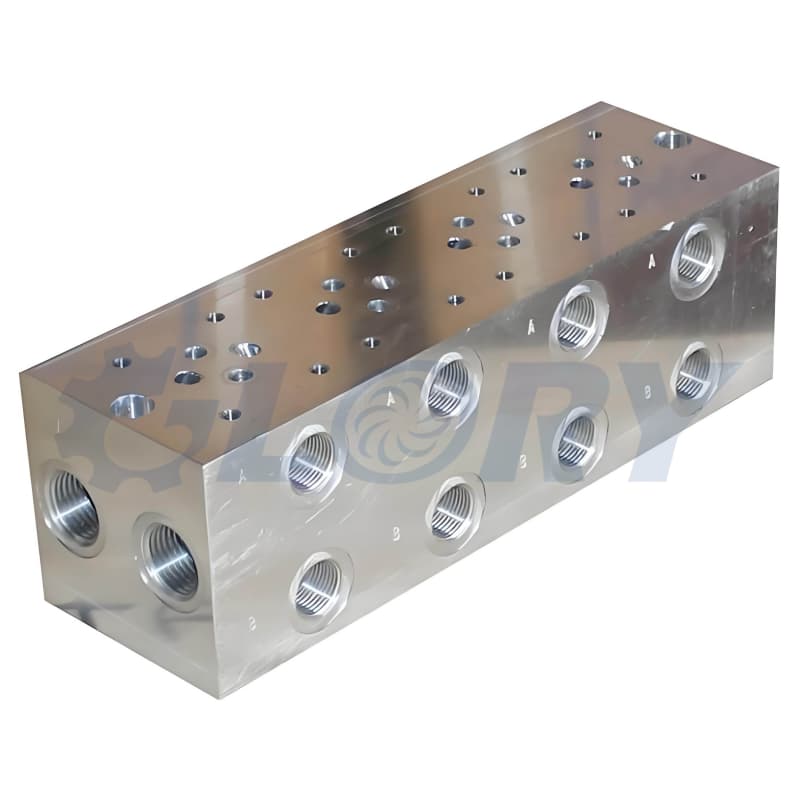
Hydraulic Valve Block
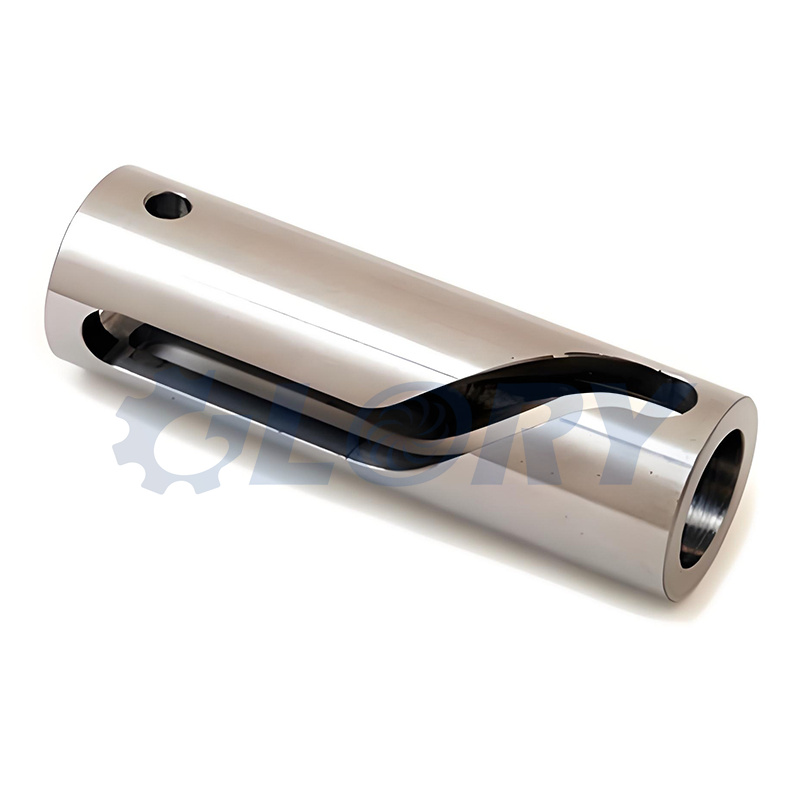
Guide Slot Rod
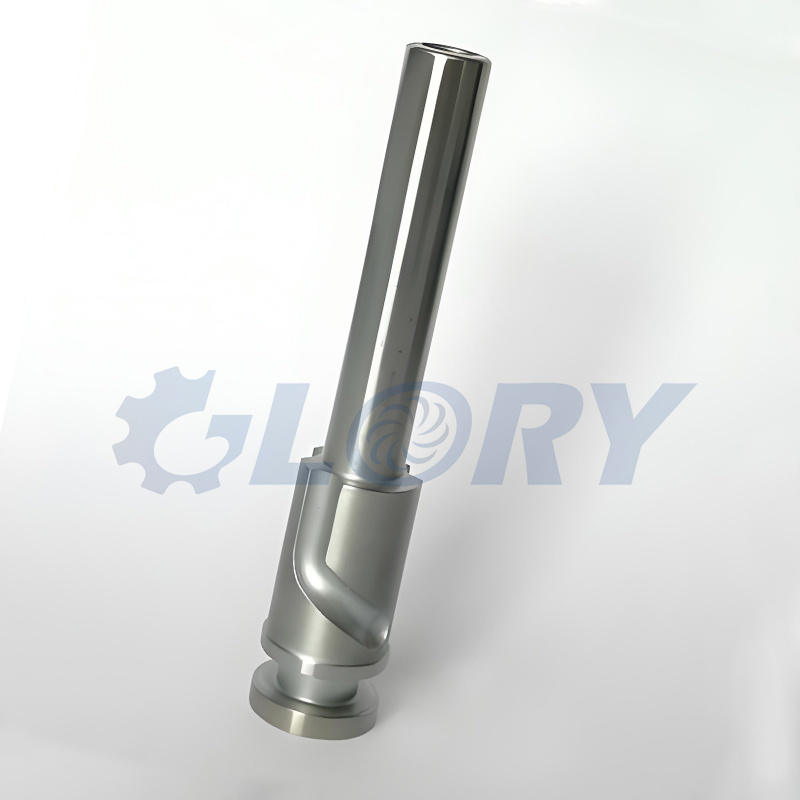
420 Stainless Steel Shaft
Machining and Inspection Capabilities on the Floor
From raw blank to measured finish, production of CNC machined 420 stainless steel in China moves through dedicated machining and inspection stations shown below.
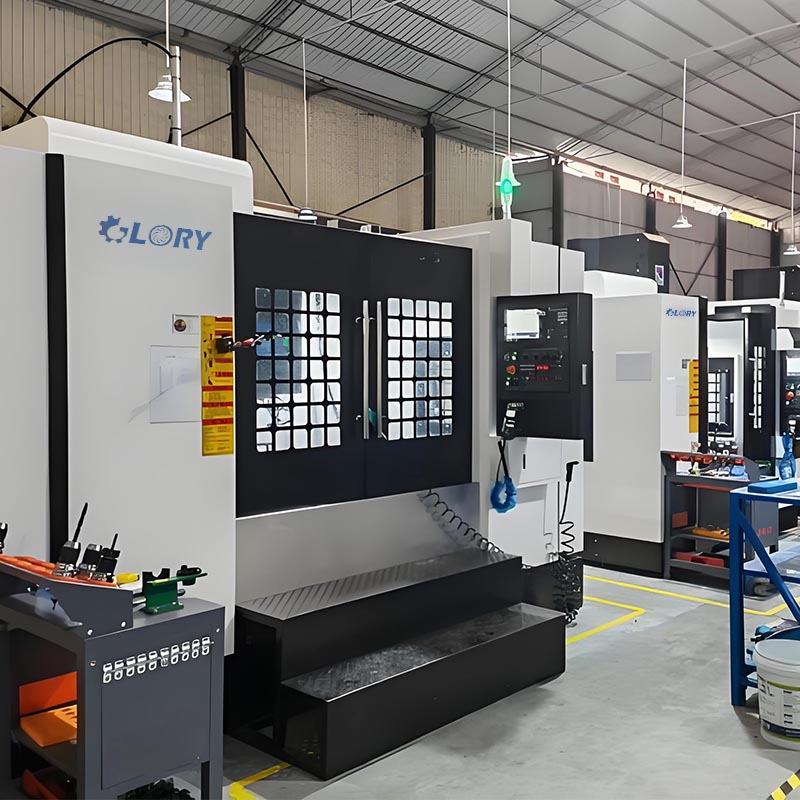
Workshop
The machining floor houses the CNC turning and milling equipment used for martensitic stainless production.
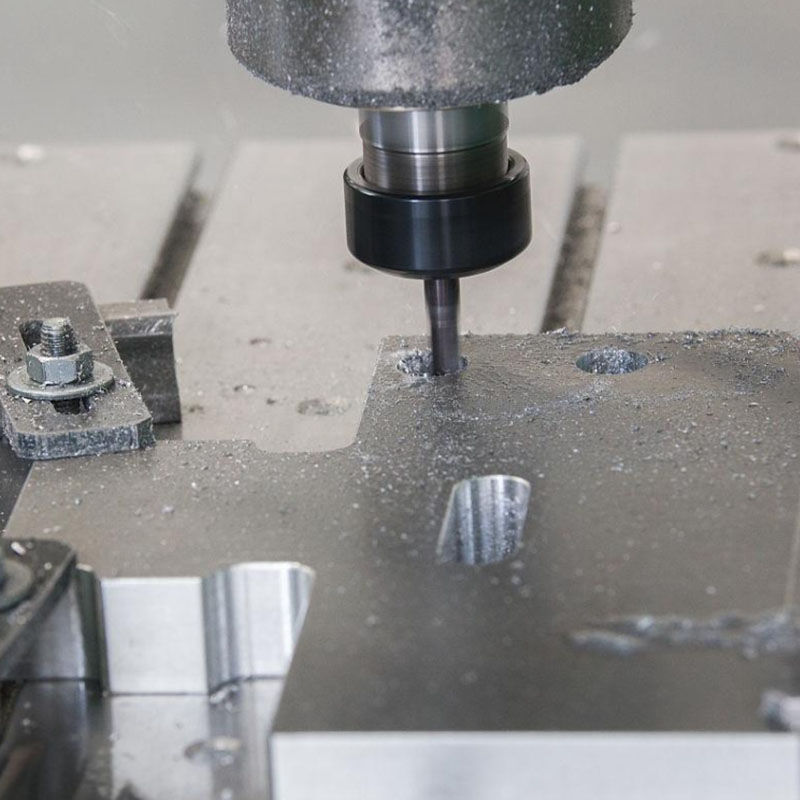
CNC Milling
Vertical milling centers cut pockets, faces, slots and hole patterns in 420 blocks and plates.
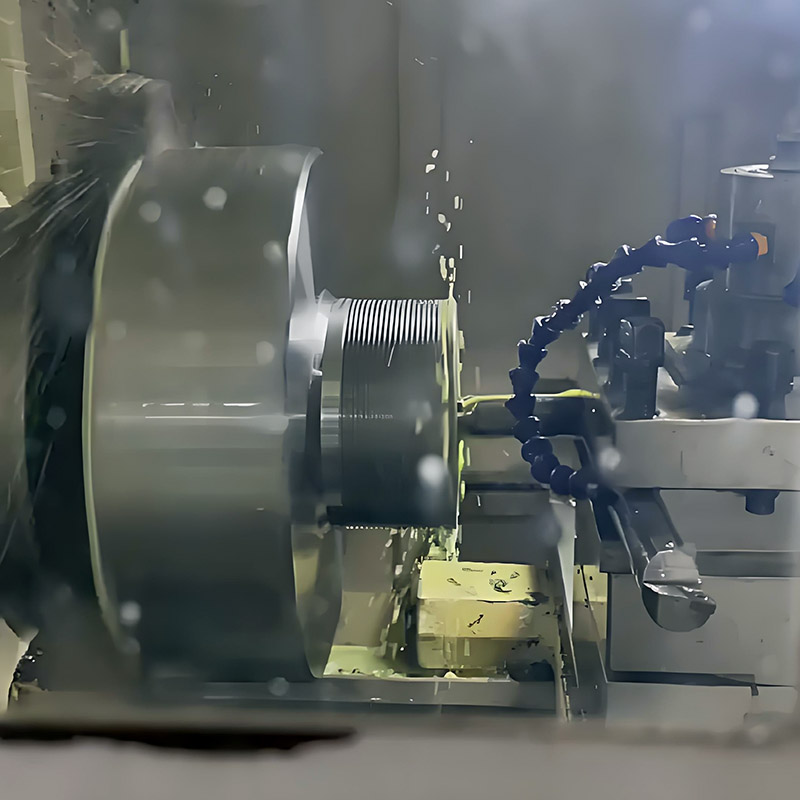
CNC Turning
CNC lathes produce turned 420 shafts, pins, bushings and threaded profiles from bar stock.
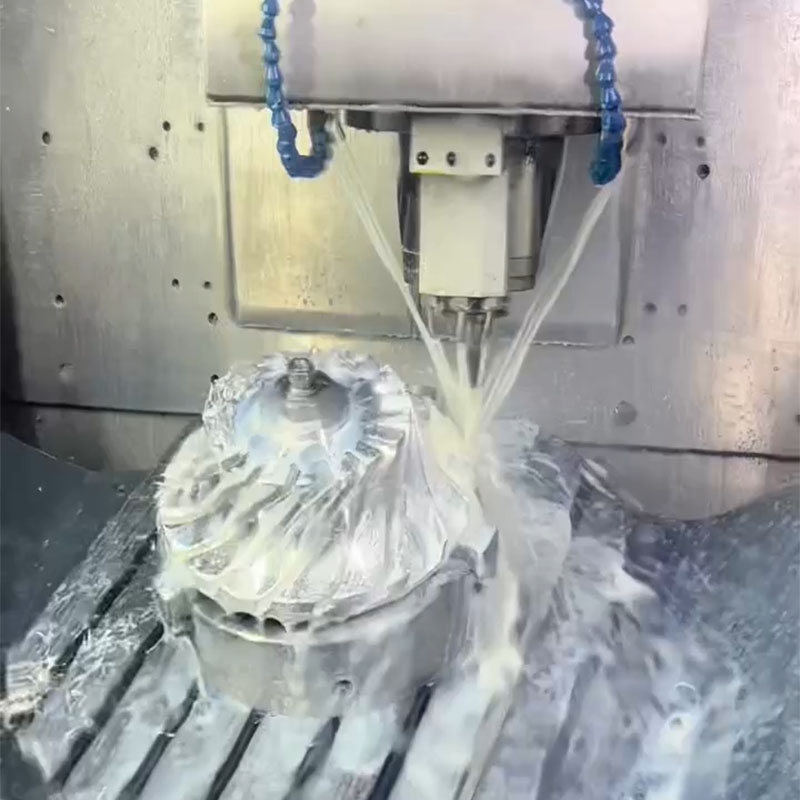
5-Axis Milling
Simultaneous five-axis machining reaches compound angles, angled ports and contoured surfaces.
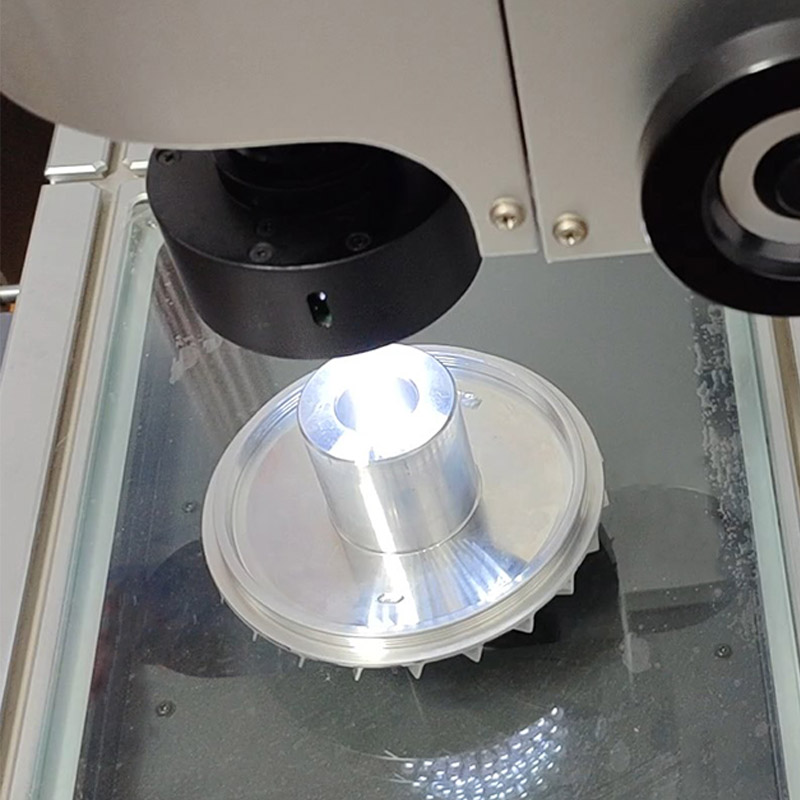
2D Measuring
Optical profile projection checks 2D contours, radii, chamfers and edge geometry against the drawing.
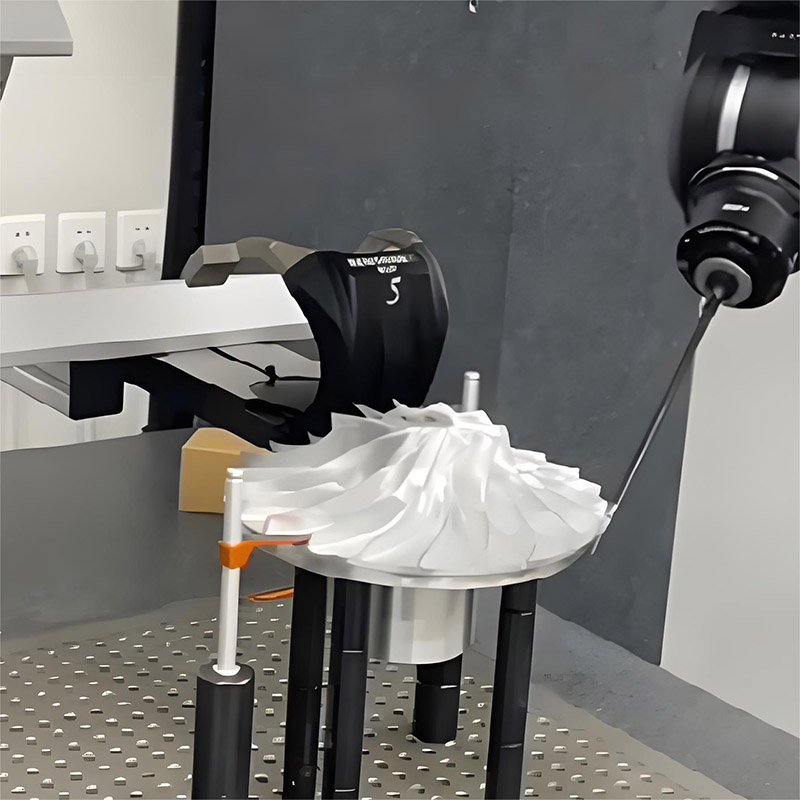
3D Measuring
Coordinate measuring captures three-dimensional dimensional relationships on finished parts.
Typical Applications for Machined 420 Components
The blend of hardness, wear resistance and mild-environment corrosion resistance makes machined 420 a recurring choice in six application families.
Valves and Fluid-Power Parts
Valve seats, spindles, spools, plungers, hydraulic blocks and manifolds that need a hard wearing surface together with resistance to water, steam and ordinary hydraulic fluids.
Shafts, Spindles and Gears
Pump shafts, gearbox shafts, cams, rollers, pins, splined parts and small transmission gears that carry repeated loads in compact sections and benefit from a hardened surface.
Cutting Tools and Blades
Industrial knives, shear blades, slicing edges, scrapers and cutting disks that must hold a keen edge after hardening and survive abrasive production environments.
Surgical, Dental and Hand Instruments
Instrument bodies, forceps-style components, clamps and reusable hand tools that tolerate repeated sterilization cycles and demand a fine, clean surface.
Mold and Tooling Components
Plastic-mold cores and cavities, slides, gate inserts, wear plates and guide components where polishability, hardness and compressive strength are decisive.
Food and Textile Machinery
Grinder components, feed screws, guide bars, needles and wash-down machinery parts operating in mild food-processing and textile environments.
Where 420 Sits Among Commonly Machined Stainless Grades
Customers comparing materials for CNC machined 420 stainless steel in China most often weigh it against four neighboring grades. The comparison is qualitative and intended for early design screening.
| Grade | Family | Through-Hardenable | Strength / Hardness | Corrosion Resistance | Machining Behavior | Typical Role |
|---|---|---|---|---|---|---|
| 420 (S42000) | Martensitic | Yes, quench + temper | Up to roughly 48–56 HRC | Mild to moderate | Moderate; strong, sometimes stringy chips | Hardened wear and load parts |
| 410 (S41000) | Martensitic | Yes | Lower carbon; slightly softer, tougher | Mild | Similar to 420, marginally easier | General-purpose lower-hardness parts |
| 416 | Martensitic, free-machining | Yes, limited | Comparable to 410 | Mild | Easiest cutting grade in the martensitic family thanks to added sulfur | High-volume screw-machine components |
| 420F | Martensitic, free-machining | Yes | Comparable to 420 | Mild to moderate | Much easier chip breaking than standard 420 | High-volume 420-type machined parts |
| 304 | Austenitic | No; work-hardens only | Annealed around 200 HB | Good | Gummy with strong work hardening; harder on tool life | General corrosion-exposed parts |
| 316 | Austenitic | No; work-hardens only | Annealed around 200 HB | Very good, including chlorides | Gummy and tough; conservative cutting data | Chemical and chloride service |
Frequently Asked Questions About Machining 420
Should 420 parts be machined before or after hardening?
Most geometry is roughed in the annealed condition, when metal removal is most economical and tool life is longest. The part is then hardened and tempered, and critical surfaces are finished by grinding or hard turning to remove the small distortion of quenching. Simple parts at modest hardness can also be machined complete from pre-hardened stock.
What tolerances and surface finishes are realistic?
On well-supported turned and milled features, IT6–IT7-class tolerances and Ra 0.8 µm-class finishes are achievable through finish turning or grinding; looser commercial tolerances reduce cost. Every target is confirmed against part size, geometry and the heat-treated condition.
The drawing says SUS420J1, 40Cr13 or 1.4021 — is that still 420?
They belong to the same 12–14% chromium martensitic family but occupy different carbon bands, as shown in the cross-standard table. We procure and machine the exact designation written on the drawing and confirm the target hardness whenever heat treatment is involved.
Is 420 stainless steel magnetic?
Yes. As a martensitic grade it is ferromagnetic in both annealed and hardened conditions, unlike austenitic 304 or 316 in their annealed state. This makes its magnetic response predictable for sensor-related and fixturing-related designs.
Can one workshop cover a prototype and later series production?
Yes. CNC machined 420 stainless steel in China through our workshop ranges from a one-piece prototype to recurring high-volume batches. Programs, fixtures and inspection records are retained so series parts reproduce the approved first article.
How is quenching distortion kept under control?
Through symmetric finish stock, preheating before austenitizing, controlled heating, oil quenching on thicker sections, prompt tempering and intermediate stress relief on long or thin parts. Final grinding stock absorbs the remaining, predictable dimensional movement.
How CNC Machined 420 Stainless Steel Orders Are Run
Six working principles define how an order of CNC machined 420 stainless steel in China is handled from drawing to packed parts.
Drawing Review Before Cutting
Each 420 job receives a manufacturability review: feature accessibility, internal corner radii versus tool diameter, thread depth-to-diameter ratio and hardening stock are checked so issues are solved on paper rather than on the machine.
Material Traceability
Stock is purchased to the named standard, heat and lot numbers are recorded for every job, and the mill’s material documentation travels with the order. It is always clear which heat a customer’s parts came from.
Processes Under One Roof
Turning, three-, four- and five-axis milling, drilling and tapping — together with coordinated heat treatment and surface finishing — flow along one production line without multi-vendor hand-offs.
Flexible Quantities
There is no artificial minimum-order barrier: a single emergency spare and a multi-thousand-piece annual program receive the same programming discipline and the same level of inspection attention.
Export-Oriented Protection
Parts are cleaned and dried, critical or cosmetic surfaces are individually protected, and packaging is designed against humidity and impact during long overseas transit.
Repeatability on Reorders
Programs, setup sheets, tool lists and inspection records are archived, so repeat orders reproduce the originally approved dimensions, threads and surface finish lot after lot.
Summary
From a single 420 stainless steel shaft to serial production of complex five-axis components, every program of CNC machined 420 stainless steel in China follows the same logic: respect the exact national-grade designation, plan machining around the heat-treated condition, keep tooling sharp and cool, and verify the critical dimensions. The grade cross-reference, property data, machining notes, process list and quantity guidance above can be used directly when preparing drawings and technical inquiries for CNC machined 420 stainless steel in China.
About Us
 We provide custom machined parts, 5-axis linkage CNC machining, and the design, production, and assembly of machinery and equipment.