
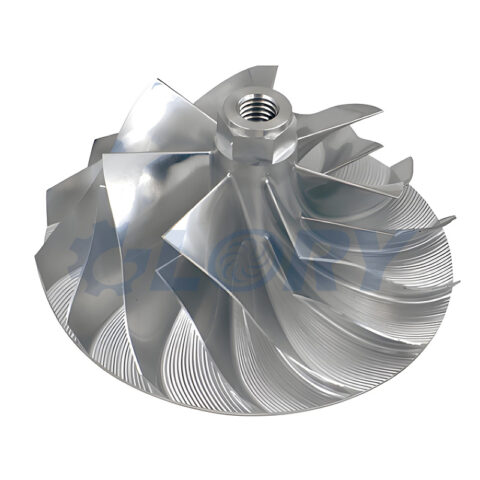
Custom 5-Axis CNC Machined 7075 Aluminum Parts from China
Custom 5-axis CNC machined 7075 aluminum parts from China, made to your drawings. Compressor impellers, complex profiles, prototypes and batch production.
Custom 5-Axis CNC Machined 7075 Aluminum Parts from China
We supply custom 5-axis CNC machined 7075 aluminum parts manufactured to customer drawings and 3D models. Our service supports overseas OEMs, equipment manufacturers, and engineering teams sourcing complex aluminum components, from single-piece prototypes to repeat production orders.
Compressor impellers are a representative application. Their curved blades, narrow flow channels, hub profiles, and precision bores require carefully coordinated machining and inspection. As a custom machining supplier in China, we coordinate material sourcing, CNC turning, five-axis milling, finishing, and dimensional inspection around your approved drawing requirements.
| Item | Custom Supply Details |
|---|---|
| Product scope | 7075 aluminum impellers, compressor wheels, hubs, brackets, housings, and complex contour parts |
| Manufacturing basis | Customer drawings, 3D CAD models, and approved technical requirements |
| Material | 7075 aluminum alloy in the specified temper and stock form |
| Main processes | CNC turning, simultaneous 5-axis milling, drilling, tapping, and precision finishing |
| Typical features | Curved surfaces, thin blades, deep pockets, angled holes, and multiple mating faces |
| Order quantities | Single-piece prototypes, small batches, and repeat production |
| Dimensions and tolerances | According to the drawing, with feasibility confirmed during technical review |
| Surface condition | As-machined or finished according to the approved specification |
| Inspection | Drawing-based dimensional inspection and agreed inspection reports |
| Supply origin | China |
7075 is a high-strength aluminum alloy used for lightweight components with demanding mechanical requirements. Its temper is an important part of the material specification. T6 and T651 conditions are commonly selected for high strength, while T73 and T7351 offer improved resistance to stress-corrosion cracking with a reduction in strength. Material properties also depend on product form and section thickness.
For a custom 7075 aluminum compressor impeller, the material and temper should follow the customer’s engineering requirements for rotational loading, operating temperature, working medium, and fatigue life. We confirm the required material condition before production and review any proposed substitution with the customer.
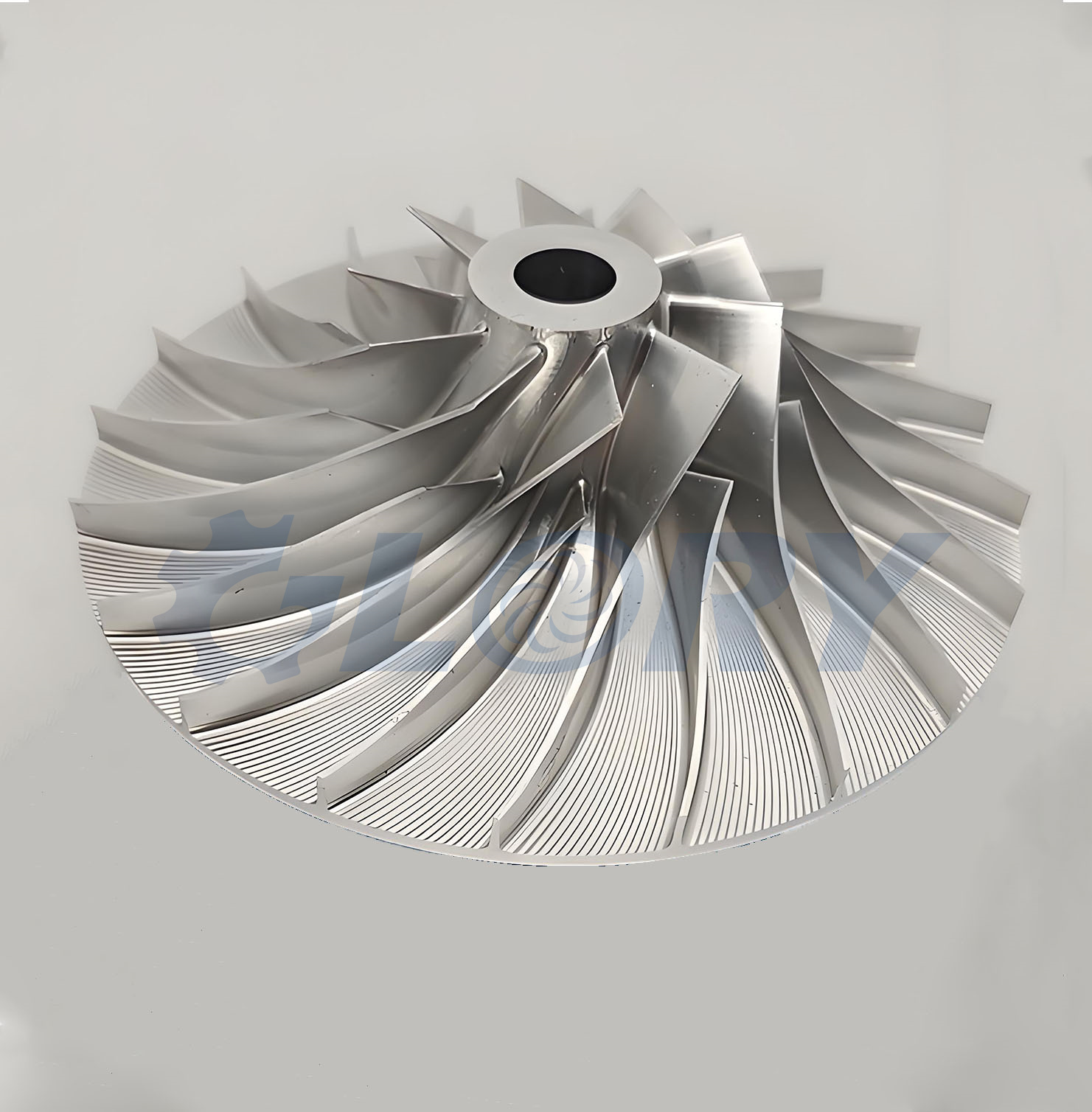
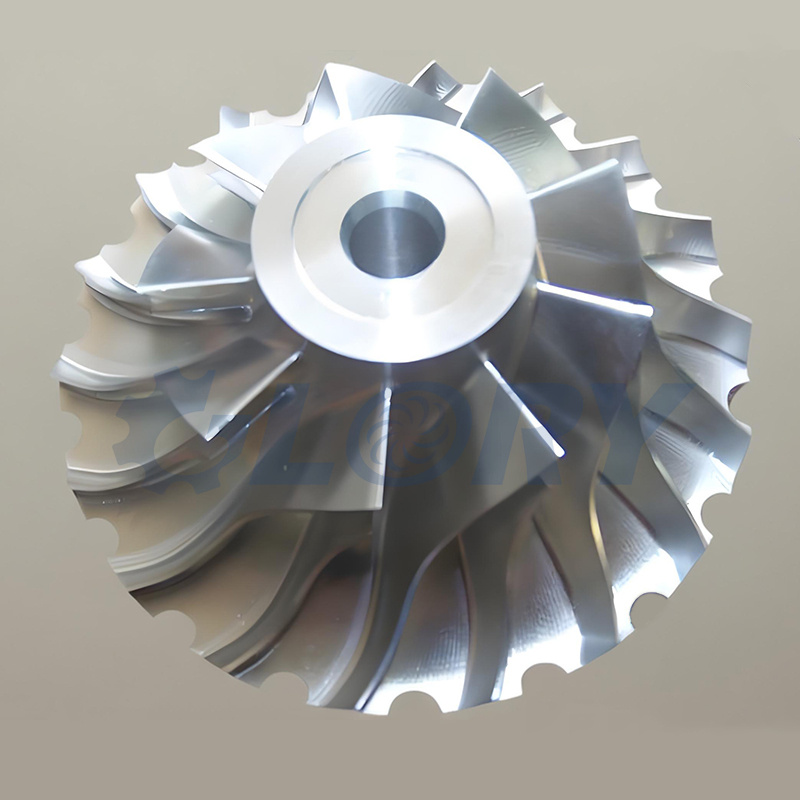
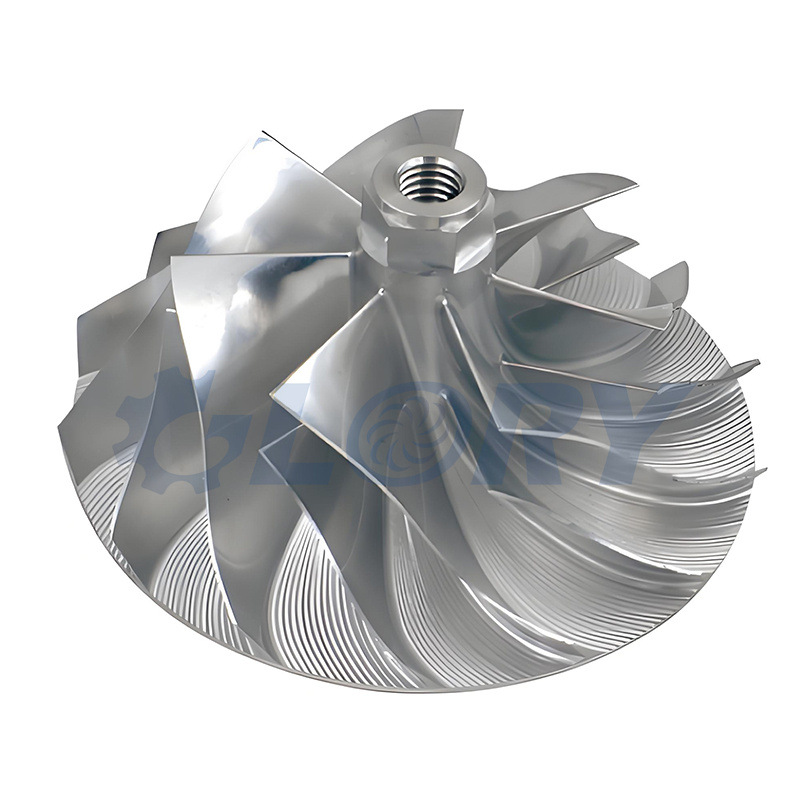
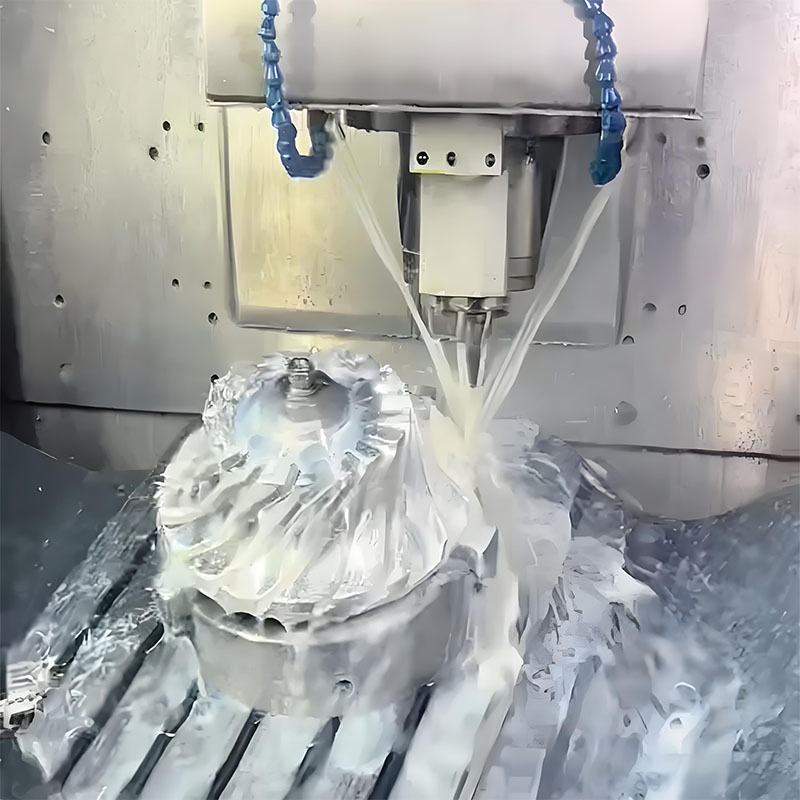
Simultaneous five-axis machining controls the cutting tool orientation while machining complex surfaces. This provides access to curved blade profiles and difficult passages, while reducing the need to reposition suitable parts between operations. Fewer setups can help maintain dimensional relationships between related features. CAM simulation supports checks for tool, holder, fixture, and machine interference before machining.
For impellers, the manufacturing plan must also address changing blade thickness, blade-root transitions, tool reach, and access between adjacent blades. Toolpaths and fixtures are selected to support the geometry defined in the customer’s model.
A compressor impeller illustrates how these requirements come together. The center bore establishes the shaft interface, the hub and back face provide mounting references, and the blades form the flow passages. Machining must preserve the relationships between these features throughout roughing and finishing.
| Impeller Feature | Machining Focus | Inspection Focus |
|---|---|---|
| Center bore and shaft interface | Controlled boring or finishing using the specified datum system | Bore size, form, and specified geometric tolerances |
| Curved blade surfaces | Five-axis toolpaths following the approved 3D model | Surface profile at defined sections or accessible measurement locations |
| Blade thickness | Controlled finishing allowance and cutting engagement | Thickness at drawing-defined positions |
| Blade-root transitions | Suitable cutter geometry and smooth toolpath transitions | Root radii, surface continuity, and visible machining defects |
| Flow channels | Tool access and chip evacuation between blades | Channel geometry and specified surface finish |
| Hub and mounting faces | Coordinated turning and milling operations | Face dimensions, flatness, and specified runout |
| Outer diameter and blade tips | Finishing with suitable support for delicate features | Diameter, tip geometry, and edge condition |
Thin blades and heavily pocketed components need particular attention during machining. Removing substantial material changes the support available to the remaining features. The process plan can therefore include staged roughing, semi-finishing, controlled clamping, and intermediate inspection before the final cuts. Finishing allowances and machining order are planned to manage distortion and preserve the required blade geometry.
An illustrative production route for a 7075 compressor impeller is shown below. The actual sequence depends on the blank, part geometry, datum requirements, and finishing specification.
| Production Stage | Main Work |
|---|---|
| Drawing and model review | Confirm revision, material temper, blade geometry, tolerances, surface requirements, and inspection scope |
| Material and blank preparation | Select the specified stock form and prepare suitable machining allowance |
| Initial CNC turning | Establish reference surfaces and prepare the hub, bore, or holding features as required |
| CAM programming and simulation | Plan roughing and finishing toolpaths, tool orientations, and collision clearance |
| Roughing and semi-finishing | Remove bulk material while retaining support and appropriate finishing allowance |
| Five-axis finish machining | Complete blade surfaces, channels, root transitions, and other complex features |
| Final interface machining | Complete remaining bores, faces, threads, or locating features according to the process plan |
| Deburring and final inspection | Check edge condition, clean the part, verify specified features, and prepare protective packaging |
Inspection is planned around the drawing’s datum system and functional requirements. CMM inspection can verify accessible bores, faces, feature positions, and selected profile points. Optical or blue-light scanning can supplement dimensional inspection by comparing accessible external surfaces with the CAD model. Measurement methods are selected according to feature size, accessibility, tolerance, and required measurement uncertainty.
For compressor impellers requiring balancing, the quotation should define the acceptance criterion, balancing configuration, correction locations, and reporting requirements. Component balancing and assembled-rotor balancing have different scopes and should be specified separately when applicable. These details allow machining and any requested balancing work to be coordinated with the final assembly requirements.
Surface finish is also specified by function. Blade surfaces, bores, mounting faces, and cosmetic areas may require different finishes. As-machined surfaces, selective polishing, or anodizing can be reviewed according to the drawing. For rotating components, any coating or polishing requirement should be approved as part of the component specification, including dimensional allowances, masking areas, and the required final surface condition.
The same custom 7075 aluminum CNC machining service can support complex brackets, lightweight housings, precision hubs, robotic components, and equipment mounting parts. Five-axis machining is useful where several faces, angled features, or curved contours must maintain close dimensional relationships.
We support international purchasing teams through coordinated technical communication, drawing revision control, inspection planning, and export packaging. Impeller packaging can be designed to protect blade tips and finished surfaces during handling and transport. Prototype orders provide an opportunity to check fit and evaluate the component before repeat production.
To request a quotation for custom 5-axis machined 7075 aluminum parts, provide the following information.
| Quotation Information | Details to Provide |
|---|---|
| Technical files | 2D drawing and 3D model, preferably STEP, with the current revision identified |
| Material | 7075 alloy, required temper, and any stock-form restrictions |
| Quantity | Prototype quantity, batch quantity, and expected repeat demand |
| Critical features | Datum system, tolerances, blade profiles, bore fits, and mating requirements |
| Finishing | Surface roughness, coating requirements, masking areas, and edge conditions |
| Impeller requirements | Relevant operating conditions and any balancing or additional testing scope |
| Inspection | Required measurements, sampling or 100% inspection scope, and report format |
| Delivery | Requested delivery date, destination, identification, and packaging requirements |
Our custom 7075 aluminum machining service in China connects your drawings with a coordinated production and inspection plan. Whether you need a five-axis machined compressor impeller or another complex aluminum component, each order is reviewed around its geometry, material condition, functional features, and supply requirements.
About Us
 We provide custom machined parts, 5-axis linkage CNC machining, and the design, production, and assembly of machinery and equipment.