
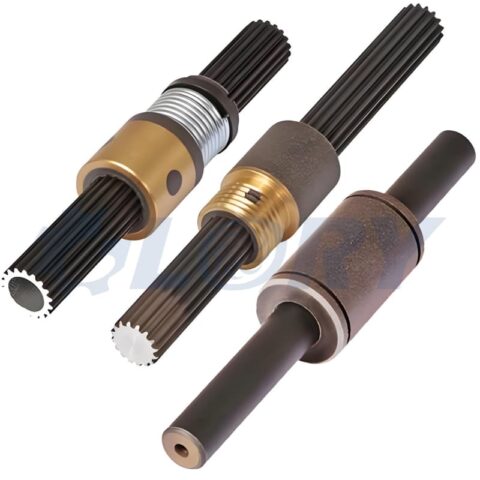
Custom Guide Spline Shafts Machined to Drawing in China
Custom guide spline shafts machined to your drawings in China. Steel and stainless steel options, sliding fits, heat treatment, and dimensional inspection.
Custom Guide Spline Shafts Machined to Drawing in China
Custom guide spline shafts are used in assemblies that require axial sliding together with controlled rotational engagement. A correctly specified shaft and mating sleeve can allow longitudinal movement while transmitting torque or preventing relative rotation, depending on the mechanism. The spline profile, fit, engagement length, and supporting features must suit the intended movement and operating conditions.
We are a China-based trading company supplying non-standard CNC machined guide spline shafts according to customer drawings. We coordinate material sourcing, machining, heat treatment, inspection, and export delivery for prototype orders and repeat production. Our service focuses on the dimensions and functional requirements of your assembly, with manufacturing details reviewed before production.
Guide spline shafts can be customized with full-length or partial splines, stepped journals, shoulders, threaded ends, mounting holes, and other features specified in your design.
| Customization Item | Options and Drawing Requirements |
|---|---|
| Product type | Guide spline shafts, sliding spline shafts, and splined guide rods |
| Spline profile | Straight-sided, involute, or customer-defined profiles, subject to machining review |
| Shaft configuration | Solid or hollow; straight or stepped; single or multiple spline sections |
| Main dimensions | Overall length, shaft diameters, spline length, and shoulder positions |
| Spline details | Tooth count, major and minor diameters, tooth thickness, and applicable profile parameters |
| Mating requirements | Specified fit with the sleeve or hub, working stroke, and required engagement length |
| Additional features | Threads, grooves, flats, keyways, cross holes, axial bores, and chamfers |
| Surface condition | Machined or ground surfaces, with treatment and roughness as specified |
| Order quantity | Prototype quantities, small batches, and repeat production; one-piece orders can be reviewed |
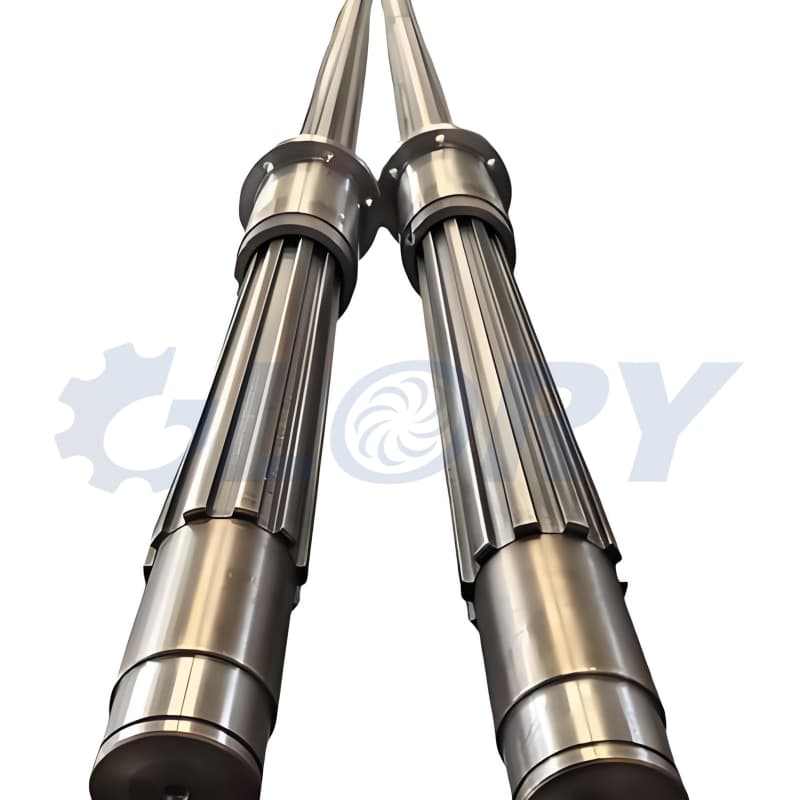
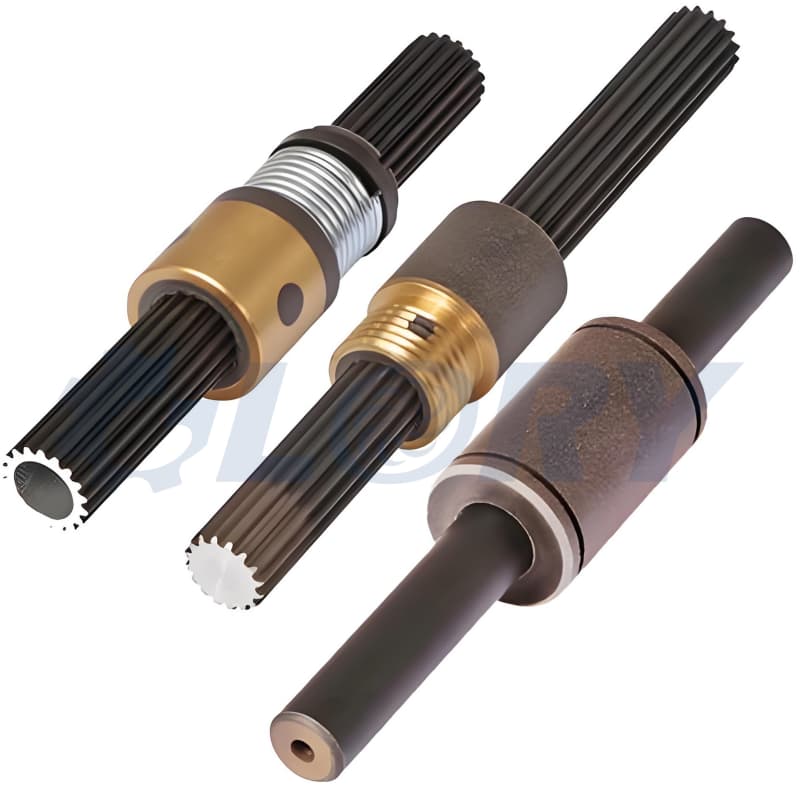
Potential applications include machine-tool adjustment mechanisms, automated production equipment, packaging machinery, telescopic drive assemblies, and custom industrial fixtures. Depending on the design, the shaft may guide a moving component while maintaining its angular position or transmit rotary motion through a sliding connection. Application suitability is reviewed against the customer’s assembly requirements.
Material selection starts with the exact grade and delivery condition shown on the drawing. The following material groups provide options for discussion during quotation review.
| Material Group | Example Grades | Details to Confirm |
|---|---|---|
| Medium-carbon steel | C45 or 1045 | Delivery condition, final hardness, and any local hardening requirements |
| Alloy steel | 40Cr, 4140, or 42CrMo4 | Required mechanical condition, heat treatment, and machining sequence |
| Case-hardening steel | 20CrMnTi or 8620 | Surface hardness, effective case depth, core requirements, and finishing allowance |
| Stainless steel | 420 or 17-4PH | Exact grade, heat-treatment condition, corrosion exposure, and mating-material requirements |
Each grade is reviewed against its own material specification. Any proposed alternative material is submitted for customer approval before procurement. The mating sleeve material, lubrication conditions, and operating environment also form part of the technical review.
Heat treatment and surface finishing are selected to match the specified material and working surfaces. Depending on the drawing, the process may include quenching and tempering, induction hardening, carburizing and hardening, or nitriding. For suitable materials, nitriding can increase surface hardness and wear resistance. Treatment requirements are confirmed together with the target hardness, treated areas, case depth where applicable, and final dimensional requirements.
Precision planning is especially important for a sliding spline connection. Tooth dimensions, profile accuracy, shaft straightness, and alignment with bearing journals all contribute to the fit. The required axial movement, permitted rotational clearance, and lubrication conditions should be established with the mating sleeve or hub. Acceptance requirements can include an agreed sliding-force check over the specified working stroke.
We review the spline section and adjoining shaft features as one component. Bearing seats, locating shoulders, threaded ends, and mounting holes are machined in relation to the drawing datums. For longer or slender shafts, the process plan considers workpiece support, machining sequence, and distortion control. Heat-treated parts receive the finishing operations and final checks specified in the agreed manufacturing plan.
Production can combine CNC turning, spline machining, milling, drilling, threading, and grinding. The sequence is adapted to the material condition, spline geometry, required accuracy, and order quantity. Spline ends and transitions receive particular attention during deburring so that edge finishing preserves the specified working profile.
Inspection is planned around the features that control assembly and operation. The following checks can be included according to the drawing and purchase requirements.
| Inspection Item | Typical Verification Focus |
|---|---|
| Shaft dimensions | Overall length, journal diameters, shoulders, grooves, and mounting features |
| Spline geometry | Tooth count, major and minor diameters, and specified tooth dimensions |
| Spline fit | Agreed spline gauges or checks with a designated mating component |
| Datum relationships | Runout and alignment of the spline section and adjoining journals, as specified |
| Straightness and surface finish | Drawing-defined straightness and roughness on designated surfaces |
| Heat-treatment results | Required hardness and, where specified, case-depth verification |
| Functional movement | Sliding travel and movement acceptance using an agreed test setup |
| Final condition | Burrs, sharp edges, cleanliness, surface damage, and protective packaging |
Inspection equipment and methods are selected for the geometry and acceptance criteria. CMM inspection can be used for suitable accessible features and datum relationships, while spline-specific measurements and gauges are arranged as required. Dimensional reports and 100% inspection of agreed critical dimensions can be provided on request.
Where a mating sleeve or hub is available, an agreed trial assembly can help evaluate the intended fit. For repeat orders, retaining the approved drawing revision, inspection criteria, and reference-part information supports consistent supply. Parts are packed with attention to protecting spline teeth, finished journals, and threaded features during transport.
Our custom spline shaft supply service gives overseas buyers one point of coordination for technical questions, production requirements, inspection documentation, and shipment arrangements. Prototype orders can support assembly evaluation before batch production. Pricing and delivery are confirmed after reviewing the drawing, material, treatment, quantity, and inspection scope.
For a quotation for custom guide spline shafts, please provide the following information where available.
| Information Required | Details to Include |
|---|---|
| Part definition | Current 2D drawing and a 3D model where available |
| Material | Exact grade, delivery condition, and permitted alternatives |
| Spline specification | Profile designation, tooth count, dimensions, fit, and any referenced drawing standard |
| Assembly conditions | Mating-part information, sliding stroke, engagement length, and operating loads |
| Accuracy requirements | Critical tolerances, datums, straightness, runout, and surface roughness |
| Treatment and inspection | Heat treatment, hardness, surface finish, inspection scope, and reporting requirements |
| Purchasing details | Order quantity, expected repeat demand, delivery schedule, and destination |
Send your drawings for a review of custom guide spline shaft machining in China. We can coordinate an OEM supply plan covering the specified material, spline geometry, shaft features, finishing, and inspection requirements for your project.
About Us
 We provide custom machined parts, 5-axis linkage CNC machining, and the design, production, and assembly of machinery and equipment.