
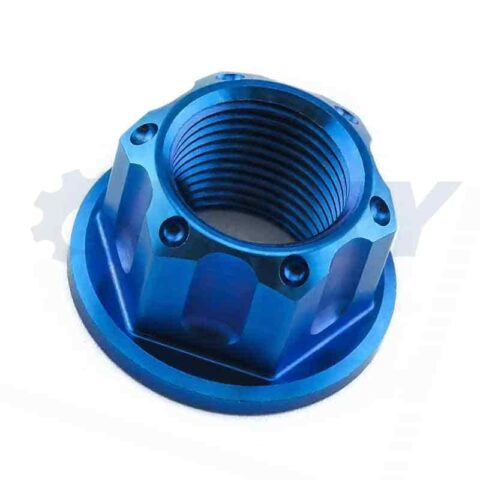
Custom CNC Machined Adjusting Nuts to Drawing from China
Source custom CNC machined adjusting nuts from China. Steel, stainless steel, brass and aluminum options, made to your drawings for prototypes and repeat orders.
Custom CNC Machined Adjusting Nuts to Drawing from China
We supply custom CNC machined adjusting nuts for equipment manufacturers, industrial component distributors and engineering companies. As a China-based supplier specializing in custom machined parts for international customers, we support production according to your drawings, material specifications and assembly requirements. From a compact threaded adjustment nut to a slotted bearing adjusting nut, each project is developed around the dimensions and features your equipment needs.
An adjusting nut is a threaded component used to set the position of a mating part, establish a mechanical stop or adjust an assembly. In suitable bearing arrangements, a precision adjusting nut can also be used to set axial clearance or preload. The required thread fit, contact face accuracy and locking method depend on the assembly design.
Our custom adjusting nut service covers prototypes, small batches and repeat production. We coordinate machining, finishing and inspection so that buyers can source drawing-specific parts through one supply contact.
Customization can include the thread, external profile, overall thickness, locating surfaces and tool engagement features. Drawings are reviewed before quotation to confirm the manufacturing route and inspection requirements.
| Item | Customization Options |
|---|---|
| Product types | Threaded adjusting nuts, bearing adjusting nuts, shaft adjusting nuts and threaded adjustment rings |
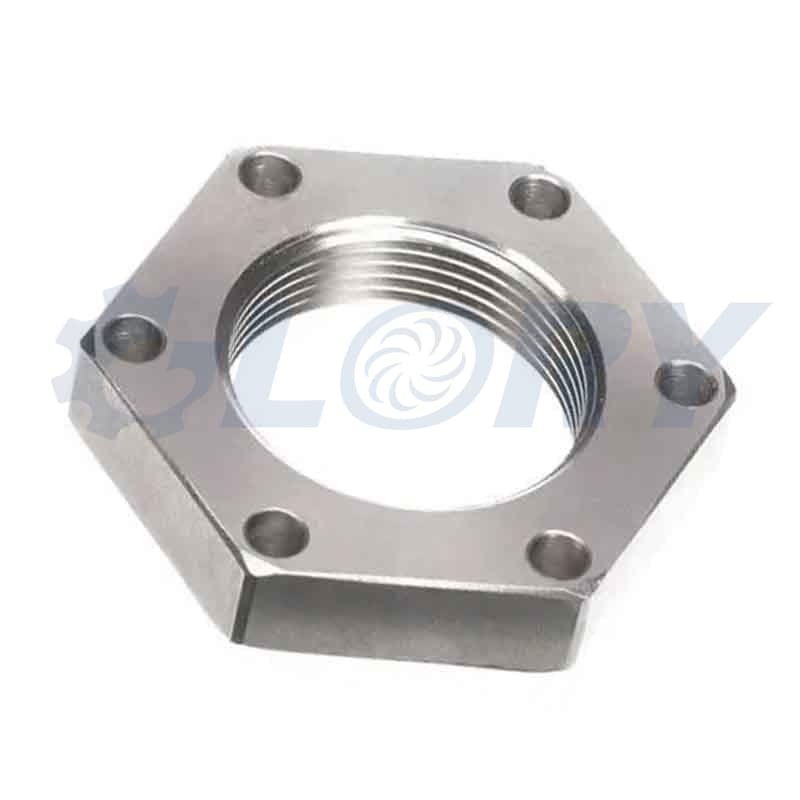
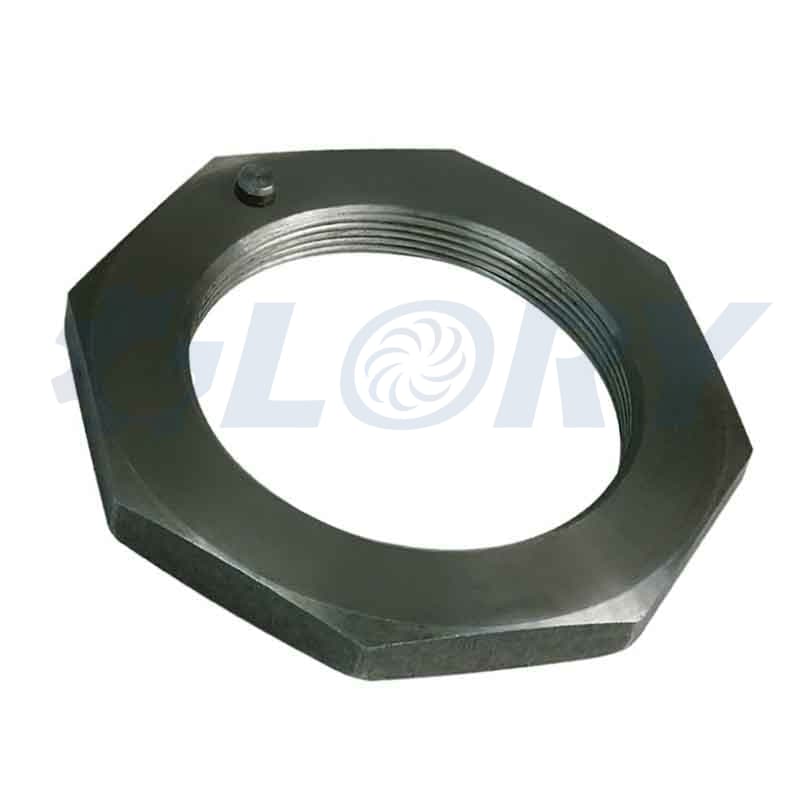
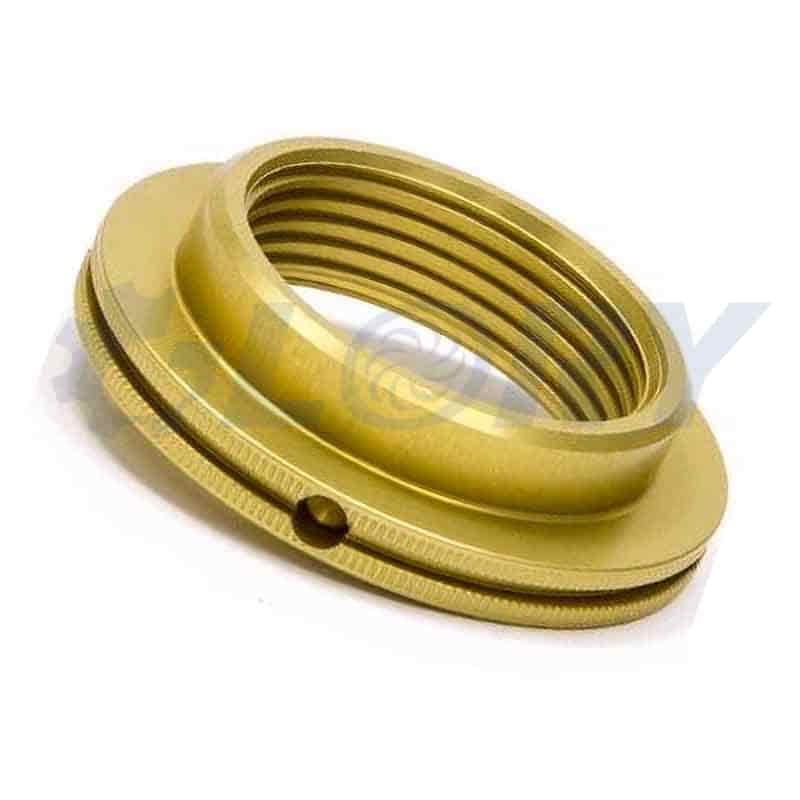
| External profiles | Round, hexagonal, flanged, stepped, slotted or knurled designs |
| Thread options | Metric coarse and fine threads, UNC, UNF and special threads subject to drawing review |
| Thread direction | Right-hand or left-hand threads as specified |
| Tool engagement | Wrench flats, hook-spanner slots, face holes or radial holes |
| Additional features | Shoulders, counterbores, grooves, chamfers and threaded locking holes |
| Optional locking designs | Jam-nut arrangements, split-clamp features or locking screw and pad arrangements according to the approved design |
| Production quantities | Prototype quantities, small batches and scheduled repeat orders |
| Manufacturing basis | Approved 2D drawings and 3D models; samples can support reverse engineering and drawing confirmation |
Accurate threading is central to the function of a CNC machined adjusting nut. We review the thread diameter, pitch, tolerance class, engagement length and entry chamfer together with the mating component. For a single-start thread, a finer pitch provides less axial travel per revolution, which can be useful where the design calls for smaller adjustment increments.
The nut profile should also suit the available assembly space. A slotted round adjusting nut may suit a compact shaft assembly, while wrench flats provide access for conventional tools. Knurled adjusting nuts can be specified for manual adjustment where the required operating torque permits. Where the position must be retained after adjustment, the drawing should define the appropriate locking arrangement.
Material selection depends on the load, operating environment, adjustment frequency and mating material. We can review the following material options for custom machined adjusting nuts.
| Material | Example Grades | Application Considerations |
|---|---|---|
| Carbon steel | 1045 | General machinery adjustment components; heat treatment and corrosion protection can be specified |
| Alloy steel | 4140 | Designs requiring specified strength and hardness; supplied condition and heat treatment must be defined |
| Stainless steel | 303, 304, 316 | Corrosion-related service requirements; grade selection also considers strength and mating-thread behavior |
| Brass | C360 | Machined adjustment hardware and instrument components where the specified brass grade suits the load and environment |
| Aluminum alloy | 6061, 7075 | Weight-sensitive assemblies with suitable thread engagement and wear requirements |
| Engineering plastic | POM | Light-load adjustment components where temperature, wear and long-term deformation have been considered |
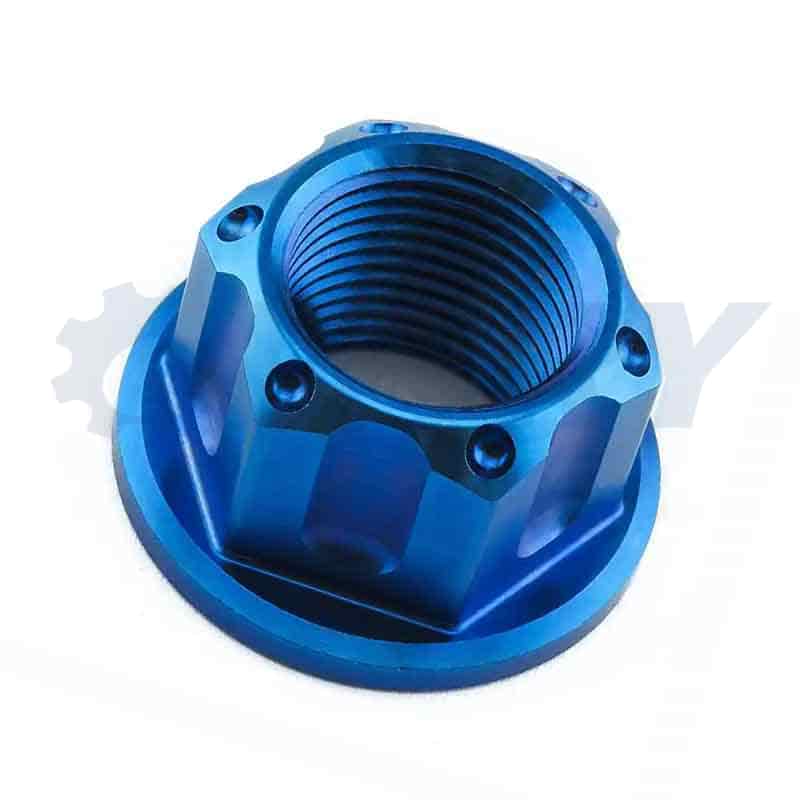
The specified material grade and condition form part of the production requirements. If your drawing permits alternatives, these can be reviewed before quotation and confirmed before production.
Manufacturing typically combines CNC turning with internal threading and secondary machining. Turning establishes the nut body, bore, shoulders and contact faces. Thread cutting or thread milling is selected according to the thread geometry and production requirements. Milling and drilling create wrench flats, spanner slots, locking holes and other custom features. Deburring and cleaning prepare the finished parts for inspection and packing.
For precision adjusting nuts, dimensional control extends beyond the thread diameter. The relationship between the thread axis and the locating face can affect how the nut contacts the mating component. Thin sections, deep slots and heat treatment may also influence the machining sequence. We review these features when planning the process.
| Inspection Item | Points to Confirm |
|---|---|
| Thread specification | Diameter, pitch, hand, tolerance class and required engagement length |
| Thread acceptance | Suitable thread gauging; trial assembly with an agreed mating part where requested |
| Overall dimensions | Outside diameter, thickness, across-flats size, steps and counterbores |
| Contact face geometry | Flatness, perpendicularity or axial runout relative to the drawing datums, where specified |
| Secondary features | Slot width, hole positions, groove dimensions and locking feature geometry |
| Surface condition | Specified roughness, burr removal, thread entry condition and finish appearance |
| Inspection records | Measurement reports and additional inspection coverage according to the agreed order requirements |
Required tolerances are confirmed against the part geometry, material, finishing process and inspection method. Critical dimensions should be identified on the drawing so that machining and verification focus on the features that control assembly and function.
Surface treatment can be specified to suit the material and service conditions. Options for suitable steel grades include black oxide with protective oil, zinc plating and nickel plating. Stainless steel parts can be supplied with specified passivation, while aluminum adjusting nuts can be anodized. Coating allowance and masking requirements are reviewed for threads and locating faces so that the finished part meets the drawing requirements.
Custom adjusting nuts can be supplied for a range of industrial assemblies. The examples below describe possible uses; the final configuration follows the customer’s equipment design.
| Application | Possible Adjusting Nut Function |
|---|---|
| Bearing and shaft assemblies | Setting axial position, clearance or preload where the bearing arrangement permits |
| Machine tools | Adjusting spindle-related components, mechanical stops and locating mechanisms |
| Automation equipment | Setting the position of fixtures, guides and adjustable machine elements |
| Packaging machinery | Adjusting guide positions, stops and format-change components |
| Industrial fixtures | Positioning threaded stops and adjustable clamping elements |
| Test equipment | Providing threaded adjustment for mechanical positioning and setup |
For buyers sourcing custom adjusting nuts from China, our service focuses on drawing-based production, clear technical communication and coordinated export supply. We can also review related shafts, sleeves, spacers and other custom machined components for the same assembly. Supplying the relevant mating-part drawings helps clarify the dimensional relationships before production begins.
To request a quotation, provide your drawing or model, material grade, quantity, thread specification, critical tolerances and surface treatment requirements. Please include any locking details, inspection requirements and target delivery date. If only a sample is available, we can review the dimensions needed to prepare an approval drawing.
Whether you need a custom bearing adjusting nut, a fine-thread adjustment nut, a slotted round nut or a non-standard threaded ring, we can review your requirements and provide a machining quotation for prototype or repeat supply.
About Us
 We provide custom machined parts, 5-axis linkage CNC machining, and the design, production, and assembly of machinery and equipment.