
Introduction to CNC machined C28000 in China
As a leading manufacturing hub for precision metal components, China has established extensive expertise in producing CNC machined C28000 brass parts for global OEM customers across diverse industries. C28000, also known as Muntz metal or 60/40 brass, represents one of the most versatile high-zinc brass alloys widely adopted for CNC machining applications due to its balanced mechanical properties, excellent formability, reliable corrosion resistance, and cost-effective performance.
CNC machined C28000 in China benefits from advanced multi-axis machining equipment, skilled engineering teams, and mature supply chains for raw material sourcing, enabling manufacturers to deliver precision brass components with consistent quality and competitive pricing. Whether you require CNC machined C28000 valve bodies, fittings, connectors, bushings, or custom geometrically complex components, Chinese machining facilities can accommodate specifications ranging from simple turned parts to highly intricate milled features with tight dimensional tolerances.
Global Standard Equivalents of C28000 Brass Alloy
C28000 is the official UNS designation in the ASTM standard system, but this alloy carries different grade designations across major global industrial standards. Understanding these equivalents helps international buyers cross-reference material specifications and ensure compliance with regional engineering requirements.
In the ASTM/UNS system (United States), the alloy is formally designated as UNS C28000, commonly referred to as Alloy 280 or Muntz metal. It is defined under specifications including ASTM B16 for valves and fittings, ASTM B111 for seamless condenser tubes, and ASTM B171 for copper alloy plate and sheet. The typical chemical composition under this standard ranges from 60.5% to 63.5% copper, with zinc as the balance element, lead content limited to 0.07% maximum, and iron content not exceeding 0.10%.
Under European EN and DIN standards, the corresponding grade is CuZn40, with the material number 2.0402 and the CW509L designation under the CEN/TS 13388 standard. The European specification defines copper content between 59% and 61%, with strict limits on impurity elements including nickel ≤0.3%, tin ≤0.3%, and iron ≤0.05%. Mechanical properties are standardized according to EN 1652, with annealed material exhibiting tensile strength between 340 and 420 MPa and minimum elongation of 33%.
In the Japanese JIS standard system, the equivalent grade is C 3712, while British BS standards designate this material as CZ 122. For the Chinese domestic market, the closest matching commercial grade is H62 brass, which shares nearly identical copper-zinc ratio and performance characteristics with C28000, making it a widely used alternative for local production while maintaining full functional interchangeability with international specifications.
Key Properties and Characteristics of C28000 Brass
C28000 brass possesses a unique combination of physical and mechanical properties that make it exceptionally suitable for CNC machining operations across various industrial applications.
From a chemical composition perspective, C28000 contains approximately 60% copper and 40% zinc, classifying it as an alpha-beta duplex brass. This dual-phase microstructure contributes to its higher strength compared to lower-zinc alpha brasses while retaining reasonable ductility. The alloy has a density of 8.47 g/cm³ at room temperature, with a melting range between 905°C and 915°C. Its thermal conductivity reaches 120 W/m·K at 20°C, and electrical conductivity measures approximately 28% IACS, making it suitable for applications requiring moderate heat dissipation and electrical transmission.
Mechanically, C28000 offers broad tunability through cold working and annealing processes. In the fully annealed condition, the material demonstrates tensile strength ranging from 300 to 400 MPa, yield strength between 100 and 150 MPa, and elongation values of 40% to 60%, allowing for substantial plastic deformation without fracture. As cold work increases to half-hard condition, tensile strength rises to 400–500 MPa with yield strength of 300–350 MPa, while elongation decreases to 15–25%. In fully hard temper, tensile strength can reach 410–540 MPa with corresponding hardness values between 120 and 160 HV.
Regarding machinability, C28000 delivers reliable cutting performance that balances tool life and surface finish quality. While not as free-machining as leaded brasses like C36000, it still produces manageable chips during CNC turning, milling, drilling, and threading operations. The alloy responds well to high spindle speeds and feed rates, and it can achieve excellent surface finishes down to Ra 0.8 μm or better with appropriate tooling and cutting parameters. Additionally, C28000 exhibits good corrosion resistance in freshwater, atmospheric environments, and many mild chemical conditions, providing adequate durability for plumbing, general industrial, and architectural applications.
Common Brass Grades for CNC Machining Comparison
Beyond C28000, several other brass alloys are commonly used in CNC machining, each optimized for specific performance requirements. Understanding the differences between these grades helps in selecting the most appropriate material for your component application.
C26000, also known as cartridge brass or 70/30 brass, contains approximately 70% copper and 30% zinc. As a single-phase alpha brass, it offers superior ductility and cold forming capabilities compared to C28000, with elongation values exceeding 50% in the annealed state. It is the preferred choice for deep drawing, stamping, and forming operations, and is widely used for ammunition casings, radiator components, and decorative hardware. However, its machinability rating is lower than C28000, making it less ideal for high-volume CNC turning applications.
C36000 free-cutting brass is the most widely used grade for high-speed CNC machining operations. With the addition of 2.5% to 3% lead content, this alloy achieves the highest machinability rating among common brasses, typically 25% to 40% faster cutting speeds than C26000. The lead acts as a lubricant during machining, producing short, broken chips that improve tool life and surface finish. C36000 is the standard choice for high-volume production of screws, valve stems, gears, electrical connectors, and precision turned components. It offers tensile strength around 350 MPa in the half-hard condition, with good dimensional stability and reasonable corrosion resistance.
C37700 forging brass contains approximately 58-62% copper and 1.5-2.5% lead, formulated specifically for hot forging and hot forming processes while maintaining good machinability. It is commonly used for forged plumbing fittings, valve bodies, and hardware components that require both shaping through hot working and subsequent finish machining operations.
C46400 naval brass incorporates approximately 1% tin addition into the 60/40 brass matrix, dramatically improving resistance to seawater corrosion and dezincification. With tensile strength around 450 MPa and excellent durability in saltwater environments, C46400 is the premium choice for marine applications including propellers, seawater valves, pump components, offshore equipment, and shipboard fittings. Its corrosion resistance far exceeds that of C28000 in saline conditions, though it comes at a higher material cost and slightly lower machinability.
Typical CNC Machined C28000 Components and Part Names
CNC machined C28000 brass parts cover an extensive range of component types across different manufacturing sectors. The alloy’s balanced properties make it suitable for both functional structural components and parts requiring specific performance characteristics.
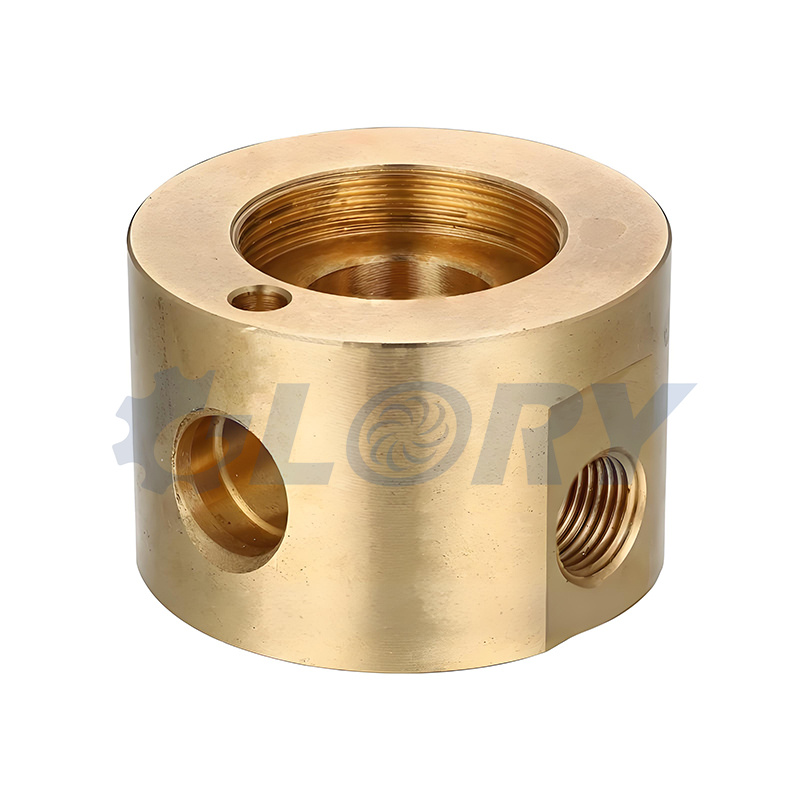
Among the most commonly produced CNC machined C28000 valve components are valve bodies, valve stems, valve cores, valve seats, and check valve assemblies. These parts leverage the material’s corrosion resistance in water systems and its ability to form tight sealing surfaces through precision machining. CNC machined C28000 valve bodies often feature complex internal passages, threaded ports, and precision-machined sealing faces, requiring multi-axis milling and turning operations to achieve the required geometry and tolerances.
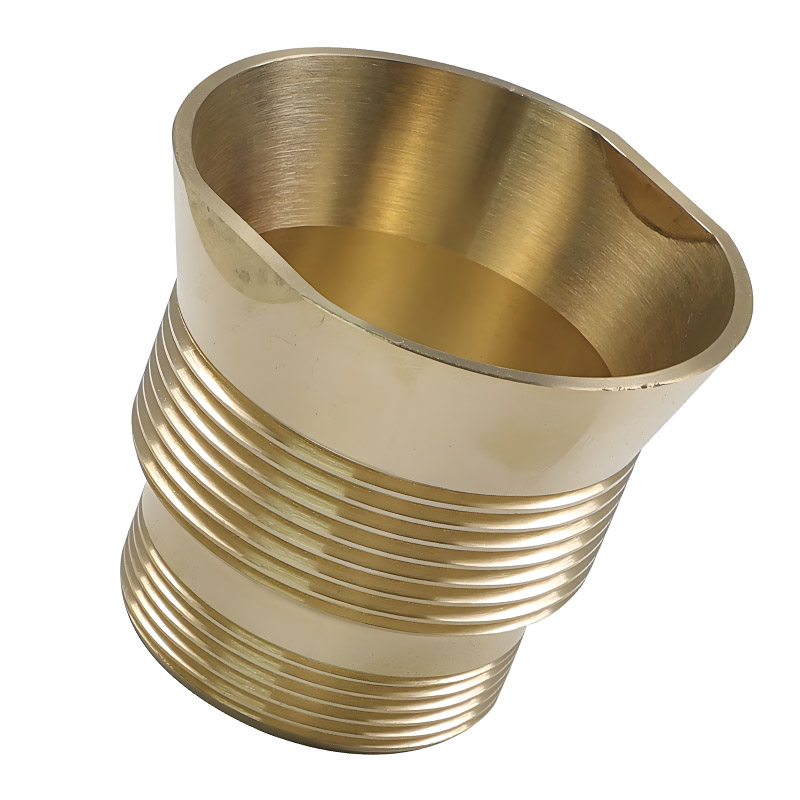
In fluid systems and plumbing, CNC machined C28000 pipe fittings include elbows, tees, reducers, couplings, adapters, and threaded connectors. These components typically require precise thread cutting—both internal and external—along with smooth bore finishes to ensure proper fluid flow and leak-free connections. CNC machined C28000 flanges, unions, and compression fittings are also common, manufactured to standard pipe dimensions or custom specifications.
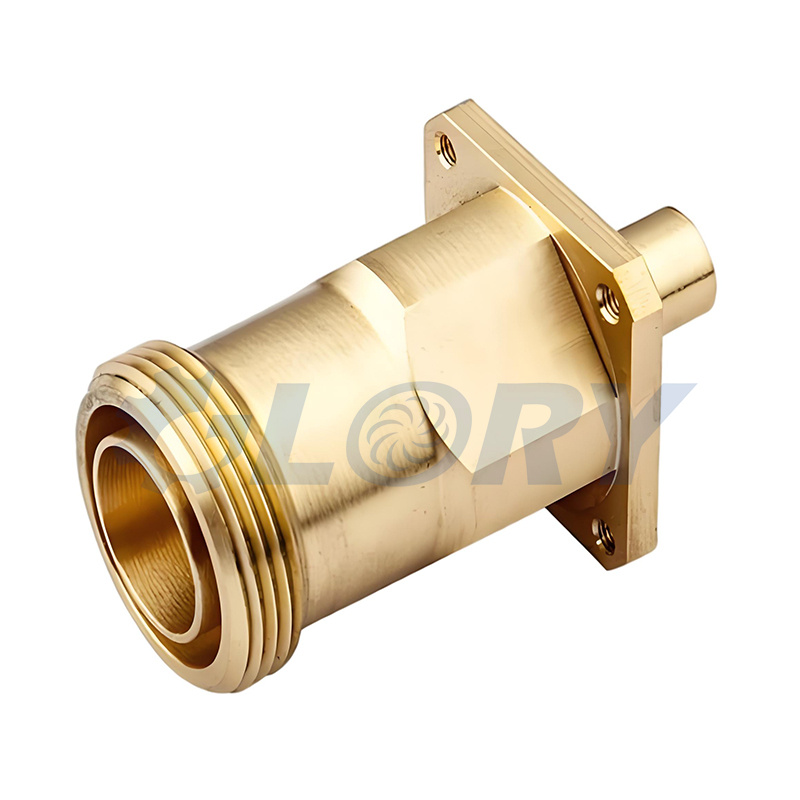
For electrical and electronic applications, CNC machined C28000 connectors, terminals, contact pins, and terminal blocks benefit from the alloy’s moderate electrical conductivity and corrosion resistance. These parts often feature tight tolerance features for proper mating and electrical contact, including precision-machined pins, sockets, and mounting features. CNC machined C28000 electrical housings and connector bodies provide both structural protection and electrical grounding functionality.


Mechanical and industrial applications include CNC machined C28000 bushings, bearing sleeves, gears, pinions, shafts, and fasteners. Bushings and bearing components utilize the material’s good wear characteristics and low friction properties when paired with steel shafts. CNC machined C28000 gears and worm wheels deliver quiet operation and good corrosion resistance compared to steel alternatives. Additionally, CNC machined C28000 screws, bolts, nuts, and threaded fasteners provide reliable performance in corrosive environments where steel fasteners would be unsuitable.
Other common CNC machined C28000 parts include hydraulic nozzles, instrument components, adjustment screws, lamp fittings, decorative hardware, and custom mechanical assemblies. The versatility of the material allows it to be machined into virtually any geometry achievable through CNC turning, milling, drilling, tapping, and secondary finishing processes.
Industrial Applications of CNC Machined C28000 Brass Parts
The diverse properties of C28000 brass enable its use across a wide spectrum of industries, each relying on specific performance characteristics of the material for their component applications.
The plumbing and HVAC industry represents one of the largest markets for CNC machined C28000 components. The alloy’s corrosion resistance in potable water systems, combined with its machinability and pressure-handling capability, makes it ideal for faucet components, mixing valves, pressure regulators, pipe fittings, and HVAC system connectors. Plumbing manufacturers depend on CNC machined C28000 valve bodies and cartridge housings to deliver reliable long-term performance in residential and commercial water systems, where the material withstands repeated temperature cycles and water chemistry variations without degradation.
In the electronics and electrical industry, CNC machined C28000 connectors, terminals, and switch components provide reliable electrical conductivity and corrosion resistance for power distribution, signal transmission, and control systems. The non-magnetic nature of brass also makes it suitable for sensitive electronic devices and testing equipment where magnetic interference would be problematic. Additionally, CNC machined C28000 heat sinks and thermal components leverage the alloy’s thermal conductivity for moderate heat dissipation applications in consumer electronics and industrial control equipment.
The automotive industry utilizes CNC machined C28000 parts for various fluid handling and sensor applications. Common components include fuel line fittings, brake system connectors, sensor bushings, thermostat housings, and carburetor parts. These components benefit from the material’s vibration resistance, dimensional stability over temperature ranges, and compatibility with automotive fluids. CNC machined C28000 threaded inserts and mounting hardware also provide durable fastening points in plastic and composite automotive components.
Marine and offshore applications employ CNC machined C28000 components for freshwater systems and general hardware, though more demanding saltwater environments typically upgrade to naval brass grades. Typical marine uses include bilge pump components, freshwater plumbing fittings, navigation light housings, and general deck hardware. The alloy’s resistance to atmospheric corrosion and salt spray makes it suitable for above-deck marine equipment.
Instrumentation and precision device manufacturers rely on CNC machined C28000 gears, adjustment shafts, dial components, and instrument housings. The material’s excellent machinability allows for production of fine-pitch gears and precision threaded adjustment mechanisms with smooth operation and consistent feel. CNC machined C28000 watch components and measuring instrument parts also benefit from the material’s dimensional stability and ability to hold tight tolerances.
Additional application sectors include architectural hardware, where CNC machined C28000 door handles, hinges, cabinet hardware, and decorative trim offer attractive golden appearance combined with wear resistance; medical equipment, where brass components are used for certain instrument parts and fittings due to natural antimicrobial properties; and general industrial machinery, where custom CNC machined C28000 components solve diverse engineering challenges from fluid handling to structural mounting.
Production Capabilities: From Prototype to High-Volume Manufacturing
Chinese CNC machining suppliers offer comprehensive production capabilities for C28000 brass components, scaling seamlessly from single-piece prototype development to full-scale mass production of millions of parts annually.
For prototype and low-volume requirements, CNC machined C28000 in China can be produced with lead times as short as a few days. Rapid prototyping services utilize 3-axis and 5-axis CNC milling centers, CNC turning centers, and Swiss-type lathes to produce one-off or small-batch parts directly from customer CAD files. This enables engineers to test form, fit, and function before committing to production tooling. Prototype quantities typically range from 1 to 100 pieces, with full engineering support for design optimization and material selection advice. Manufacturers work closely with customers to refine part designs for manufacturability, identifying opportunities to reduce machining time, improve tolerances, and lower production costs without compromising performance.
Medium-volume production runs, generally ranging from 100 to 10,000 pieces, leverage optimized CNC machining processes with dedicated workholding fixtures and tooling setups. At this scale, manufacturers implement process improvements such as multi-spindle turning, live tooling capabilities, and palletized machining systems to reduce cycle times and maintain consistent quality across the production run. CNC machined C28000 components at this volume level often include secondary operations such as deburring, polishing, tapping, and assembly, providing customers with fully finished, ready-to-install parts.
For high-volume production exceeding 10,000 pieces and extending into millions of units annually, Chinese manufacturers deploy advanced manufacturing technologies including multi-spindle automatic lathes, rotary transfer machines, and dedicated CNC machining cells optimized for specific part geometries. These automated production systems run 24/7 with minimal operator intervention, achieving maximum efficiency and lowest per-unit cost for CNC machined C28000 components. High-volume production also benefits from rigorous process control, statistical process monitoring, and automated inspection systems to ensure consistent quality across large production lots.
All production volumes benefit from comprehensive secondary processing capabilities, including various surface finishes such as natural brass, brushed finish, polished mirror finish, passivation, and electroplating options. Additional value-added services include thread rolling, broaching, laser engraving, ultrasonic cleaning, and custom packaging solutions tailored to customer requirements.
Quality Control and Manufacturing Precision
Precision and consistency are paramount in CNC machined C28000 brass production, and Chinese manufacturers implement rigorous quality control measures throughout the manufacturing process to ensure parts meet customer specifications.
Dimensional accuracy is maintained through regular calibration of CNC machine tools and inspection equipment. Standard machining tolerances for CNC machined C28000 parts typically range from ±0.05 mm for general features to ±0.01 mm for critical dimensions such as sealing surfaces, bearing bores, and precision thread fits. Advanced inspection equipment including coordinate measuring machines (CMM), optical comparators, micrometers, calipers, and thread gauges are used to verify part dimensions at various stages of production. First article inspection reports are provided for new production setups, and in-process sampling ensures ongoing compliance with specifications throughout production runs.
Material quality is controlled through incoming raw material inspection and traceability systems. C28000 brass bar stock and sheet material are sourced from reputable metal suppliers with verified chemical composition and mechanical properties. Material test reports can be provided upon request, documenting alloy composition and conformance to relevant standard specifications. This ensures that every CNC machined C28000 component starts with material that meets the required performance characteristics.
Surface quality inspection covers parameters such as surface roughness, cosmetic appearance, and absence of defects. CNC machined C28000 parts are visually inspected for burrs, scratches, tool marks, and other surface imperfections, with surface roughness measurements taken using profilometers for critical surfaces. Cleaning and packaging processes are designed to protect part surfaces during storage and shipping, ensuring components arrive in ready-to-use condition.
For customers with specific quality requirements, manufacturers can implement custom inspection protocols, including 100% inspection for critical features, functional testing for assembled components, and detailed documentation packages. The focus on continuous process improvement ensures that CNC machined C28000 production consistently meets or exceeds customer expectations for quality, delivery, and value.
Conclusion
CNC machined C28000 in China represents a compelling solution for global OEMs seeking reliable, cost-effective precision brass components. With its well-balanced combination of mechanical strength, machinability, corrosion resistance, and versatility across applications, C28000 brass serves as a workhorse material across plumbing, electronics, automotive, marine, and general industrial sectors. The availability of equivalent grades across multiple global standards further enhances its suitability for international projects.
Chinese manufacturing capabilities span the full spectrum from single prototype parts to high-volume mass production, supported by advanced CNC equipment, skilled engineering teams, and comprehensive quality control systems. Whether you need CNC machined C28000 valve bodies, fittings, connectors, bushings, gears, or custom-designed components, Chinese suppliers can deliver precision-manufactured parts that meet your exact specifications and performance requirements.
As market demands for precision brass components continue to evolve, the combination of C28000’s material advantages and China’s manufacturing expertise positions OEM CNC machined C28000 brass parts as a competitive choice for companies worldwide seeking to optimize their supply chain without compromising on quality or technical performance.
 We provide custom machined parts, 5-axis linkage CNC machining, and the design, production, and assembly of machinery and equipment.