
This page is written for buyers who need machined parts from 1144 steel and want the practical details before sending a drawing: what the material is, how it is named under different national standards, which parts are normally made from it, and how a job runs from a single prototype to full volume. If you are sourcing CNC machined 1144 steel in China, the sections below cover the numbers that matter for quoting and ordering.
What is 1144 steel?
1144 is a resulfurized, high-manganese medium-carbon steel from the American AISI/SAE family of free-machining steels (UNS G11440). For CNC work it is normally supplied cold-drawn and stress-relieved, which is the condition that gives machined parts their strength without a separate heat-treatment step.
The defining ingredient is sulfur. At 0.24–0.33% it forms soft manganese sulfide inclusions that do two useful things at the cutting edge: they break the chip into short, tight curls, and they lubricate the cut. The manganese, at 1.35–1.65%, keeps the strength well above a plain cold-drawn 1045 bar. The practical result is a grade that machines fast, holds a good surface finish, and keeps tool life predictable — which is why 1144 is one of the most common materials loaded on bar-fed CNC lathes.
Typical chemical composition of 1144 (AISI/SAE 1144, UNS G11440):
| Element | Content (%) |
|---|---|
| Carbon (C) | 0.40 – 0.48 |
| Manganese (Mn) | 1.35 – 1.65 |
| Sulfur (S) | 0.24 – 0.33 |
| Phosphorus (P) | 0.040 max |
| Silicon (Si) | 0.15 – 0.35 (typical) |
Because the carbon content sits in the medium range, 1144 responds well to induction hardening on wear surfaces — journals, guide rods, cam tracks — without going through a full through-hardening cycle.
1144 under different national standards
1144 started as an American designation, but the same material is bought under different names around the world. The designations below are closest-match equivalents rather than word-for-word copies; the chemistry range and delivery condition should always be confirmed against the mill’s actual heat before a production run.
| Country / Region | Standard | Grade designation | Notes |
|---|---|---|---|
| United States | ASTM A311 / SAE J403 / ASTM A108 | 1144 (UNS G11440) | Original designation. Class B means cold-drawn and stress-relieved with guaranteed mechanical properties. |
| China | GB/T 8731 | Y45Mn (also written Y45MnS) | Free-cutting structural steel; the domestic grade used for the same kind of parts. |
| Japan | JIS G 4804 | SUM43 | The standard Japanese equivalent for 1144. |
| Europe / Germany | EN 10087 / EN 10277-3 | 44SMn28 (material no. 1.0762) | Nearest EN designation for this composition family. |
| International | ISO 683-9 (free-cutting steels) | 44SMn28 | Commonly seen on European drawings. |
| France / Italy | AFNOR / UNI (older tables) | 45MF6.3 / CF44SMn28 | Historical cross-reference names, still found on older prints. |
What this means for a buyer of CNC machined 1144 steel in China is simple. A Chinese drawing calls it Y45Mn, a Japanese drawing calls it SUM43, a European drawing calls it 44SMn28 — and they all machine to the same practical specification. When we quote your part, we buy the bar against the chemistry range shown above regardless of which designation your print uses.


Properties and characteristics that matter in machining
Cold-drawn, stress-relieved 1144 is a consistent, predictable material, and the properties below are the ones that actually affect quoting and machining decisions. Values are typical for the common 20–50 mm bar range; larger diameters taper slightly.
| Property | Typical value (cold-drawn, stress-relieved) |
|---|---|
| Tensile strength | ≈ 795 MPa (115 ksi) minimum in the common bar range; typical mid-range tests ≈ 745–760 MPa (108–110 ksi) |
| Yield strength | ≈ 690 MPa (100 ksi) minimum; typical ≈ 620 MPa (90 ksi) |
| Elongation | ≈ 10% in 2 in |
| Hardness | ≈ 95 HRB / 210 HB as supplied |
| Machinability rating | ≈ 80% of the AISI 1212 reference free-machining grade |
| Achievable turned finish | Ra 0.8 µm routine; Ra 0.4 µm with a finishing pass |
Why these numbers matter in practice:
- Strength without heat treatment. The part reaches finished strength straight from the bar, so there is no distortion from a hardening cycle and no extra process cost.
- Clean chips. Short broken chips keep automatic bar-fed machines running unattended and keep the operator safe — a real cost factor on long runs.
- Dimensional stability. Stress-relieved bar holds size after the part is released from the chuck; long shafts and slender parts stay straight.
- Hardenable where needed. Induction hardening on journals and guide rods gives a hard, wear-resistant surface without changing the core.
- The trade-off. The sulfur that makes 1144 cut so well also makes it a poor welding grade, and transverse ductility and impact toughness are lower than an alloy steel. For welded assemblies or parts taking severe multi-directional shock, pick a different grade. For turned and milled components carrying steady or fatigue loads along the axis, 1144 is the right call.
Common parts machined from 1144 steel
1144 is a shaft-and-fastener grade. Most of the parts machined from it are round, slender, and need strength plus a clean cut. The list below covers the parts we machine from this material most often.
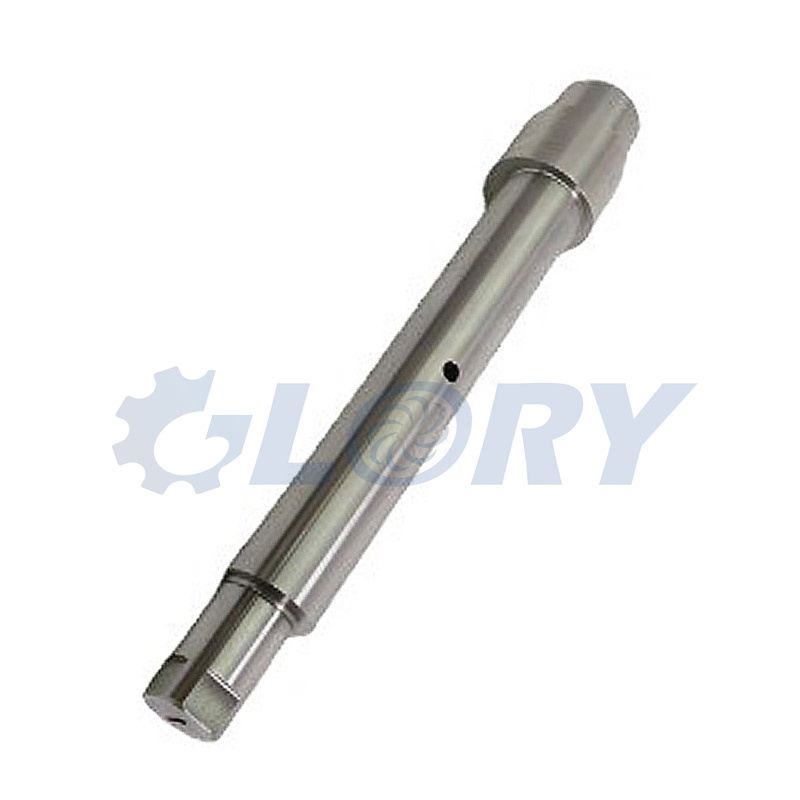
- CNC machined 1144 steel shafts — motor shafts, drive shafts, pump shafts and hydraulic piston rods where strength and straightness matter and the part is machined, not welded.
- CNC machined 1144 steel spindles and axles — lathe spindles, conveyor axles, roller axles and idler shafts.
- CNC machined 1144 steel lead screws and linear guide rods — often induction hardened on the wear surface for long service against linear bearings.
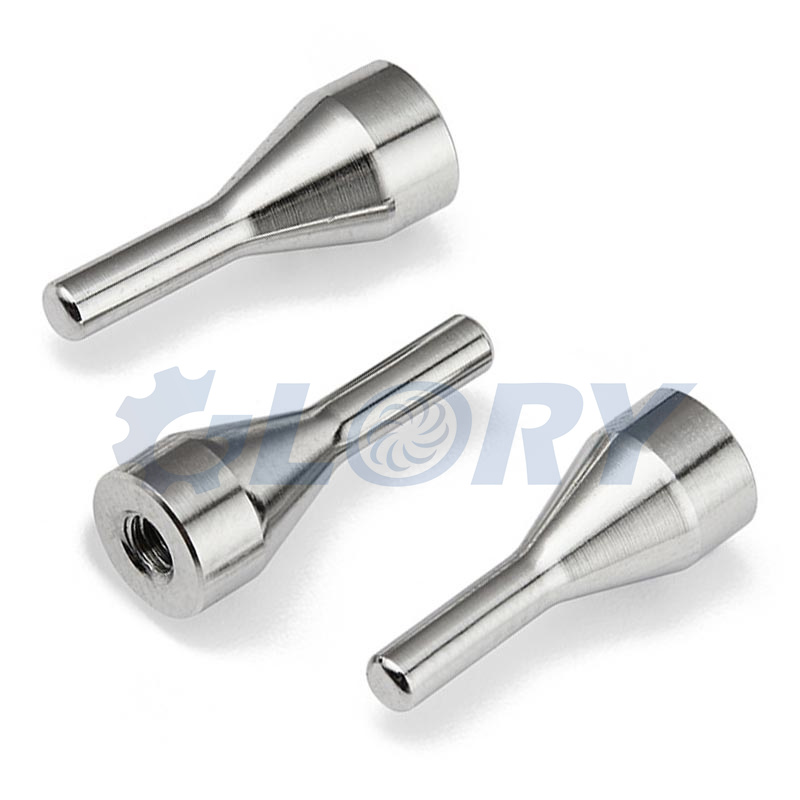
- CNC machined 1144 steel studs, pins and dowel pins — threaded studs, clevis pins, locating pins and fixture dowels.
- CNC machined 1144 steel bushings and sleeves — wear bushings, bearing sleeves and spacer sleeves, where 1018 is too soft and alloy steel is unnecessary.
- CNC machined 1144 steel couplings and hubs — gear couplings, flange couplings, shaft hubs and keyed hubs.
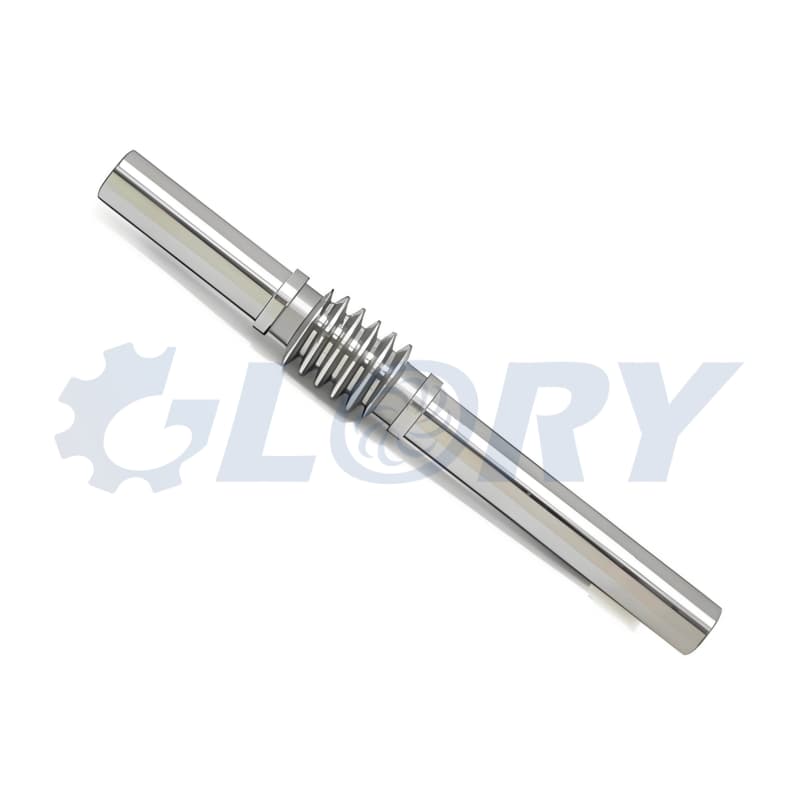
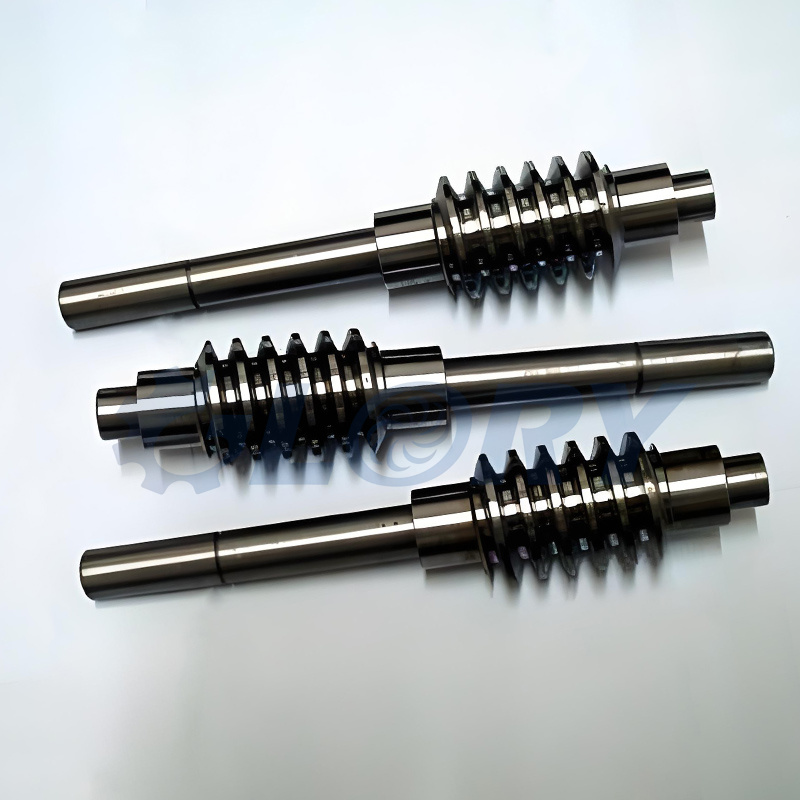
- CNC machined 1144 steel gears, worms and worm shafts — light- and medium-duty gearing and worm drive components.
- CNC machined 1144 steel valve stems, fittings and hydraulic components — valve stems, check-valve parts, hydraulic fittings and spool bodies where machinability shortens cycle time.
- CNC machined 1144 steel collets, tie rods and pistons — machine collets, steering tie rods, pneumatic cylinder pistons and rods.
- CNC machined 1144 steel rollers and wheels — conveyor rollers, guide rollers and track rollers.
Industries that use 1144 steel parts
- Automotive and off-road vehicles — transmission shafts, steering components, axle parts and high-strength fasteners.
- Agricultural machinery — PTO shafts, drive shafts, hydraulic rods and seed-drill components.
- Construction and earthmoving equipment — hydraulic cylinder rods, pivot shafts, pins and bushings.
- General machinery and machine building — feed shafts, lead screws, rollers, spindles and couplings.
- Power transmission — couplings, hubs, drive shafts and worm drives.
- Hydraulics and pneumatics — cylinder rods, pistons, valve stems and fittings.
- Pumps and valves — pump shafts, valve components and packing sleeves.
- Material handling and conveyors — rollers, axles, pulley shafts and guide parts.
- Food processing and packaging — internal mechanism parts where the grade’s clean finish and strength suit running components; 1144 is not stainless, so it is not used for food-contact surfaces.
- Textile machinery — spindles, rollers and traverse cams.
From a single prototype to mass production
The same material and the same process discipline apply whether the order is one piece or one hundred thousand. CNC machined 1144 steel in China is commonly prototyped first, because the material cost and machining cost are low enough that a trial part is cheap insurance before committing to volume.
- Single pieces and prototypes — typically 3–5 working days from a clean drawing. You check the actual part, then approve the volume order.
- Small batches (10–500 pcs) — the same setup discipline as production; no shortcuts on tolerances.
- Medium runs (500–5,000 pcs) — cycle time is optimized, tooling is shared across repeat batches, and pricing stays stable.
- Mass production (5,000+ pcs per order) — bar-fed CNC turning centers run the job with short broken chips and unattended cycles; multi-axis turning centers do shaft work in one clamping; key diameters are checked with in-process gauging and monitored statistically so long runs hold repeatability.
Practical details on quoting:
- Standard turning tolerance ±0.02 mm; precision work ±0.005–0.01 mm where the drawing asks. Thread classes, concentricity and runout are held to the print.
- Finishes after machining: black oxide, zinc plating, phosphating, nickel plating or hard chrome, with plating allowance on toleranced diameters where required.
- Material is bought per heat with confirmed chemistry, cut to length, so scrap and cycle time stay low.
- Quote time: 1–2 working days on a clean drawing. STEP, PDF or DWG all work. If anything on the print is unclear, we ask before quoting, not after.
- Packaging for export: rust protection, cartons or plywood cases, palletized for air or sea freight.
Why source CNC machined 1144 steel in China
For a grade this common, the location of the machine shop is a real part of the cost. China is one of the world’s largest steel producers, and free-cutting grades like 1144 / Y45Mn are stocked locally across the common range (typically Ø6–150 mm rounds, plus hex and square), which keeps material price and lead time down. Machine-hour rates are a fraction of Western levels, and that difference shows up directly in the unit price — the drawing, the material and the tolerances are the same; the cost of the hour is not.
Our shop does turning, milling, drilling, tapping and surface treatment under one roof, so your parts do not travel between suppliers, and you deal with one person from quote to shipment.
If your print calls for 1144, SUM43, Y45Mn or 44SMn28, the practical route is the same: CNC machined 1144 steel in China, machined by a shop that works with this grade as a daily material. Send us your drawing with quantity, tolerances and required finish, and you get a firm quote within two working days — from a single prototype to a full production run.
 We provide custom machined parts, 5-axis linkage CNC machining, and the design, production, and assembly of machinery and equipment.