
OEM CNC Machined 2024 Aluminum in China
We are a China-based precision machining workshop manufacturing OEM CNC machined 2024 aluminum in China for product designers, equipment makers and industrial brands around the world. From a single machined prototype to repeating high-volume batches, every CNC machined 2024 aluminum part is produced to the drawing, to the tolerance band and to the delivery schedule agreed with the customer.
2024 is an aluminum–copper alloy of the 2000 series, valued for its high strength, low density and good behavior under cutting tools. On this page you will find the services we offer on this material, the way 2024 is named under different national standards, its chemical and mechanical profile, the production volumes we support, and the machining and measuring equipment used to keep each batch under control.
CNC Machined 2024 Aluminum Parts in Production
The gallery below shows a small selection of components cut from 2024 and comparable aluminum grades. These are real production geometries made on our turning and milling equipment — brackets, plates, housings, motion components and other custom parts. Every order of CNC machined 2024 aluminum in China that leaves our floor is built from the customer's own drawing, so shapes, features and surface finishes follow the print rather than a fixed catalog.
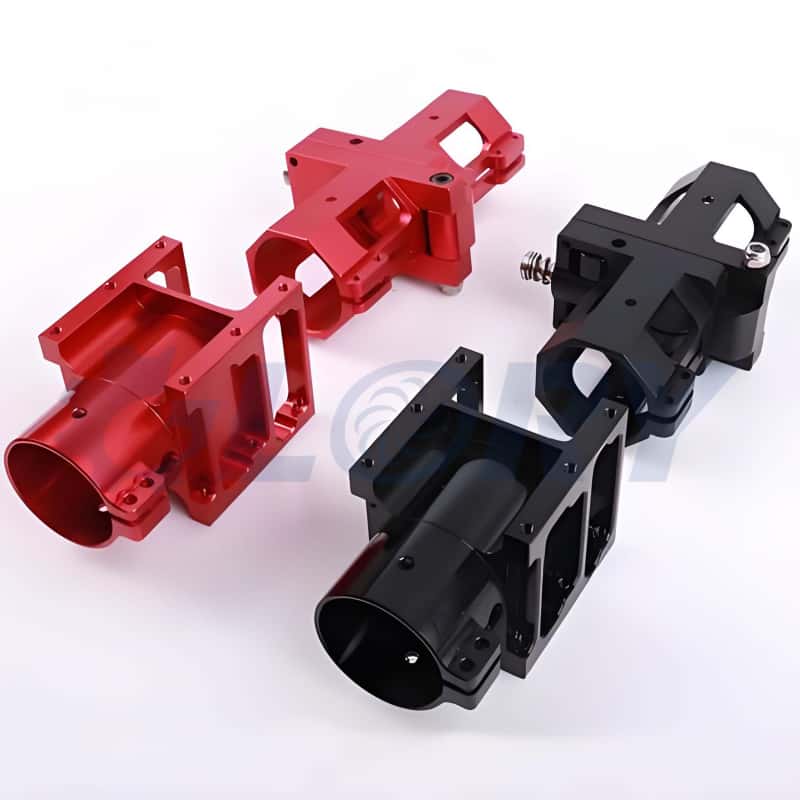
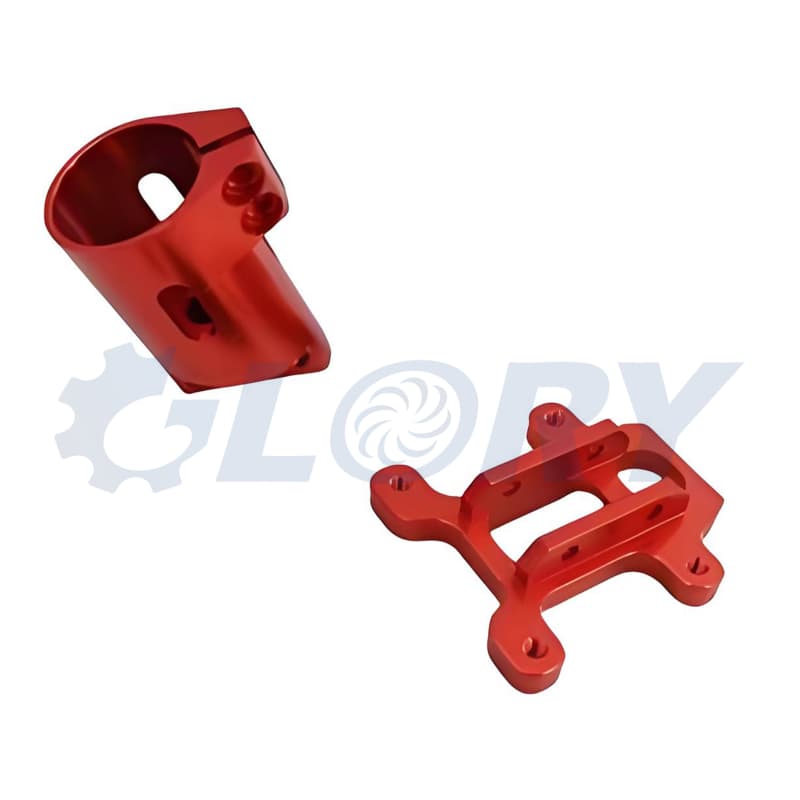
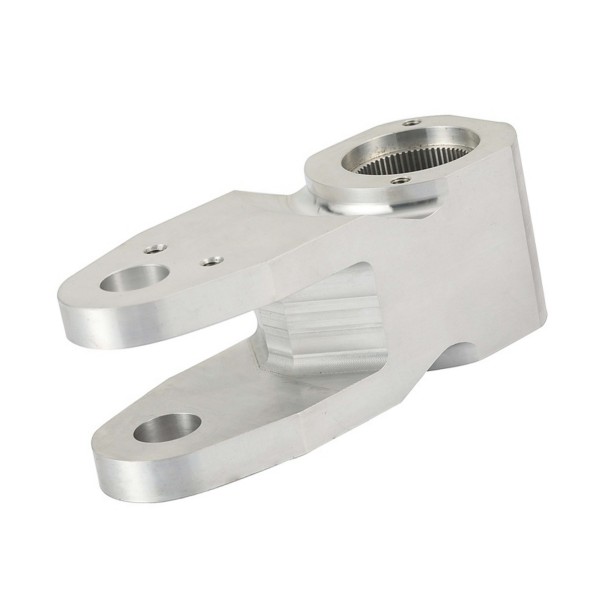
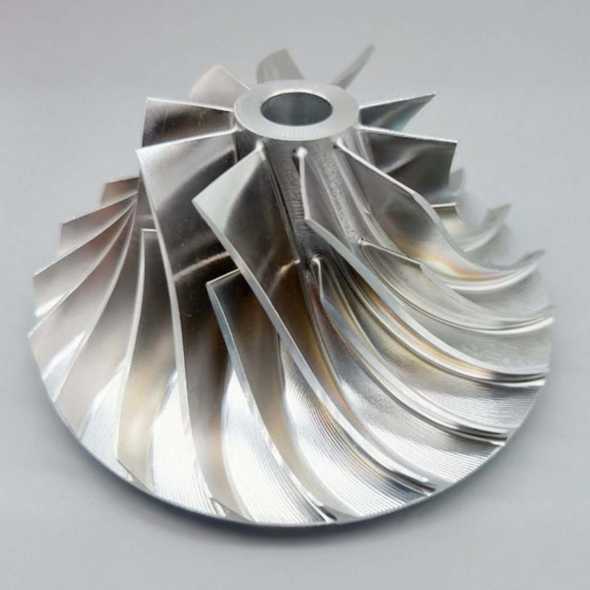
How Grade 2024 Is Named Under Different National Standards
When buyers request CNC machined 2024 aluminum in China, the drawing may reference an American, European, Japanese, Chinese, Russian or international designation. These names describe the same aluminum–copper–magnesium family, with small differences in element limits and temper naming. The table below maps the designations we most often see on incoming prints, so procurement and engineering teams can confirm they are comparing like-for-like stock.
| Standard system | Region | Equivalent designation | Practical note for machined parts |
|---|---|---|---|
| AA (Aluminum Association) | United States | 2024 | The baseline designation used on most export drawings and the reference for quoting. |
| UNS | United States | A92024 | Unified Numbering System cross-reference frequently seen on aerospace-style prints. |
| EN AW / EN 573 | European Union | EN AW-2024 / AlCu4Mg1 | Chemical-symbol form; tempers follow EN 515 notation such as T351. |
| DIN | Germany | 3.1355 / AlCuMg2 | Legacy German material number still encountered on older European drawings. |
| JIS | Japan | A2024 (A2024P plate, A2024BD bar) | Form suffix indicates plate, bar, tube or extruded product. |
| GB/T 3190 | China | 2A12 (formerly LY12) | Closest domestic counterpart; AA 2024 stock can also be ordered directly against the print. |
| GOST | Russia / CIS | D16 (Д16) | Historical counterpart widely used in Soviet-era and CIS equipment documentation. |
| ISO 209 | International | AlCu4Mg1 | ISO chemical designation that describes composition rather than a producer brand. |
Practical guidance: GB 2A12 and AA 2024 are not line-for-line identical in every element limit, but they are treated as interchangeable for the majority of machined structural components. If a print carries a mandatory standard clause, we machine against the named specification and select raw stock accordingly; when the drawing simply states "2024", we confirm the preferred standard and temper in writing before cutting metal.
Chemical composition of 2024 (weight %, typical limits)
Copper (Cu)
3.8 – 4.9% — the principal alloying element; it drives strength through heat treatment.
Magnesium (Mg)
1.2 – 1.8% — works with copper to form strengthening precipitates after aging.
Manganese (Mn)
0.30 – 0.90% — supports grain structure and adds a further strength contribution.
Iron (Fe)
≤ 0.50% — controlled as an impurity to limit brittle intermetallic phases.
Silicon (Si)
≤ 0.50% — kept low so it does not interfere with the Cu–Mg strengthening system.
Zinc (Zn)
≤ 0.25% — residual level; 2024 is deliberately not a zinc-bearing 7000-series alloy.
Titanium / Chromium
Ti ≤ 0.15%, Cr ≤ 0.10% — grain refinement and microstructure control.
Aluminum (Al)
Balance — each other residual element ≤ 0.05%, residuals combined ≤ 0.15%.
Typical Mechanical and Physical Profile (T351 Plate)
The figures below are typical reference values for 2024-T351 plate and are used for early-stage feasibility checks. Exact values shift with temper, product form (sheet, plate, bar, extrusion), thickness and test direction, so final design calculations should always follow the material data sheet attached to the purchased lot.
Key Characteristics That Shape Machining Decisions
Understanding how 2024 behaves — both its strengths and its limits — helps us choose feeds, speeds, workholding and surface treatment before the first chip flies. The six points below summarize what engineers should know when they specify CNC machined 2024 aluminum in China-based production.
High strength at low weight
2024 sits among the strongest of the commonly machined heat-treatable aluminum alloys. Its strength-to-weight ratio makes it a natural choice when 6061 is no longer strong enough but the part must remain far lighter than steel.
Strong fatigue behavior
Components exposed to repeated loading — joints, levers, fittings and rotating hardware — benefit from its fatigue resistance, which is why the alloy has a long history in airframe and motion-system applications.
Heat-treatable tempers
Solution heat treatment followed by natural or artificial aging produces T3, T4, T351 and T851 tempers. The temper selected changes strength, residual stress and machining stability, and is confirmed before production.
Excellent machinability
In hardened tempers the alloy cuts cleanly, forms manageable chips and tolerates high feed rates, which supports tight dimensional control, fine finishes and economically short cycle times on both mills and lathes.
Corrosion behavior and cladding
Its corrosion resistance is lower than that of 5000- or 6000-series alloys. Alclad stock or a protective surface treatment can be specified for harsh environments, and we flag this early so finishing is planned, not added late.
Forming and joining profile
The annealed O temper can be formed, while fusion welding is generally not recommended because of hot-cracking sensitivity. Most production assemblies use fasteners, inserts or precision-machined mating interfaces instead.
Turning, Milling, Drilling and Tapping Under One Roof
A typical order of CNC machined 2024 aluminum in China combines several processes in a single routing. Keeping these operations in-house reduces refixturing error, shortens lead time and keeps dimensional relationships — bore to face, hole pattern to datum, thread to pocket — consistent across the whole part. The eight capabilities below cover the vast majority of 2024 components we produce.
CNC turning
Bar-fed and chucking lathes handle OD/ID turning, facing, grooving, profiling, threading and knurling for shafts, sleeves, bushings, spacers, fittings and round flanges in 2024 bar stock.
3-axis milling
Vertical machining centers cut prismatic geometry — pockets, slots, planar faces and hole patterns — from 2024 plate and block, with stable, predictable cycle times for plates and brackets.
4-axis milling
A rotary axis indexes around the part so multiple sides, cross-holes and perimeter features are machined in one setup, improving alignment and removing the tolerance stack-up of repeated manual clamping.
5-axis milling
Simultaneous five-axis movement reaches compound angles, undercuts and sculptured surfaces such as impeller blades and contoured housings while keeping the cutter normal to the surface for a better finish.
Drilling
Controlled hole location with spot, twist, step and deep-hole drills; peck cycles evacuate chips from deep bores in 2024 and prevent work hardening around the hole wall.
Tapping
Metric and inch internal threads cut with machine taps or thread milling for difficult sizes and thin walls; thread inserts can be installed when a drawing calls for a reinforced, wear-resistant thread.
Boring and reaming
Fine boring and reaming bring critical bores into narrow tolerance bands with controlled surface roughness, which matters for bearing seats, pivot holes and sealing diameters.
Deburring and surface prep
Edge break, tumbling, bead blasting, brushing and coordination of anodizing, powder coating or conversion coating leave the part clean, dimensionally stable and ready for assembly.
From a Single Piece to Large-Batch Production
Buyers sourcing CNC machined 2024 aluminum in China rarely need the same volume in every phase of a product's life. Early design iterations need a handful of parts quickly; mature products need stable, repeating batches. Our routing is structured to follow that journey without forcing the customer to re-source at each stage.
One-off and prototype
1 – 10 piecesFirst articles and design-verification samples cut from plate or bar, with fast turnaround so fit, function and assembly clearance can be checked before design freeze.
Low-volume production
10 – 500 piecesBridge quantities for pilot builds and market testing. Soft fixturing and optimized CAM programs keep one-time cost proportionate to the small lot size.
Mid-size batches
500 – 5,000 piecesDedicated fixtures, planned tool life and scheduled in-process checks keep critical dimensions centered inside the tolerance band across the full run.
High-volume and repeat orders
5,000+ piecesMass-production routing with lot-level material traceability, balanced cycle times, staged inspection and standing repeat-order schedules for steady demand.
Machining and Inspection Capabilities on the Floor
The six scenes below show where CNC machined 2024 aluminum parts are actually produced and verified — from the workshop floor and multi-axis cutting cells to the optical and coordinate measuring stations that confirm finished geometry against the drawing.
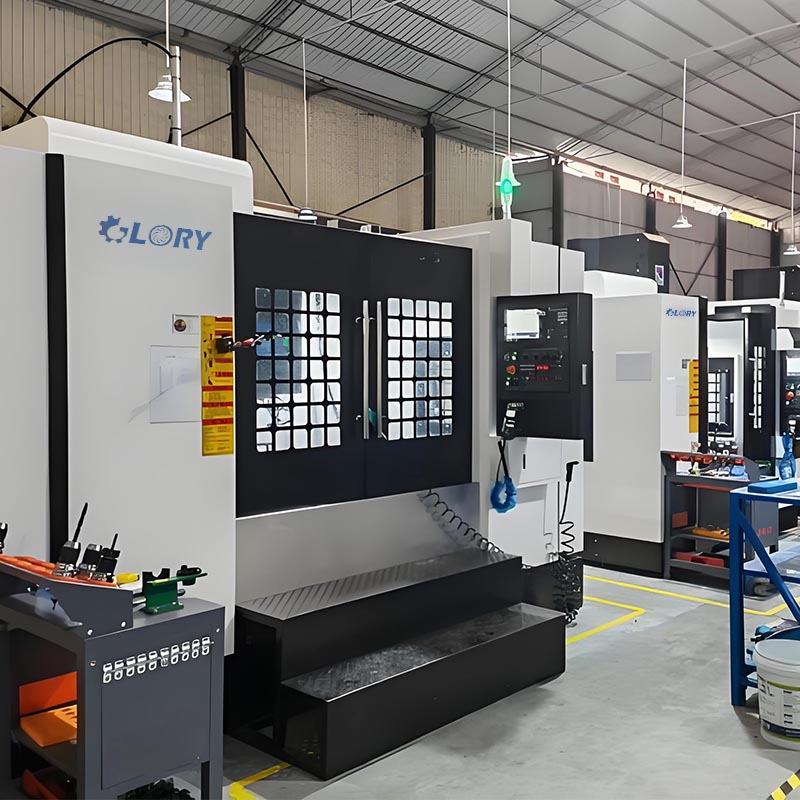
Workshop
Organized machining floor with turning and milling cells, raw-stock storage and finished-part staging arranged to keep routings short and traceable.
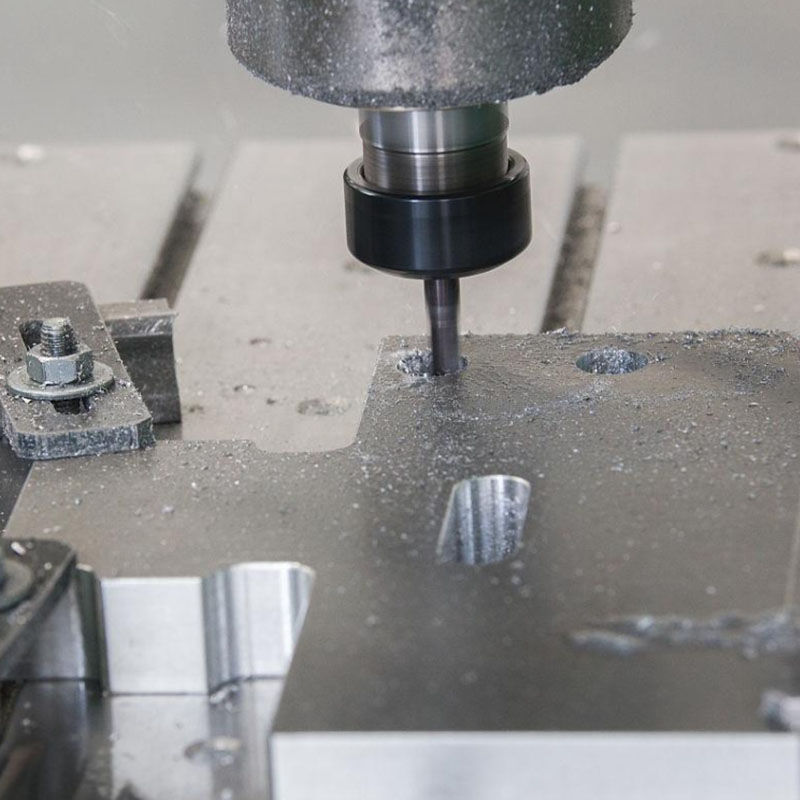
CNC milling
Vertical milling centers produce pockets, profiles and hole patterns in 2024 plate and block, with flood coolant and programmed chip evacuation.
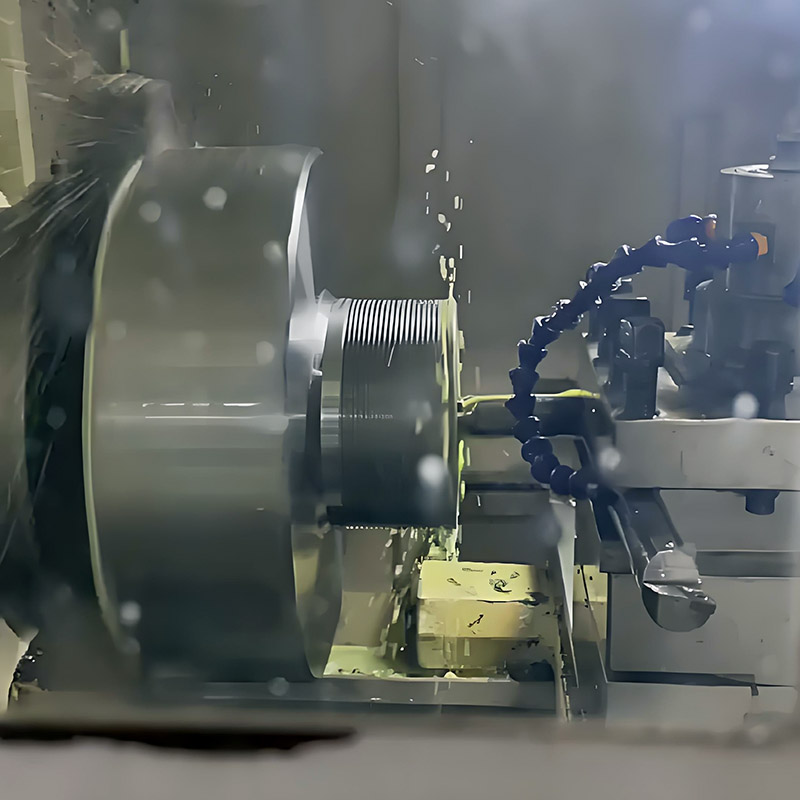
CNC turning
Precision lathes turn round 2024 components such as shafts, sleeves and fittings, holding concentricity and surface finish along the full length.
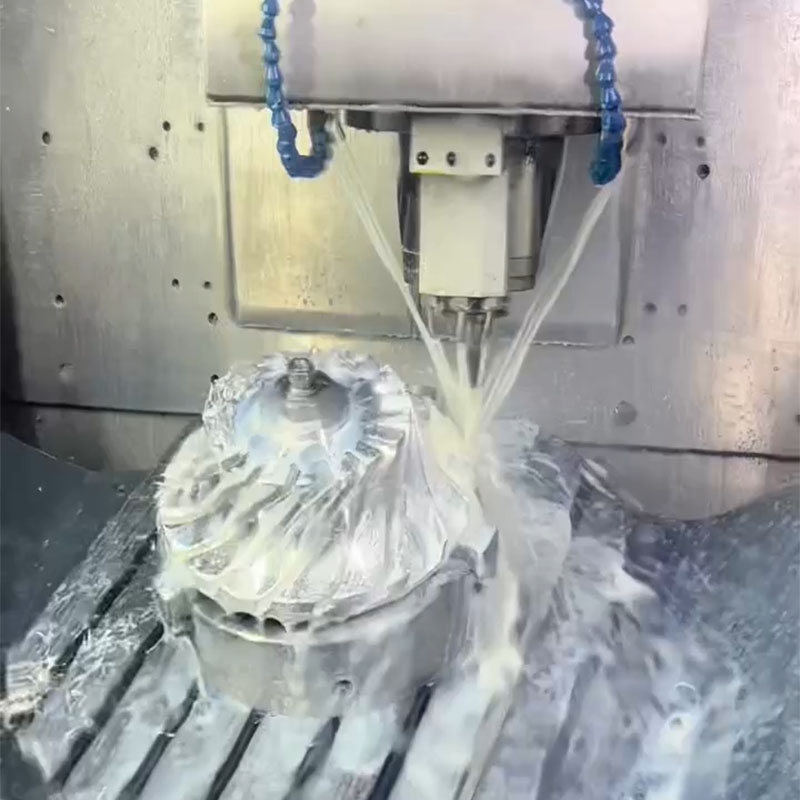
5-axis milling
Simultaneous five-axis machining reaches complex contoured surfaces and compound-angle features in a single clamping for prototype and production parts alike.
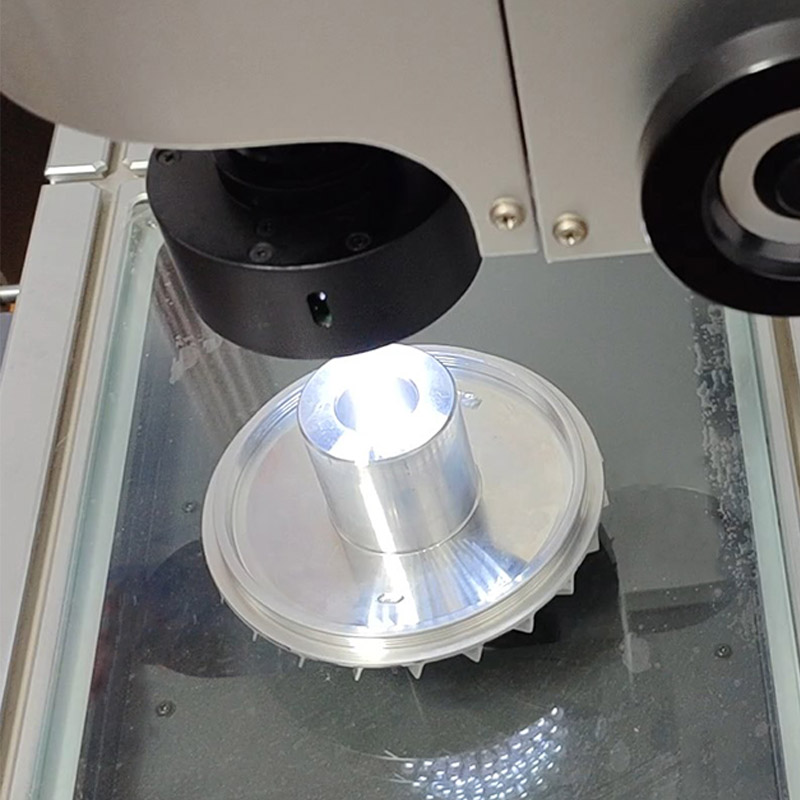
2D measuring
An optical profile projector compares silhouettes and edge geometry — radii, angles, thread profiles and blade contours — against magnified drawing data.
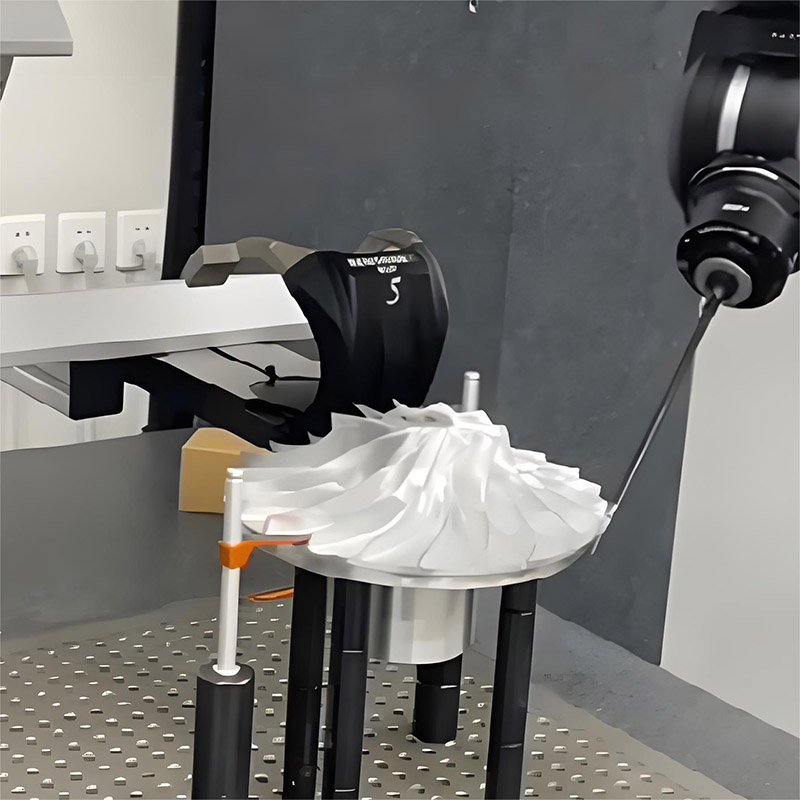
3D measuring
A coordinate measuring machine probes three-dimensional features, position tolerances and complex surfaces, recording measured values against the datum scheme.
Where Machined 2024 Components Are Used
The combination of low density, high static strength and fatigue resistance puts machined 2024 in load-bearing, weight-sensitive products across several industries. The eight application groups below reflect the geometries most often seen on the prints we receive.
Aerospace structures
Wing and fuselage interior structures, ribs, stringers, brackets and seat-frame components that trade mass for strength.
Aircraft fittings
Control-system fittings, hinges, clevises and link arms that see repeated cyclic loads during service.
Automotive and motorsport
Uprights, adapter plates, pedal-box parts and lightweight brackets where unsprung and rotating mass matters.
Hydraulic manifolds
Valve bodies and fluid blocks with intersecting bores, flat sealing faces and precise port locations.
Robotics and automation
Robot joints, arm links, effector plates and motion frames that must stay rigid while accelerating quickly.
Electronics hardware
Reinforced frames, chassis plates, heat-spreading structures and mounting decks for compact electronic equipment.
Shafts and couplings
Turned shafts, couplers, spacers, bushings and threaded fastener-type parts produced from round bar.
Precision and hobby equipment
RC drivetrain parts, optical mounts, instrument components and other small, feature-dense mechanisms.
How Each Batch Is Kept Under Control
Dimensional confidence on CNC machined 2024 aluminum in China comes from a sequence of checks built into the routing rather than a single final inspection. The six-stage workflow below is how a lot moves from incoming stock to packed, ready-to-ship parts.
Incoming stock verification
Alloy and temper are checked against the order using the supplier's material documentation; bar and plate dimensions are confirmed before any fixture is built.
First-article check
The first completed part is measured feature by feature against the drawing; serial production begins only after every critical dimension is confirmed.
In-process monitoring
Operators measure defined critical dimensions at fixed intervals, compensating tool wear before features can drift toward a tolerance limit.
2D optical measurement
A profile projector and vision equipment verify 2D geometry — radii, chamfers, angles, blade profiles and edge-of-feature distances — without contact pressure.
3D coordinate inspection
A CMM probes complex three-dimensional features, true-position relationships and datum-based tolerances that hand tools cannot reach reliably.
Final review and packing
Visual review, complete deburring, cleaning and protective packaging prevent cosmetic damage and galvanic issues during transit and storage.
Frequently Asked Questions About Machined 2024
Short, practical answers to the questions engineering and procurement teams raise most often when placing orders for CNC machined 2024 aluminum in China.
What is 2024 aluminum mainly used for?
It is chosen for high-strength, weight-sensitive parts — airframe-type structures, fittings and brackets, motorsport components, hydraulic valve bodies, robot joints, shafts and precision mechanisms. It is usually preferred over 6061 when calculated loads demand more strength, and selected against 7075 when its particular balance of fatigue behavior and machinability fits the design.
What is the Chinese domestic equivalent grade?
Under GB/T 3190, the closest counterpart is 2A12, historically labeled LY12. For most machined components it is treated as interchangeable with AA 2024, while export orders can also be produced directly from AA-designated imported or domestic stock. The standard named on the drawing is the one followed during material selection.
Which temper works best for CNC machined 2024 aluminum in China orders?
T351 and T851 plate are the most common choices for machined parts because the stress-relieved, stretched condition reduces movement after heavy material removal. T3/T4 sheet suits lighter fabricated geometries, while the O temper is reserved for forming work. We recommend confirming temper together with part thickness and how much material will be removed.
Can one supplier handle both a single prototype and later mass production?
Yes. The same drawing, CAM strategy and datum scheme can be carried from a one-off first article through low-volume bridge lots into repeating high-volume batches. Keeping the progression under one roof preserves lessons learned during prototyping — preferred clamping, tool approach and inspection points — instead of restarting that learning curve elsewhere.
How are tight tolerances verified?
Critical features are measured after the first article and then at fixed intervals during the run. Hand instruments cover routine dimensions, a 2D profile projector handles profiles and radii, and a 3D coordinate measuring machine inspects spatial relationships and complex surfaces against the drawing's datum scheme.
Does 2024 corrode, and can it be anodized?
Its natural corrosion resistance is below that of 6061, so parts for damp or salt environments often use alclad stock or a specified protective finish. It can be anodized, but cosmetic results are less consistent than on 6061 and color may vary slightly; where appearance is critical, we discuss the chosen finish and a representative sample before the full run.
In short, OEM CNC machined 2024 aluminum in China is a practical, repeatable solution for buyers who need the strength of a 2000-series alloy combined with precise turning, three-axis to five-axis milling, drilling and tapping — whether the order is a single first article or a scheduled mass-production program. By matching the correct national grade designation (AA 2024, EN AW-2024, JIS A2024, GB 2A12, GOST D16 or ISO AlCu4Mg1), selecting the right temper, routing every feature through suitable equipment and verifying dimensions with both 2D and 3D measuring methods, machined 2024 components can be produced batch after batch with stable geometry, controlled finishes and predictable lead times.
About Us
 We provide custom machined parts, 5-axis linkage CNC machining, and the design, production, and assembly of machinery and equipment.