
OEM CNC Machined PEEK Plastic in China
We are a China-based CNC machining workshop supplying OEM CNC machined PEEK plastic in China for engineers, procurement teams and product brands in Europe, North America, Russia, Pakistan, South Africa and other overseas markets. Solid PEEK rod, plate and tube stock are turned, milled, drilled and tapped into precise components built entirely around the customer's drawing.
From a single machined PEEK prototype to repeated large-volume batches, every order follows the same principle: the right PEEK grade, polymer-aware machining parameters and measured dimensions before shipment.
PEEK-Specific Process Knowledge
Tool sharpness, feed rate, spindle speed and cooling are adjusted around the way PEEK behaves under heat and clamping, rather than treating it like metal.
Complete In-House Capabilities
Turning, 3-axis, 4-axis and 5-axis milling, drilling and tapping are coordinated in one workshop, so a part moves between processes without delay.
One Piece to Volume Batches
A single machined PEEK prototype, a small validation run or a repeat order of several thousand pieces can all be produced to the same drawing.
Drawing-Based OEM Supply
Components are manufactured strictly to customer drawings, samples or written specifications and supplied as neutral, unbranded OEM parts.
What Is PEEK, and Why Machine It?
PEEK (polyether ether ketone) is a semicrystalline, high-performance engineering thermoplastic selected for demanding applications where ordinary plastics fail. It combines mechanical strength, temperature resistance and chemical stability in a single material, which is also why it must be cut with carefully selected tooling and machining parameters.
PEEK retains useful stiffness and strength at elevated temperatures, with a long-term service range around 250 °C, and it resists many acids, alkalis, solvents, oils, steam and hot water. It also offers strong fatigue and creep behavior, low flammability, excellent electrical insulation and only a fraction of the weight of steel, aluminum or brass.
For design engineers, CNC machining PEEK from solid rod, plate or tube stock is often the most practical route to tight-tolerance, low-to-medium volume parts: no molding tooling is required, design revisions are easy to accommodate, and the finished component keeps the isotropic properties of the base stock. When teams source CNC machined PEEK plastic in China, they typically need a workshop that understands these material characteristics, not one that simply runs a standard metal-cutting program.
Thermal Performance
Continuous service around 250 °C; withstands steam and hot-water environments while keeping stiffness under heat.
Mechanical Strength
High tensile and compressive strength with strong resistance to creep and fatigue under sustained loads.
Chemical Resistance
Stable against many chemicals, fuels, oils and solvents across typical industrial working temperatures.
Insulation & Light Weight
Excellent electrical insulation and low density help reduce component weight compared with metal equivalents.
PEEK Grades We Machine from Solid Stock
Different PEEK formulations exist for different loads, speeds and contact conditions. We machine the grade named on the customer drawing, or help select one from the working conditions described.
Unfilled (Virgin) PEEK
The natural, unreinforced grade offers balanced toughness, ductility and electrical insulation. It suits general precision parts, spacers, insulators and sealing components.
Glass-Filled PEEK
Glass reinforcement raises stiffness and dimensional stability and lowers thermal expansion, fitting structural components that carry static or lightly dynamic loads.
Carbon-Filled PEEK
Carbon reinforcement adds mechanical strength, thermal conductivity and wear resistance for load-bearing and friction-exposed machine components.
Bearing-Grade PEEK
PTFE, graphite and carbon-filled formulations reduce friction and wear rate for bushes, slides, wear rings and other moving-contact parts.
CNC Machining Capabilities for PEEK Components
Our CNC machined PEEK plastic in China service covers the full set of standard precision machining processes. Several processes can be combined on one part, and workholding is planned together with the toolpath to protect thin walls and soft polymer surfaces.
CNC Turning
External and internal turning, facing, grooving, profiling and cut-off on PEEK rods and tubes, producing bushes, sleeves, rollers, sealing rings and rotational spacers.
3-Axis CNC Milling
Prismatic PEEK parts with pockets, slots, machined faces and 2D profiles; suitable for plates, brackets, manifolds and fixture components.
4-Axis CNC Milling
Indexed rotary machining reaches multiple sides in a single setup, reducing repeated alignment error on cross-drilled and multi-face PEEK components.
5-Axis CNC Milling
Simultaneous multi-axis cutting of complex 3D surfaces, angled holes, undercuts and impeller-like geometries with fewer setups and cleaner transitions.
Drilling
Through holes, blind holes, small-diameter and deep holes produced with pecking cycles and controlled chip evacuation that prevent heat buildup and damaged hole walls.
Tapping
Internal threads and thread preparation cut with PEEK-appropriate taps and speeds; pockets can also be machined for customer-installed threaded inserts.
From a Single Prototype to Large-Batch Production
There is no rigid MOQ barrier. Fixturing, programming and inspection effort are matched to the order size, so a one-off PEEK prototype and a recurring batch follow the same drawing requirements.
Single Piece & Prototype, 1-10 pcs
First articles, fit-check samples and engineering prototypes, usually machined directly from solid PEEK stock with short lead time.
Low-Volume Run, 10-100 pcs
Pilot production, spare parts and market-validation batches produced with flexible scheduling and quick design-change response.
Mid-Volume Repeat Orders, 100-1,000 pcs
Scheduled releases supported by stored CNC programs, repeatable setups and batch inspection records kept across orders.
Large-Batch Production, 1,000+ pcs
Optimized fixturing and cycle times for stable, repeatable CNC machined PEEK plastic parts delivered release by release.
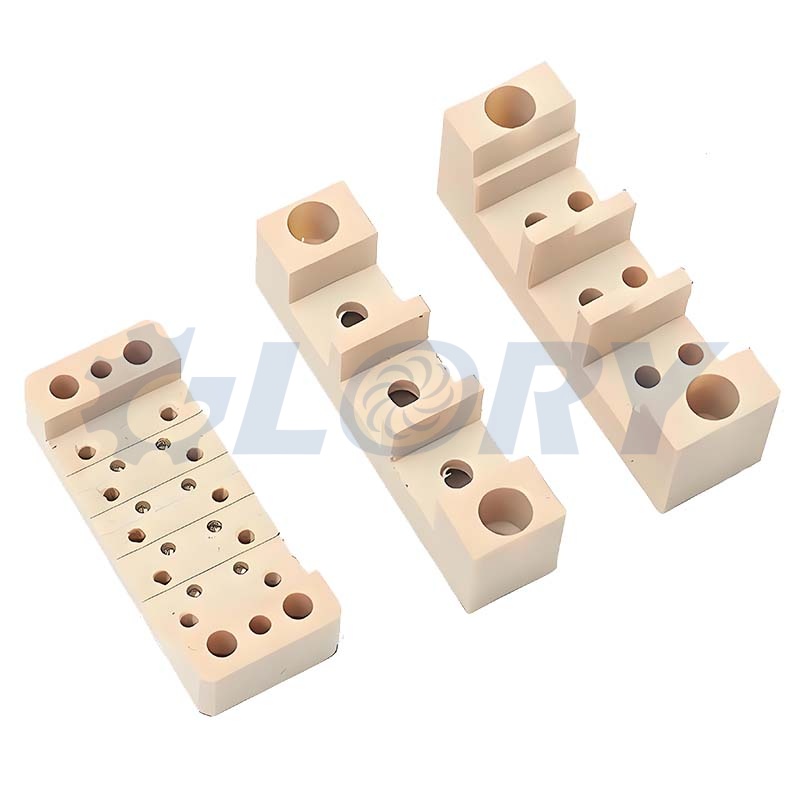
Machined PEEK Parts Produced to Customer Drawings
The samples below show the kind of CNC machined PEEK plastic in China components we produce. They illustrate typical geometries and surface quality rather than a fixed catalog; every order is made to the customer's own design.

Machining and Measuring Resources Behind Every PEEK Order
PEEK work is backed by our broader engineering-plastics and precision-inspection resources. The same equipment is used across polyurethane, nylon and other polymer work, which keeps process experience wide and measuring routines consistent.
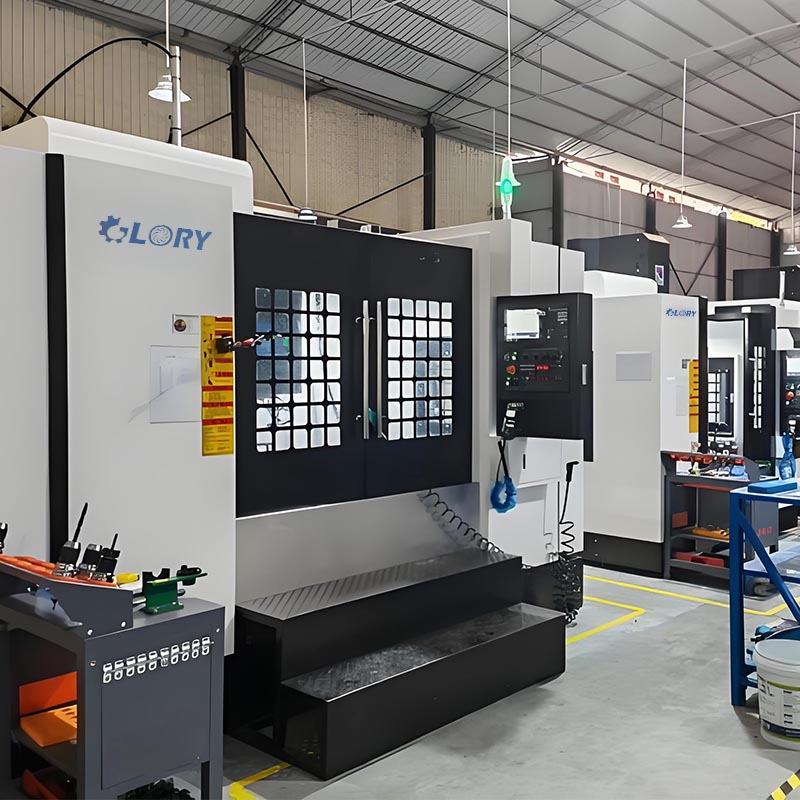
The CNC machining floor where plastic and metal components are produced process by process.
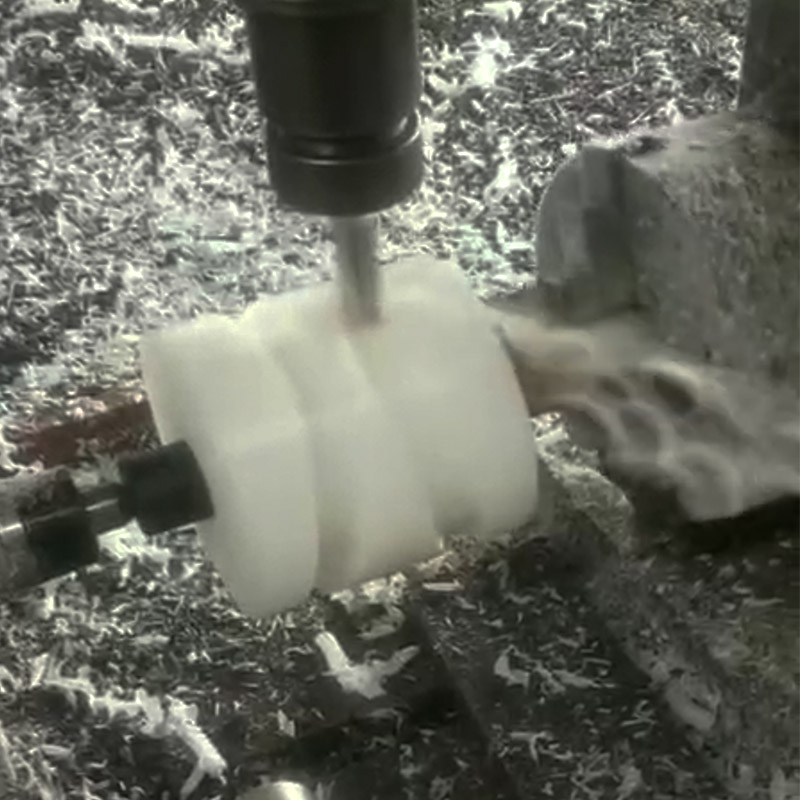
CNC milling of engineering plastics with dedicated, sharp tooling and controlled cutting heat.
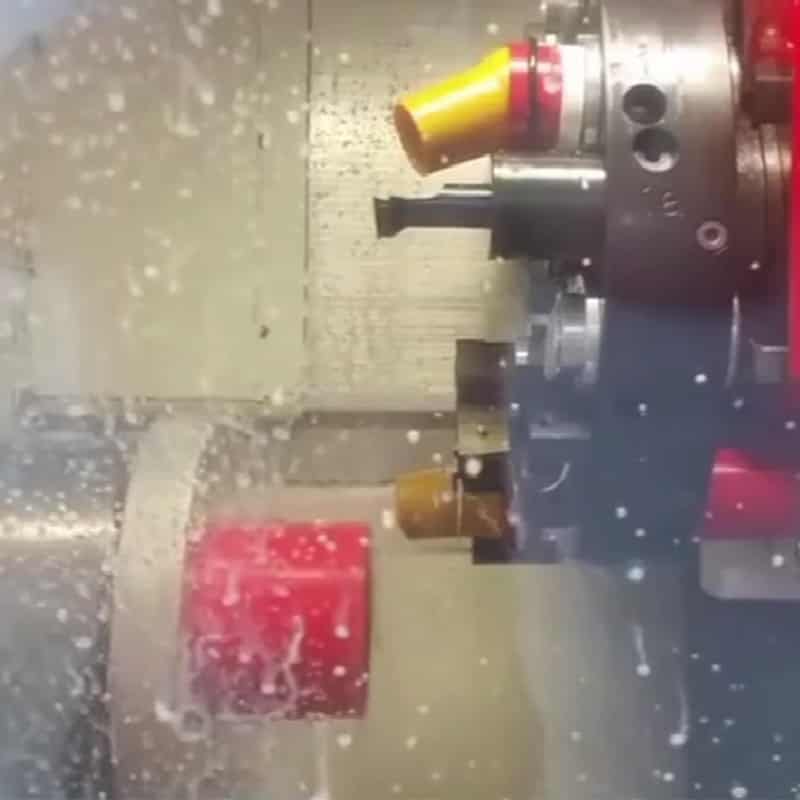
Precision turning of polyurethane and other elastic polymer stock on CNC lathes.
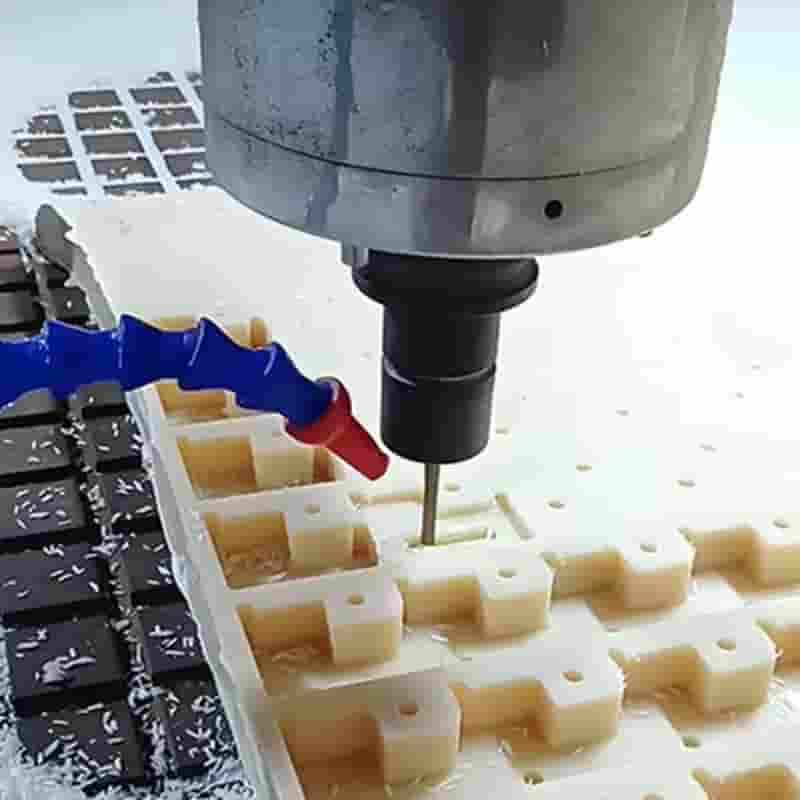
Multi-axis milling of nylon parts with soft clamping that protects polymer surfaces.
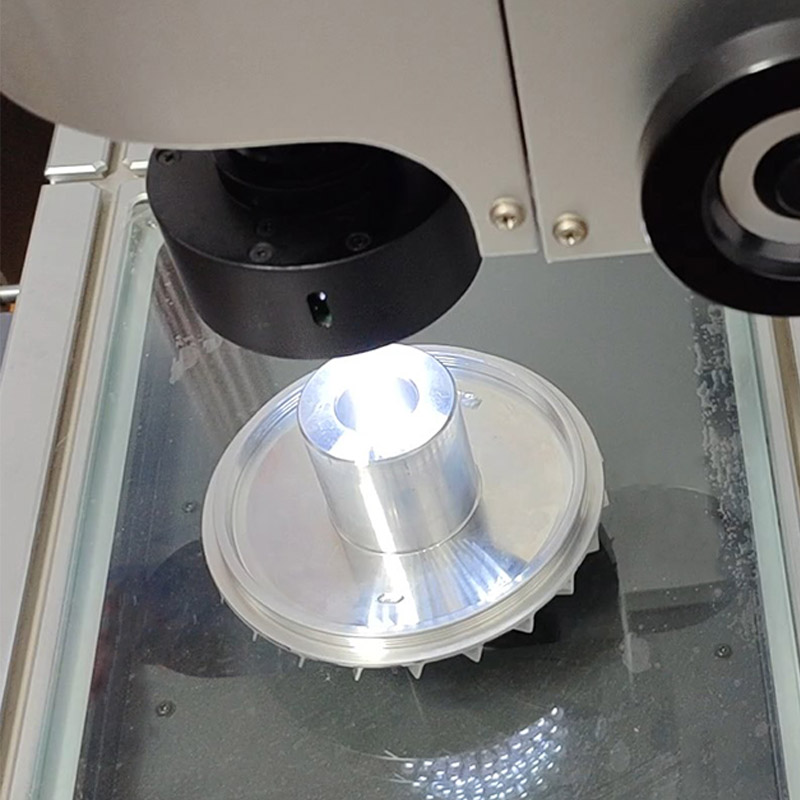
Optical profile projector for checking profiles, edges, radii and small features in two dimensions.
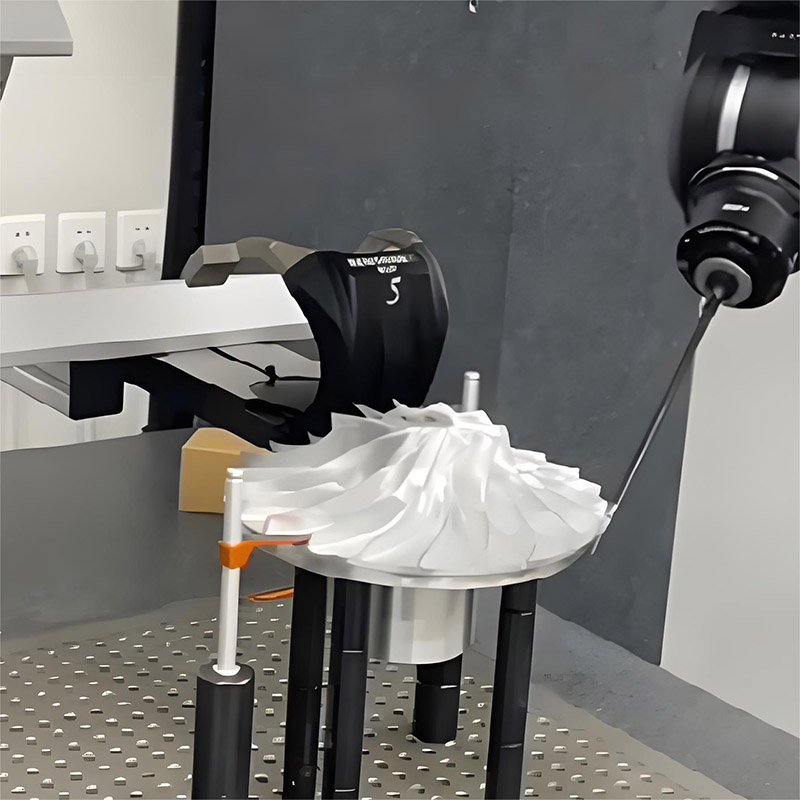
Coordinate measuring machine for three-dimensional inspection of positions, bores and contours.
Where CNC Machined PEEK Parts Are Used
Because PEEK combines heat resistance, strength, light weight and insulation, machined PEEK components appear wherever metal is too heavy, too hot or chemically unsuitable. All parts below are produced to customer specifications rather than from a fixed stock catalog.
Aerospace & Transportation
Interior brackets, cable supports, spacers and lightweight structural components where weight reduction matters.
Medical & Life-Science Equipment
Instrument housings, handles, spacers and fixture components made to customer drawings for equipment builders.
Semiconductor & Display Tooling
Insulating wear parts, wafer-handling supports and chemical-exposed components requiring clean, controlled machining.
Oil, Gas & Energy
Sealing rings, back-up rings, valve seats and related components exposed to pressure, heat and aggressive media.
Electrical & Electronics
Insulators, connector bodies, sensor holders and high-voltage isolation parts with precise hole patterns.
Food, Pharma & Packaging Machinery
Wear strips, guide parts, rollers and machine components for wet, wash-down or high-temperature processing lines.
How We Keep Machined PEEK Parts Stable and Accurate
Delivering consistent CNC machined PEEK plastic in China means controlling the details polymers are sensitive to. Our process is built around four practical controls used on every PEEK job.
Workholding & Stress Control
PEEK marks and deflects more easily than metal, so we use soft jaws, custom fixtures, controlled clamping force and balanced stock removal to protect thin walls and flatness.
Heat-Aware Cutting
Sharp, polished tools, suitable spindle speeds, air cooling and controlled chip load prevent melting, smearing, burrs and heat-related surface damage.
Dimensional Stability
Roughing and finishing are staged to release internal stress; thermal expansion and post-machining relaxation are considered before final dimensions are taken.
Multi-Level Inspection
First-article, in-process and final checks use calipers, micrometers, bore gauges, a 2D profile projector and a 3D coordinate measuring machine, with records on request.
How a PEEK Machining Project Moves Through the Workshop
A transparent, repeatable sequence keeps custom PEEK components traceable from the incoming drawing to the packed shipment.
Drawing & Manufacturability Review
Dimensions, tolerances, threads, wall thickness and PEEK grade are reviewed, and any manufacturability question is raised before cutting starts.
Material Preparation
The correct PEEK grade and stock shape, whether rod, plate or tube, is selected, checked and cut to an appropriate blank size.
CAM Programming
Toolpaths, workholding, operation sequence and inspection points are planned together for the specific geometry.
CNC Machining
Turning, milling, drilling and tapping are performed on the matched machines, with first-piece confirmation before the run continues.
Deburring & Cleaning
Sharp edges, machining marks, chips and coolant residue are removed without changing any critical dimension.
Inspection & Export Packing
Final dimensions are measured, parts are labeled and protectively packed, and batch records accompany the shipment.
Common Questions About CNC Machined PEEK Plastic in China
What information is needed to start a PEEK project?
A drawing in PDF, DWG, STEP or IGES format, with critical dimensions and tolerances, the PEEK grade (or the working conditions if the grade is still open), required quantity and any surface or packaging requirements.
Is there a minimum order quantity?
No. Single-piece prototypes and one-off replacement parts are accepted alongside low-volume runs and repeated large-batch production.
Can production start from a physical sample?
Yes. A sample can be measured and drafted into a drawing for written confirmation before production, with critical dimensions agreed in advance.
How is PEEK kept dimensionally stable during machining?
With sharp tooling, symmetric roughing, controlled cutting heat, stress-relieving staged passes and acclimation before final measurement, practices developed specifically for engineering polymers.
For buyers sourcing CNC machined PEEK plastic in China, we offer one material-aware workshop for OEM PEEK turning, multi-axis milling, drilling and tapping, supported by in-house 2D and 3D measuring. From a single custom PEEK prototype to repeated large-volume releases, every component is produced to the customer's drawing and supplied as a neutral, ready-to-assemble part.
Our hands-on experience across PEEK, polyurethane, nylon and other engineering polymers means toolpaths, fixtures and measuring plans are chosen for plastics first, the practical foundation of stable, repeatable machined PEEK components.
About Us
 We provide custom machined parts, 5-axis linkage CNC machining, and the design, production, and assembly of machinery and equipment.