OEM CNC Machined 1018 Carbon Steel in China

OEM CNC Machined 1018 Carbon Steel in China

AISI 1018 is one of the most practical low-carbon engineering steels ever put on a CNC machine: soft enough to cut quickly, tough enough to survive real service loads, and responsive to carburizing when a hard wear surface is required. As a Chinese workshop focused on CNC machined 1018 carbon steel in China, we turn, mill, drill and tap this grade every day — from one-off functional prototypes to repeat high-volume production orders drawn from cold-drawn bar, hot-rolled round, plate and block stock.

On this page you will find the material chemistry, mechanical and physical properties, the equivalent commercial grades used under different national standards, the way 1018 behaves during machining, the heat treatments and surface finishes it accepts, and the production volumes and component families we support.

Material
AISI / SAE 1018 low-carbon steel
Core processes
Turning, milling, drilling, tapping
Milling axes
3-axis, 4-axis and 5-axis
Order size
Single piece to high-volume batches
Sample components

CNC Machined 1018 Carbon Steel Components

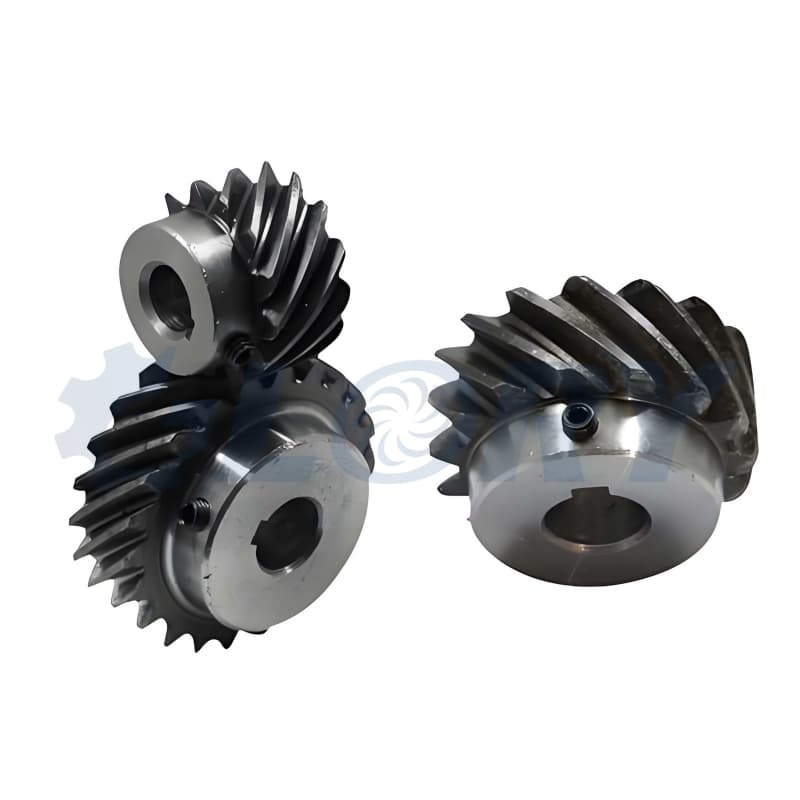
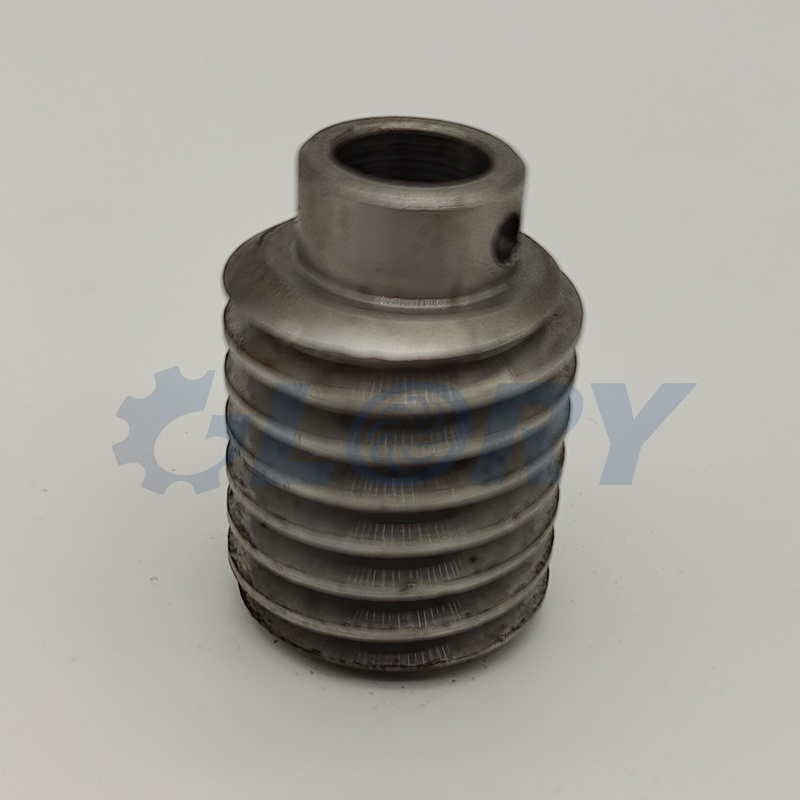
The parts below are representative of the CNC machined 1018 carbon steel in China work that leaves our floor. Both are shown as machined, with carburizing used where the application calls for a wear-resistant case.

Carburized gear CNC machined from 1018 carbon steel

Carburized Gear

Steel worm shaft CNC turned and milled from 1018 carbon steel

Worm Shaft

In-house capability

CNC Machining Processes Applied to 1018 Steel

Every CNC machined 1018 carbon steel in China order we accept is routed through the process combination its geometry actually needs — often several of the four core processes below on the same raw blank.

CNC Turning

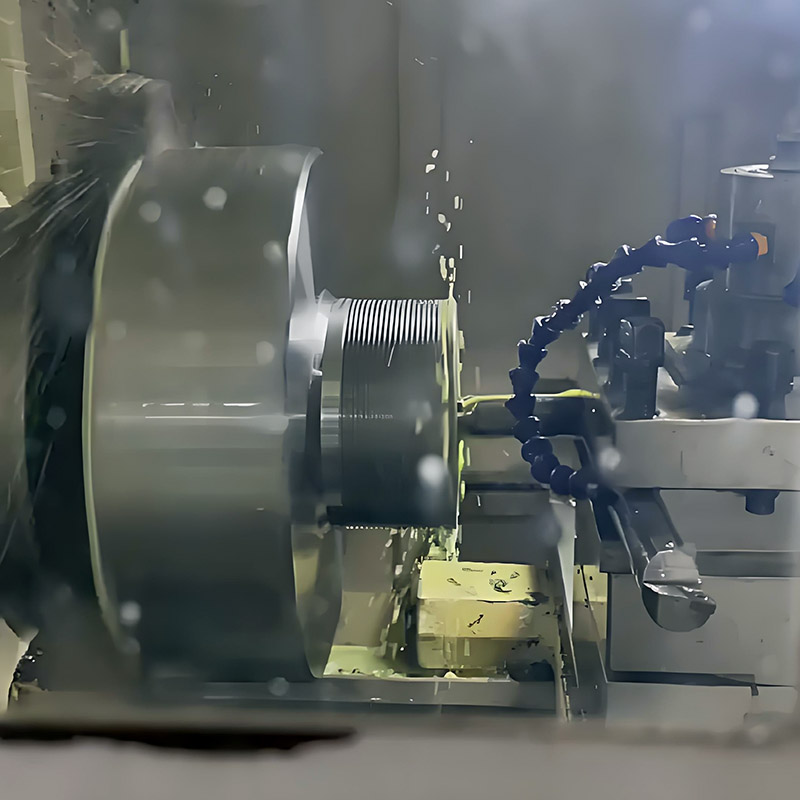
OD and ID turning, facing, grooving, parting, taper turning and single-point threading on horizontal lathes and turning centers. Typical work includes shafts, pins, bushings, spacers, sleeves, threaded studs and stepped cylindrical parts held to consistent diameters across long production runs.
CNC Milling — 3 / 4 / 5 Axis

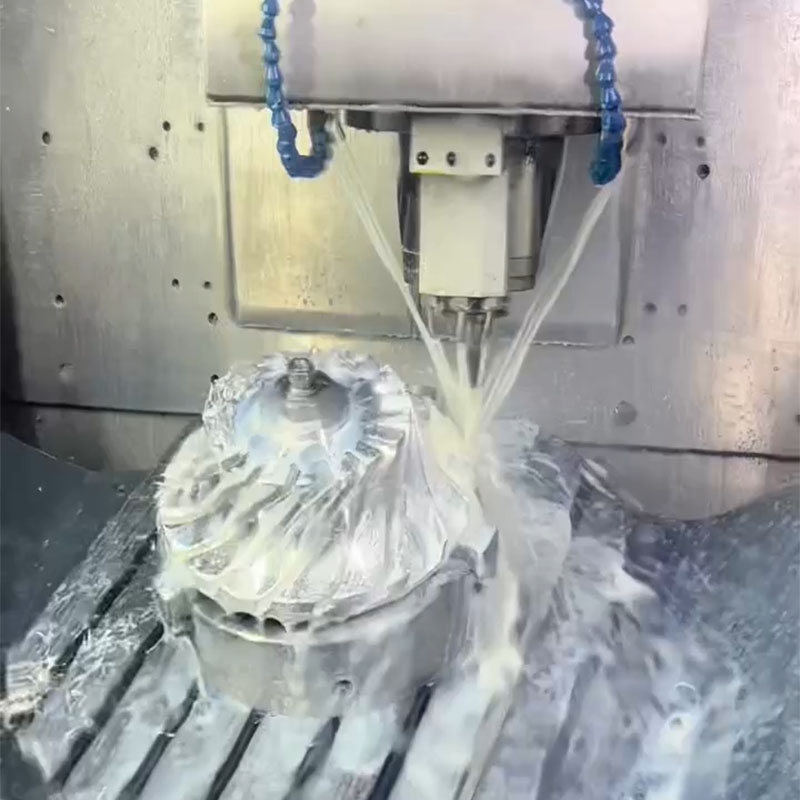
Three-axis milling handles flats, pockets, slots and standard hole patterns. Four-axis indexed or simultaneous milling completes multiple sides of a part in one setup. Five-axis machining reaches compound angles, helical gear geometry and contoured surfaces without refixturing, preserving positional accuracy between features.

CNC Drilling

Straight and stepped holes, deep holes with peck cycles to clear chips, counterboring, countersinking, spot facing and precision reaming for close-tolerance bores. Hole position, perpendicularity and diameter repeatability are controlled on machining centers rather than drilled by hand.

Tapping and Threading

Internal metric and unified threads by machine tapping — spiral-point taps for through holes, spiral-flute taps for blind holes — together with thread milling for coarse, fine or oversized threads. Roll-form tapping can be selected when stronger thread flanks are required in the soft 1018 matrix.

Global grade map

1018 Commercial Grades Under Different National Standards

Drawings from different markets rarely say "1018". The table below maps the grade to its commercial designations in the standards systems we encounter most. These are close commercial equivalents rather than identical twins — each standard defines its own chemistry window, so the drawing and the mill test report should always be reconciled before cutting.

Region / standards body Commercial designation Practical note
United States — AISI / SAE 1018 (UNS G10180) The baseline grade; "10" marks plain carbon steel and "18" indicates roughly 0.18% nominal carbon.
United States — ASTM A29 / A108 / A513 / A519 Grade 1018 Product-form standards covering hot-rolled and cold-finished bar, welded tubing and mechanical tubing.
European Union — EN C15E / C15R, material No. 1.1141 EN 10084 case-hardening steel; E denotes a sulphur ceiling, R a controlled sulphur range for machining.
Germany — DIN C15 (1.0401) / Ck15 (1.1141) Ck15 carries tighter phosphorus and sulphur limits and is the traditional German case-hardening counterpart.
Japan — JIS S15C / S15CK (JIS G4051) S15C is the general carbon construction steel; the K suffix identifies carburizing quality.
China — GB 15# (GB/T 699); near grade 20# 15# matches the chemistry window most closely; 20# sits slightly higher in carbon and is sometimes substituted.
United Kingdom — BS 080M15 / 040A15 (formerly En3b) BS 970 designations; the M grade is supplied to a checked chemical-analysis range.
France — AFNOR / NF XC15 / XC18 French case-hardening series, overlapping 1018 in carbon and manganese range.
International — ISO C15E4 (ISO 683-11) ISO case-hardening steel reference frequently used on cross-border drawings.
Russia — GOST Steel 15 / 18ps (GOST 1050) "ps" indicates a semi-killed melt practice; a workable eastern-European equivalent.
Equivalence is commercial and process-based. When an equivalent grade is substituted for a specified AISI 1018, its chemistry window and supply condition (cold drawn versus hot rolled) are recorded against the work order before the first cut.
Material data sheet

Chemistry and Mechanical Properties of 1018 Steel

The values below describe bar supplied under SAE J403 / ASTM A29 chemistry limits, with mechanical values in the cold-drawn condition that most CNC machined 1018 carbon steel in China projects actually use.

Chemical composition (weight %)

Carbon (C)0.15 – 0.20%
Manganese (Mn)0.60 – 0.90%
Phosphorus (P)0.040% maximum
Sulphur (S)0.050% maximum
Iron (Fe)Balance, roughly 98.8 – 99.3%
The modest carbon ceiling keeps the steel ductile and weldable, while manganese adds strength and a more uniform ferrite–pearlite structure than 1010 or 1015.

Mechanical properties (cold-drawn bar)

Ultimate tensile strengthapprox. 440 MPa / 63,800 psi
Yield strengthapprox. 370 MPa / 53,700 psi
Elongation at breakapprox. 15% cold drawn; approx. 25% hot rolled
Hardness as suppliedapprox. 126 HB, HRB 71 – 89
Modulus of elasticityapprox. 205 GPa / 29.7 × 10⁶ psi
Hot-rolled 1018 is softer and more ductile (roughly 400 MPa tensile, 220 MPa yield, 116 HB); cold-drawn bar offers tighter size tolerance and a brighter starting surface.
Physical behaviour

Physical and Thermal Properties That Affect Machining

These constants matter when fixturing thin walls, planning coolant strategy or designing parts that run warm in service.

Density
7.87 g/cm³
0.284 lb/in³ — used for blank weight and stock-cost estimates.
Melting range
1,410 – 1,510 °C
Roughly 2,570 – 2,750 °F; the exact range follows melt chemistry.
Elastic modulus
~205 GPa
Stiffness typical of plain carbon steel; deflection calculations stay predictable.
Thermal conductivity
51.9 W/(m·K)
Measured near 100 °C; cutting heat conducts into the chip and workpiece steadily.
Thermal expansion
11.5 – 13.9 µm/(m·°C)
Account for it when mating 1018 parts with dissimilar metals at temperature.
Magnetic behaviour
Ferromagnetic
Strong magnetic response, useful for sensor brackets, solenoid and magnetic assemblies.
Why designers choose it

Performance Characteristics of 1018 Carbon Steel

1018 is rarely the strongest steel on a drawing, but its balanced behaviour makes it a default choice whenever machinability, weldability and a sensible unit cost have to be solved together.

Balanced strength and ductility

Roughly 440 MPa tensile strength with 15 – 25% elongation depending on supply condition gives enough load capacity for general machinery while preserving the toughness to resist shock and deformation.

Excellent weldability

A low carbon equivalent — typically below 0.25 — lets 1018 be welded by MIG, TIG, stick and flux-core processes without preheat on sections under roughly 25 mm, which is why welded-and-machined assemblies often specify it.

First-rate carburizing response

1018 is considered a benchmark case-hardening grade. After carburizing and quench it builds a 58 – 62 HRC wear case, commonly 0.5 – 1.5 mm deep, over a tough 20 – 30 HRC core that absorbs impact instead of cracking.

Uniform, predictable structure

Its ferrite–pearlite microstructure is chemically defined and consistent heat to heat, so machinists do not hit the random hard spots that structural plate grades can contain.

Good cold formability

The soft as-rolled condition accepts bending, swaging, flaring, staking and light cold heading, allowing a single grade to cover machined parts and parts that combine machining with forming.

Stable cost and availability

As a commodity low-carbon grade it is stocked worldwide in round bar, hex, square, flat, plate and seamless tube, which keeps raw-material lead times and per-kilogram cost under control even for large orders.

Shop-floor behaviour

How 1018 Carbon Steel Behaves During CNC Machining

The reason CNC machined 1018 carbon steel in China orders price and deliver so efficiently is that the material cooperates with the cutting process. Six characteristics define that behaviour.

High machinability rating

1018 carries a machinability rating of roughly 70 – 78% relative to free-machining B1112 at 100%. It cuts with lower energy than medium-carbon grades such as 1045 and supports aggressive, stable cycle times.

Gentle cutting forces

Low carbon content means the steel does not work-harden aggressively ahead of the tool. Spindle loads stay steady, thin walls deflect less and tool edges wear predictably rather than chipping without warning.

Continuous chips need control

Soft 1018 produces long, continuous chips that can bird-nest around the tool or spindle. Chipbreaker insert geometries, peck cycles and programmed air-blow breaks keep unattended production runs clean.

Tooling-friendly across budgets

High-speed steel is adequate for one-off and repair work; uncoated or TiN-coated carbide is used for production. Sharp, positive-rake edges prevent built-up edge, and tool life remains long enough for lights-out batches.

Fine finishes and tight sizes

Cold-drawn 1018 routinely reaches Ra 1.6 µm with a carbide finishing pass, and Ra 3.2 µm without secondary work. Diameter tolerances around ±0.01 mm are routine; ±0.005 mm is achievable with finishing passes and rigid fixturing.

Predictable thermal behaviour

With thermal conductivity around 51.9 W/(m·K), flood application of soluble oil or synthetic coolant carries heat away through the chip, protecting both edge life and dimensional accuracy on long cuts.

Suggested starting cutting parameters (reference window, to be tuned to machine and setup)

Operation Typical tooling Cutting-speed window Shop-floor note
CNC turning Uncoated / TiN carbide, positive rake 100 – 200 m/min, up to ~250 m/min coated; HSS 25 – 35 m/min Feed roughly 0.15 – 0.40 mm/rev; raise surface speed if a torn finish appears.
3 / 4 / 5-axis milling Carbide end mills, climb milling Roughing ~105 – 155 m/min; finishing ~150 – 215 m/min Four- and five-axis setups favor light radial engagement at higher feed to keep chip heat out of the part.
Drilling / reaming HSS or carbide drills; reamer for finish bore ~20 – 35 m/min in steel Use peck drilling beyond roughly 3 × diameter to evacuate chips and cool the drill point.
Tapping / thread milling Spiral-point or spiral-flute taps Low spindle speed, generous tapping fluid Match tap type to blind versus through holes; thread-mill large or coarse threads to avoid tap breakage.
Downstream processes

Heat Treatment and Surface Finishes for Machined 1018 Parts

1018 cannot be through-hardened to high hardness — its low carbon ceiling caps direct quench hardness near 35 – 40 HRC — but it answers extremely well to surface treatments. Four heat-treatment routes and four common finishes cover nearly every requirement we see.

Carburizing / case hardening

Roughly 900 – 930 °C carbon diffusion followed by quench; a 0.5 – 1.5 mm case at 58 – 62 HRC rides over a shock-resistant core for gears, worms, pins and ratchets.

Annealing

Held around 850 – 950 °C and cooled under control to restore a soft, ductile state before heavy forming or aggressive rough machining.

Normalizing

Heated around 890 – 940 °C after forging or rough work to refine grain structure and even out hardness before final machining.

Stress relieving

Roughly 540 – 650 °C soak after heavy stock removal, releasing residual stress so thin or precise sections hold size in finishing.

Black oxide

A thin conversion coating that darkens the surface, holds a light oil film and resists mild handling corrosion while keeping dimensions essentially unchanged.

Zinc electroplating

The standard economical barrier against rust for indoor and light-exposure service, supplied clear, blue or yellow-tinted per drawing.

Electroless nickel plating

Uniform thickness even on complex 1018 geometry, adding wear and corrosion protection without the build-up problems of rack electroplating.

Phosphating and powder coating

Phosphate crystals anchor paint or powder; with proper pretreatment 1018 accepts durable painted and powder-coated cosmetic surfaces.

Prototype to mass production

From a Single Piece to High-Volume Production

The same 1018 grade supports every stage of a product's life. Tooling strategy, fixturing and inspection rhythm change with batch size; the material behaviour does not.

VOLUME 01

One-off and prototype, 1 – 10 pcs

Machined directly from bar or plate stock on standard tooling. Fast feedback on fit, function and design iteration, with first-piece dimensional confirmation before the run continues.

VOLUME 02

Low volume, 10 – 500 pcs

Soft-jaw and simple fixture work balances setup cost against cycle time, suitable for validation builds, spares and early market batches of CNC machined 1018 carbon steel.

VOLUME 03

Mid volume, 500 – 5,000 pcs

Dedicated fixturing, optimized feeds and speeds, and planned tool-change intervals keep unit cost falling while feature consistency is maintained batch to batch.

VOLUME 04

High volume, 5,000 – 100,000+ pcs

Repeat production on lathes and mills with multi-part fixturing, in-process dimensional checks at fixed intervals and scheduled raw-stock replenishment for stable delivery.

Where the grade works

Typical 1018 Carbon Steel Parts and Applications

The component families below recur across automotive, general industrial, hydraulic, electronic-hardware and agricultural equipment drawings.

Shafts and worm shafts

Transmission shafts, output shafts, worms and stepped spindles, often carburized on the working surfaces.

Gears, pinions and ratchets

Small helical and spur gears, pinions, pawls and ratchet wheels that exploit the hard-case / tough-core combination.

Pins, dowels and studs

Dowel pins, taper pins, chain pins, anchor pins and locating studs produced in long, consistent runs.

Fasteners and threaded parts

Custom bolts, screws, threaded rods, inserts and specials where rolled or cut internal and external threads are required.

Bushings, spacers and couplings

Turned sleeves, spacers, collars, hubs and coupling halves with precise bores and shoulder faces.

Hydraulic and pneumatic parts

Fittings, adapter bodies, valve-related components and manifold-style blocks with cross-drilled oil passages.

Plates, brackets and supports

Millled mounting plates, machine brackets, standoffs and structural supports that may be welded after machining.

Jigs, fixtures and tooling

Soft, easily modified 1018 tooling components, locators, clamp blocks and fixture bodies for production lines.

Floor capability

Machining and Inspection Equipment for 1018 Steel Parts

The same floor that produces every CNC machined 1018 carbon steel in China order described on this page pairs the production equipment below with dedicated 2D and 3D measuring, so dimensional control is built into each operation rather than added as an afterthought.

Machining floor

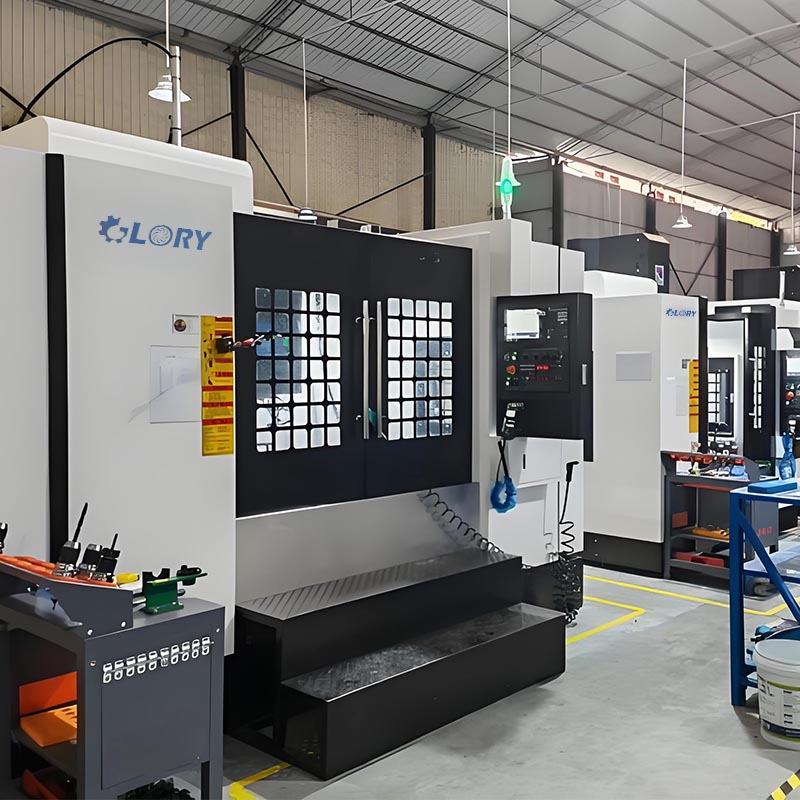
CNC machining workshop arranged for 1018 carbon steel production

Workshop

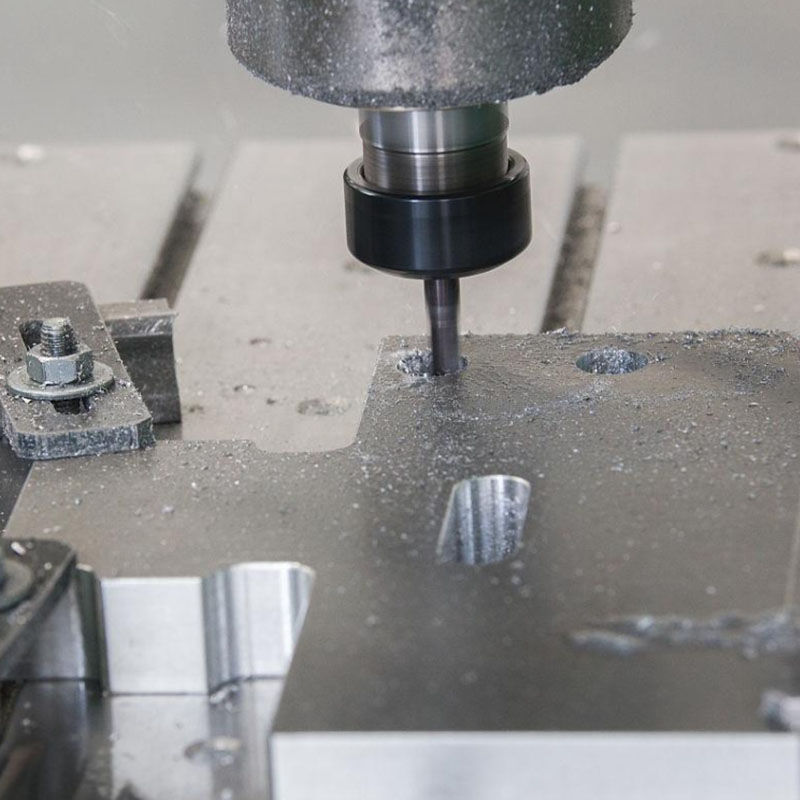
CNC milling, drilling and tapping of a customized 1018 steel part

CNC Milling

CNC turning of 1018 carbon steel bar on a lathe

CNC Turning

Five-axis CNC machining of a 1018 steel prototype component

5-Axis Milling

Dimensional inspection

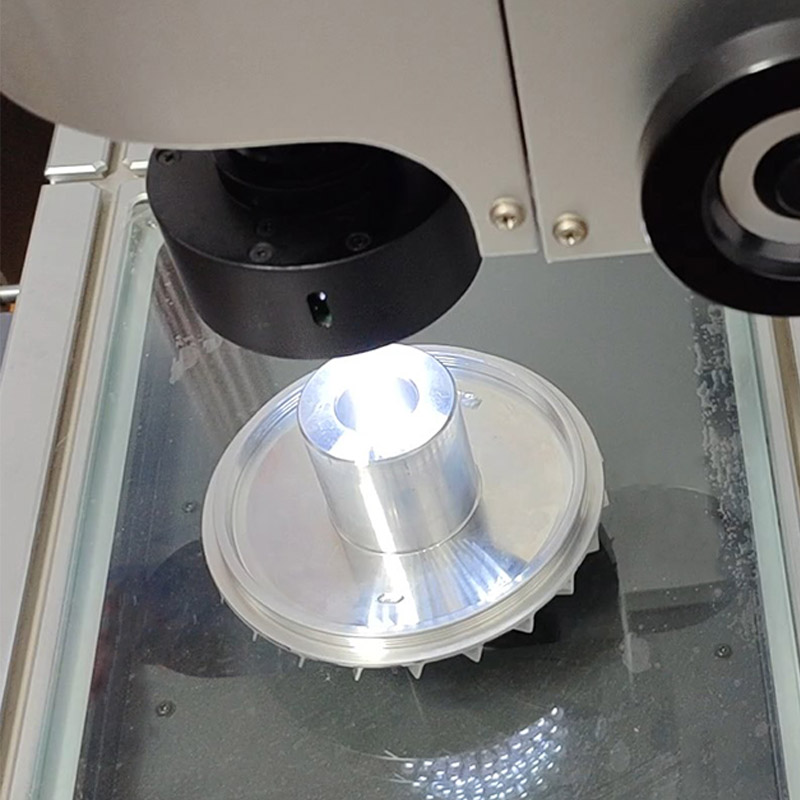
2D optical profile projector measuring a machined impeller

2D Measuring

An optical profile projector magnifies the silhouette of turned and milled 1018 parts to verify profiles, radii, chamfer angles, thread forms and other two-dimensional dimensions directly against the drawing.

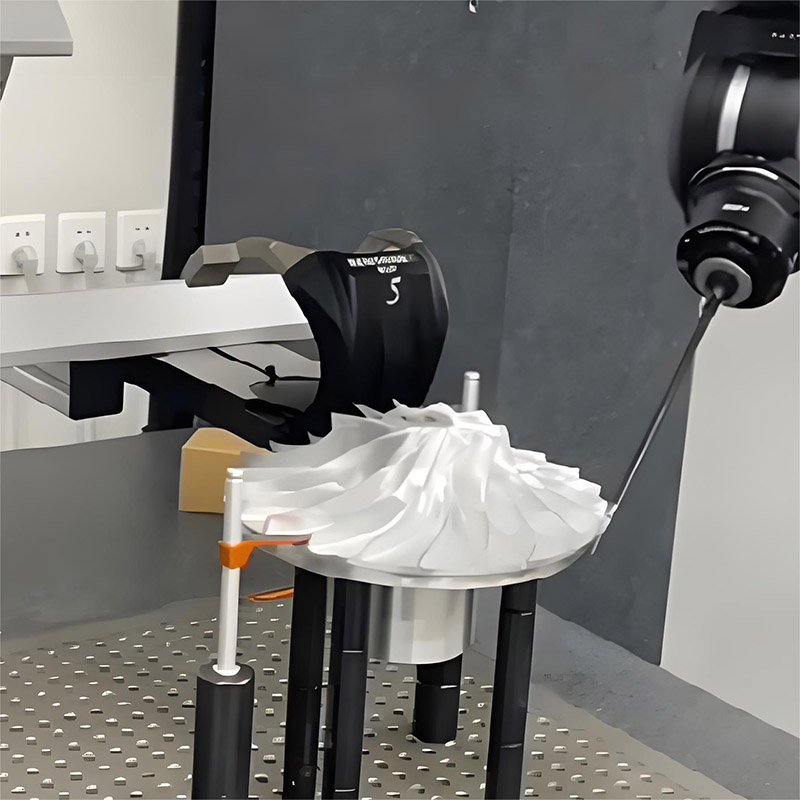
Coordinate measuring machine performing 3D inspection of a machined impeller

3D Measuring

A coordinate measuring machine probes three-dimensional geometry — true position, flatness, perpendicularity, concentricity and contoured surfaces — for first-article confirmation and in-process checks on finished components.

How an order flows

How a CNC Machined 1018 Carbon Steel Order Is Produced

A controlled six-step path keeps a one-off prototype and a 50,000-piece repeat order equally traceable.

STEP 01

Drawing review and manufacturability feedback

Tolerances, thread calls, corner radii and surface requirements are reviewed; ambiguous or costly features are flagged and alternatives proposed before steel is cut.

STEP 02

Material sourcing and incoming verification

Stock is selected in the correct supply condition — cold-drawn bar for precision work, hot-rolled for larger sections — and checked against the mill material test report and a hardness reading.

STEP 03

Programming and tooling setup

Tool paths, workholding and inspection points are planned together; multi-axis parts are programmed to finish related features in a single setup wherever geometry allows.

STEP 04

Machining with in-process checks

First-piece dimensions are confirmed, then critical sizes are checked at fixed intervals during the run so tool wear is corrected before it can drift a feature out of tolerance.

STEP 05

Heat treatment and surface finishing

Carburizing, plating, black oxide or coating is sequenced after rough machining, with finish stock reserved so any treatment movement is cleaned up in final machining.

STEP 06

Final inspection, cleaning and packaging

Finished parts are measured against the drawing, deburred, cleaned of chips and coolant, rust-prevented and packed to survive export freight without surface damage.

Buyer questions

Frequently Asked Questions About Machined 1018 Steel

What exactly is AISI 1018 carbon steel?

It is a plain low-carbon steel in the AISI/SAE four-digit system, containing 0.15 – 0.20% carbon and 0.60 – 0.90% manganese. The first two digits, "10", identify a plain carbon steel, and "18" indicates roughly 0.18% nominal carbon. It is valued for machinability, weldability and carburizing response rather than for high as-supplied hardness.

Cold-drawn or hot-rolled 1018 — which should a drawing specify?

Cold-drawn bar has tighter dimensional tolerance, a brighter surface and higher strength (around 440 MPa tensile, 370 MPa yield), and is the default feedstock for precision CNC work. Hot-rolled bar is softer, more ductile and more economical for large cross-sections or parts that will be heavily machined away before finishing.

Can 1018 be welded after machining?

Yes. Its low carbon equivalent gives it excellent weldability by MIG, TIG, stick and flux-core methods, normally without preheat on sections below about 25 mm and without post-weld heat treatment on thin sections. This makes it a common choice for assemblies that combine machined and welded components.

How hard can a machined 1018 part become?

Direct through-hardening is limited to roughly 35 – 40 HRC because of the low carbon content. The intended hardening route is carburizing, which diffuses carbon into the surface to produce a 58 – 62 HRC wear case over a tough core. If a part must be hard throughout its section, a medium-carbon or alloy grade is the better choice.

What tolerances and surface finishes are realistic?

With cold-drawn stock and rigid fixturing, diameters around ±0.01 mm are routine in production and ±0.005 mm is achievable on finishing passes. Surface finish near Ra 1.6 µm is reachable with sharp carbide finishing tooling; Ra 3.2 µm is typical without extra secondary work.

Why source CNC machined 1018 carbon steel in China?

Chinese machine shops combine ready access to 1018 and its GB/JIS-equivalent stock with mature turning, multi-axis milling, drilling, tapping and heat-treatment supply chains. The result is competitive per-part cost across the full volume range, from a single prototype piece to repeated high-volume batches, without changing material or process route as the product scales.

Summary

A Practical Grade, Machined With Discipline

AISI 1018 earns its place on engineering drawings because it removes friction from the manufacturing process: it cuts cleanly on lathes and three-, four- and five-axis mills, drills and taps without drama, welds without ceremony, and — when a wearing surface is required — carburizes into one of the most dependable hard-case / tough-core combinations available at commodity-steel cost. Its global family of equivalent grades, from C15E and Ck15 to S15C, 15#, 080M15 and XC15, means drawings from almost any market can be translated into the same reliable shop-floor reality.

For buyers looking for CNC machined 1018 carbon steel in China, the value lies in matching that cooperative material to disciplined process planning: the right stock condition, sharp tooling, sensible speeds and feeds, in-process dimensional control and correctly sequenced heat treatment. Whether a project calls for a single carburized gear, a first batch of worm shafts, or a steady high-volume stream of pins, bushings and threaded components, 1018 carbon steel remains one of the most economical and predictable materials a precision machining shop can put on the machine.