
OEM CNC Machined 5140 Alloy Steel in China
A practical technical and manufacturing reference for design engineers, buyers and procurement teams sourcing CNC machined 5140 alloy steel in China. AISI/SAE 5140 — stocked and machined locally under the Chinese GB designation 40Cr — is a medium-carbon, low-alloy chromium steel chosen for its balanced strength, toughness and wear resistance after quenching and tempering. Our China workshop produces turned, milled, drilled and tapped 5140 / 40Cr components from a single machined prototype to recurring high-volume series, always built to the customer’s drawing, sample or written material specification.
Typical 5140 Alloy Steel Components We Machine
A short gallery of representative CNC machined 5140 alloy steel parts produced in China at our facility. Every part below is made to the customer’s own drawing, heat-treatment requirement and finish call-out.
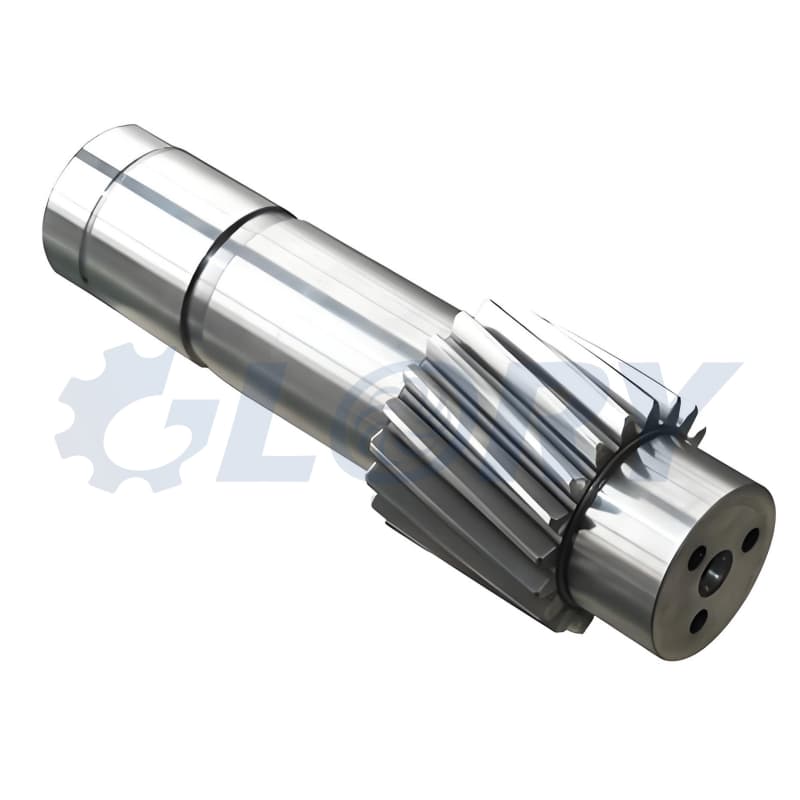
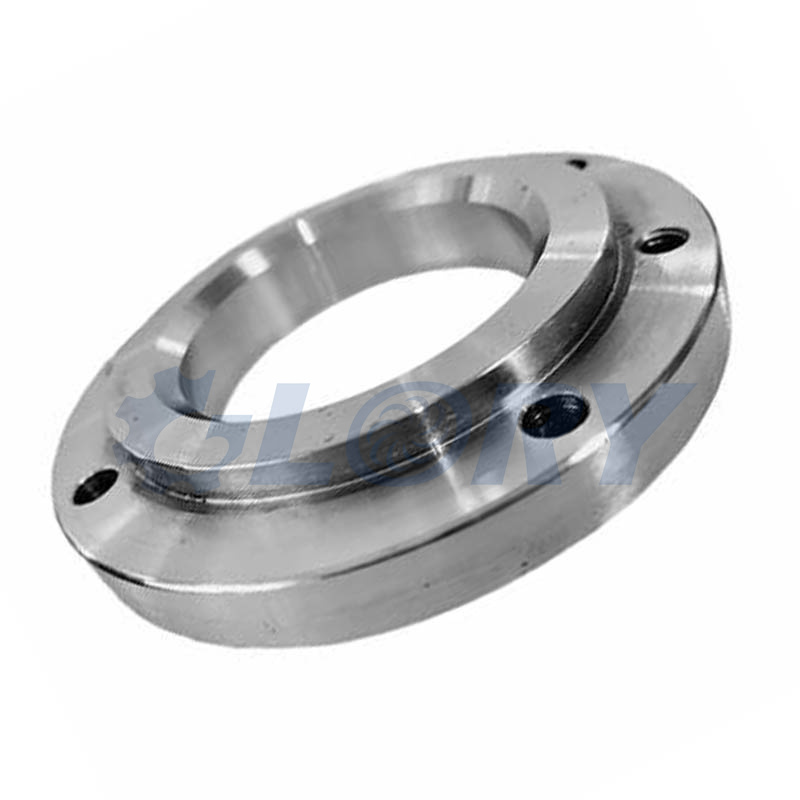
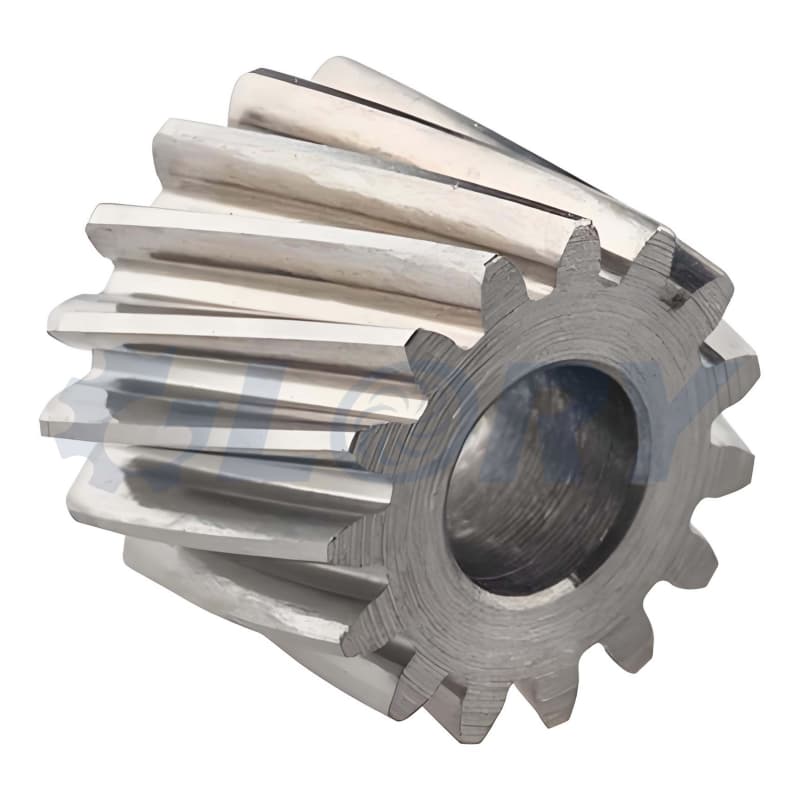
In-House CNC Machining Capabilities for 5140 Steel
CNC machined 5140 alloy steel components made in China at our plant move through a fully planned process route. The six core operations below can be ordered individually or combined into one turnkey part.
CNC Turning
Outside- and inside-diameter turning, facing, grooving, profiling and thread cutting on 5140 bar stock, forgings and sawn blanks. The process suits gear shafts, sleeves, bushings and stepped cylindrical parts, with stable dimensional control maintained across long, repeat production runs.
3-Axis CNC Milling
Vertical machining of prismatic 5140 components: flat faces, steps, pockets, slots, keyways and 2.5D profiles. It is the economical choice for flanges, mounting plates and simple brackets, using efficient fixturing that can be recalled instantly for repeat orders.
4-Axis CNC Milling
An indexed or fully interpolated fourth axis machines helical grooves, radial hole circles, cross-drilled features and multi-sided 5140 parts in fewer setups, which protects positional accuracy between features that would otherwise have to be re-indicated on a second fixture.
5-Axis CNC Milling
Simultaneous five-axis machining reaches compound angles and continuous curved surfaces in a single clamping. It is used for complex 5140 gear blanks, contoured bodies and tightly related feature sets where repeated re-fixturing would otherwise stack up alignment error.
Precision Drilling
Straight, stepped and intersecting holes, including close-tolerance bores finished by reaming or boring. Deep-hole work uses controlled peck cycles together with flood or through-tool coolant to safeguard hole quality and tool life in this chromium-alloy grade.
Tapping and Threading
Internal metric and unified threads are cut with spiral-point or spiral-flute taps, or formed by roll taps when the material condition allows. External threads are produced by single-point turning or thread milling for a stronger and more accurate thread profile.
Understanding Grade 5140 (GB 40Cr)
Before specifying CNC machined 5140 alloy steel from a China supplier, it helps to understand how the grade is built, why chromium is added and in which supply condition it machines best.
Grade Overview
AISI 5140 is a medium-carbon engineering steel containing roughly 0.40% carbon and 0.80% chromium. The chromium addition raises hardenability compared with plain 0.40% carbon steels, allowing an oil quench to develop uniform strength across meaningful section sizes instead of only at the surface.
In China the grade is stocked and machined as 40Cr under GB/T 3077, a close chemical and mechanical match to 5140. SCr440 (JIS, Japan) and 41Cr4 (DIN/EN, Germany and Europe) are the corresponding regional grades.
Components are normally produced from one of three starting conditions: annealed or normalized bar for buyers who arrange their own heat treatment, quenched-and-tempered blanks for direct finishing, or fully heat-treated parts brought to final size by a light finishing cut or grinding.
| Chemical Composition (wt %, typical ladle analysis) | |
|---|---|
| Carbon (C) | 0.38 – 0.43 |
| Manganese (Mn) | 0.70 – 0.90 |
| Silicon (Si) | 0.15 – 0.35 |
| Chromium (Cr) | 0.70 – 0.90 |
| Phosphorus (P), max. | 0.035 |
| Sulfur (S), max. | 0.035 – 0.040 |
| Iron (Fe) | Balance |
5140 Equivalent Grades Under Different National Standards
Drawings for CNC machined 5140 alloy steel arrive at our China facility under many local grade names. The table below lists the designations most commonly treated as interchangeable with 5140 / 40Cr.
| Country / Region | Standard System | Equivalent Designation | Notes on the Match |
|---|---|---|---|
| United States | AISI / SAE | 5140 | Baseline grade referenced on most export drawings |
| China | GB/T 3077 | 40Cr | Domestic stock grade used for CNC machined 5140 alloy steel in China |
| Japan | JIS G4104 | SCr440 | Closest JIS chromium steel grade, same carbon and chromium band |
| Germany | DIN 17200 / EN 10083 | 41Cr4 / 1.7035 | European quenching and tempering steel, material number 1.7035 |
| European Union | EN 10083-3 | 41Cr4 | Harmonized EN grade carried over from the DIN grade |
| United Kingdom | BS 970 | 530M40 (formerly 530A40) | Traditional British 1% Cr-series engineering steel |
| France | AFNOR | 42C4 | French designation for the same 41Cr4 chemistry family |
| Russia | GOST 4543 | 40Kh (40X) | Cyrillic-designated chromium structural steel, near equivalent |
These are closest cross-standard equivalents rather than perfectly identical grades: the allowable ranges for carbon, manganese, chromium and residual elements differ slightly between standards. A production drawing should always name the governing standard together with the required heat-treatment condition.
Performance Characteristics of Quenched and Tempered 5140
The figures below are typical reference values for quenched-and-tempered 5140 / 40Cr on standard test sections. Real values on a machined component shift with bar diameter, quenching severity and tempering temperature, and are confirmed against the chosen heat-treatment route.
Strength After Tempering
In the quenched-and-tempered condition the grade supports highly loaded shafts, gears and fasteners, combining tensile strength near 980 MPa with a yield strength near 785 MPa on standard reference sections.
Toughness Under Shock Load
Tempering across roughly 500 – 650 °C trades a controlled amount of hardness for impact toughness, which matters for power-transmission parts exposed to reversing loads, torque spikes and shock loading.
Wear-Resistant Working Surfaces
Induction or flame hardening lifts gear teeth, splines and shaft journals to about 48 – 55 HRC while leaving the component core tough, placing wear resistance exactly where contact and friction occur.
Hardenability and Fatigue Life
Chromium gives deeper and more uniform hardening than a plain carbon steel, improving through-section consistency and fatigue behavior on medium sections; very large cross-sections still require quench verification at the chosen heat-treatment supplier.
How 5140 Behaves During CNC Machining
Understanding the machining behavior of 5140 / 40Cr is what allows CNC machined 5140 alloy steel parts made in China to hold tolerance, protect tool life and survive heat treatment without scrap. The six points below summarize the shop-floor rules applied to this grade.
Recommended Supply Condition
5140 machines most economically in the annealed or normalized condition at roughly 170 – 220 HB. The standard route for precise work is rough machining in the soft state, quenching and tempering, then a light finishing cut or grinding pass on critical surfaces.
Cutting Data and Tooling
Coated carbide inserts are preferred. As a conservative starting window, rough turning runs around 120 – 180 m/min and finish turning around 180 – 250 m/min, with roughing feeds of 0.15 – 0.40 mm/rev; high-speed-steel tooling runs substantially slower. Final values are tuned to holder rigidity, machine condition and material hardness.
Chips and Work Hardening
The grade produces long, continuous chips, so chip-breaker geometries and peck cycles protect the cutting zone. Its moderate work-hardening tendency means the tool should stay engaged with a real depth of cut instead of rubbing a work-hardened skin.
Drilling and Tapping Practice
Holes are drilled with coated or cobalt high-speed-steel drills under flood coolant. Internal threads are tapped at conservative surface speeds around 6 – 12 m/min with sulfurized cutting fluid; cold-form taps work well on ductile, pre-heat-treatment stock.
Distortion Control After Treatment
Oil quenching from about 840 – 860 °C followed by tempering limits cracking and distortion risk compared with water quenching. A planned finish allowance is left before treatment and critical diameters or bores are restored by post-treatment turning or surface grinding.
Forging and Welding Notes
Hot forging is carried out between roughly 1150 and 850 °C with slow, controlled cooling. Weldability is limited: preheat of around 200 – 300 °C and post-weld tempering are required, and welding in the hardened condition is avoided.
From a Single Piece to High-Volume Production
The same process documentation covers every order size, so a CNC machined 5140 alloy steel prototype made in China transitions smoothly into series production without re-engineering the part.
Single Piece and Prototype
One-off and first-article parts machined from bar stock or a sawn blank, with manufacturability feedback provided before cutting so design iterations stay fast and low cost.
Low-Volume Production
Small batches for design validation, machine spares and aftermarket demand, produced with soft tooling and standardized fixturing to keep non-recurring setup cost to a minimum.
Recurring Batch Production
Scheduled medium batches built from fixed process sheets, tooling lists and inspection points, so every new lot machines identically to the first approved article.
High-Volume Series
Large-series manufacturing on dedicated fixturing with optimized cycle times, balanced operations and batch-level process control that drives stable, predictable unit cost.
Engineering Support Behind Every 5140 Part
The items below describe how a drawing moves through the workshop before, during and after the metal is cut.
Drawing and DfM Review
Engineers review tolerances, corner radii, thread call-outs, hole access and the heat-treatment strategy before production, flagging any feature that would be unstable or unnecessarily expensive to machine.
Tolerance and Surface Range
Dimensional control commonly reaches IT7 and IT6 on selected critical features. As-machined surfaces typically land at Ra 1.6 – 3.2 µm, with chosen surfaces ground down to Ra 0.8 µm where the drawing requires it.
In-Process and Final Checks
First-article confirmation, in-process checks between operations and final verification against the drawing protect consistency, with inspection records retained against each production lot for later traceability.
Material and Finish Coordination
Heat-lot records follow every steel batch. Oil quenching and tempering, induction hardening of working surfaces and secondary finishes such as black oxide or phosphating are coordinated to the specification.
Typical Applications of Machined 5140 / 40Cr
The combination of through-strength, surface hardness and machinability makes CNC machined 5140 alloy steel from China a recurring choice across the following component families.
Transmission Gears and Gear Blanks
Spur and helical gear blanks that are turned, milled or hob-ready, then induction hardened on the teeth for long service under repeated contact loading.
Gear, Spline and Pinion Shafts
Stepped shafts combining turned journals, milled keyways, splines and gear profiles in a single quenched and tempered component.
Spindles, Axles and Sleeves
Rotating and load-carrying parts requiring stable cylindricity, fine surface finish on bearing seats and a tough core to resist fatigue.
Connecting Rods, Couplings and Levers
Mechanism components that transmit force and tolerate shock, benefiting from the grade’s balanced strength and impact behavior.
High-Strength Fasteners
Bolts, studs and threaded tension members turned and threaded from 5140 bar for higher strength than plain carbon steel fasteners.
Steering and Chassis Components
Steering arms, pivot pins and chassis load parts exposed to dynamic road loads, often supplied with a black oxide or phosphated final finish.
Frequently Asked Questions About 5140 Machining
Short answers to the questions buyers most often raise when requesting CNC machined 5140 alloy steel in China.
What is the Chinese equivalent of AISI 5140?
Under the Chinese GB/T 3077 system, AISI 5140 corresponds to 40Cr. Japanese SCr440 and European 41Cr4 (material number 1.7035) are the closest regional equivalents; because tolerance bands differ slightly, the governing standard should always be named on the drawing.
In what condition should 5140 be machined?
For the best tool life and dimensional stability, rough machining is performed on normalized or annealed material at around 170 – 220 HB. Quenching and tempering follow roughing, and critical surfaces then receive a light finish pass or grinding.
Can a single part be ordered, or only large batches?
Both. Production of CNC machined 5140 alloy steel in China through our workshop covers one-off prototypes and spare-part quantities as well as recurring batches and high-volume series, all under the same process documentation.
Which processes are available for 5140 components?
CNC turning, 3-axis, 4-axis and 5-axis CNC milling, precision drilling with reaming and boring, and metric or unified tapping, supported by surface grinding after heat treatment where the drawing requires it.
How is heat-treatment distortion kept under control?
A calculated finish allowance is left during roughing, oil quenching reduces cracking and distortion risk, tempering sets the target strength level, and final dimensions are restored by finish turning or grinding.
What finishes can be applied to machined 5140 parts?
Parts can be supplied as machined, with precision-ground surfaces, or finished with black oxide, phosphating or a customer-specified coating. Induction-hardened teeth and journals can be integrated into the same overall process route.
Sourcing CNC Machined 5140 Alloy Steel in China: A Summary
5140 / 40Cr remains a default engineering choice wherever a medium-carbon alloy steel must carry real load while remaining practical to machine. The grade is widely stocked across China, well understood by heat-treatment workshops and fully compatible with turning, 3- to 5-axis milling, drilling and tapping on modern CNC equipment.
By matching the supply condition to the process route — soft-state roughing, controlled oil quenching and tempering, then targeted finish machining or grinding — CNC machined 5140 alloy steel components made in China can be produced repeatably from a single engineering sample all the way to series volumes of thousands. The grade tables, property figures and machining notes on this page serve as a working specification reference; final parameters should always be confirmed against the actual part drawing, section size and selected heat-treatment condition.
About Us
 We provide custom machined parts, 5-axis linkage CNC machining, and the design, production, and assembly of machinery and equipment.