
OEM CNC Machined 6063 Aluminum in China
6063 is a heat-treatable Al-Mg-Si wrought alloy valued for its smooth surface, high thermal conductivity, moderate strength and outstanding response to anodizing. That combination makes it the default choice for heat sinks, LED cooling profiles, tubes, rails and architectural sections. As a workshop producing CNC machined 6063 aluminum in China, we convert extruded profiles, bars and tubes into finished, ready-to-assemble components through precision turning, 3-axis, 4-axis and 5-axis milling, drilling and tapping — from a single machined prototype to repeated large-batch production orders.
The 6063 Aluminum Alloy at a Glance
Before describing how 6063 is machined, it helps to understand why this alloy is so often specified for precision components that must combine heat transfer, appearance and dimensional accuracy.
Alloy family
6063 belongs to the 6xxx series, in which magnesium and silicon form Mg₂Si precipitates that deliver strength through controlled aging. Its lean chemistry keeps the material ductile in extrusion while still reaching useful strength in the T5 and T6 tempers.
Stock forms we machine
We machine 6063 supplied as custom extruded profiles, round and square tubes, solid round and flat bars, plates and near-net extruded blanks. Extrusions are often used as pre-forms, with CNC operations adding precision holes, faces, threads and mating surfaces.
Common tempers
T5 is artificially aged straight from extrusion and offers a balanced, easy-to-source condition; T6 is fully solution heat-treated and aged for the highest standard strength; O is the soft annealed temper used where severe forming precedes machining.
Surface character
With tightly controlled iron and copper limits, 6063 produces a fine, uniform surface that anodizes without streaking. At roughly one third of steel's density, finished parts stay light while presenting a clean, cosmetic exterior.
Composition, Physical and Mechanical Properties
The figures below reflect commonly published 6063 data and are the basis for the tooling, feed and temper decisions used when we produce CNC machined 6063 aluminum in China.
Chemical Composition Limits (wt.%)
| Silicon (Si) | 0.20 – 0.60 |
| Magnesium (Mg) | 0.45 – 0.90 |
| Iron (Fe), max | 0.35 |
| Copper (Cu), max | 0.10 |
| Manganese (Mn), max | 0.10 |
| Chromium (Cr), max | 0.10 |
| Zinc (Zn), max | 0.10 |
| Titanium (Ti), max | 0.10 |
| Others, each / total, max | 0.05 / 0.15 |
| Aluminum (Al) | Remainder |
Typical Physical Properties
| Density | 2.70 g/cm³ (0.098 lb/in³) |
| Melting range | 615 – 655 °C |
| Elastic modulus | 68.9 GPa |
| Shear modulus | approx. 26 GPa |
| Coefficient of thermal expansion (20–100 °C) | 23.4 × 10⁻⁶ /K |
| Thermal conductivity at 25 °C | 201 – 218 W/m·K (temper dependent) |
| Electrical conductivity | 53 – 58% IACS |
| Specific heat capacity | approx. 900 J/kg·K |
Mechanical Properties by Temper (Typical Values for Extruded Stock)
| Temper | Ultimate tensile strength | 0.2% proof / yield strength | Elongation | Brinell hardness | Processing note |
|---|---|---|---|---|---|
| O (annealed) | up to 130 MPa | — | 18% and above | approx. 25 HB | Maximum formability; soft and gummy when cut, so it is usually formed first and machined after aging. |
| T4 (solution treated, naturally aged) | approx. 145 – 170 MPa | approx. 70 – 90 MPa | 14 – 20% | approx. 48 HB | Rarely stocked for machining; an interim condition that ages further over time. |
| T5 (press-quenched, artificially aged) | approx. 170 – 186 MPa | approx. 145 MPa | approx. 12% | approx. 60 HB | The most common extrusion temper; straight, stable and well suited to CNC machining. |
| T6 (solution treated, artificially aged) | approx. 240 – 241 MPa | approx. 214 MPa | approx. 12% | approx. 73 HB | Highest standard temper; produces the cleanest cuts and tightest dimensional behavior. |
Values are typical handbook-level ranges for reference. Exact minimums vary with product standard, section thickness and wall thickness; the controlling drawing specification always takes precedence.
6063 Commercial Designations Under Different National Standards
The same Al-Mg-Si chemistry is traded around the world under several national designation systems. Drawings from different markets may therefore name 6063 differently. The table below cross-references the commercial grades most frequently encountered on drawings and purchase orders. Composition limits differ slightly between standards, so the standard named on the controlling drawing should always govern material acceptance.
| Region / standards system | Commercial designation | Remarks |
|---|---|---|
| United States / Canada (AA, ASTM, UNS) | AA 6063 · UNS A96063 | North American Aluminum Association number; supplied under ASTM B221, B210, B241 and related product standards. |
| European Union (EN 573-3) | EN AW-6063 / EN AW-AlMg0.7Si | Current European wrought alloy numbering; EN AW-6063A is a closely related variant with slightly tighter iron and higher magnesium ranges. |
| International (ISO 209) | AW-6063 / AlMg0.7Si | ISO chemical-symbol designation, broadly aligned with the EN composition. |
| Germany (legacy DIN) | 3.3206 · AlMgSi0.5 | Older Werkstoff number and symbolic name still seen on legacy German drawings. |
| United Kingdom (legacy BS) | HE9 | Traditional BS 1474-series extrusion grade; current British standards adopt EN AW-6063. |
| France (legacy AFNOR) | A-GS | Older French symbolic grade; modern French specifications use the EN designation. |
| Japan (JIS) | A6063 | Listed in JIS H4040 for bars/wire and JIS H4100 for extruded profiles; widely used in Japanese extrusion-based designs. |
| China (GB/T) | 6063 (legacy grade LD31) | Current GB/T 3190 wrought alloy registration; LD31 is the former Chinese grade number found on older domestic drawings. |
| Russia / CIS (GOST) | AD31 (АД31) | Traditional Cyrillic-grade equivalent used across CIS supply chains; chemistry matches the 6063 family closely. |
| Australia / New Zealand (AS/NZS) | 6063 | Aligned with the Aluminum Association number under AS/NZS 1865, AS/NZS 1866 and related standards. |
Cross-references are approximate commercial equivalents rather than guaranteed identical substitutes. Where a drawing cites a specific national standard, material is purchased and verified against that standard's composition and property limits.
Performance Characteristics That Matter in Service
These four properties explain why designers repeatedly return to 6063 for thermal, cosmetic and lightweight structural parts.
Efficient heat transfer
Thermal conductivity of roughly 201–218 W/m·K, combined with electrical conductivity above 50% IACS, lets heat move quickly from a source into machined or extruded fins. This is the core reason 6063 dominates natural-convection heat sinks, LED coolers and cooling plates.
Light weight, useful strength
At 2.70 g/cm³ the alloy weighs about a third as much as steel, yet T6 sections reach roughly 241 MPa ultimate tensile strength and 214 MPa yield strength — enough for frames, brackets, rails and enclosures that must stay easy to lift, mount and ship.
Corrosion resistance and anodizing quality
A naturally protective oxide film gives good atmospheric corrosion resistance without copper-rich staining. The alloy anodizes very evenly, supporting clear, black or color-dyed finishes that are both decorative and wear resistant, and that raise surface emissivity for thermal parts.
Extrudability and joining
6063 extrudes at high speed into thin-walled, complex cross-sections with tight wall consistency, and it welds readily by TIG or MIG. It also suits bolted, riveted, bonded and snap-fit assemblies, giving designers freedom to combine extruded shapes with machined details.
How 6063 Behaves During CNC Machining
6063 is considered a free-cutting, high-speed-friendly aluminum, but excellent results depend on controlling temper, tool geometry, chip evacuation and thin-wall deflection. The practices below are applied on every batch of CNC machined 6063 aluminum in China that leaves our floor.
Tooling and cutting data
Aged T5/T6 stock cuts far more cleanly than soft O temper. We use sharp, polished-flute carbide tools with high positive rake angles — typically two- or three-flute end mills for aluminum — and polycrystalline diamond tooling for very long runs. High spindle speeds, climb milling and roughly 0.05–0.20 mm per tooth prevent rubbing and built-up edge.
Chip formation and cooling
6063 produces soft, ductile chips that can weld to a cutting edge if speed drops. Flood emulsion or mist lubrication, together with directed air blast, keeps the edge cool and flushes chips out of deep fin gaps, pockets and drilled holes so chips are never recut.
Workholding and thin-wall strategy
Heat-sink fins and tube walls deflect easily under clamp or cutting force. Soft jaws, vacuum plates and machined profile nests spread clamping pressure, while symmetric roughing passes release residual stress step by step, keeping delicate fins straight and parallel.
Tolerances, finish and post-processing
Aged 6063 is dimensionally stable, and sharp tooling routinely achieves surface finishes around Ra 0.8–1.6 µm. All edges are deburred after cutting. Because anodizing adds a thin conversion layer, critical diameters and thread fits are compensated before surface treatment so final dimensions remain on specification.
In-House CNC Capabilities for 6063 Components
Every 6063 part is routed through the process combination its geometry actually needs; complex parts often combine several of the operations below in a single integrated workflow.
CNC Turning
Precision turning of round heat-sink bases, sleeves, spacers, bushings, rings, fittings and tubular components. Operations include facing, OD and ID boring, grooving, profiling and OD/ID threading, with live-tool stations adding cross-holes and milled flats without a second setup.
CNC Milling — 3-Axis, 4-Axis, 5-Axis
Three-axis centers handle face milling, pocketing and regular hole and fin patterns. Four-axis rotary tables index holes, slots and fins around tubes and round sinks. Five-axis machines contour complex cooling geometries and angled faces, completing multiple sides of a part in one fixturing for better alignment.
CNC Drilling
Accurate hole arrays for fan and PCB mounting, fluid passages and bolt patterns, including deep holes, stepped holes, cross-holes, counterboring, countersinking and reamed precision holes. Peck cycles protect hole quality by evacuating soft aluminum chips at controlled intervals.
CNC Tapping and Threading
Internal metric threads from small instrument sizes upward, plus UNC/UNF inch threads; larger or coarse threads are produced by thread milling to avoid tap breakage. Spiral-flute taps and correctly sized minor diameters protect threads in the relatively soft 6063 matrix and deliver clean, repeatable fits.
From a Single Piece to Large-Batch Production
Order quantity never changes the standard of machining. The same drawing, tooling logic and inspection discipline apply whether we deliver one engineering prototype or a scheduled series of large batches of CNC machined 6063 aluminum in China.
Prototype and single parts
One-off components and first-article builds with no minimum order quantity, machined from bar, tube or existing extrusion stock. Ideal for fit checks, thermal mock-ups and design verification before committing to volume tooling.
Small-batch and pilot runs
Pilot production for product launches and market testing. Simple dedicated fixtures begin to replace ad-hoc workholding, cycle times are optimized, and first-article dimensions are recorded as the baseline for later repeat orders.
Series production
Purpose-built fixtures, multi-part setups and balanced toolpaths keep unit cost and lead time under control while lot-to-lot consistency is maintained through fixed work offsets, documented programs and in-process checks.
Large-batch and scheduled production
Repeatable high-volume manufacturing with raw material reserved against forecasts, staggered release dates, stable cycle times and locked inspection plans, so every shipment matches the first approved article across long production lifecycles.
Surface Finishing Options for Machined 6063 Parts
6063 is one of the most finishing-friendly aluminum alloys. Machined components can be delivered as-milled or routed through a cosmetic or functional surface process.
Anodizing
Clear, black or color-dyed anodized layers add wear resistance, corrosion protection and a uniform matte or satin appearance. For thermal components the treated surface also raises emissivity and improves radiative cooling.
Powder coating
A durable, evenly colored exterior skin for visible architectural frames, display systems and outdoor assemblies, with controlled film thickness and consistent color across production lots.
Brushing, sandblasting and polishing
Directional brushed grain, uniform matte sandblasted texture or smooth polished finishes are used to hide tool marks, prepare a surface for anodizing or achieve a specific cosmetic look.
Degreasing and edge finishing
Ultrasonic or solvent degreasing, vibratory and tumble deburring, and edge breaking remove machining residue and sharp burrs, leaving parts clean and safe for assembly, bonding or subsequent treatment.
Typical Applications of Machined 6063 Components
The alloy's blend of thermal, cosmetic and structural properties keeps it in demand across a broad spread of industries.
Heat sinks and cold plates
Extruded, skived and fully machined heat sinks, round pin sinks, cooling plates, IGBT and converter coolers, and LED thermal bases where conductivity and fin accuracy are decisive.
LED lighting and electrical parts
Linear light housings, strip channels and track profiles, lamp bodies, electrical enclosure components and busbar-related parts that require precise mounting holes and clean anodized surfaces.
Architectural and furniture frames
Window and door sub-assemblies, railings, display and exhibition frames, office furniture structures, stand brackets and decorative trims requiring cosmetic consistency.
Tubes, rails and lightweight structures
Pneumatic and structural tubing, conveyor and guide rails, manifold bodies, fitness and medical equipment frames, and transport components where low mass and corrosion resistance matter.
How a Typical 6063 Machining Project Flows
A transparent, repeatable workflow keeps single prototypes and large batches equally controlled.
Drawing review and DFM feedback
Drawings, STEP models and tolerances are reviewed for machinability; wall thicknesses, internal radii, thread choices and finish allowances are clarified before any metal is cut.
Stock and temper selection
The right 6063 temper and form — extrusion, tube, bar or plate — is selected against strength, geometry and finish requirements, and material is booked to the relevant national designation shown on the drawing.
Machining and surface finishing
Turning, 3/4/5-axis milling, drilling and tapping are combined in optimized setups, followed by deburring and the chosen anodizing, coating or mechanical finish.
Inspection and protective packaging
Critical dimensions, threads and surface quality are checked against the drawing, and finished parts are individually protected to preserve cosmetic surfaces through transit.
Machined 6063 Aluminum Products
A small selection of 6063 thermal components produced on our turning and milling centers.
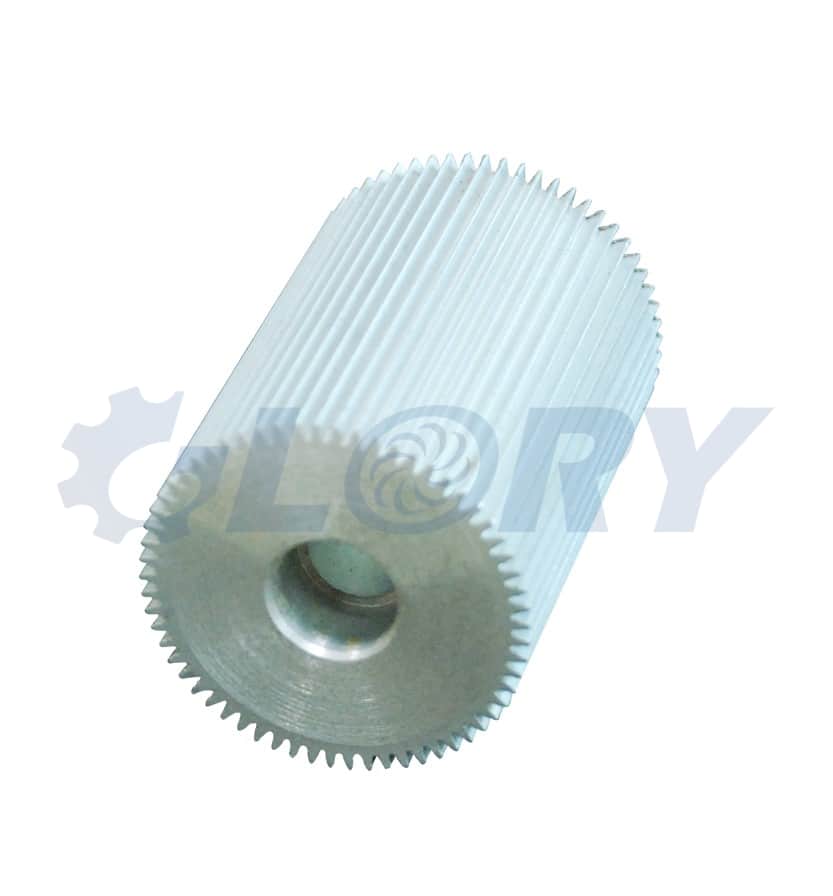
Round Heatsink
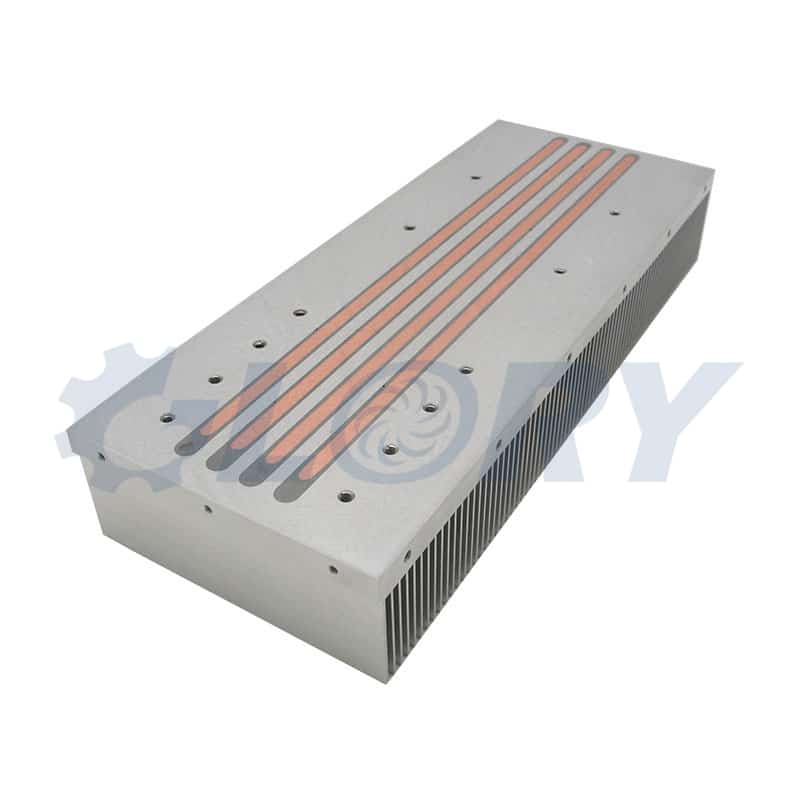
Thermal Tube Heatsink
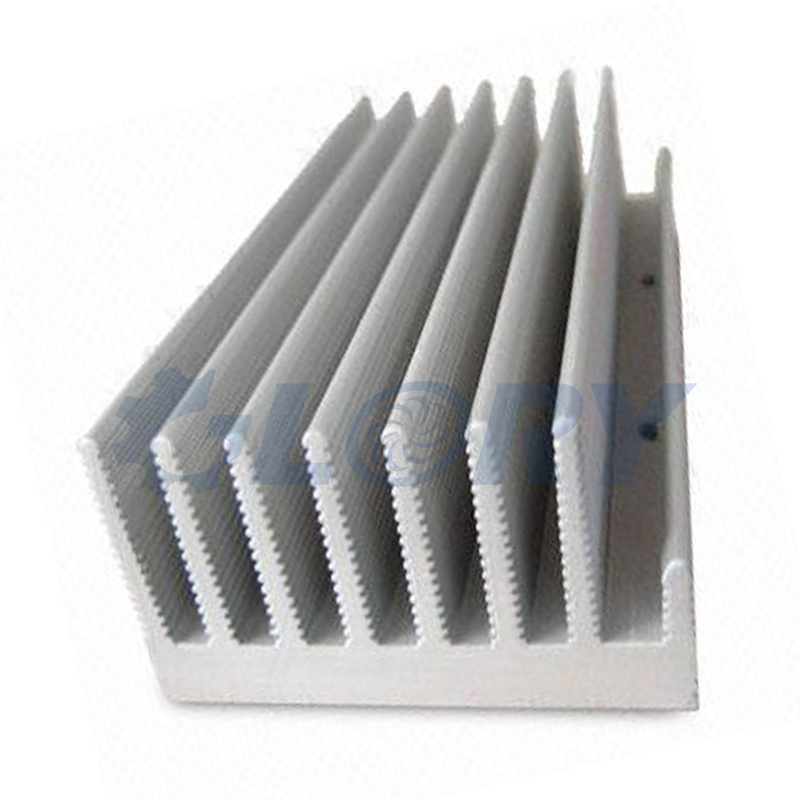
6063 Aluminum Heatsink
Precision-Machined 6063, Built Around Your Drawing
6063 rewards a workshop that understands tempers, chip behavior, thin-wall fixturing and anodizing allowances. Our turning, 3-axis, 4-axis and 5-axis milling, drilling and tapping processes turn that understanding into consistent components — whether the requirement is a single CNC machined 6063 aluminum part in China for an engineering prototype or a scheduled large-batch program of finished, surface-treated assemblies.
By matching the correct national grade designation, the proper T5 or T6 temper and a controlled machining and finishing route to every drawing, machined 6063 components arrive dimensionally stable, cosmetically clean and ready to move straight into the next stage of assembly.
About Us
 We provide custom machined parts, 5-axis linkage CNC machining, and the design, production, and assembly of machinery and equipment.