
OEM CNC Machined 7075 Aluminum Alloy in China
We are a China-based precision machining workshop dedicated to producing OEM-grade CNC machined 7075 aluminum in China for customers who need high-strength, tight-tolerance parts without the cost level of domestic workshops in Europe or North America. Every component is manufactured directly from customer-supplied drawings, 3D models and technical requirements rather than from a fixed catalog, so geometry, tolerances, threads, surface treatment and packaging can all be defined by the buyer.
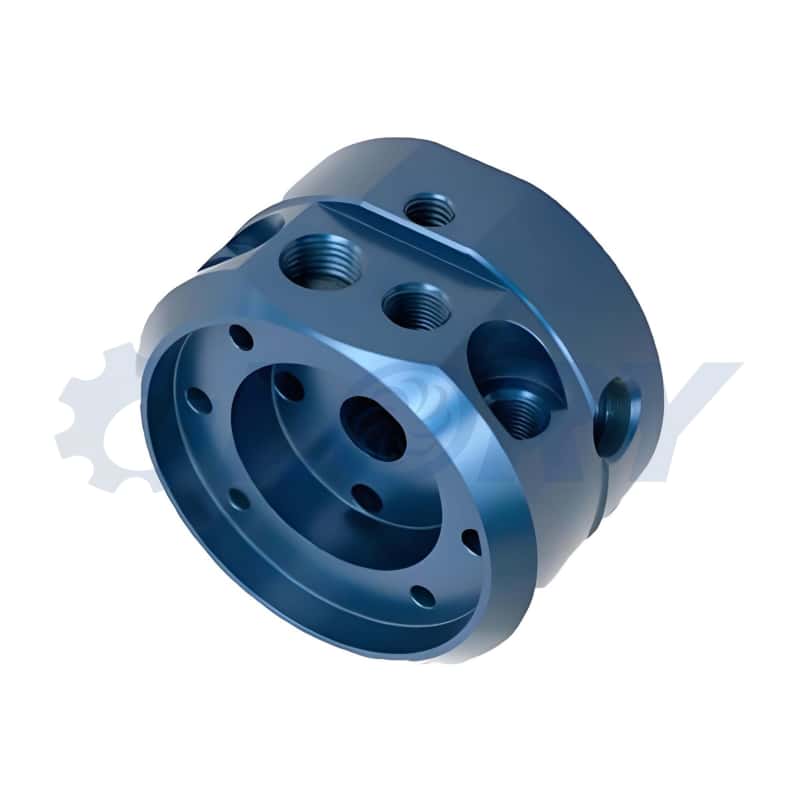
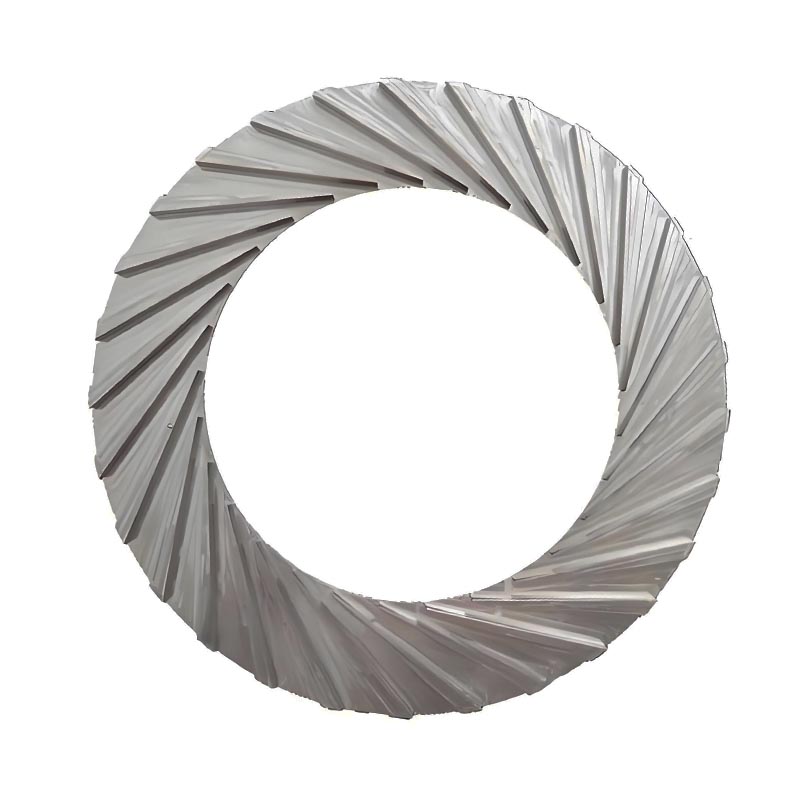
7075 aluminum is selected whenever a design sits at the intersection of low weight and high mechanical load — aviation connection parts, compressor impellers and diffusers, hydraulic valve blocks, structural brackets, robot end-effectors and high-performance automotive components. Our CNC machined 7075 aluminum in China service covers the full process chain from a single prototype through pilot runs to repeat batch production, using CNC turning, 3-axis / 4-axis / 5-axis CNC milling, drilling and tapping under one roof.
The page below summarizes the 7075 material itself, its international grade equivalents, tempers and mechanical properties, the parts we routinely produce, the equipment and measuring methods used on the shop floor, the production volumes we support, and the engineering details that help a 7075 design machine well on the first run.
Understanding 7075 Aluminum Alloy
Before commissioning CNC machined 7075 aluminum in China, it helps to understand how the alloy is classified, why it is so strong, how its grade is written in different national standards, and how temper condition changes the behavior of a finished part.
Alloy family and metallurgical background
7075 is a member of the 7xxx aluminum series, in which zinc is the principal alloying element, supported by magnesium and copper. After solution heat treatment and artificial aging, zinc- and magnesium-rich precipitates form inside the aluminum matrix and block dislocation movement, which is what gives the alloy its very high strength.
Developed originally for aircraft structural applications, 7075 remains one of the strongest aluminum alloys routinely used in precision machining. In the peak-aged T6 condition its static strength approaches that of mild steel while retaining the low density of aluminum, making it a natural choice whenever component mass directly affects performance — rotating impellers, reciprocating machinery, aerospace structures and fast-moving automation axes.
Compared with general-purpose alloys such as 6061, CNC machined 7075 aluminum offers noticeably higher strength and hardness, excellent machinability and a fine, clean cut surface. Its trade-offs are also well understood: lower atmospheric corrosion resistance, limited weldability and a price premium over 6061. These characteristics are normally managed through correct temper selection, design geometry and post-machining surface treatment rather than by changing the alloy itself.
Raw stock is commonly purchased as extruded round bar, forged block, rolled plate or drawn tube in T6, T651, T7351 and related tempers, so a drawing can call out the exact form and condition that best matches the loading case.
| Element | Min % | Max % | Role in the alloy |
|---|---|---|---|
| Zinc (Zn) | 5.1 | 6.1 | Main strengthening element, forms aging precipitates |
| Magnesium (Mg) | 2.1 | 2.9 | Works with Zn to raise strength after aging |
| Copper (Cu) | 1.2 | 2.0 | Improves strength and response to heat treatment |
| Chromium (Cr) | 0.18 | 0.28 | Controls grain structure and stress-corrosion behavior |
| Iron (Fe) | — | 0.50 | Residual impurity, kept limited for ductility |
| Silicon (Si) | — | 0.40 | Residual impurity element |
| Manganese (Mn) | — | 0.30 | Minor grain-structure control |
| Titanium (Ti) | — | 0.20 | Grain refinement in cast billet |
| Other elements, each | — | 0.05 | Controlled residual limits |
| Aluminum (Al) | Balance | Base matrix metal | |
| Region / standard system | Standard | Grade designation | Notes |
|---|---|---|---|
| United States | Aluminum Association / ASTM (B209 plate, B221 extruded bar) | 7075, UNS A97075 | The reference designation used on most English-language OEM drawings |
| International | ISO 209 | AlZn5.5MgCu | Chemical-composition-based international designation |
| European Union | EN 573 / EN AW | EN AW-7075 / AlZn5.5MgCu | Used on European drawings and material declarations |
| Germany | DIN | 3.4365 / AlZnMgCu1.5 | Legacy German material number and symbolic name |
| Japan | JIS H4000 / H4040 | A7075 | Common on Japanese equipment and machinery drawings |
| China | GB/T 3190 | 7075 (closely related domestic grade 7A09, formerly LC9) | Domestic stock can be ordered directly as 7075; 7A09 is the traditional near-equivalent Al-Zn-Mg-Cu grade |
| Temper | Process condition | Typical application logic |
|---|---|---|
| O | Fully annealed, soft and formable | Bending / forming work that is aged afterwards |
| T6 | Solution heat treated then artificially aged to peak strength | Maximum static strength for general machined parts |
| T651 | T6 plus controlled stretching to remove internal stress | Plate and bar for precision machining, lower distortion after metal removal |
| T73 | Solution treated and deliberately over-aged | Better resistance to stress-corrosion cracking at some strength cost |
| T7351 | T73 with stress-relief stretching | Thick plates and large structural components exposed to service stress |
| T76 | Special over-aged temper | Improved resistance to exfoliation corrosion |
| Property | Metric | Imperial |
|---|---|---|
| Density | 2.81 g/cm³ | 0.102 lb/in³ |
| Ultimate tensile strength | 572 MPa | 83 ksi |
| Tensile yield strength | 503 MPa | 73 ksi |
| Shear strength | 331 MPa | 48 ksi |
| Fatigue strength (5×10⁸ cycles) | 159 MPa | 23 ksi |
| Modulus of elasticity | 71.7 GPa | 10.4 Msi |
| Brinell hardness | ~150 HB | — |
| Elongation at break | ~11 % | — |
| Thermal conductivity | 130 W/(m·K) | 75 BTU/(h·ft·°F) |
| Coefficient of thermal expansion | 23.6 µm/(m·°C) | 13.1 µin/(in·°F) |
| Melting range | 477 – 635 °C | 890 – 1175 °F |
| Comparison point | 7075-T6 | 6061-T6 | 2024-T3 |
|---|---|---|---|
| Alloy series | Al-Zn-Mg-Cu (7xxx) | Al-Mg-Si (6xxx) | Al-Cu-Mg (2xxx) |
| Ultimate tensile strength | ~572 MPa | ~310 MPa | ~483 MPa |
| Tensile yield strength | ~503 MPa | ~276 MPa | ~345 MPa |
| Density | 2.81 g/cm³ | 2.70 g/cm³ | 2.78 g/cm³ |
| Machinability | Excellent, chips cleanly at high feed | Good, slightly softer and more ductile chips | Good, often machined in stress-relieved tempers |
| Weldability | Generally not recommended for fusion welding | Readily weldable (TIG / MIG) | Limited, generally not welded |
| Atmospheric corrosion resistance | Moderate; anodizing or coating commonly added | Very good | Moderate; often clad or coated |
| Typical design role | Highly loaded, lightweight structural and rotating parts | General-purpose frames, housings, welded assemblies | Fatigue-loaded skins, wing and fuselage structures |
Exceptional strength-to-weight ratio
With peak tensile strength above 570 MPa at roughly one third the density of steel, 7075 lets designers shrink cross-sections and remove mass without sacrificing load capacity, which is why it dominates heavily loaded lightweight assemblies.
Heat-treatable, predictable strength
Solution treatment and controlled aging produce repeatable T6, T651 and T7351 conditions. Selecting a stress-relieved temper before machining greatly reduces movement of thin walls and deep pockets after material removal.
Excellent CNC machinability
7075 cuts with low cutting forces, short broken chips and low built-up edge, allowing aggressive feeds and speeds while holding fine surface finishes, clean thread profiles and sharp feature definition.
Good fatigue and dynamic-load behavior
Its fatigue performance supports rotating and cyclically loaded components such as impellers, compressor diffusers, lever arms and moving automation parts where 6061 would deflect or fail prematurely.
Corrosion behavior that must be designed for
Because copper and zinc reduce atmospheric corrosion resistance compared with 6061, exposed 7075 parts are commonly anodized, hard-anodized, powder coated or otherwise sealed; over-aged T73-family tempers improve stress-corrosion resistance.
Limited weldability, ideal for bolted designs
Fusion welding of 7075 is generally avoided because the heat-affected zone loses strength and becomes crack-sensitive. Assemblies are instead designed around machined threads, fasteners, inserts and precision mating faces.
Typical CNC Machined 7075 Aluminum Products
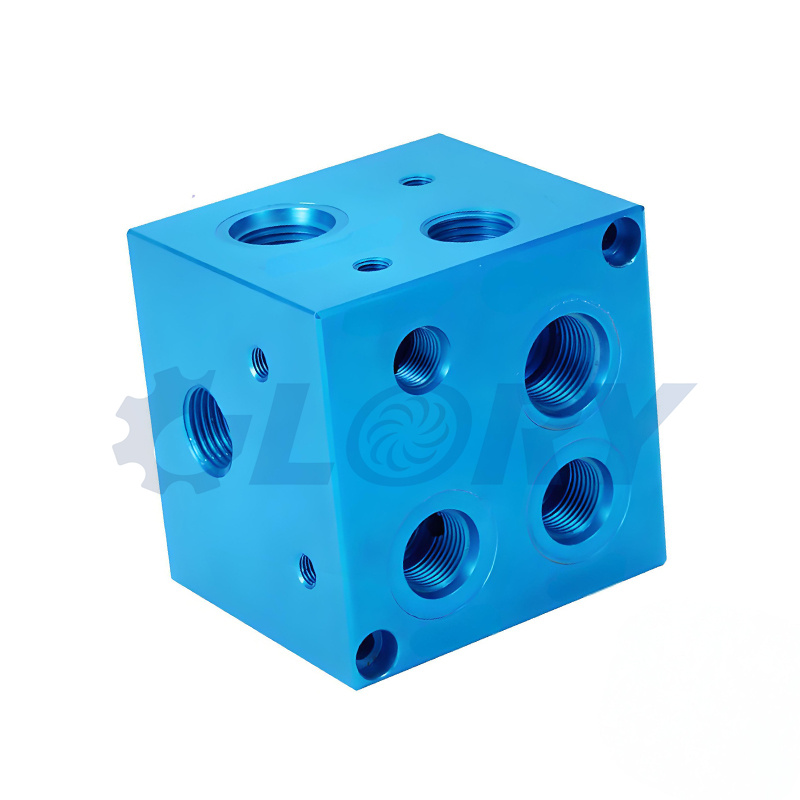
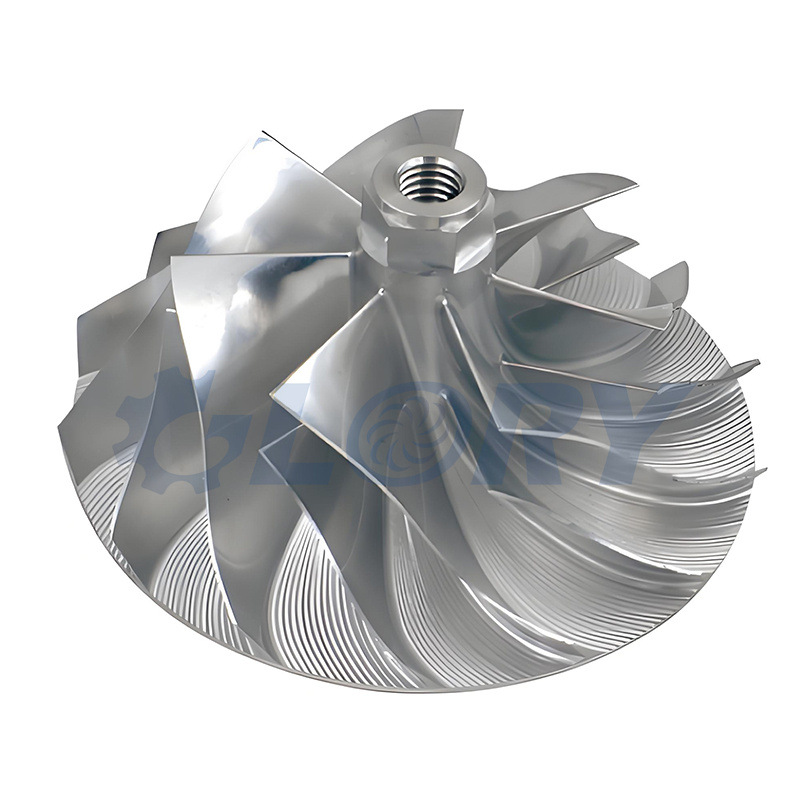
A representative selection of components produced as CNC machined 7075 aluminum in China. Every item below is a custom-made part built to customer drawings rather than a stocked standard.
In-House CNC Machining Capabilities
CNC machined 7075 aluminum in China from this workshop is produced with a complete set of subtractive processes, so a part can move between turning, milling, drilling and threading operations without leaving the production line.
CNC Turning
Precision CNC lathes produce rotational 7075 features such as shafts, sleeves, bushings, threaded fittings, stepped bores, grooves, sealing seats and face profiles.
- External and internal cylindrical turning
- Facing, grooving, profiling and knurling
- Metric, unified and pipe thread cutting
- Close concentricity between bore and OD
3-Axis CNC Milling
Vertical machining centers handle prismatic 7075 parts with pockets, steps, slots, flat faces and drilled hole patterns from bar, plate or forged block.
- Pocket roughing and finish wall passes
- Profiles, slots, keyways and engraved marks
- Cost-efficient for single-setup geometry
- Well suited to plates, brackets and housings
4-Axis CNC Milling
A rotary fourth axis indexes or continuously rotates the 7075 workpiece, exposing multiple sides in one setup and cutting helical or wrapped features accurately.
- Multi-sided parts without repeated refixturing
- Indexed holes and flats around an axis
- Helical grooves and wrapped cam profiles
- Fewer setup errors and shorter cycle time
5-Axis CNC Milling
Simultaneous five-axis machining reaches compound curved surfaces in a single clamping, which is essential for impellers, diffusers, blades and complex aerodynamic forms in 7075.
- Continuous 5-axis contouring of free-form surfaces
- Short, rigid cutters in deep cavities, less vibration
- Compound angles and undercuts in one setup
- Higher positional consistency between features
Precision Drilling
Drilling operations on 7075 cover spot drilling, deep-hole drilling, step drilling, counterboring, countersinking and reaming for accurate hole size and position.
- Controlled hole position relative to datums
- Reamed holes for precision bearing fits
- Peck cycles for controlled chip evacuation
- Countersinks and counterbores for fastener heads
Tapping and Thread Making
Internal threads in 7075 are produced by machine tapping or, for demanding cases, thread milling and single-point turning, covering metric, UNC, UNF, NPT and custom profiles.
- Metric coarse and fine pitch threads
- Unified UNC / UNF and tapered pipe threads
- Thread milling for large or delicate threads
- Threaded inserts prepared for high-wear locations
From One-Off Prototype to Large-Batch Production
A defining advantage of sourcing CNC machined 7075 aluminum in China is the ability to scale the same drawing from a single validation piece through to repeated series batches without changing supplier or re-engineering the process.
Prototype and one-off builds
Single functional prototypes, design-validation pieces and spare parts are machined from the same 7075 stock grades as production parts, with fast setup and direct engineering feedback on manufacturability.
Pilot and low-volume runs
Small series for product launches, field trials and custom machinery use soft jaws and simple fixtures to keep unit cost reasonable while protecting consistency across the batch.
Repeat serial production
Stable cycle programs, dedicated fixturing, first-piece confirmation and in-process dimensional checks keep every batch aligned with the drawing and with previous deliveries.
Large-batch and blanket orders
High-volume demand is supported with planned raw-stock purchasing, optimized tooling life, staged delivery schedules and documented process parameters for repeatable long-term supply.
Workshop Floor, Machining Cells and Inspection
The following scenes show how CNC machined 7075 aluminum in China moves through the workshop: raw stock enters the production area, passes through milling and turning cells, and is then verified with 2D optical and 3D coordinate measuring before packaging.
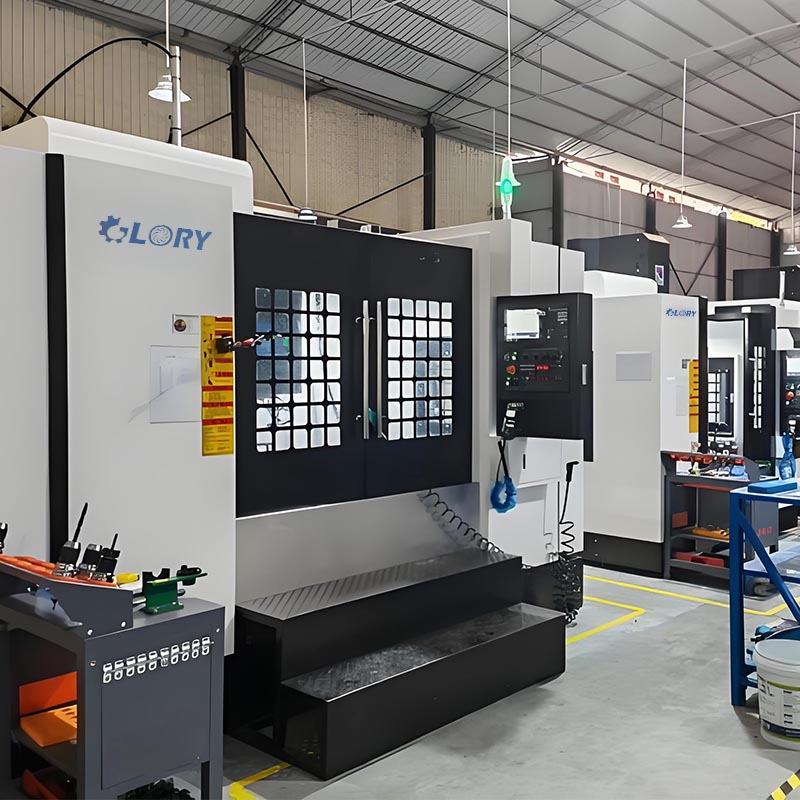
Workshop
Organized machining floor with grouped CNC cells, tooling storage and staged raw material, supporting orderly flow from cutting to final inspection.
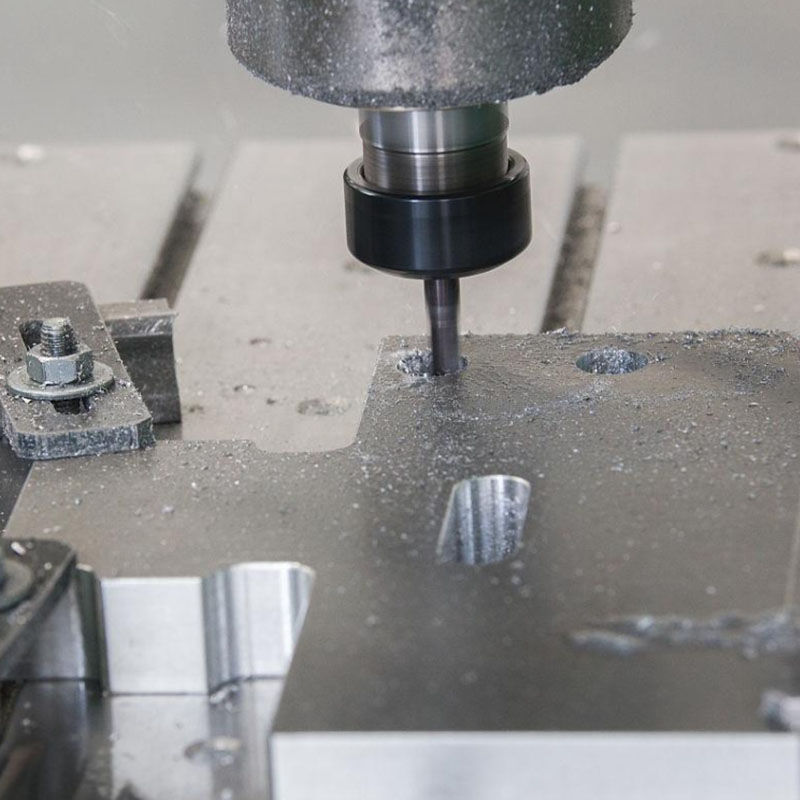
CNC Milling
Vertical milling centers cut pockets, profiles and hole patterns in 7075 plate and block, combining roughing, finishing, drilling and tapping in coordinated setups.
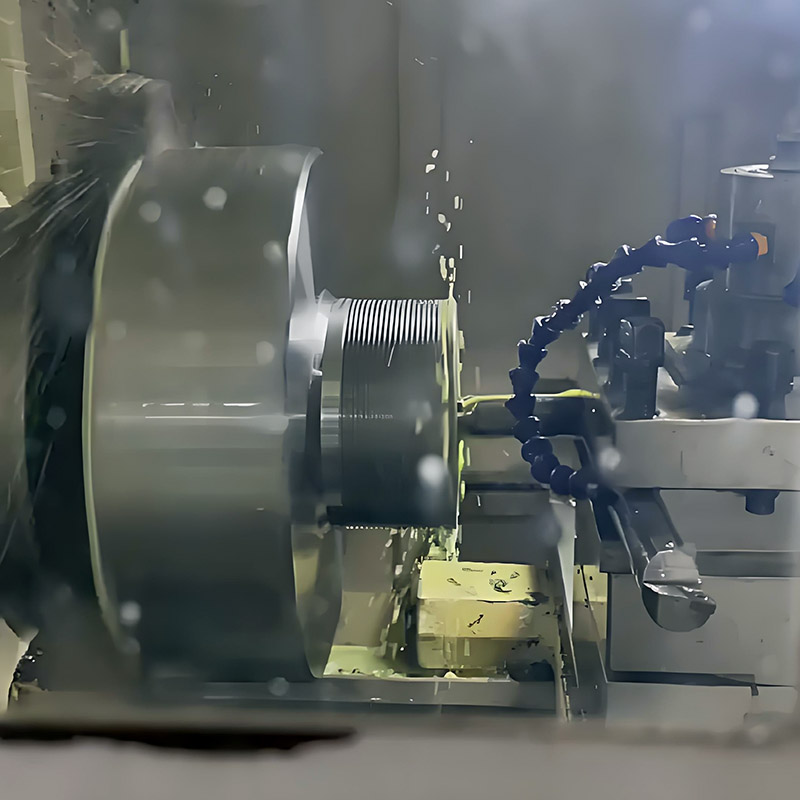
CNC Turning
CNC lathes shape rotational 7075 features such as sealing diameters, stepped bores, faces and external or internal threads with tight concentricity control.
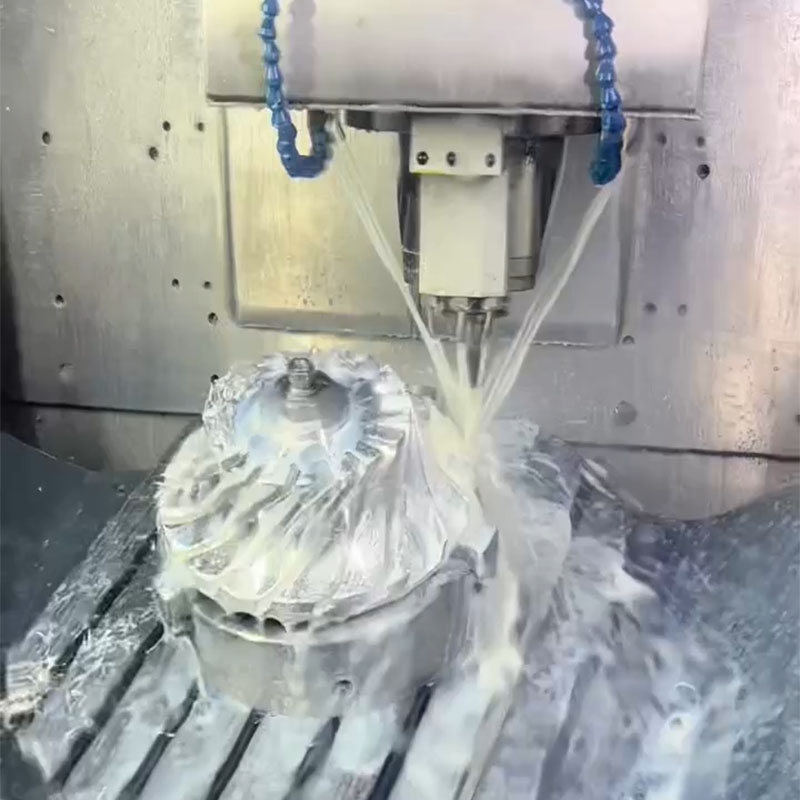
5-Axis Milling
Simultaneous five-axis machining produces impeller blades, diffuser channels and compound-curved 7075 surfaces in a single clamping for high feature-to-feature accuracy.
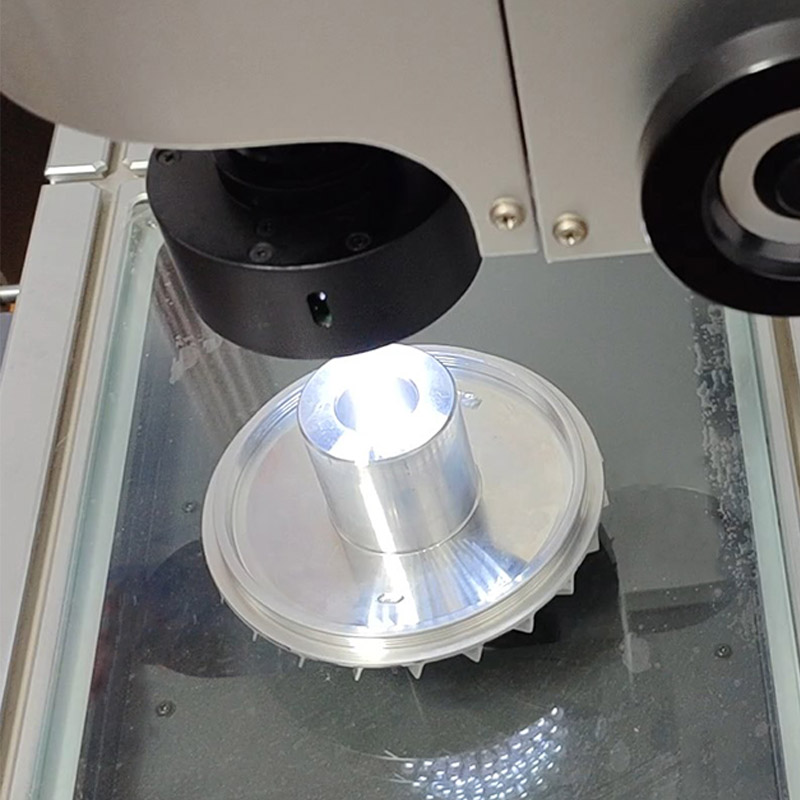
2D Measuring
Profile projectors and optical vision systems verify 2D contours, radii, angles, edge profiles and small-feature dimensions that are difficult to reach with tactile tools.
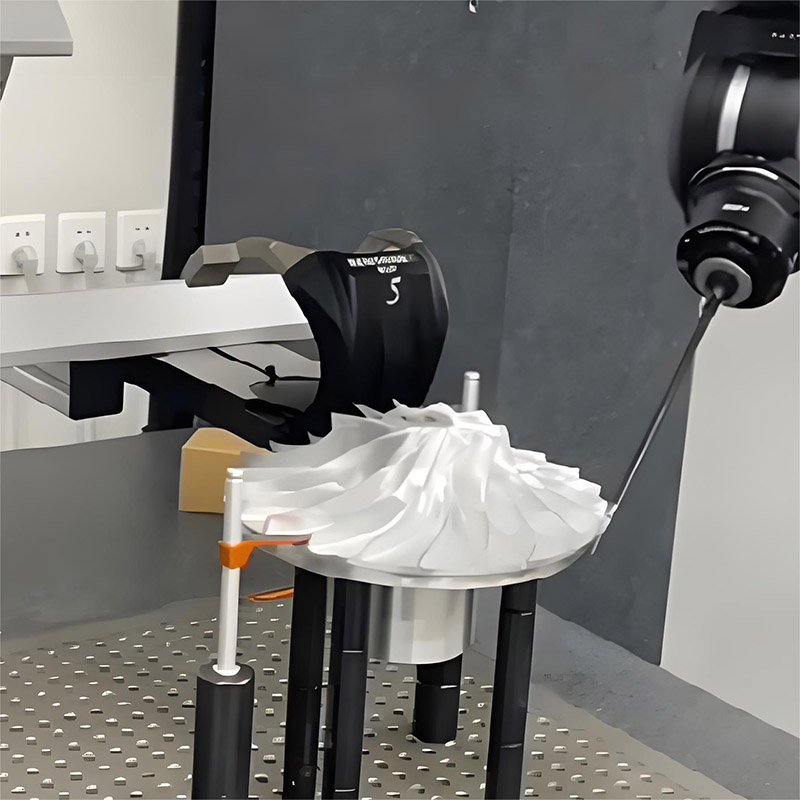
3D Measuring
A coordinate measuring machine probes three-dimensional positions, bore locations, true position and complex surfaces against the 3D model to confirm the finished part.
Industries That Use CNC Machined 7075 Aluminum Parts
The combination of light weight, high static strength and clean machinability makes 7075 a recurring choice across the following engineering sectors.
Aviation and Aerospace Structures
Connection fittings, brackets, supports, actuator components and cabin interior structural parts where every gram saved matters and high yield strength is non-negotiable.
Motorsport and High-Performance Automotive
Lightweight uprights, adapter plates, shifting components, sensor mounts and suspension-related parts exposed to vibration, shock and repeated dynamic loads.
Hydraulics and Fluid Power
Hydraulic valve blocks, manifold bodies and connection plates with intersecting internal galleries, precise sealing faces and tapped ports.
Turbomachinery and Compressors
Five-axis machined impellers, diffusers, inducer wheels and shroud components where blade geometry, balance and surface quality directly affect efficiency.
Industrial Automation and Robotics
Robot arm end-effectors, moving carriages, coupling bodies and high-speed axis components that benefit from low inertia and high stiffness.
Tooling, Jigs and Fixtures
Lightweight inspection fixtures, assembly jigs, mold inserts and vacuum-forming tooling where 7075 offers faster machining and better heat conduction than tool steel.
Surface Treatment Options for Machined 7075 Parts
Because 7075 relies more heavily on surface protection than 6061, the finish is usually defined on the drawing before production. The following options are routinely applied after machining.
As-Machined Finish
Deburred edges and an untouched machined surface, typically around Ra 1.6 to 3.2 micrometers, suitable for internal structural parts and mating surfaces later assembled out of sight.
Bead Blasting
Fine glass-bead blasting produces a uniform matte texture, removes tool marks and creates an even base appearance before anodizing or assembly.
Clear or Color Anodizing
Sulfuric-acid anodizing builds a protective oxide layer that can be left clear or dyed in black, blue, red or other specified colors for corrosion protection and visual identity.
Hard Anodizing
A thicker, wear-resistant oxide layer suited to impeller bores, sliding surfaces and fixture components; dimensional allowance for the coating is planned before cutting.
Brushing and Polishing
Directional brushing or mechanical polishing prepares cosmetic 7075 surfaces that need a controlled linear grain or a smooth reflective appearance.
Powder Coating and Laser Marking
Powder coating adds a tough colored exterior for equipment exposed to handling and environment, while laser marking adds permanent part numbers and batch identification.
Engineering Notes for Designing Machinable 7075 Parts
These are the details reviewed before cutting begins on any order of CNC machined 7075 aluminum in China. Addressing them on the drawing shortens lead time, stabilizes quality and avoids costly rework.
Wall thickness and rib design
Although 7075 is strong, very thin walls deflect under cutter pressure. Stable production generally favors walls of 0.8 mm or thicker, with 1.0 mm preferred for tall walls, and ribs instead of large thin panels.
Internal corner radii
Every end mill leaves a radius in internal corners. Designing pockets with radii slightly larger than the cutter radius lets a larger, stiffer tool run faster and leaves fewer chatter marks than chasing sharp internal corners.
Datum strategy and tolerance zones
A clear primary, secondary and tertiary datum scheme allows tight tolerances to be concentrated where they matter. General features can follow standard workshop tolerances while critical bores and positions are held tighter.
Threads and reinforced threaded holes
Engagement depth of 1.5 to 2.5 times thread diameter is typical for aluminum. Holes that see repeated assembly or high clamp load can be prepared for helical wire inserts to protect the softer 7075 threads.
Stress-relieved stock for deep pockets
Parts with aggressive material removal from thick plate should specify T651 or T7351 stress-relieved stock, and symmetrical roughing from both sides helps keep the component flat after machining.
Coating allowance and edge breaks
Hard anodizing adds measurable thickness to every exposed surface, so mating diameters need a pre-coat allowance. A defined edge-break or chamfer specification also removes sharp burrs in a repeatable way.
Why Buy CNC Machined 7075 Aluminum in China from This Workshop
The value of CNC machined 7075 aluminum in China is not only a lower unit price. It is the combination of direct workshop communication, complete process coverage and engineering-level control over each custom order.
Direct workshop, no trading layer
Drawings are reviewed by the people who will actually machine the part, so technical questions about geometry, threads, tolerances and stock form are answered from the shop floor rather than passed through intermediaries.
Material grade and batch control
7075 stock is purchased in the temper and form called out on the drawing, and each production order keeps records of material grade, temper and batch so repeat orders use the same input condition.
Pre-production engineering review
Every model is checked for machinability, tool access, internal radii, thread depth, flatness risks and finish compatibility before metal is cut, with issues raised while they are still cheap to resolve.
Complete processes in one line
Turning, 3-axis to 5-axis milling, drilling, tapping and coordination with surface-treatment vendors happen under one production schedule, removing the lead-time risk of moving parts between separate shops.
Quantity flexibility without re-tooling
The same CNC program and fixturing logic supports a single prototype, a 100-piece pilot lot and a multi-thousand-piece series, so designs can grow into production without switching supplier.
Dimensional verification before dispatch
Critical dimensions are checked with hand instruments, 2D optical profile measurement and 3D coordinate measuring, and measurement records can be prepared together with the parts when the drawing requires them.
Frequently Asked Questions About 7075 CNC Machining
Practical answers to the questions OEM engineers most often raise when placing an order for CNC machined 7075 aluminum in China.
What is the difference between 7075-T6 and 7075-T7351?
T6 is peak-aged for maximum strength. T7351 is over-aged and stress-relieved by stretching, trading some strength for noticeably better resistance to stress-corrosion cracking and lower distortion after heavy machining, which suits thick structural plates.
Can 7075 aluminum parts be welded?
Fusion welding is generally not recommended because the heat-affected zone loses aging strength and is crack-sensitive. Designs normally use machined threads, fasteners, inserts or precision bolted joints instead; if welding is unavoidable, 6061 is usually the better alloy choice.
How does machining 7075 compare with machining 6061?
7075 is harder and stronger, cuts with cleaner broken chips, holds thin features more rigidly and achieves a fine finish at high feed rates. 6061 is softer, slightly cheaper and easier to weld, so the choice follows the strength, weight and joining requirements of the design.
What files are needed to quote a custom 7075 part?
A 3D model in STEP, IGES or X_T format defines the geometry, while a 2D PDF, DWG or DXF drawing carries tolerances, threads, surface roughness, temper and finish requirements. Critical dimensions and inspection expectations should be marked explicitly on the drawing.
Is there a minimum order quantity for CNC machined 7075 aluminum in China?
No fixed minimum applies. A single prototype or spare part can be produced, and the same process can then be repeated at low, medium or high volume. Unit pricing naturally improves as quantity rises because setup and programming effort is spread across more pieces.
What tolerances and surface roughness are realistic?
General machined features commonly follow standard CNC tolerances around plus or minus 0.05 mm, while defined critical bores and positions can be held substantially tighter with stable fixturing. As-machined surfaces typically reach Ra 1.6 to 3.2 micrometers, with finer results on finish passes.
A Complete Path From 7075 Drawing to Finished Component
Ordering OEM CNC machined 7075 aluminum alloy in China works best when material knowledge, machine capability and inspection discipline are treated as one connected process. 7075 is not a generic aluminum: its zinc-magnesium-copper chemistry, its T6, T651 and T7351 tempers, and its international grade equivalents all influence how a part should be roughed, finished, measured and protected.
By combining turning, 3-axis, 4-axis and 5-axis milling, drilling and tapping in the same workshop, and by scaling from a single validation piece to repeat large-batch demand, this CNC machined 7075 aluminum in China service is built for OEM customers who need dependable custom parts, transparent engineering communication and a stable supply path as their products grow from prototype to series production.
- 7075 in T6, T651, T73 and T7351 tempers, with AA, EN AW, DIN, JIS and GB grade cross-reference understood on every drawing
- Turning plus 3-axis, 4-axis and 5-axis milling, drilling and tapping under one production schedule
- Complex 7075 components including impellers, diffusers, aviation connection parts and hydraulic valve blocks
- Quantity range from one-off prototypes and spares to pilot lots and large, repeatable production batches
- 2D optical and 3D coordinate measurement of critical dimensions before parts leave the workshop
- Post-machining finishes including bead blasting, clear or color anodizing, hard anodizing and powder coating
About Us
 We provide custom machined parts, 5-axis linkage CNC machining, and the design, production, and assembly of machinery and equipment.