
This international procurement guide is compiled for global mechanical buyers and sourcing teams. It covers mainstream international PC polycarbonate material grades, common machined component types, material characteristics, key machining quality control points and practical export cases. The content is factory-based, concise and practical, fully matching the specification style of aluminum alloy and titanium alloy procurement guides for unified foreign trade document management.
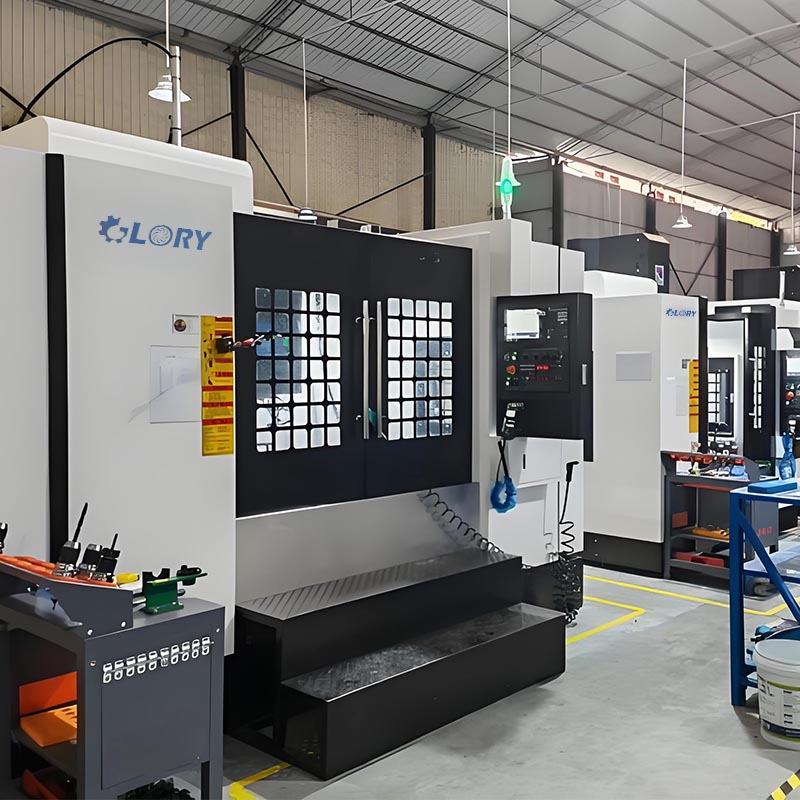
1. Global PC Polycarbonate Grade & Standard Equivalents
PC (Polycarbonate) is a high-transparency, high-toughness engineering plastic widely used for mechanical structural parts, transparent protective parts, insulating components and equipment appearance parts. It features impact resistance, shatterproof performance and stable dimensional accuracy. Different regional standards are basically interchangeable for general mechanical machining purposes.
- USA ASTM / Bayer Standard: PC General grade, Lexan 9034, 101
- Europe EN Standard: PC polycarbonate (PC-1000)
- Japan JIS: PC transparent engineering plastic grade
- China GB: PC polycarbonate board & rod
Grade selection principle: Standard PC for general structural and transparent parts; high-purity low-residual PC for optical and high-cleanliness equipment applications.
2. High-Frequency Export PC Machined Parts List
These components account for the majority of PC foreign trade machining orders, matching international drawing habits and customer procurement demands:
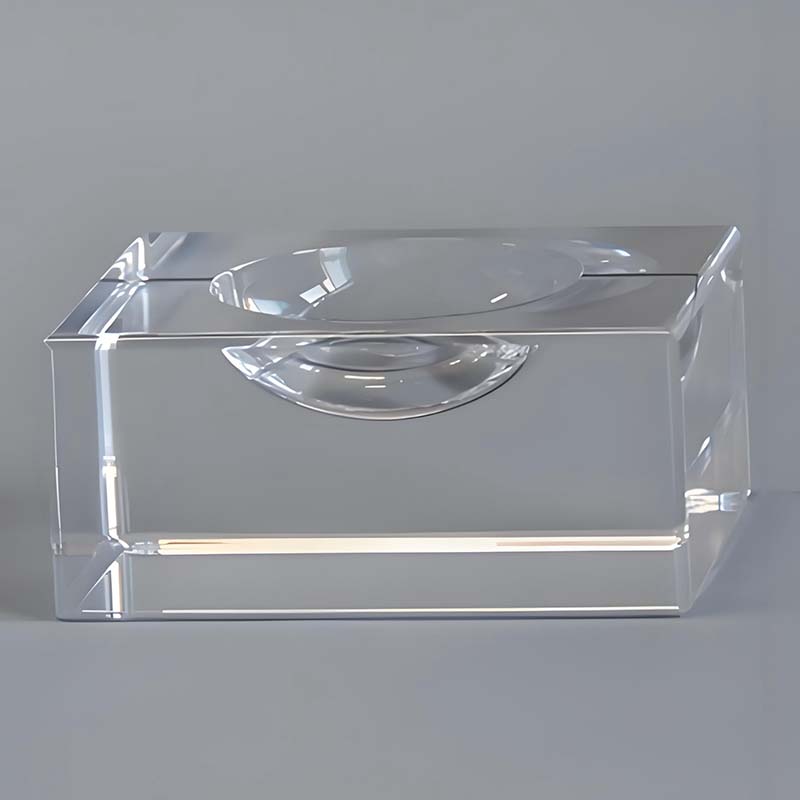
1. Transparent protective parts: transparent cover plates, equipment safety shields, observation windows, dustproof covers, light transmission panels
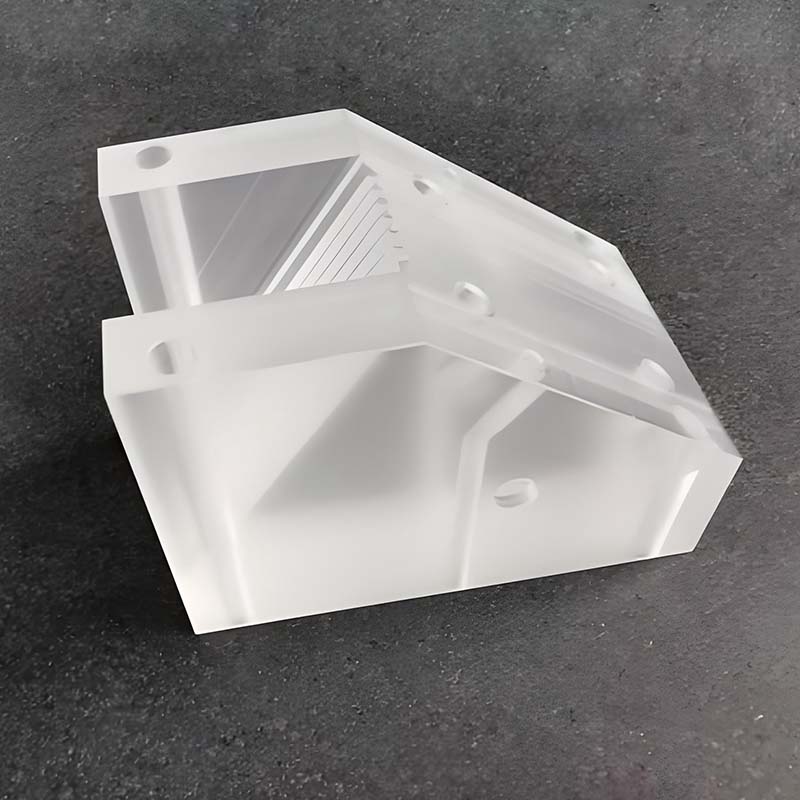
2. Mechanical structural parts: positioning brackets, support blocks, spacer plates, mounting base plates, fixture auxiliary supports
3. Insulation & electronic parts: insulating gaskets, isolation plates, circuit protective baffles, non-conductive spacing sleeves
4. Precision assembly parts: pin holes positioning plates, multi-hole mounting jigs, limit blocks, connecting fixed blocks
5. Anti-collision & buffer parts: equipment anti-shock baffles, impact-resistant protective structural parts
3. PC Material Performance & Procurement Application Guidelines
Core advantages: Ultra-high impact toughness, transparent and aesthetic appearance, good rigidity, excellent insulation performance, low water absorption, stable dimension, shatter-proof and pressure-resistant, better weather resistance than acrylic and ABS.
Best application scenarios: automation equipment transparent protection structures, electronic insulating parts, medical equipment baffles, laboratory observation windows, outdoor anti-aging transparent components, precision mechanical fixed parts.
Not recommended scenarios: long-term high-temperature working environment above 120°C, strong corrosive chemical environment, ultra-high wear-resistant moving parts.
4. PC Machining Characteristics & Export Quality Standards
PC material is tough, sticky and heat-sensitive. It is easy to produce burrs, melting edges, tool marks, surface fogging and thermal deformation during cutting. Strict process control is required for high-precision and high-transparency export orders.
4.1 Turning Process Requirements
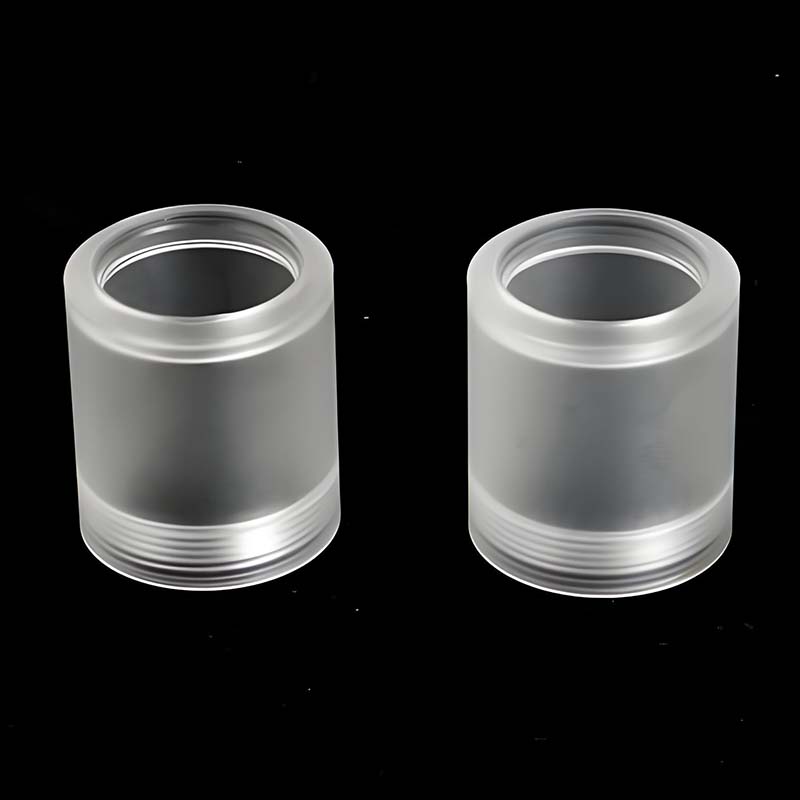
Adopt high-speed light cutting with sharp special plastic tools. Reduce single cutting depth to avoid heat accumulation and material melting. Sufficient air cooling or micro-liquid cooling is required to prevent edge sticking and white foggy surface. Precision rotary sleeves and spacer rings must maintain smooth and transparent surface without tool lines.
4.2 Milling Process Requirements
Layered low-stress milling is mandatory for PC plates and transparent structural parts. Vacuum adsorption clamping is used to avoid indentation and plate warping. For high-transparency appearance parts, tool path optimization is required to eliminate vibration lines and ensure uniform light transmission effect. All edges are neat without melting burrs.
4.3 Drilling and Tapping Standards
PC drilling easily causes orifice cracking and thermal expansion. Adopt graded pre-drilling and low-speed finishing drilling. For PC thread processing, use low-torque plastic taps to prevent thread cracking, tooth collapse and material stacking. All assembly holes and threads must pass gauge inspection to ensure precise assembly.
4.4 Surface Quality & Transparency Control
High-standard export transparent PC parts require secondary fine polishing after machining to remove tiny tool marks and restore high light transmittance. Avoid excessive cutting heat which will cause irreversible fogging and affect appearance and light transmission performance.
4.5 Deformation Control
PC internal stress is easy to accumulate after machining. Large thin plates need stress relief treatment to prevent long-term warping and dimensional drift during sea transportation and long-term equipment operation.
5. Real Foreign Trade PC Machining Cases
Case 1: European Automation Transparent Protective PC Parts
Requirement: A German automation equipment purchaser ordered batches of PC transparent protective covers and observation window panels for automated production lines. The key requirements: high transparency, no surface fogging, no burrs, precise hole position tolerance, anti-impact and long-term non-deformation.
Procurement pain point: Ordinary processing causes cutting heat fogging, edge melting burrs and slight plate warping, which affects equipment appearance and safety protection performance.
Solutions: Adopt full-process low-heat light cutting, vacuum non-deformation clamping, manual fine deburring and professional transparent polishing. Each part is inspected for light transmission flatness and dimension.
Result: Batch parts have clear transparency, perfect edge quality and stable size. Fully meet European automation equipment appearance and safety standards, achieving long-term stable cooperation.
Case 2: Southeast Asian Electronic Equipment PC Insulation Parts
Requirement: A Malaysian electronic technology company customized multi-specification PC insulating baffles and positioning spacer plates. The parts are used for internal insulation and structural fixing of precision electronic equipment, requiring stable insulation performance, smooth surface, no conductive dust residue and accurate assembly gap.
Procurement pain point: Ordinary plastic processing easily produces residual burrs and surface granular marks, which may fall off and affect electronic circuit safety.
Solutions: Use brand-new sharp tools for dust-free finishing, low-stress cutting to ensure smooth surface, full appearance screening and dimensional inspection.
Result: The PC insulating parts operate stably in electronic equipment, with no dust pollution and no assembly deviation, and have become the customer’s fixed supporting parts.
6. Export Delivery & Quality Assurance
Full PC customization capability: Support machining of PC plates, rods and profiles, covering prototype trial production, small-batch customization and mass production.
International standard compliance: Processed strictly according to ISO, DIN, ANSI and JIS requirements. Provide dimensional inspection reports and quality documents to support overseas customer audits and customs clearance.
Professional export packaging: Adopt anti-scratch, shockproof and dust-proof packaging to protect transparent PC surfaces from scratches, cracks and extrusion deformation during long-distance cross-border transportation.
 We provide custom machined parts, 5-axis linkage CNC machining, and the design, production, and assembly of machinery and equipment.