
OEM CNC Machined 17-4PH Stainless Steel in China
We produce CNC machined 17-4PH stainless steel in China for OEM customers that need martensitic precipitation-hardening parts with high strength, controlled hardness and repeatable tolerances. From a single engineered prototype to recurring series production, every CNC machined 17-4PH stainless steel component delivered from our China workshop is manufactured against the selected aging condition, the drawing dimensions and an agreed inspection plan before shipment.
Featured 17-4PH Components
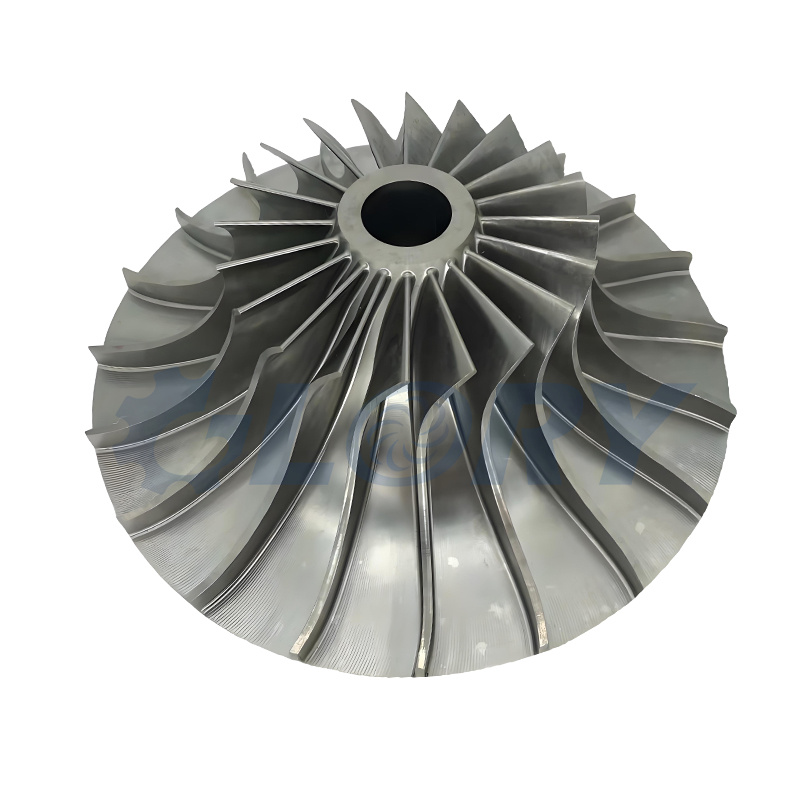
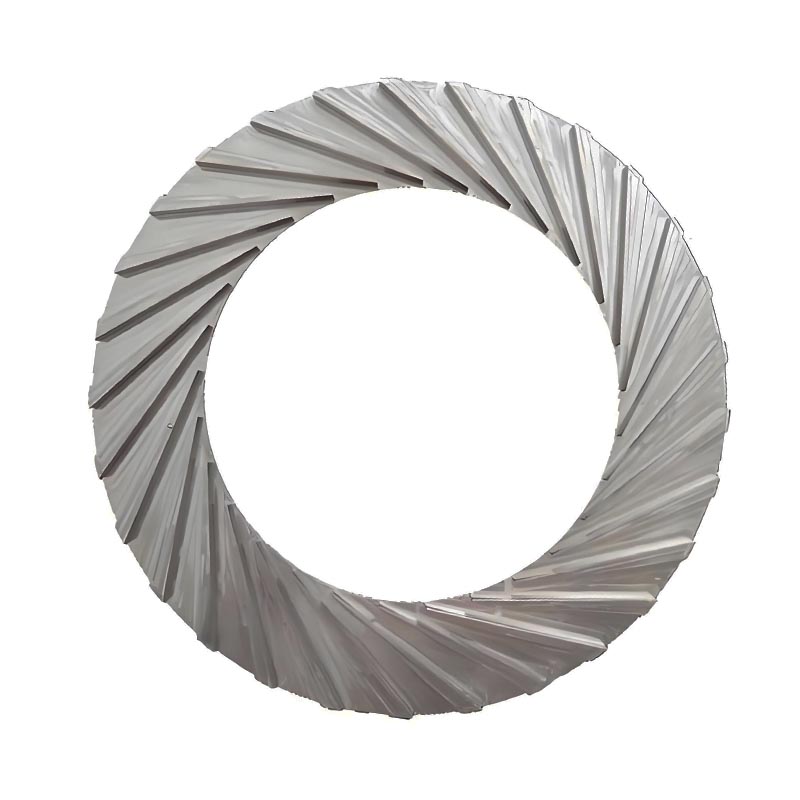
A selection of rotating and flow-control components regularly produced from CNC machined 17-4PH stainless steel in China. The three examples below show the kind of contoured, thin-vane and high-accuracy geometry that the material supports when it is combined with multi-axis machining.

Understanding 17-4PH Stainless Steel
17-4PH is a martensitic precipitation-hardening stainless steel whose name reflects its chemistry: approximately 17% chromium and 4% nickel, with copper and niobium additions that create its hardening response. It is delivered in the solution-annealed Condition A and reaches its final mechanical properties through a low-temperature aging treatment, during which fine copper-rich precipitates form inside the martensitic matrix.
The grade combines mechanical strength far above common austenitic stainless steels with corrosion performance broadly comparable to Type 304 in atmospheric, fresh-water and mildly chemical environments. Because the aging reaction occurs at relatively low temperature, distortion is minimal and predictable, which makes the alloy especially suitable for precision CNC machined 17-4PH stainless steel parts that must hold tight tolerances after hardening.
Customers choose CNC machined 17-4PH stainless steel in China when a component needs wear resistance, fatigue strength, moderate corrosion resistance and stable dimensions at the same time — typical examples include impellers, shafts, valve trim, pump components, fasteners, fixtures and structural parts exposed to repeated mechanical load.
17-4PH Grade Designations Across Standards
The same precipitation-hardening alloy appears under different designations in American, European, Japanese and Chinese standard systems. The table below helps cross-reference incoming drawings and raw material orders for CNC machined 17-4PH stainless steel in China.
| Standard System | Grade Designation | Typical Form |
|---|---|---|
| Common trade name | 17-4 PH / 17.4 PH | Bar, plate, sheet, forging, wire |
| UNS (Unified Numbering System) | S17400 | All wrought forms |
| AISI / ASTM / ASME | Type 630 (ASTM A564, ASTM A693, ASME SA-564) | Bar, plate, sheet, strip |
| AMS (aerospace material grades) | AMS 5604 (bar), AMS 5622 (sheet / strip / plate) | Aerospace bar and flat stock |
| EN (European standard) | 1.4542 / X5CrNiCuNb16-4 | Bar, plate, forging |
| JIS (Japanese standard) | SUS630 | Bar, plate, sheet |
| GB/T (Chinese standard) | 05Cr17Ni4Cu4Nb (formerly 0Cr17Ni4Cu4Nb) | Bar, plate, forging |
| AFNOR (French standard) | Z6CNU17-04 | Bar and forging |
| Element | Nominal Content (wt %) |
|---|---|
| Chromium, Cr | 15.50 – 17.50 |
| Nickel, Ni | 3.00 – 5.00 |
| Copper, Cu | 3.00 – 5.00 |
| Niobium + Tantalum | 0.15 – 0.45 |
| Manganese, Mn | ≤ 1.00 |
| Silicon, Si | ≤ 1.00 |
| Carbon, C | ≤ 0.07 |
| Phosphorus, P | ≤ 0.040 |
| Sulfur, S | ≤ 0.030 |
| Iron, Fe | Balance |
Composition ranges follow the wrought 17-4PH / S17400 / Type 630 specification. Exact heat chemistry follows the material record supplied with each raw-material batch.
Why Engineers Specify 17-4PH
The combination of hardening response, corrosion behavior and dimensional stability explains why 17-4PH is one of the most widely machined precipitation-hardening stainless steels for demanding mechanical components.
Precipitation-Hardening Strength
Copper-rich precipitates formed during aging raise tensile strength to roughly 1310 MPa in the H900 condition, supporting highly loaded shafts, pins and structural elements without moving to a much heavier alloy.
Through-Section Hardening
The aging reaction hardens the full cross section rather than only a surface layer, so hardness and strength remain consistent from the outside diameter to the core of reasonably sized machined parts.
Balanced Corrosion Resistance
Atmospheric, fresh-water and mild chemical exposure is handled at a level broadly comparable to Type 304 and clearly above conventional martensitic grades such as 410 and 420 stainless steel.
Predictable Dimensional Change
Aging takes place at low temperature and produces only a small, repeatable shrinkage. Semi-finishing before heat treatment and light finishing afterward allow final tolerances to be held with confidence.
Mid-Temperature Mechanical Performance
Useful strength is retained to approximately 316 °C (600 °F), and the alloy resists oxidation in intermittent hot service, which suits pump, valve and turbomachinery environments.
Wear Surfaces and Cyclic Loading
High surface hardness in the lower-temperature aging conditions supports wear seats, guide surfaces and rotating components that see repeated cyclic stress during service.
Mechanical Properties by H-Condition
17-4PH reaches different balances of strength, hardness and toughness depending on the aging temperature. Selecting the correct condition before machining begins is one of the first engineering decisions for every batch of CNC machined 17-4PH stainless steel in China.
| Condition | Aging Treatment (typical) | Hardness (min.) | Tensile Strength (min.) | Yield Strength (min.) | Elongation (min.) |
|---|---|---|---|---|---|
| Condition A | Solution annealed, no aging | ≤ 38 HRC typical | — | — | Softest delivery state for rough machining |
| H900 | 480 °C (900 °F), 1 hour | 40 HRC | 1310 MPa (190 ksi) | 1170 MPa (170 ksi) | 10 % |
| H925 | 495 °C (925 °F), 4 hours | 38 HRC | 1170 MPa (170 ksi) | 1070 MPa (155 ksi) | 10 % |
| H1025 | 552 °C (1025 °F), 4 hours | 35 HRC | 1070 MPa (155 ksi) | 1000 MPa (145 ksi) | 12 % |
| H1075 | 579 °C (1075 °F), 4 hours | 32 HRC | 1000 MPa (145 ksi) | 860 MPa (125 ksi) | 13 % |
| H1100 | 593 °C (1100 °F), 4 hours | 31 HRC | 965 MPa (140 ksi) | 795 MPa (115 ksi) | 14 % |
| H1150 | 621 °C (1150 °F), 4 hours | 28 HRC | 930 MPa (135 ksi) | 725 MPa (105 ksi) | 16 % |
Typical reference values for wrought Type 630 / S17400; lower-temperature conditions favor maximum strength and hardness, while higher-temperature conditions trade some strength for improved toughness. Final property values follow each material heat record.
CNC Machining Capabilities for 17-4PH
Our process route for CNC machined 17-4PH stainless steel in China covers the complete removal process chain on one floor: rotational geometry, multi-axis milled geometry, hole making and internal threading. This keeps setups, lead time and accumulated alignment error under control.
CNC Turning
Slant-bed CNC lathes produce shafts, sleeves, bushings, valve stems, seats and cylindrical components with external and internal turning, facing, grooving, profiling and cutting of external threads.
3-Axis CNC Milling
Vertical machining centers handle prismatic parts, flat faces, pockets, slots, bolt-hole patterns and housings, with rigid fixturing suited to the cutting forces of hardened stainless steel.
4-Axis CNC Milling
A rotary axis allows indexed machining of four sides in a single setup, reducing refixture error on flanges, couplings, multi-port bodies and parts with features spaced around a centerline.
5-Axis CNC Milling
Simultaneous five-axis machining creates the swept surfaces of impellers, blade wheels, vane wheels and contoured flow components while keeping short, rigid tool engagement between deep blades.
CNC Drilling
Precision hole making covers plain and cross-drilled holes, bolt circles, counterbores, countersinks and controlled-depth features, using pecking and chip-evacuation strategy adapted to stainless steel.
CNC Tapping
Internal threads are produced by machine tapping or helical thread milling for difficult-to-reach or coarse pitches, with thread gauging used to confirm fit class on every threaded feature.
From a Single Piece to High-Volume Series
CNC machined 17-4PH stainless steel in China is often first validated as a machined prototype and then scaled into recurring production. The same drawing, condition and control plan carry through every stage below.
Single-Piece & Prototype
One-off and first-article parts for design validation, fit checks and rotating assemblies, with first-article dimensional reporting before any repeat order.
Low-Volume Pilot Batch
Small pilot runs from several to a few dozen pieces support field testing, assembly qualification and design freeze without high minimum-order pressure.
Repeat Mid-Volume
Recurring batches in the hundreds combine stable fixturing, programmed tool life and in-process inspection to keep part-to-part variation tight across deliveries.
High-Volume Series
Series production at larger quantities uses optimized cycle times, dedicated work holding and final sampling plans so every shipment matches the approved first article.
Machining Floor and Measuring Capability
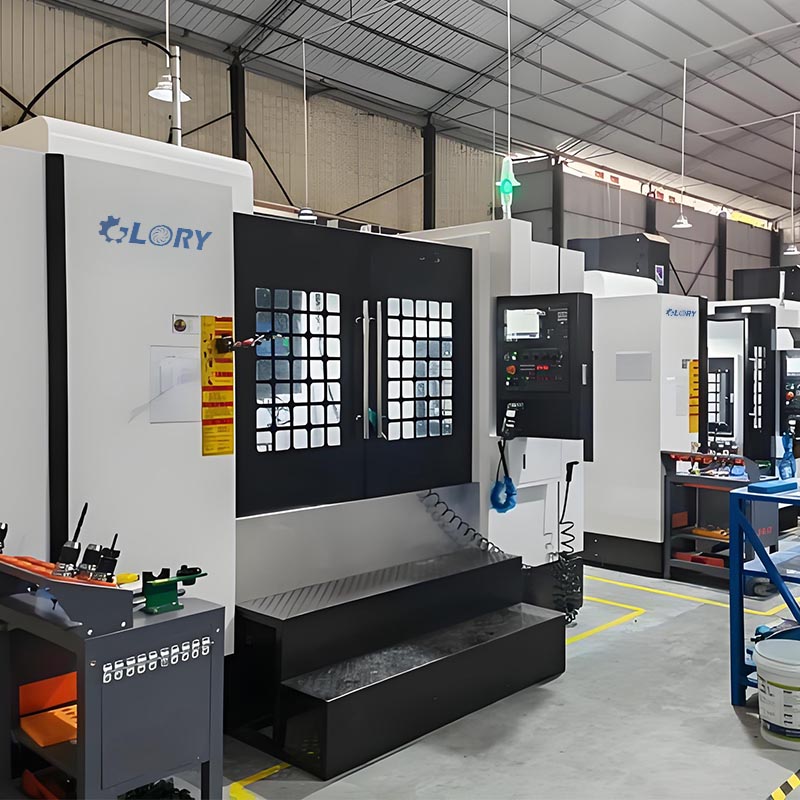
The images below show the production and inspection environment behind each batch of CNC machined 17-4PH stainless steel in China, from raw stock removal through 2D profile and 3D coordinate verification.
Workshop
Organized machining floor with grouped turning and milling cells, scheduled tool replacement and segregated raw, in-process and finished material areas.
CNC Milling
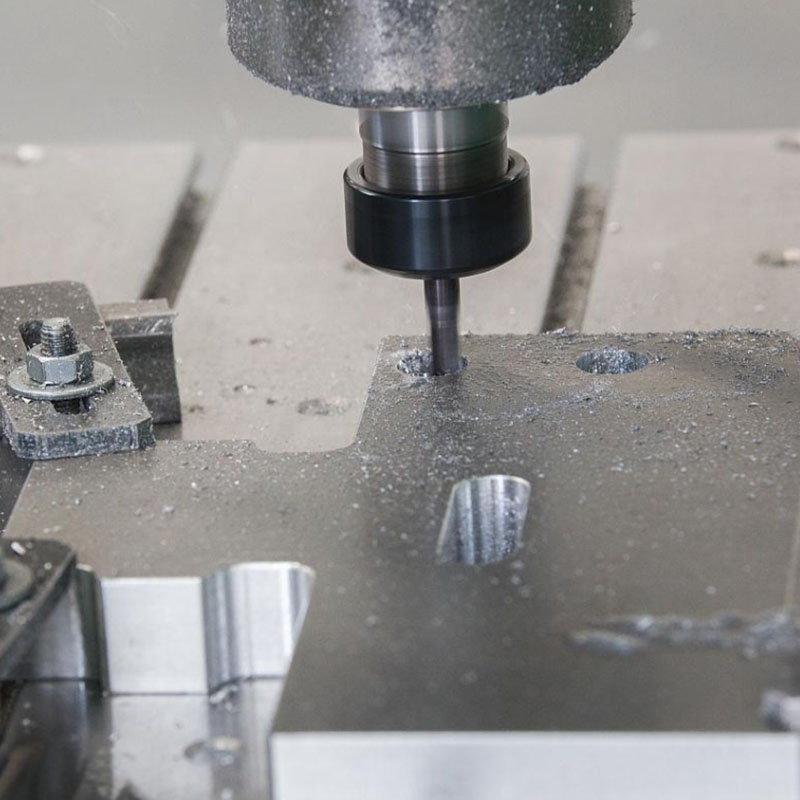
Vertical milling cells produce pockets, faces and hole patterns, combining drilling and tapping in the same setup to preserve positional accuracy between features.
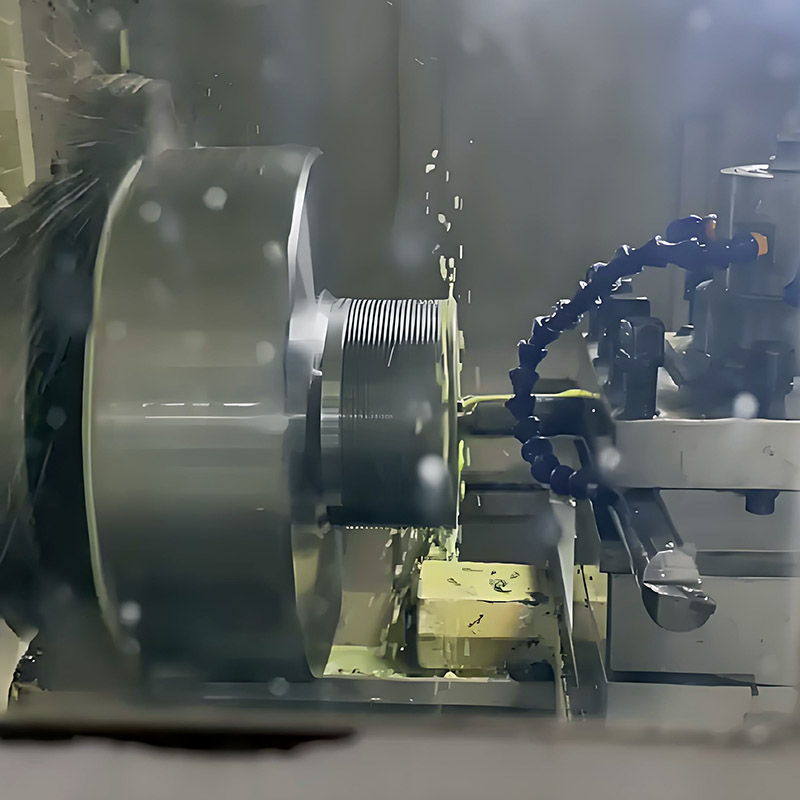
CNC Turning
Turning operations create rotational diameters, bores, grooves and threads with controlled feeds and speeds selected for the specific 17-4PH aging condition.
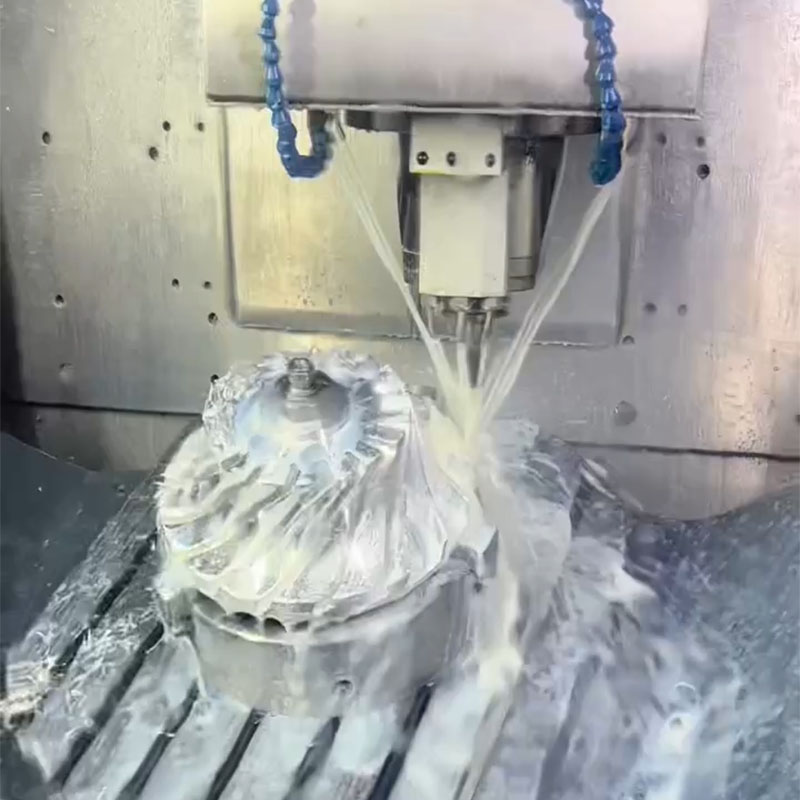
5-Axis Milling
Simultaneous five-axis machining handles impeller channels, blade profiles and other contoured surfaces that cannot be reached efficiently on three-axis equipment.
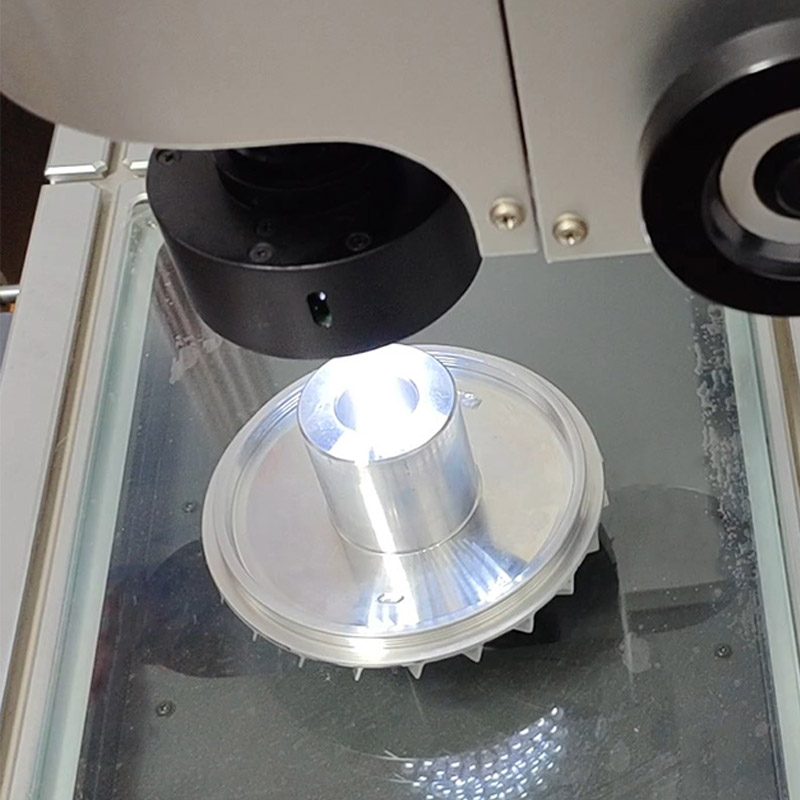
2D Measuring
Optical profile projection compares edge profiles, radii, angles and small-feature geometry against the drawing, especially on thin vane and blade sections.
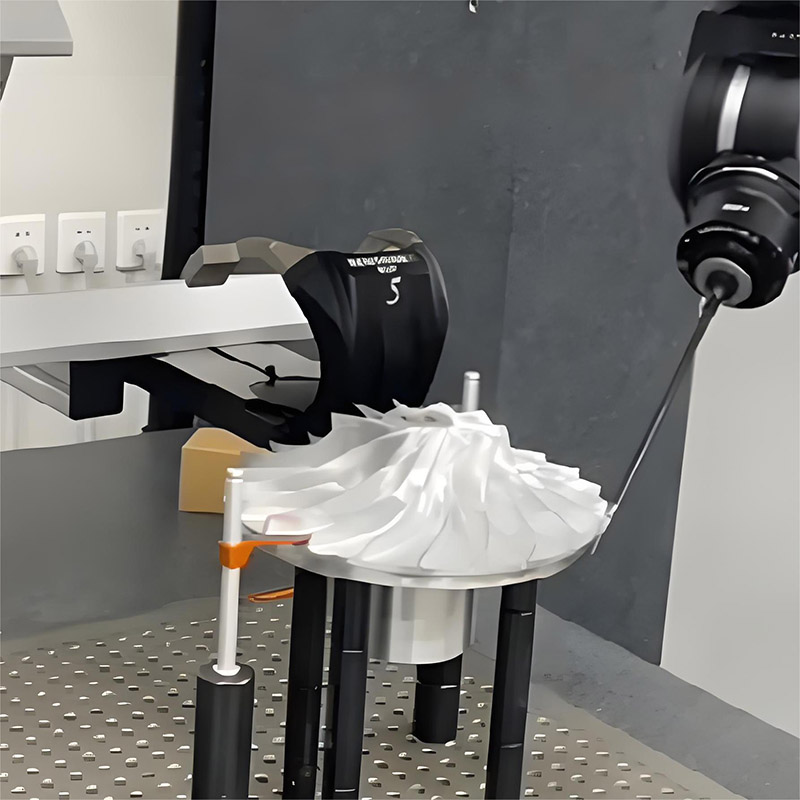
3D Measuring
Coordinate measuring captures three-dimensional point data on blades, hubs and bores, confirming position, true position and profile against the nominal model.
Industries That Use Machined 17-4PH Parts
The strength-to-corrosion balance of 17-4PH makes it a recurring choice across mechanical engineering sectors where uptime, wear behavior and dimensional repeatability matter.
Pumps & Valves
Shafts, stems, seats, cages, impellers and diffusers handling pressure and flow erosion.
Oil & Gas
Downhole and surface components exposed to mechanical load, pressure and corrosive media.
Aerospace & Defense
Structural and actuation parts requiring high strength in a compact stainless envelope.
Medical Equipment
Instrument housings, mechanism parts and fixtures demanding strength and clean surfaces.
Food & Packaging
Machinery components facing humidity, wash-down cycles and repeated mechanical cycling.
Marine Engineering
Fittings, shafts and mechanism parts in salt-atmosphere and humid operating environments.
Energy & Power
Turbomachinery, control mechanisms and flow components for thermal and renewable systems.
Automation & Robotics
Compact brackets, couplings, joints and end-effector parts with stable hardened geometry.
How a 17-4PH Machining Project Is Controlled
Because 17-4PH changes hardness during aging, process sequencing is planned before the first cut. The four-stage workflow below is applied to every order of CNC machined 17-4PH stainless steel in China, regardless of batch size.
Drawing & Condition Review
Critical dimensions, threads, surface requirements and the target H-condition are reviewed so the machining and heat-treatment sequence is fixed up front.
Rough & Semi-Finish Machining
Most stock is removed in Condition A with sharp positive-rake tools, leaving a defined finish allowance that compensates for predictable aging movement.
Aging & Finish Machining
After aging to the selected condition, final passes, precision bores, threads and mating surfaces are finished to drawing at final hardness.
Measurement & Batch Release
First-article and in-process checks, 2D profile inspection and 3D coordinate measurement feed the final dimensional record before parts are released.
A Stable Source for CNC Machined 17-4PH Stainless Steel in China
17-4PH remains a preferred alloy whenever a component must combine high mechanical strength, useful corrosion resistance and stable final dimensions. Our workshop supports the complete process chain for CNC machined 17-4PH stainless steel in China: turning, three-axis to five-axis milling, drilling and tapping, coordinated with the correct H900 through H1150 aging condition for each application.
Production scales flexibly from a single validated prototype to repeat high-volume series, and every batch follows the same drawing review, machining sequence and dimensional verification routine — so the first approved article and the hundredth delivered part remain the same part.
 We provide custom machined parts, 5-axis linkage CNC machining, and the design, production, and assembly of machinery and equipment.
