
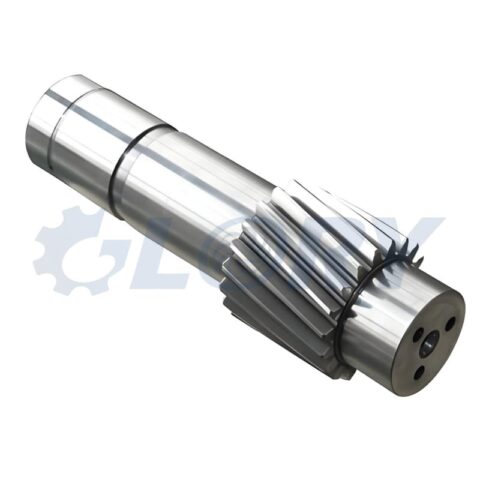
Custom 5140 chrome steel quenched‑and‑tempered gear shaft
OEM 5140 chrome steel quenched-and-tempered gear shaft, CNC machined 5140 gear shaft, custom gear shaft manufacturer, 5140 quenched and tempered shaft, CNC turned gear shaft, spline shaft machining, prototype to production shaft
5140 chrome steel quenched‑and‑tempered gear shaft
Introduction to 5140 Chrome Steel Quenched-and-Tempered Gear Shafts
The search for a dependable gear shaft usually starts with one material decision: 5140 chrome steel in the quenched-and-tempered condition. As a supplier focused on OEM 5140 chrome steel quenched-and-tempered gear shaft manufacturing, we work with this grade regularly because it offers a practical balance of strength, toughness, wear resistance, and machinability. Unlike plain medium-carbon steels, 5140 contains chromium, which increases hardenability and allows the part to develop uniform mechanical properties after quenching and tempering. This makes the material especially suitable for shafts that must carry bending loads, torque, shock, and continuous rotation without early failure.
A CNC machined 5140 gear shaft is not simply a turned bar. It is a load-bearing component that usually includes bearing journals, gear seat diameters, snap ring grooves, keyways, splines, threads, and oil holes. The material and the machining process must work together. If the blank is poorly prepared or the turning and milling parameters are not matched to the hardened condition, the final shaft may suffer from chatter, dimensional drift, poor surface finish, or reduced fatigue life.
We produce OEM 5140 chrome steel quenched-and-tempered gear shaft parts from solid round bar, forged blanks, or pre-hardened stock. We support single-piece prototypes, small-batch development runs, and full production volumes. The goal is to deliver a shaft that meets the drawing, performs under load, and remains stable during assembly and service.
International Grade Equivalents of 5140 Chrome Steel
Because the same alloy is defined differently around the world, it is important to confirm the exact standard on your drawing. 5140 chrome steel is known as AISI/SAE 5140 or UNS G51400 in North America. In China, the nearest common grade is 40Cr under GB/T. In Germany and under European standards, it is generally specified as 41Cr4 with material number 1.7035. In Japan, the comparable grade is SCr440 under JIS. British references often compare 5140 to 530M40, although the exact chemical limits can vary slightly by standard and mill.
These grades are not always identical in trace element limits or in the acceptable ranges for sulfur and phosphorus. When you order an OEM 5140 chrome steel quenched-and-tempered gear shaft, it is advisable to state the accepted standard, the required chemical range, or the mechanical property targets rather than relying only on a trade name. For example, 40Cr and SCr440 may have slightly different manganese or chromium allowances depending on the specific standard version. Most of the time these differences are small, but for high-volume production they can influence heat treatment response and machining behavior.
Core Characteristics of Quenched-and-Tempered 5140 Chrome Steel
5140 is a medium-carbon chromium alloy steel. The typical chemical composition includes approximately 0.38 to 0.43 percent carbon, 0.70 to 0.90 percent chromium, 0.75 to 1.00 percent manganese, and 0.15 to 0.35 percent silicon, with controlled sulfur and phosphorus levels. The chromium improves hardenability and promotes the formation of fine carbides, which helps wear resistance. After quenching and tempering, the microstructure is generally a tempered martensite or a fine sorbite-like structure, depending on tempering temperature and section size.
Common mechanical properties for quenched-and-tempered 5140 depend on the exact tempering cycle, but many gear shaft applications target a hardness of 28 to 35 HRC. In this range, the material can offer tensile strength roughly between 850 and 1050 MPa, yield strength above 650 MPa, and elongation around 12 to 16 percent. The combination of hardness and toughness is better than that of plain 1045 carbon steel in similar sections, because the chromium content allows deeper and more uniform hardening.
For a CNC machined 5140 gear shaft, the quenched-and-tempered condition provides several practical advantages. The material resists indentation and fretting at keyway and spline contact surfaces. It has better fatigue strength than annealed or normalized stock. It also holds dimensional stability during machining and subsequent assembly. Some designs require additional local surface hardening by induction. In those cases, the shaft core remains tough while the gear teeth, bearing journals, or spline flanks are hardened to 50 HRC or higher. This is a common route for shafts that need both fatigue resistance and wear resistance.
The main limitation is hardenability in very large sections. For diameters beyond about 60 to 80 mm, the center may not fully transform, and mechanical properties can drop. In such cases, alternative alloy grades may be considered, but for most gear shaft sizes, 5140 in the quenched-and-tempered condition is highly effective.
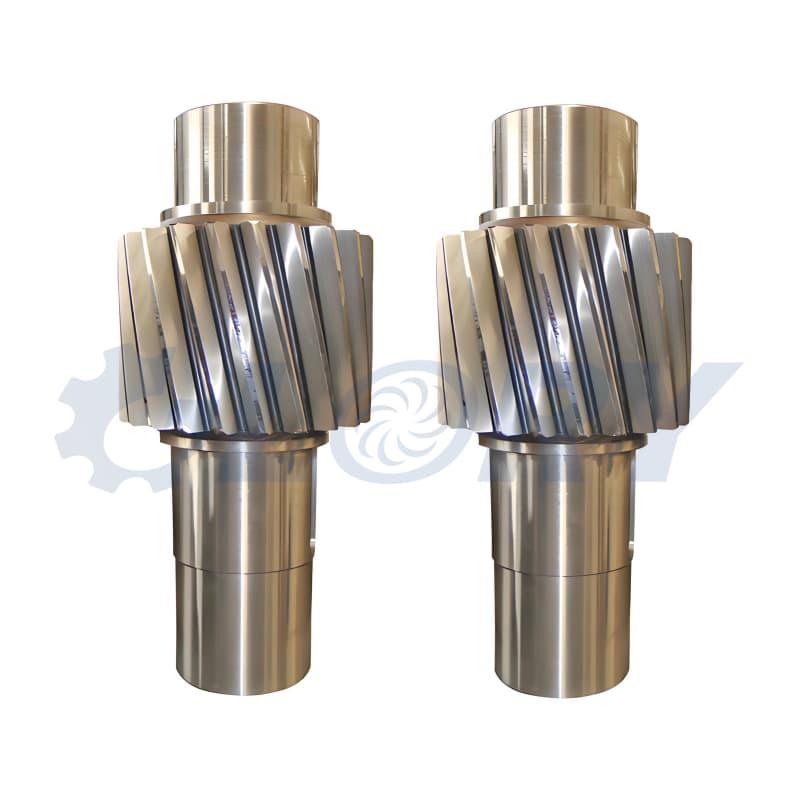
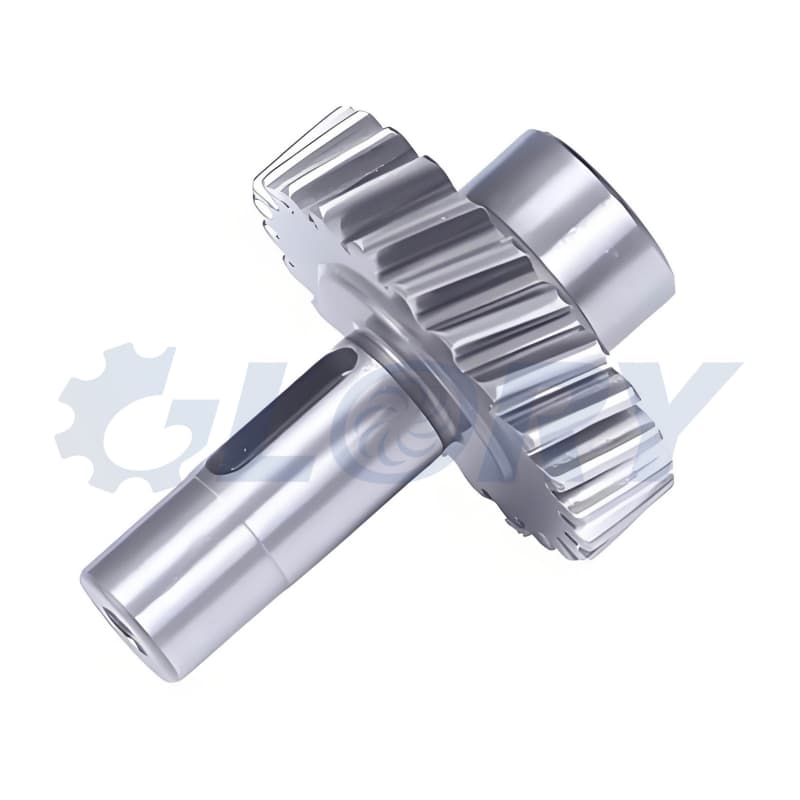
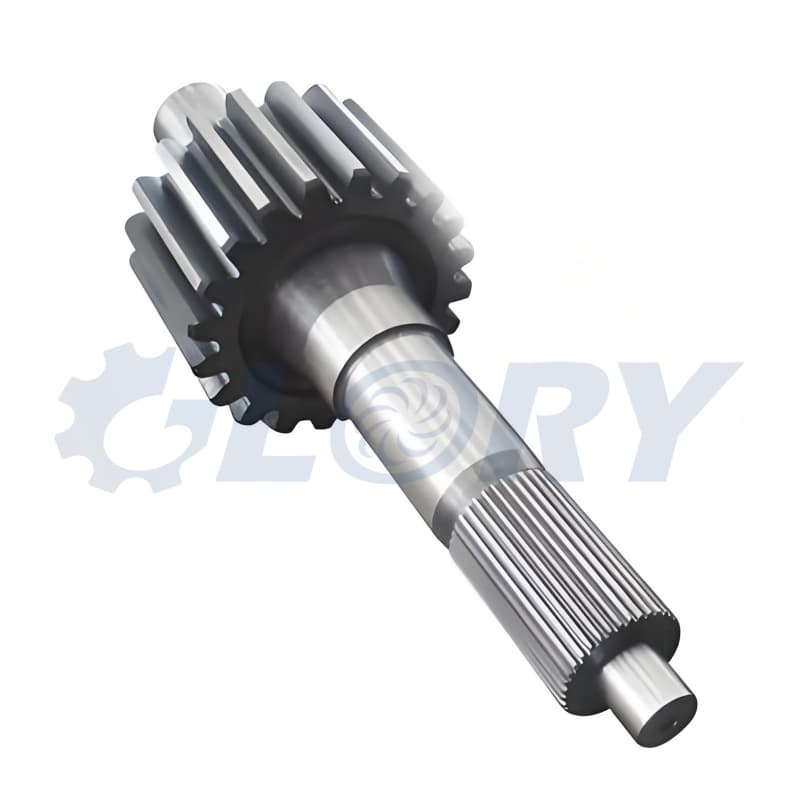
Typical CNC Machined 5140 Components and Their Industries
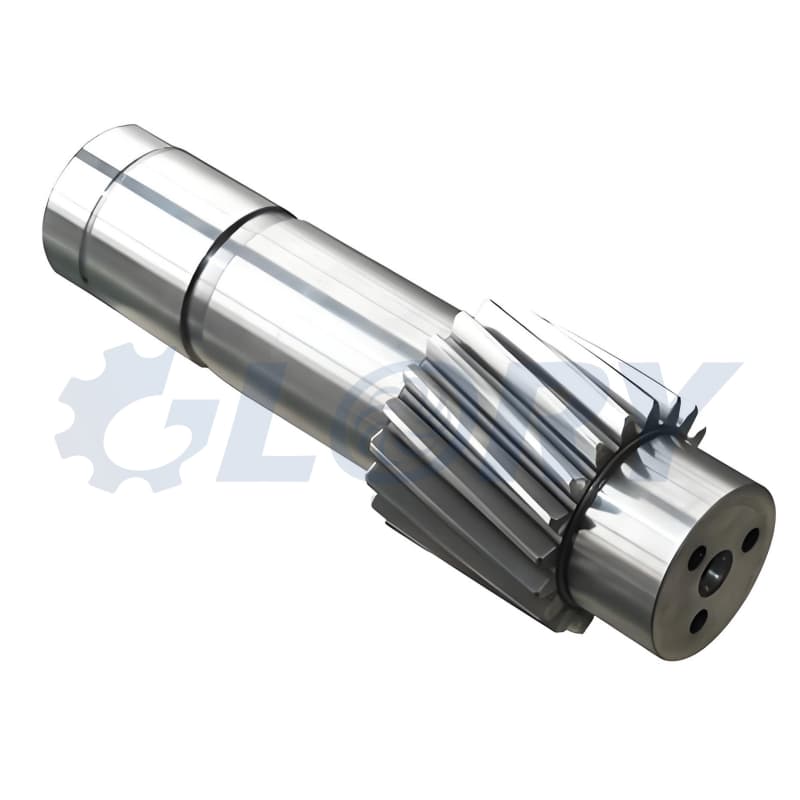
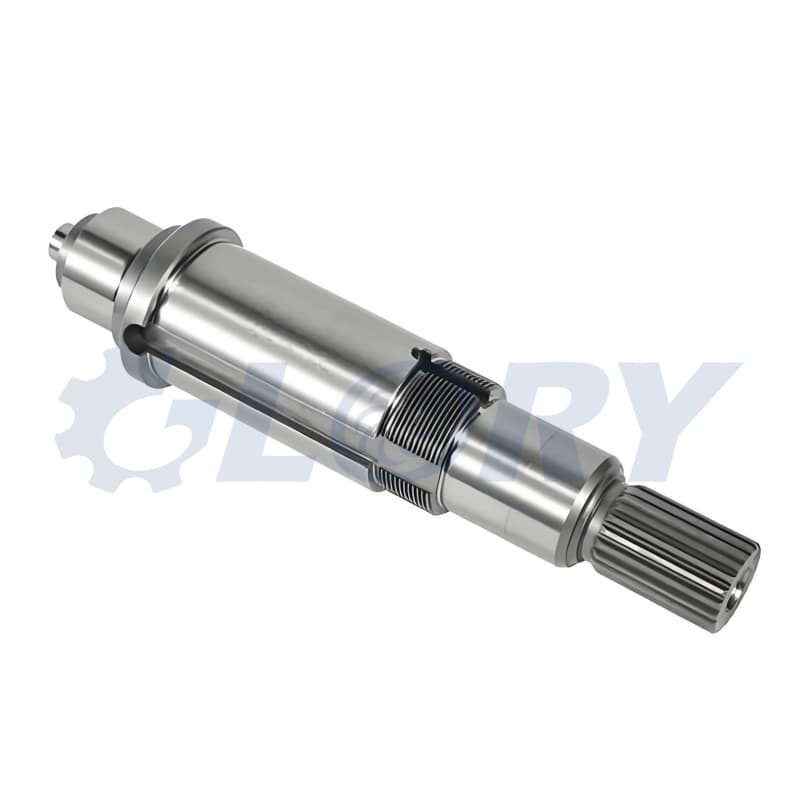
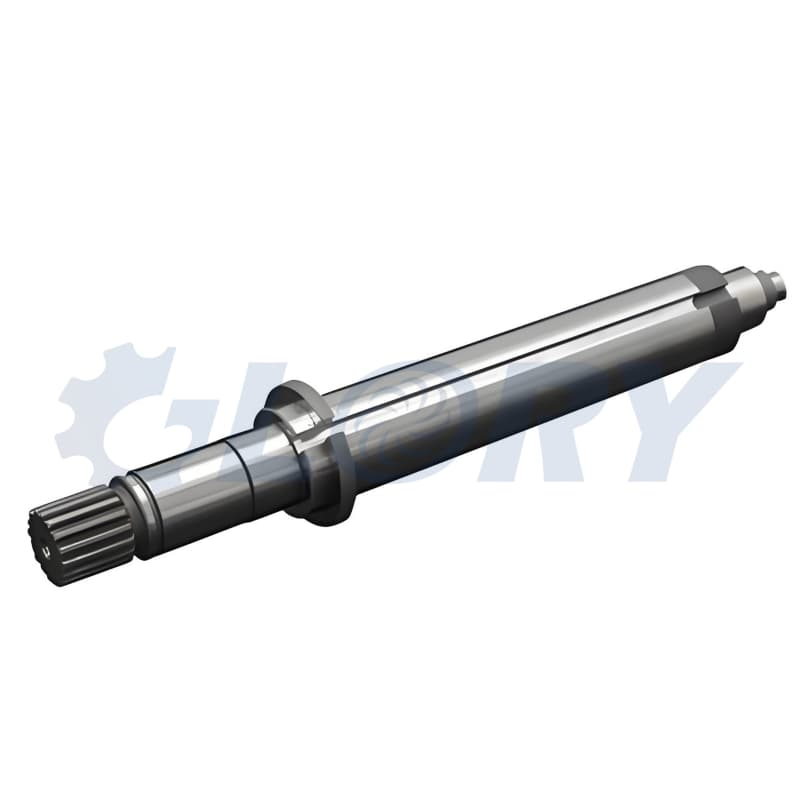
A CNC machined 5140 gear shaft is most often used in power transmission equipment, including industrial gearboxes, speed reducers, differential assemblies, transfer cases, and compact drive units. These shafts require precise bearing journals, accurate gear seat diameters, and often spline or keyway features. A CNC machined 5140 spline shaft is common in agricultural power take-off systems, hydraulic pump drives, and industrial transmission systems. A CNC machined 5140 pinion shaft is widely applied in steering gears, swing drives, hoists, winches, and axle final drives. A CNC machined 5140 worm shaft is found in conveyor drives, lifting platforms, gate actuators, and packaging machinery.
In machine tools and automation, a CNC machined 5140 spindle is often used for rotary tables, grinding wheel heads, drilling heads, and light milling spindles. A CNC machined 5140 rotor shaft appears in hydraulic motors, screw compressors, and electric motor assemblies. A CNC machined 5140 axle shaft is used in off-highway trucks, utility vehicles, turf equipment, and compact construction machinery. A CNC machined 5140 coupling hub connects motors to pumps, generators, and compressors, where the quenched-and-tempered condition helps resist keyway deformation and fretting.
For material handling and process equipment, a CNC machined 5140 roller shaft or conveyor drive shaft provides fatigue resistance under continuous rotation. A CNC machined 5140 transmission shaft can be found in marine propulsion, rail auxiliary drives, industrial mixers, and test stands. A CNC machined 5140 output shaft is used in planetary gearboxes, winch drives, and rotary actuators. A CNC machined 5140 idler shaft appears in track undercarriages and belt drive systems. Each of these components benefits from the combination of a tough core and a machinable surface after final turning, milling, and grinding.
Common industries served by these parts include automotive and electric vehicle drivetrains, agricultural machinery, construction equipment, mining equipment, material handling, oil and gas, marine, rail, power generation, machine tools, packaging, printing, textile machinery, robotics, pumps, and compressors. In every case, the shaft must be produced not only to the drawing dimensions but also with attention to runout, concentricity, surface finish, and edge quality.
OEM 5140 Chrome Steel Quenched-and-Tempered Gear Shaft Manufacturing Flow
We produce OEM 5140 chrome steel quenched-and-tempered gear shaft components from customer drawings, samples, or 3D models. The typical process begins with material selection. We confirm the standard, bar size, stock allowance, and whether the blank should be hot rolled, forged, or pre-hardened. For prototype work, pre-hardened 5140 bar is often used so that machining can be completed without a separate heat treatment cycle. For production orders, the shaft may be rough machined first, then quenched and tempered, and finally finished to size.
Rough machining includes sawing, facing, centering, rough turning, and sometimes deep hole drilling for lubrication passages. After heat treatment, finish machining may include CNC turning, milling, drilling, tapping, thread milling, keyway cutting, spline hobbing or shaping, cylindrical grinding, and honing. A CNC machined 5140 gear shaft often requires high concentricity between bearing journals and gear seat diameters. We control the workholding and machining sequence to keep runout within the required tolerance. For spline shafts, the splines are usually cut after heat treatment to maintain pitch accuracy and avoid distortion.
A CNC machined 5140 spline shaft can be produced with involute splines, straight-sided splines, or serrations depending on the mating hub. A CNC machined 5140 pinion shaft may include an integral gear section or a separate gear mounted on a keyed and threaded seat. A CNC machined 5140 spindle often has long slender geometry and requires steady rest support, low cutting forces, and possibly final grinding to achieve roundness and surface finish.
From Single-Piece Prototypes to High-Volume OEM Production
One of the most important requirements for an OEM 5140 chrome steel quenched-and-tempered gear shaft supplier is flexibility. We handle single-piece prototypes as well as high-volume production runs. For a one-off prototype, we use standard pre-hardened stock when possible to reduce lead time and avoid the distortion risk of heat treating a single part. Programming is done from the customer model, and CAM simulation helps verify tool paths before cutting begins. Typical prototype shafts can be completed within days depending on features and available material.
For small-batch production of 10 to 100 pieces, we develop stable workholding and tooling strategies that keep cycle times reasonable while holding tight tolerances. In this range, process control is especially important because minor variations in cutter wear, clamping pressure, or ambient temperature can affect dimensions. We measure in-process and compensate tool offsets as needed.
For high-volume OEM 5140 chrome steel quenched-and-tempered gear shaft production, we focus on repeatability. The process is split into dedicated operations, using bar feeders, automated loading, fixture plates, or multi-axis turn-mill centers. Heat treatment is done in controlled batches, and hardness testing is performed on sample parts from each lot. After finish machining, critical diameters are inspected with high-resolution measuring equipment. High-volume production can range from several hundred to tens of thousands of shafts per month depending on size, geometry, and secondary operations.
Machining Strategy for Quenched-and-Tempered 5140 Steel
Quenched-and-tempered 5140 is harder than annealed or normalized steel, so the machining strategy must be adjusted accordingly. Turning operations generally use coated carbide inserts with a tough substrate and a heat-resistant coating. Cutting speeds are normally lower than those used for low-carbon steel, while feed rates are kept moderate to control surface finish and tool life. Interrupted cuts, such as turning across a keyway or milling a spline, require careful entry and exit strategies to avoid edge chipping.
Milling operations for a CNC machined 5140 gear shaft often use solid carbide end mills with a corner radius and a wear-resistant coating. Climb milling is preferred when possible. For deep pockets or internal keyways, the tool overhang must be minimized because the hardened material can cause chatter. Slotting and broaching are common for keyways. Spline hobbing after quench-and-temper is routine for many shaft designs, but the hob speed and feed may be reduced compared with soft material.
Drilling and tapping in quenched-and-tempered 5140 require sharp drills, pecking cycles, and adequate coolant flow. For threaded holes, thread milling is often preferred over tapping because it produces better chip control and reduces the risk of tap breakage. If the shaft requires cross holes for lubrication, deep hole drilling may be done before final heat treatment or after, depending on hole depth and position.
Grinding is frequently used on bearing journals, gear seat diameters, and seal surfaces. A CNC machined 5140 gear shaft can achieve a surface roughness of Ra 0.8 micrometer or better on ground surfaces. Typical tolerances are IT6 to IT7 for bearing fits, with runout controlled within 0.02 mm or tighter depending on the assembly requirement. Spline and keyway symmetry are also controlled because misalignment can cause premature wear or assembly problems.
Inspection and Quality Consistency
Although every workshop has its own quality practices, a reliable OEM 5140 chrome steel quenched-and-tempered gear shaft supplier should provide dimensional inspection reports and material traceability. We check hardness after heat treatment using a Rockwell hardness tester. Critical diameters are measured with micrometers or a coordinate measuring machine. Roundness, runout, and cylindricity are verified on key journals. Surface roughness is checked on bearing and seal areas. For high-volume orders, sampling plans are agreed before production begins.
Material traceability is maintained by heat lot or bar number. A mill test report can be supplied to show the chemical composition and mechanical properties of the starting material. For shafts that will operate under high stress, additional inspection methods such as magnetic particle testing or ultrasonic testing may be used to detect surface or internal discontinuities. These options should be discussed at the quotation stage because they affect cost and lead time.
Summary and Sourcing Support
5140 chrome steel in the quenched-and-tempered condition is a proven material for gear shafts, spline shafts, pinion shafts, spindles, axle shafts, rotor shafts, worm shafts, drive shafts, and many other rotating components. The material offers better hardenability and fatigue resistance than plain medium-carbon steel while remaining more economical than some high-alloy alternatives. With proper machining methods, it can be turned, milled, drilled, splined, and ground to tight tolerances.
When you need an OEM 5140 chrome steel quenched-and-tempered gear shaft, send us your drawing, sample, or 3D file. We will review the geometry, material standard, heat treatment requirement, tolerances, and expected quantity. We support single-piece prototypes, low-volume pilot runs, and full production volumes. The objective is to produce a shaft that fits the assembly, performs under load, and remains cost-effective from the first article to the final production batch.
About Us
 We provide custom machined parts, 5-axis linkage CNC machining, and the design, production, and assembly of machinery and equipment.