
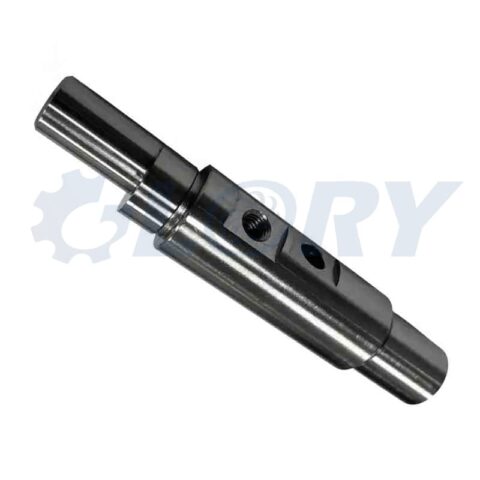
Custom CNC Machined Eccentric Shafts Made to Drawing in China
Custom CNC Machined Steel Alloy Brass Aluminum Eccentric Shafts Made to Drawing in China - OEM machining shaft
Custom CNC Machined Eccentric Shafts Made to Drawing in China
We supply custom CNC machined eccentric shafts for machinery builders, equipment manufacturers, and industrial buyers worldwide. As a China-based supplier specializing in non-standard machined parts, we coordinate machining, heat treatment, finishing, inspection, and export delivery according to customer drawings and order requirements.
From a single prototype to repeat production, our eccentric shaft machining service focuses on the features that matter in your assembly: eccentric offset, bearing fits, journal geometry, angular orientation, and mounting dimensions. Carbon steel, alloy steel, and stainless steel options support a wide range of mechanical designs.
An eccentric shaft incorporates one or more journals whose centerlines are parallel to, but offset from, the main shaft axis. This geometry can drive reciprocating or oscillating movement through a suitable linkage, or provide controlled positional adjustment. The offset, journal location, and relationship between features must match the intended mechanism.
| Product Specification | Customization Details |
|---|---|
| Product name | Custom eccentric shaft, CNC turned eccentric shaft, precision machined eccentric shaft |
| Supply type | Non-standard components manufactured to approved drawings |
| Order quantity | From one-piece prototypes to small batches and repeat production |
| Shaft configuration | Single eccentric, multiple eccentric, stepped, flanged, solid, or hollow designs |
| Main processes | CNC turning, eccentric turning, CNC milling, drilling, threading, and grinding as required |
| Dimensions | Custom overall length, journal diameters, shoulder positions, and eccentric offset |
| Additional features | Keyways, flats, threads, grooves, cross holes, and lubrication passages |
| Material condition | Specified grade and delivery condition, with heat treatment where required |
| Tolerances and finish | Defined by the drawing and confirmed during technical review |
| Inspection documentation | Dimensional inspection reports available according to the agreed inspection scope |
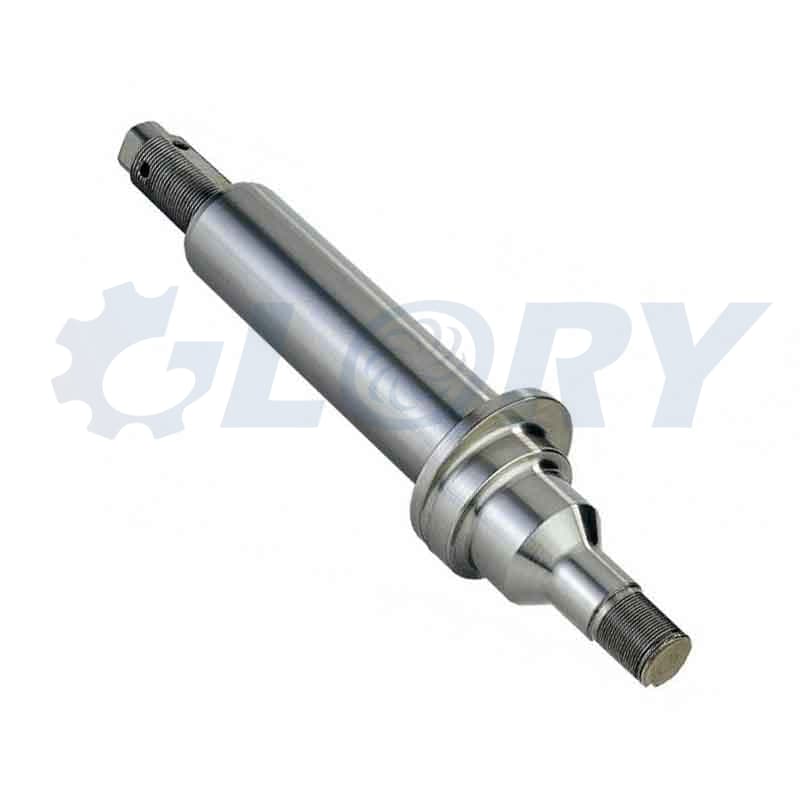
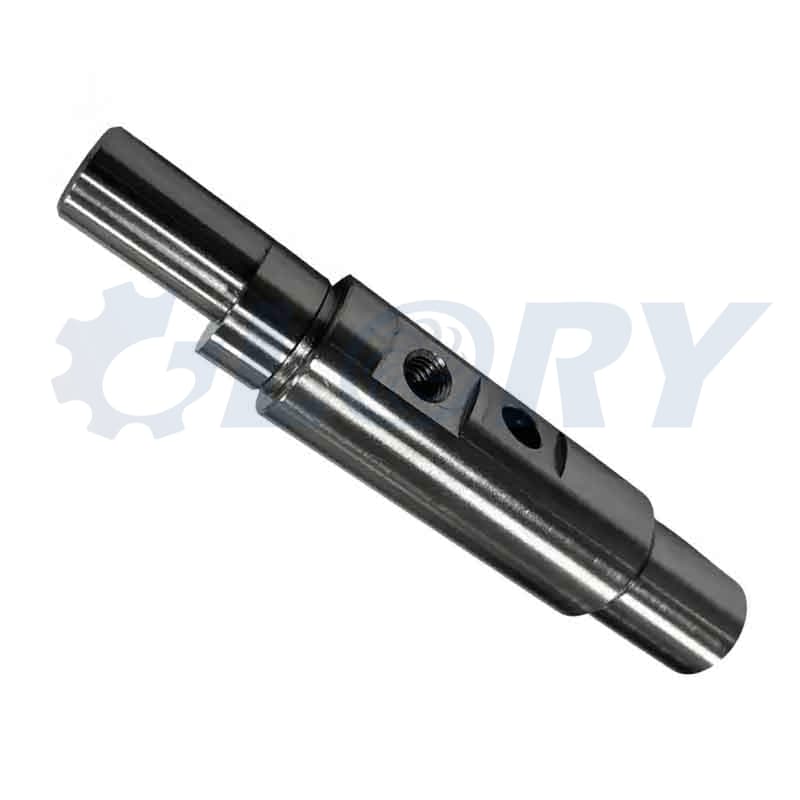
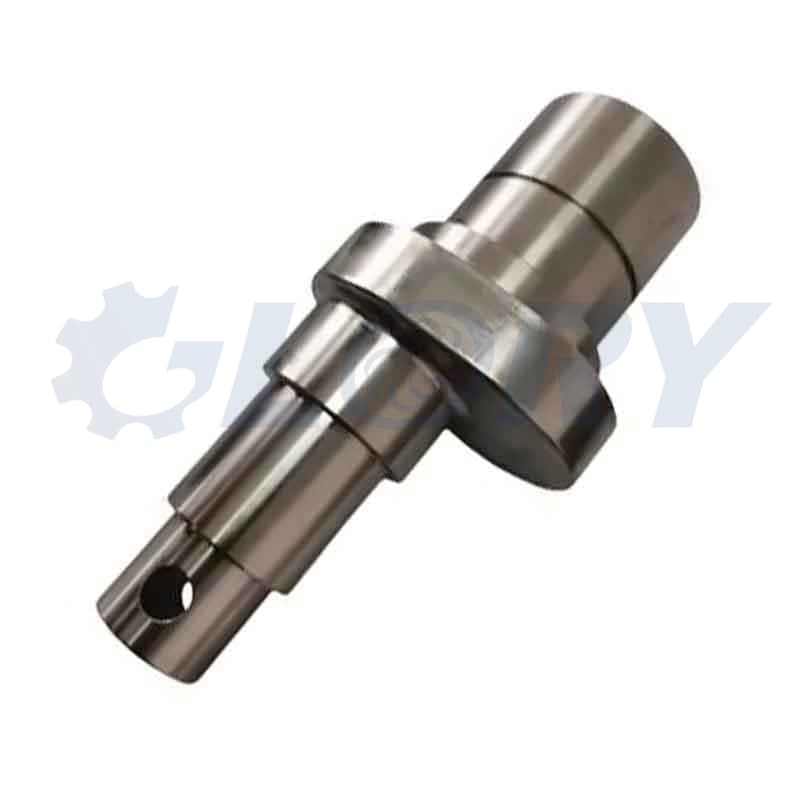
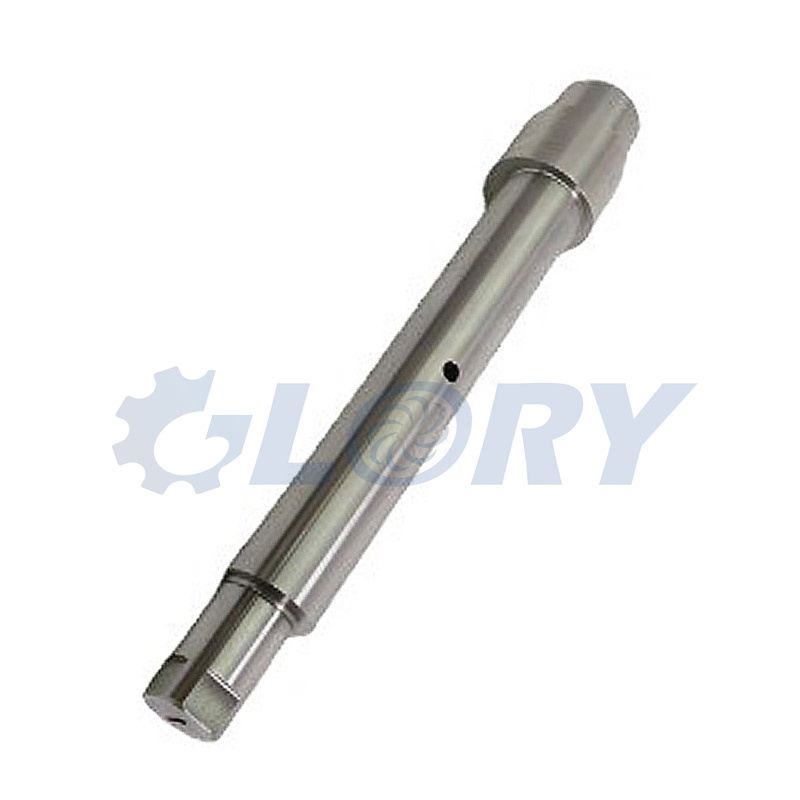
Each custom eccentric shaft is reviewed as part of its intended assembly. Bearing seats, shoulders, threads, and drive features must work together with the offset journals. We review these relationships before production so that manufacturing and inspection use a consistent set of drawing datums.
We support the following configurations, with the final machining route determined by geometry, material, and quantity.
| Eccentric Shaft Type | Typical Custom Features |
|---|---|
| Single eccentric shaft | One offset journal with specified eccentricity and axial position |
| Multiple eccentric shaft | Two or more offset journals with defined offsets and relative phase angles |
| Stepped eccentric shaft | Multiple bearing diameters, shoulders, spacers, and retaining features |
| Flanged eccentric shaft | Integral mounting flange, bolt holes, and locating surfaces |
| Hollow eccentric shaft | Axial bore or internal passage with wall thickness specified by the design |
| Keyed or threaded eccentric shaft | Keyways, drive flats, threaded ends, and locking features for assembly |
Material selection depends on loading, wear, operating environment, and the specified heat treatment. We can review the grades below for your project. The exact grade and material condition are confirmed before production; any proposed substitution requires customer approval.
| Material Option | Typical Selection Considerations |
|---|---|
| 1045 carbon steel | General mechanical shafts requiring a practical balance of machinability, strength, and cost |
| 4140 alloy steel | Loaded shaft components with specified strength and heat treatment requirements |
| 42CrMo4 alloy steel | Strength and toughness in the quenched and tempered condition; suitable for induction hardening where specified. |
| 8620 alloy steel | Designs requiring a carburized surface and defined case depth |
| 304 or 316 stainless steel | Applications where corrosion resistance influences material selection |
| 17-4 PH stainless steel | Applications requiring a combination of strength and corrosion resistance, with the heat treatment condition specified |
A typical production route begins with drawing review and preparation of the specified bar stock or forging. Rough machining establishes the main geometry, followed by the required heat treatment and finishing operations. The sequence is adapted to the material condition and dimensional requirements of each part.
CNC turning produces the main journals, shoulders, grooves, and threads. Eccentric features are machined using suitable offset workholding or a machining strategy matched to the design. CNC milling adds keyways, flats, mounting details, and other features whose orientation must relate accurately to the eccentric sections. Grinding can be included where journal size, surface finish, or material hardness requires it.
For shafts requiring heat treatment, the production plan accounts for possible dimensional change and the stock needed for subsequent finishing. Bearing seats and other precision surfaces are checked in their final condition. Heat treatment options can be reviewed for suitable grades, including quenching and tempering, induction hardening, and carburizing.
Surface requirements are selected by function. Ground bearing journals, polished contact surfaces, black oxide on suitable steel components, and passivation for suitable stainless steel parts can be considered. Treatment coverage and any effect on final dimensions are agreed before processing.
Inspection focuses on the drawing’s functional dimensions and geometric requirements. Eccentric offset and phase angle are evaluated relative to the specified datums, while bearing seats and mounting surfaces are checked against their individual requirements.
| Inspection Item | What Is Checked |
|---|---|
| Eccentric offset | Location of each eccentric journal axis relative to the main datum axis |
| Phase angle | Angular relationship between eccentric sections and specified reference features |
| Journal diameter and form | Bearing fit dimensions, roundness, and cylindricity where specified |
| Main journal runout | Runout of designated concentric surfaces relative to the drawing datums |
| Axial dimensions | Overall length, shoulder spacing, journal widths, and groove locations |
| Mounting features | Keyway position, thread dimensions, hole locations, and flange geometry |
| Surface and heat treatment | Specified surface roughness, hardness, and case depth where applicable |
Inspection methods are selected to suit the feature and tolerance. Dimensional checks may include coordinate measurement, micrometers, gauges, and suitable runout setups. Surface roughness and heat treatment checks are arranged when specified. Critical dimensions can receive 100% inspection by agreement, with the measurement scope established before production.
Custom eccentric shafts are used in reciprocating pump drives, automated machinery, textile equipment, and other mechanisms requiring controlled eccentric movement. Related designs support roller adjustment, mechanical feeding, clamping, and positioning. We supply the shaft to the customer’s approved design, with the interfaces and operating requirements reviewed during the quotation stage.
For equipment development, prototype eccentric shafts allow customers to evaluate assembly fit and mechanism operation before ordering a production batch. For replacement projects, a sample can support reverse engineering, with functional dimensions, material, and wear allowances reviewed before the manufacturing drawing is approved.
Our export service provides a single point of coordination for drawing questions, production requirements, inspection records, and shipment preparation. Individual protection can be arranged for finished journals, threads, and other sensitive surfaces. Packaging is selected according to shaft size, weight, material, and transport requirements.
To request a quotation for custom eccentric shaft machining in China, provide a dimensioned drawing and a 3D model where available. Include the material grade, quantity, eccentric offset, phase angles, bearing fits, surface finish, heat treatment, and required delivery date. Identifying critical dimensions and mating components helps us prepare a machining proposal that fits your assembly and purchasing requirements.
About Us
 We provide custom machined parts, 5-axis linkage CNC machining, and the design, production, and assembly of machinery and equipment.