
In high-end manufacturing fields such as aerospace, advanced equipment, precision molds and medical devices, the machining accuracy and forming efficiency of precision parts with complex curved surfaces, special-shaped cavities, multi-directional inclined holes and integral impellers directly determine the core performance of products. Traditional three-axis CNC machining only has three linear motion axes (X, Y, Z). When processing complex spatial structures, multiple re-clamping and repeated positioning are required, which easily causes cumulative errors and cannot machine special structures such as undercuts, deep and narrow cavities, and free-form surfaces. Supported by a motion system combining three linear axes and two rotary axes, five-axis CNC machining breaks through the spatial limitations of traditional processing, realizing one-time clamping, five-surface forming and full-range precision machining of complex precision parts. It has become a core supporting technology for high-end precision manufacturing. This paper systematically expounds the technical principles, core advantages, key process points, common machining problems and industrial applications of five-axis machining, providing technical support for the process implementation of five-axis machining for precision parts.
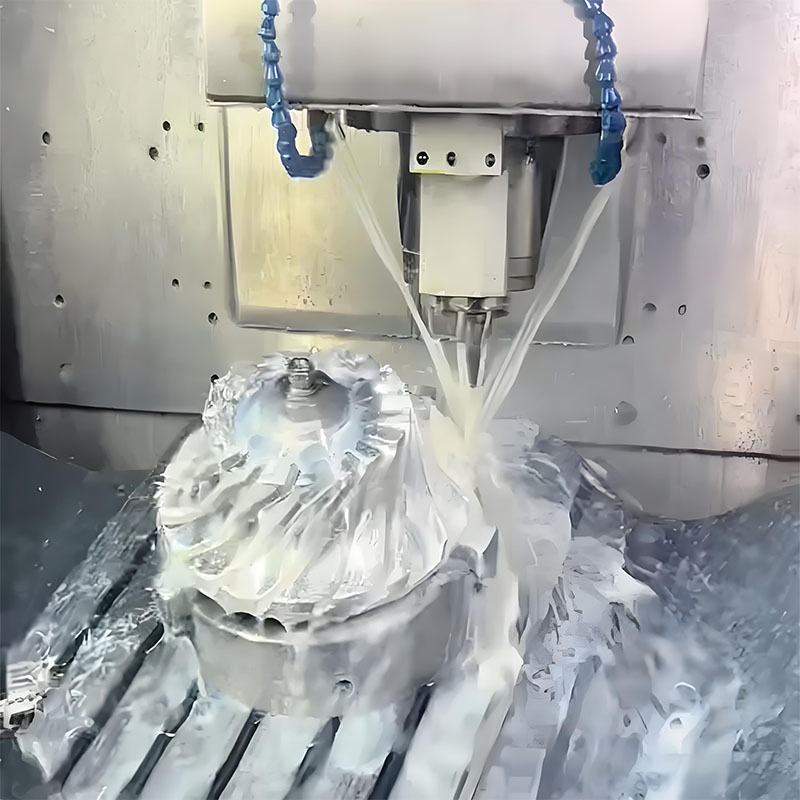
1. Core Technical Principles of Five-Axis CNC Machining
Based on the traditional three linear axes (X, Y, Z), five-axis machining adds two of the three rotary axes (A, B, C) to form a multi-dimensional collaborative motion CNC machining system. The mainstream industrial configurations are X/Y/Z linear axes + A/C rotary axes or X/Y/Z linear axes + B/C rotary axes. Specifically, the A-axis is a swing axis rotating around the X-axis, the B-axis is a swing axis rotating around the Y-axis, and the C-axis is a rotary axis rotating around the Z-axis.
According to different motion modes, five-axis machining is divided into 3+2 fixed-axis machining and five-axis linkage machining, which are applicable to different processing scenarios:
1. 3+2 fixed-axis machining: The rotary axes swing to a fixed angle and are locked in advance. Only the X, Y and Z axes perform linkage cutting during processing with a fixed tool posture. This mode features simple operation, low machine tool load and stable tool path. It is suitable for batch processing of structured features such as part planes, inclined holes and regular inclined planes, with high processing efficiency and strong fault tolerance.
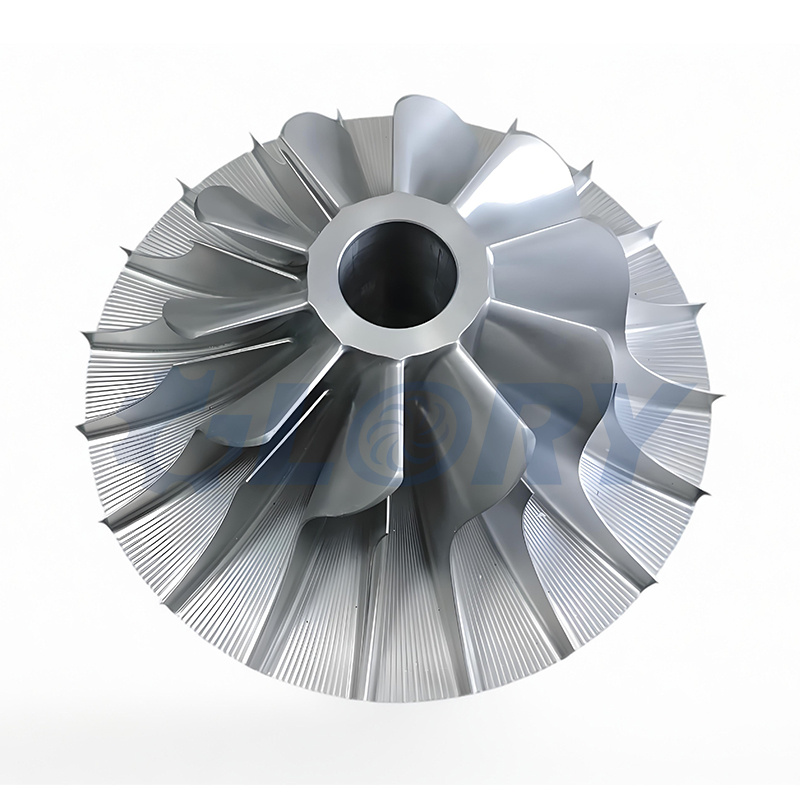
2. Five-axis linkage machining: The three linear axes and two rotary axes perform synchronous dynamic motion throughout the processing. The tool posture is adjusted in real time with the curvature of the part surface, enabling cutting of arbitrary complex spatial trajectories. As the core technology for high-precision special-shaped parts such as free-form surfaces, integral impellers and complex cavities, it ensures the continuity and uniformity of surface cutting.
The core technical logic of five-axis machining is to adjust the spatial posture of the tool and workpiece through rotary axes, so that the tool fits the processing surface at the optimal angle, avoiding tool interference and residual dead angles in three-axis machining. Meanwhile, it unifies the processing benchmark, fundamentally improving the overall machining accuracy and surface quality of parts.
2. Core Advantages of Five-Axis Machining Compared with Traditional Three-Axis Machining
Compared with traditional three-axis machining, five-axis machining delivers core values in accuracy, efficiency and process adaptability, thoroughly solving the processing pain points of complex precision parts. The specific advantages are as follows:
2.1 Eliminating Cumulative Errors and Improving Machining Accuracy
Three-axis machining of complex parts requires multiple flipping, tooling disassembly and re-positioning, and each clamping generates positioning deviation. The superposition of multiple errors easily causes part hole deviation, surface dislocation and sealing surface leakage. For high-precision products such as medical robot joints and aerospace sealing parts, tiny errors may lead to equipment vibration and performance failure. Five-axis machining realizes full-range processing with one-time clamping and adopts a unified benchmark coordinate system throughout the process, completely eliminating cumulative positioning errors caused by repeated clamping. The dimensional accuracy of parts can be stably controlled within ±0.005mm, and the contour accuracy of curved surfaces is significantly improved.
2.2 Optimizing Cutting Posture and Improving Surface Machining Quality
In the processing of deep cavities and curved parts, three-axis machining can only adopt vertical cutting with short tools, which easily causes tool interference, side wall residue and uneven tool marks in deep narrow cavities and undercut structures. Five-axis machining can adjust the tool angle through swing axes to make the tool perpendicular to the processing surface or cut at the optimal inclination angle. It reduces tool overhang length, lowers tool vibration and deformation, and avoids cutting residue at sudden curvature changes of curved surfaces. The processed parts have uniform surface finish and do not require secondary polishing, directly meeting the assembly and service requirements of high-end parts.
2.3 Expanding Processing Boundaries and Adapting to Complex Special-Shaped Structures
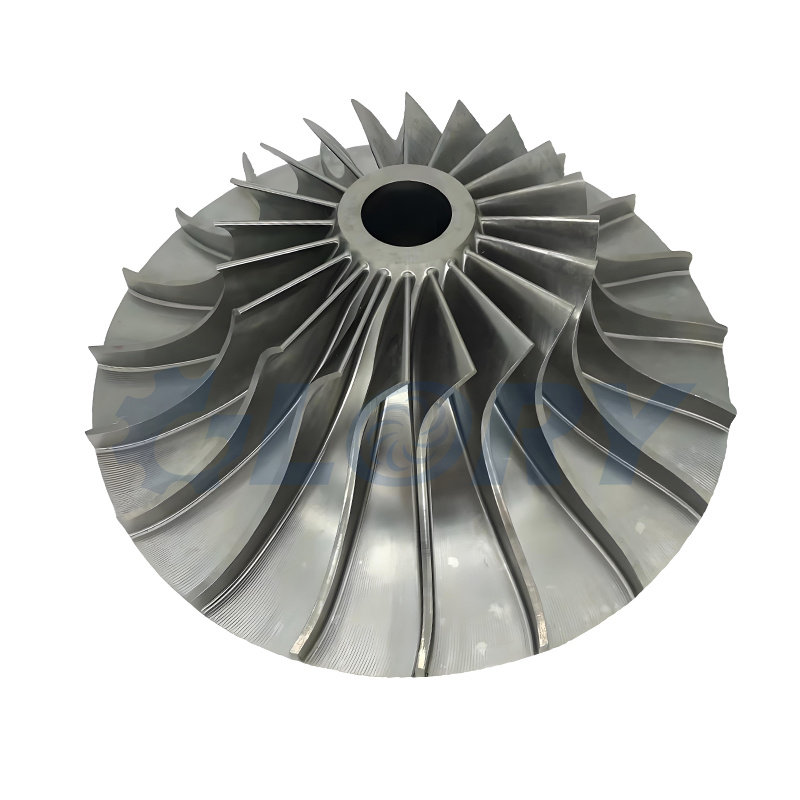
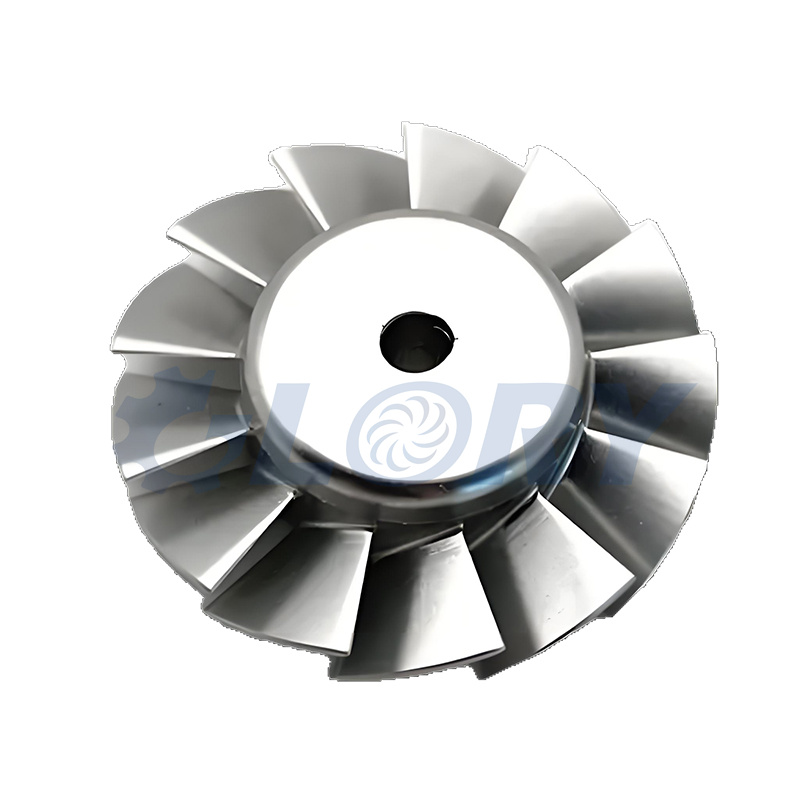
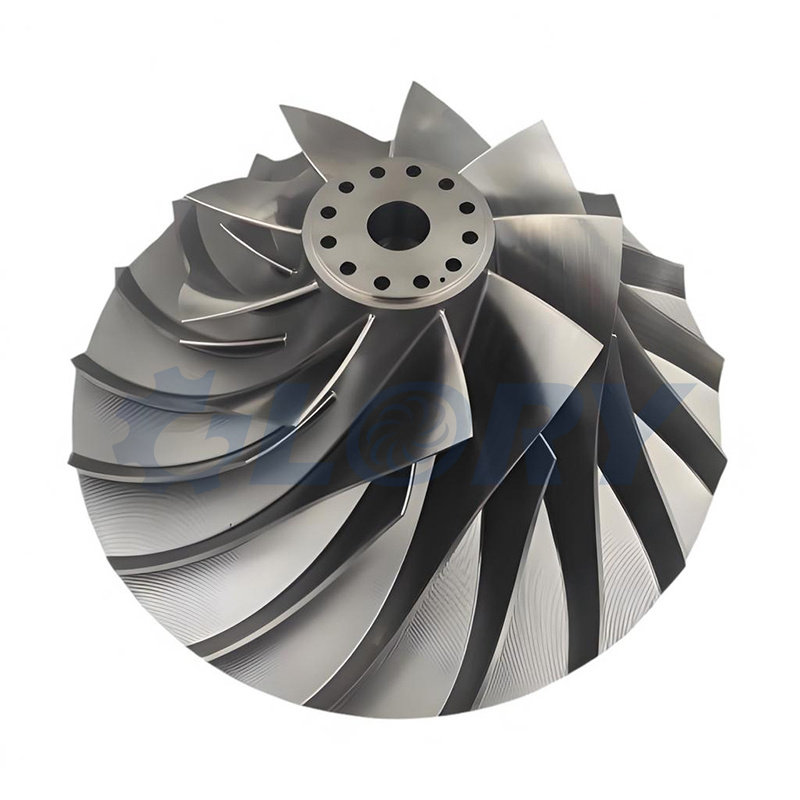
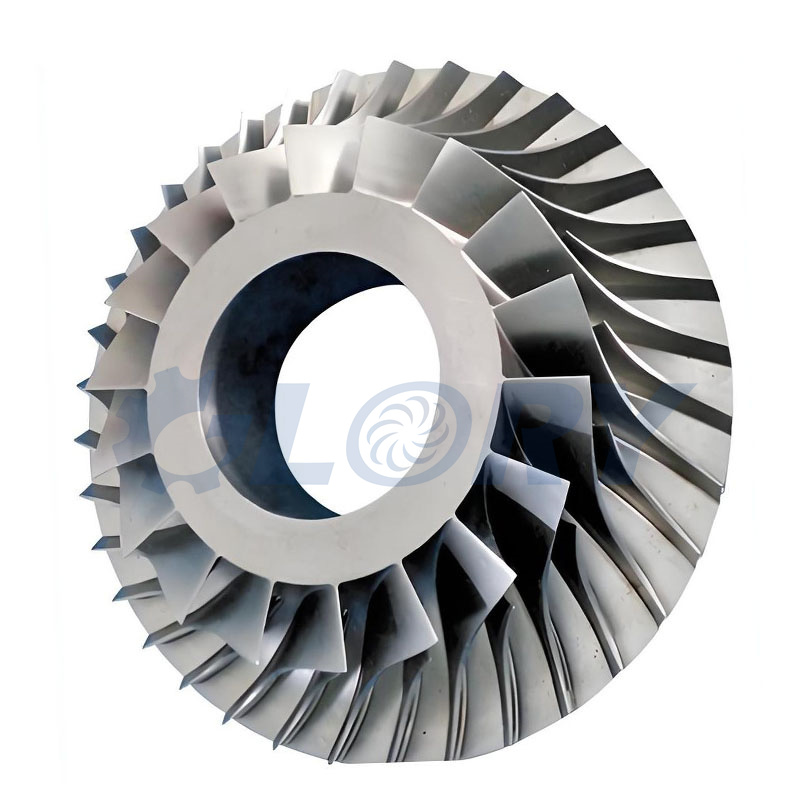
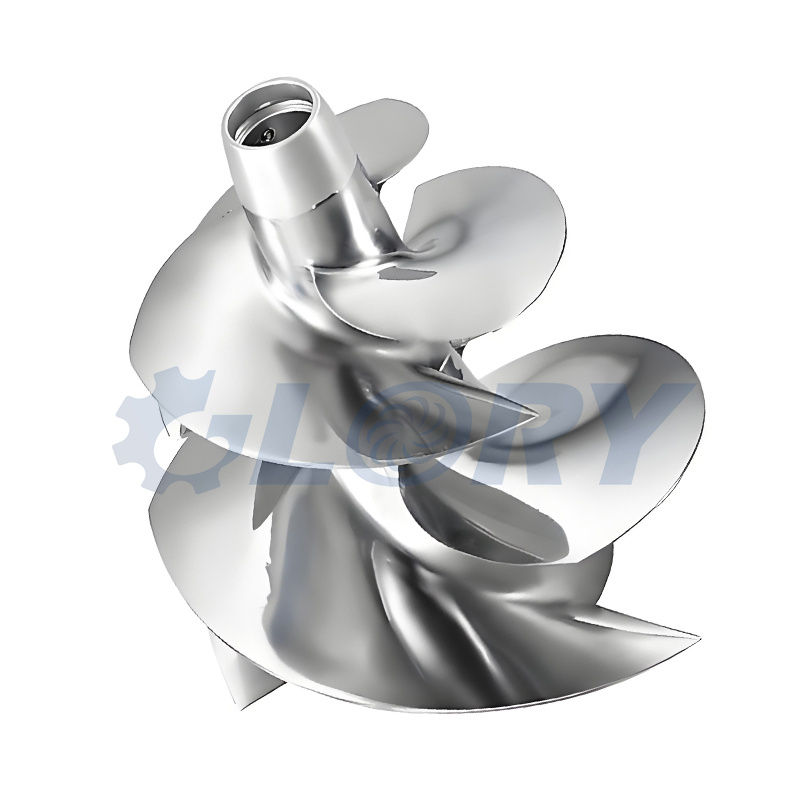
Traditional three-axis machining cannot process complex features such as undercut structures, spatial curved surfaces, multi-angle inclined holes and special-shaped deep cavity channels. Most special-shaped parts have to be processed separately and then assembled, which not only complicates the working procedures but also reduces the overall strength and tightness of parts. Relying on multi-dimensional posture adjustment capability, five-axis machining can complete the one-piece forming of complex structures such as impeller blades, turbine cavities, special-shaped molds and precision cavities in one go, improving the structural integrity and strength of products.
2.4 Simplifying Process Flow and Improving Production Efficiency
Five-axis machining eliminates frequent flipping, tooling replacement and re-tool setting, greatly simplifying auxiliary processes such as clamping, positioning and re-inspection and shortening the production cycle. Meanwhile, the optimal tool cutting posture reduces empty tool paths and repeated cutting, improving effective cutting efficiency. Compared with three-axis machining, the overall processing efficiency of complex parts is increased by 30%~80%, with prominent advantages in batch production.
3. Typical Parts Suitable for Five-Axis Machining
Five-axis machining is not applicable to all conventional parts. For simple planes, regular shaft parts and ordinary orifice plates, three-axis machining has higher cost performance. Its core application scenarios are precision parts withcomplex spatial structures, multi-dimensional processing features and high-precision surface requirements, mainly including the following types:
3.1 Fluid Power Parts
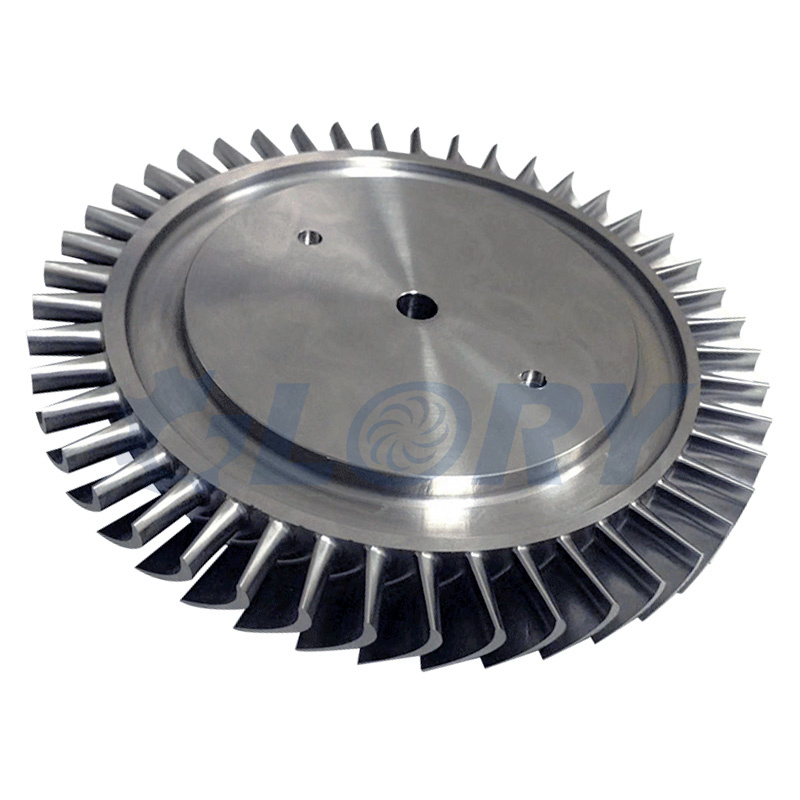
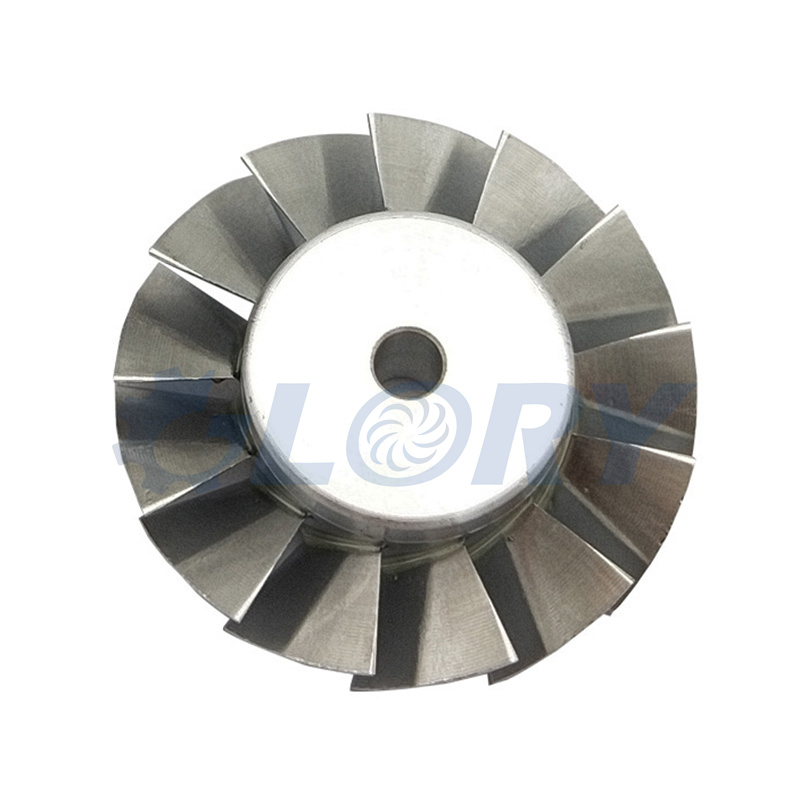
Represented by aero-engine integral blisks, turbine blades, water pump impellers and propellers, these parts have continuous irregular free-form surfaces with large curvature changes. The narrow processing space at blade roots and tops can only be fully and continuously cut by five-axis linkage machining. This ensures the smoothness of fluid surfaces and meets the aerodynamic and hydraulic performance requirements of power equipment.
3.2 Complex Mold Cavity Parts
Automotive interior molds, precision plastic molds and die-casting molds generally have deep narrow cavities, multi-angle draft inclined planes, undercut textures and special-shaped runners. Three-axis machining is prone to processing dead angles, uneven cavity side wall roughness and draft angle deviation. Five-axis machining can complete the integrated processing of cavities, cores, inclined top holes and runner systems at one time, ensuring consistent mold structure and improving mold forming accuracy and service life.
3.3 Aerospace Precision Structural Parts
Aerospace brackets, airborne shells and aerospace sealing components are characterized by thin walls, multiple inclined holes, complex curved surfaces and strict tolerance requirements, with extremely high standards for lightweight design and structural integrity. One-time clamping five-axis machining avoids deformation caused by repeated clamping of thin-walled parts and guarantees hole position accuracy, flatness and overall structural strength.
3.4 Medical and High-End Intelligent Equipment Parts
Micro special-shaped parts such as surgical robot joints, precision instrument shells and optical accessories have complex structures, tiny dimensions, strict tolerances and flawless surface quality requirements. Five-axis machining can accurately adapt to micro curved surfaces and special-shaped structures, eliminate assembly errors caused by split processing, and meet the high-precision assembly needs of medical equipment and optical instruments.
4. Key Process Implementation Points of Five-Axis Precision Machining
The accuracy and efficiency of five-axis machining depend not only on equipment hardware but also on full-process process optimization including programming strategy, tool selection, clamping scheme and precision control. The key process points are as follows:
4.1 Optimization of Refined CAM Programming Strategy
Programming is the core link of five-axis machining, directly determining tool path quality and processing stability. For regular inclined planes and orifice structures, 3+2 fixed-axis machining is preferred to simplify tool paths and improve processing stability. For free-form surfaces and continuous contour structures, five-axis linkage machining is adopted with optimized parameters of smooth tool axis transition, swing angle limit and interference avoidance, preventing sharp tool axis reversal at sudden surface curvature changes and eliminating tool marks, over-cutting and dynamic machine errors. For large-area curved parts, zonal processing is adopted to split continuous surfaces into multiple processing areas, combining fixed-axis and linkage modes to ensure uniform cutting allowance in all areas.
In the roughing stage, the equal-height surrounding cutting strategy is prioritized to remove allowance evenly, correct material deformation and reserve stable and uniform allowance for finishing. In the finishing stage, surface fitting tool paths are adopted with refined step distance and tolerance to ensure surface contour accuracy and surface finish.
4.2 Tooling Clamping and Positioning Scheme Design
Centering on one-time clamping forming, five-axis tooling design follows the principles of no interference, high rigidity and full coverage. Precision vices and indexing plates are used for conventional parts; vacuum chucks and custom profile tooling are adopted for special-shaped curved parts and thin-walled parts to avoid clamping deformation and prevent interference between tooling, swing axes and tools. Before clamping, the benchmark shall be accurately aligned and the workpiece coordinate system unified to ensure complete coincidence between processing and design benchmarks, avoiding benchmark deviation from the source.
4.3 Tool Selection and Cutting Parameter Matching
Tools for five-axis machining need to adapt to multi-angle cutting. Cemented carbide integral milling cutters, extended indexable milling cutters and rounded corner milling cutters are preferred. The tool overhang length is adjusted according to the processing area to balance rigidity and processing space. Large-diameter tools with large chip flutes are used for roughing to improve material removal efficiency; ultra-fine grain cemented carbide tools are adopted for finishing to reduce cutting marks and ensure surface quality.
Cutting speed, feed rate and cutting depth are matched according to workpiece materials (aluminum alloy, stainless steel, titanium alloy, die steel, etc.). For difficult-to-machine materials such as titanium alloy, cutting speed is reduced and feed rate optimized to lower tool wear and thermal deformation. For aluminum alloy thin-walled parts, layered micro-cutting is adopted to avoid vibration and deformation.
4.4 Precision Compensation and Control in Processing
Before processing, geometric accuracy calibration and rotary axis zero calibration of the machine tool shall be completed to eliminate inherent mechanical errors. During processing, machine tool temperature compensation and tool wear compensation functions are enabled to avoid accuracy deviation caused by ambient temperature changes and tool wear. For high-precision parts, a finishing allowance of 0.05~0.1mm is reserved after roughing, and finishing is carried out after the workpiece fully releases cutting stress to effectively solve part deformation problems.
5. Common Problems and Solutions in Five-Axis Machining
5.1 Uneven Surface Tool Marks and Excessive Contour Accuracy Error
Main causes: severe tool axis swing, uneven tool path step distance and unstable cutting speed. Solutions: optimize CAM programming parameters, enable the tool axis smoothing function and limit the maximum swing angle variation; refine the finishing step distance, adopt the uniform-speed linkage cutting mode to avoid sudden start-stop and speed change in local areas; optimize tool paths independently for areas with sudden curvature changes and strengthen local cutting trajectories.
5.2 Tool Interference, Local Over-Cutting or Residue
Main causes: unreasonable tool length and diameter selection and insufficient full-scale interference detection of tool paths. Solutions: conduct full-machine simulation interference detection before processing and select tools with appropriate length and diameter; optimize tool inclination to avoid protruding part structures and tooling; adopt zonal processing for complex structures to eliminate dead-angle interference.
5.3 Deformation of Thin-Walled Parts
Main causes: concentrated cutting stress, insufficient clamping rigidity and excessive cutting allowance. Solutions: adopt layered multiple cutting to release stress gradually; use profile tooling for uniform stress bearing to avoid local extrusion deformation; optimize cutting parameters and reduce single cutting depth to lower cutting heat accumulation.
6. Industrial Applications and Technical Development Trends
As a mandatory process for high-end manufacturing, five-axis CNC machining is widely applied in core fields including aerospace, energy power, precision molds, medical equipment and new energy vehicles. It thoroughly solves the industrial pain points of difficult processing, low accuracy and low efficiency of complex precision parts, and has become one of the core indicators to measure the precision manufacturing capacity of enterprises.
With the upgrading of intelligent manufacturing technology, five-axis machining is developing towards high speed, intelligence and integration. New technologies such as intelligent automatic CAM programming, real-time dynamic machine tool compensation, online detection closed-loop processing and five-axis turn-milling composite processing are continuously implemented, further improving processing accuracy and automation level and reducing manual commissioning costs. In the future, it will further empower the localization upgrading of high-end equipment and the refined manufacturing of precision parts.
7. Conclusion
The core value of five-axis CNC machining lies not only in breaking the spatial limitations of traditional processing, but also in realizing high-precision, high-efficiency and high-consistency forming of complex precision parts through full-process process system optimization. Against the background of iterative upgrading of high-end manufacturing, proficient mastery of the principles, programming strategies, process key points and problem-solving schemes of five-axis machining and accurate matching of processing technologies for different parts can maximize the performance advantages of five-axis equipment, overcome precision processing bottlenecks and provide solid process support for high-end equipment manufacturing.
 We provide custom machined parts, 5-axis linkage CNC machining, and the design, production, and assembly of machinery and equipment.