
5-Axis CNC Machining Impellers
Precision-engineered rotating components for optimal fluid dynamics and performance
Introduction to 5-Axis Impeller Machining
5-axis CNC machining has revolutionized the production of complex impeller geometries, enabling unprecedented precision and efficiency in the manufacturing process. By utilizing simultaneous movement across five axes, this advanced machining technique allows for the creation of intricate blade profiles and optimized fluid flow paths that significantly enhance performance.
The integration of computer-aided design (CAD) and computer-aided manufacturing (CAM) systems further elevates the precision of 5-axis impeller machining, ensuring that each component meets exacting specifications and performance requirements.
From aerospace propulsion systems to industrial turbomachinery, 5-axis machined impellers play a critical role in enhancing operational efficiency, reducing energy consumption, and improving overall system performance across a wide range of applications.
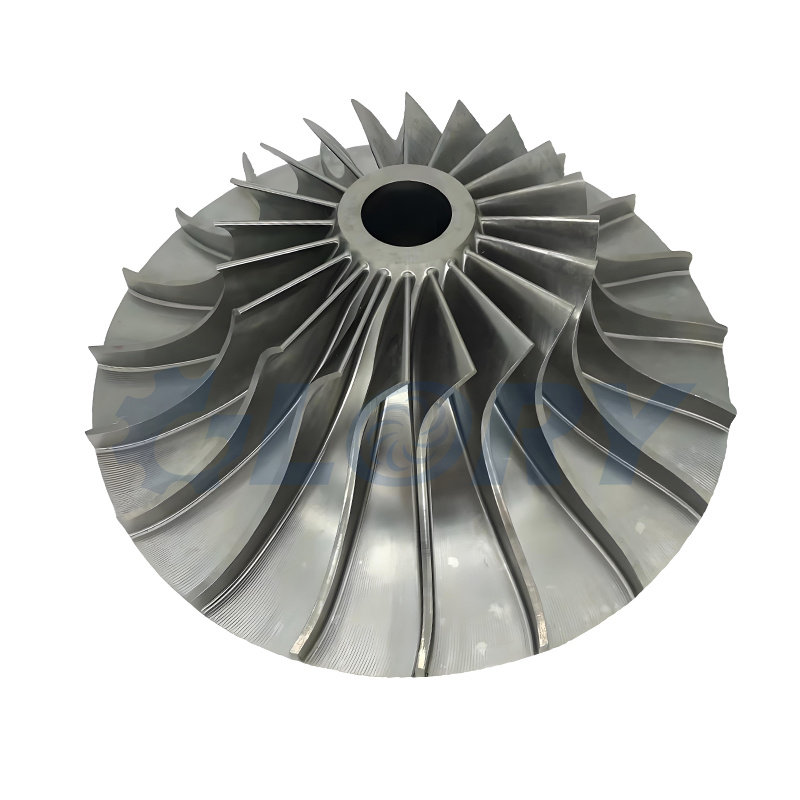
Technical Specifications
Dimensional Accuracy
- Tolerance: ±0.005mm
- Surface Finish: Ra 0.8μm standard
- Repeatability: ±0.002mm
- Blade Profile: Complex 3D contours
Machining Capabilities
- Max Diameter: 600mm
- Max Length: 800mm
- Material Removal Rate: Up to 50cm³/min
- Spindle Speed: Up to 20,000 RPM
Technology Integration
- CAD/CAM: Full integration
- Tool Monitoring: Real-time
- In-process Measurement: Laser scanning
- Simulation: Virtual machining
Precision Comparison: Traditional vs. 5-Axis Machining
Materials & Properties
The selection of appropriate materials for impeller construction is critical to achieving optimal performance and durability. 5-axis CNC machining accommodates a wide range of advanced materials, each offering unique properties suited to specific operating conditions and performance requirements.
Material selection considerations include strength-to-weight ratio, corrosion resistance, temperature tolerance, fatigue life, and manufacturing feasibility. Our engineering team works closely with clients to identify the optimal material for each application.
Advanced material science has led to the development of specialized alloys and composites that significantly enhance impeller performance, particularly in demanding environments such as aerospace propulsion systems and industrial gas turbines.
Material Performance Comparison
| Material | Application | Key Properties | Max Temperature |
|---|---|---|---|
| Titanium Alloy (Ti-6Al-4V) | Aerospace, Medical | High strength-to-weight ratio, excellent corrosion resistance | 550°C |
| Inconel 718 | Gas Turbines, Aerospace | High temperature strength, excellent creep resistance | 650°C |
| Stainless Steel (316L) | Industrial, Marine | Good corrosion resistance, cost-effective | 870°C |
| Aluminum Alloy (6061-T6) | Automotive, General Engineering | Lightweight, good machinability | 200°C |
| Carbon Fiber Composite | Aerospace, High-performance | Ultra-lightweight, exceptional stiffness | 250°C |
Manufacturing Process
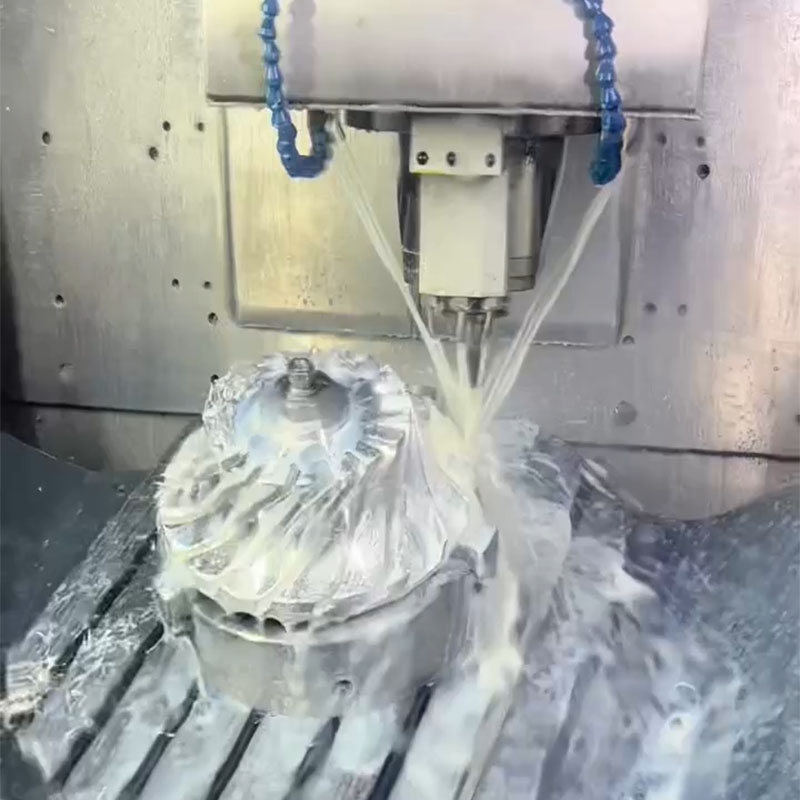
Advanced Machining Workflow
The 5-axis CNC machining process for impellers involves several critical stages, each requiring specialized expertise and advanced technology to ensure optimal results.
Design & Engineering
CAD modeling with fluid dynamics simulation to optimize blade profiles
CAM Programming
Toolpath generation with collision detection and machining simulation
Material Preparation
Precision workholding and fixturing for optimal stability during machining
5-Axis Machining
Simultaneous multi-axis cutting with high-precision tooling
Quality Assurance
Comprehensive inspection using CMM, laser scanning, and visual analysis
Process Efficiency Improvements
Applications & Industries
5-axis CNC machined impellers find application across a diverse range of industries, where precision, efficiency, and reliability are paramount. The ability to create complex geometries with tight tolerances makes these components essential in numerous critical systems.
Aerospace & Defense
Jet engine compressors, turbofan systems, and auxiliary power units rely on precision-machined impellers for optimal thrust-to-weight ratios and fuel efficiency.
Energy & Power Generation
Gas turbines, steam turbines, and hydroelectric generators utilize advanced impellers to maximize energy conversion efficiency and operational reliability.
Industrial Machinery
Compressors, pumps, and blowers in various industrial processes depend on high-performance impellers for efficient fluid handling and pressure generation.
Automotive
Turbochargers and superchargers use precision impellers to enhance engine performance, improve fuel economy, and reduce emissions.
Medical Equipment
Specialized impellers for medical pumps and diagnostic equipment require exceptional precision and biocompatible materials.
Marine
Propulsion systems, sea water pumps, and offshore drilling equipment utilize corrosion-resistant impellers for reliable marine operations.
Quality Assurance & Testing
Comprehensive Quality Control
Our 5-axis CNC machined impellers undergo rigorous quality assurance protocols to ensure they meet the most demanding specifications. We employ advanced inspection technologies and methodologies to verify every critical dimension and performance characteristic.
Coordinate Measuring Machine (CMM)
High-precision dimensional measurement with accuracy up to 0.001mm
Laser Scanning
Full 3D surface inspection and deviation analysis
Surface Roughness Testing
Verification of finish quality using contact and non-contact methods
Balancing
Dynamic balancing to ensure vibration-free operation at high speeds
Material Analysis
Spectroscopic analysis to verify material composition and integrity
Quality Performance Metrics
Advantages of 5-Axis Machining
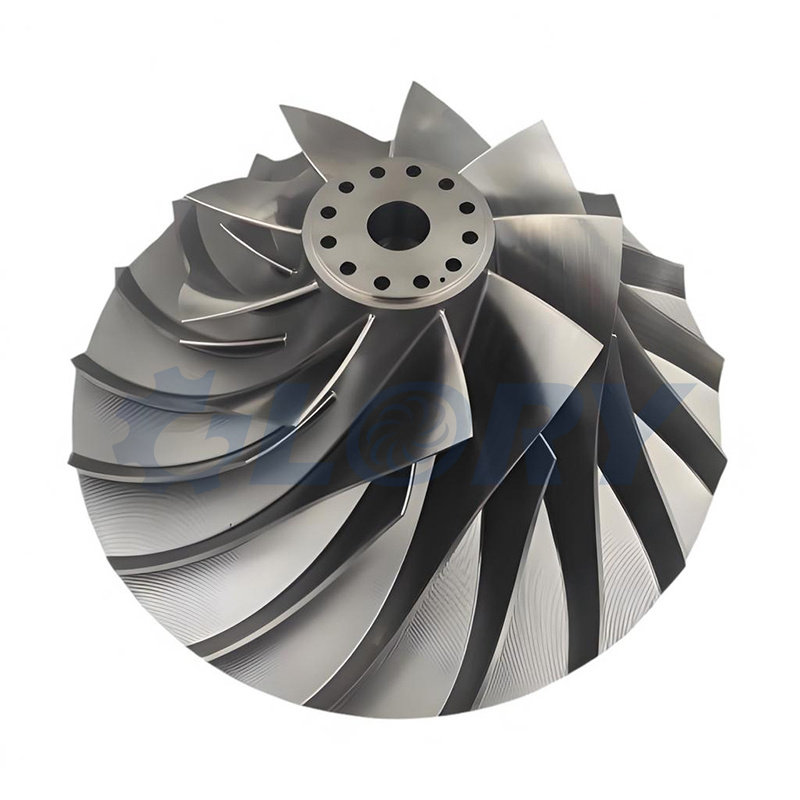
Transforming Impeller Manufacturing
5-axis CNC machining offers numerous advantages over traditional manufacturing methods for impeller production, enabling significant improvements in both performance and efficiency.
Enhanced Precision
Simultaneous multi-axis movement enables complex geometries with exceptional accuracy
Reduced Lead Time
Single-setup machining eliminates multiple operations and reduces production time
Improved Surface Finish
Continuous tool contact and optimal cutting angles produce superior surface quality
Design Flexibility
Enables complex, organic shapes that optimize fluid dynamics and performance
Cost Efficiency
Reduced setup time, fewer operations, and minimal material waste lower production costs
 We provide custom machined parts, 5-axis linkage CNC machining, and the design, production, and assembly of machinery and equipment.