
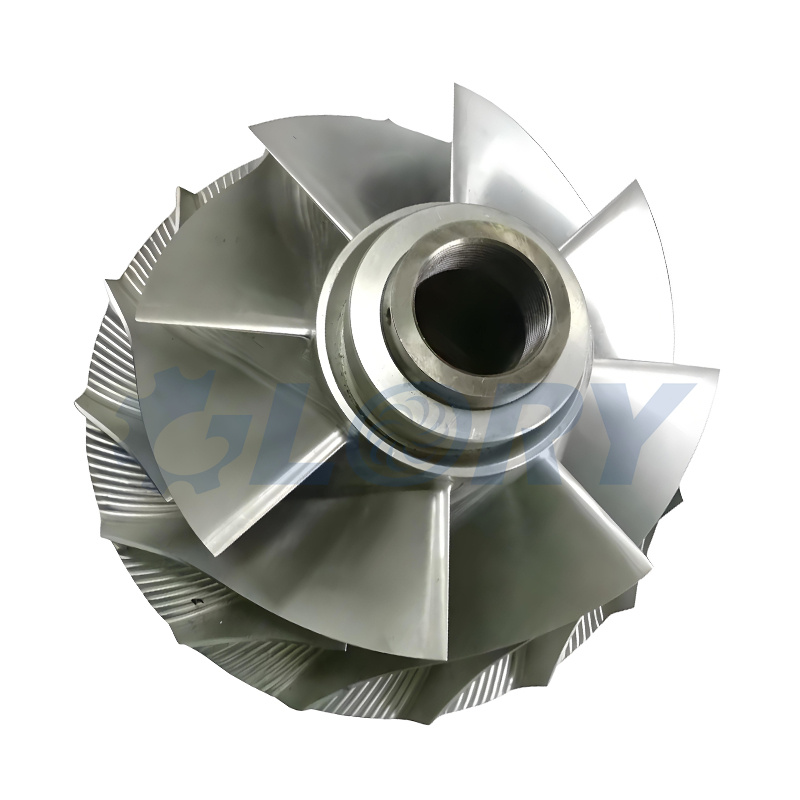
Efficient 5-Axis Machining: Programming Strategies for Impellers and Blades
We explores advanced strategies for programming 5-axis CNC machines to manufacture complex components like impellers and blades, which are critical parts in jet engines, gas turbines, and other high-performance machinery.
Core Challenge:
Impellers and blades feature complex, sculpted surfaces, are made from tough, advanced materials, and must withstand extreme operating conditions. For these reasons, machining them is often considered the pinnacle of 5-axis machining.
Part 1: Machining a Closed Impeller – The Key is Precision and Refinement
For an enclosed impeller, the programming strategy focuses on creating a precise and safe toolpath.
-
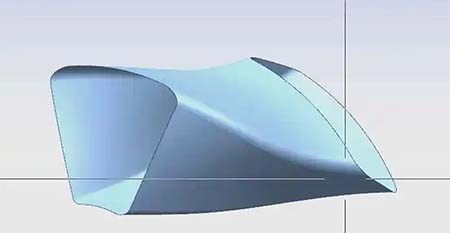
Primary Technique: We use a streamline projection method to generate the toolpath. This ensures the cutting path perfectly follows the complex curvature of the blades.
-
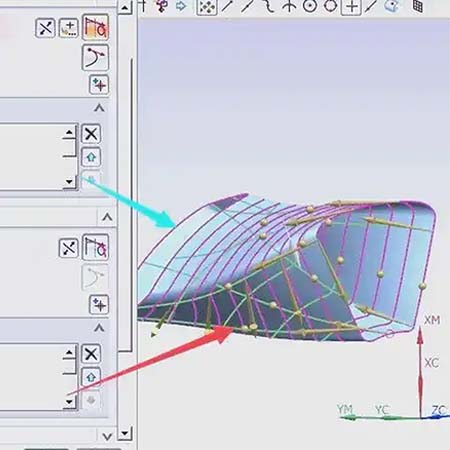
Tool Axis Control: Simultaneously, we use tool axis vector interpolation to smoothly and efficiently control the angle of the cutter, which is crucial for both quality and avoiding collisions.
-
The Critical Step: Iteration and Gouging Prevention
-
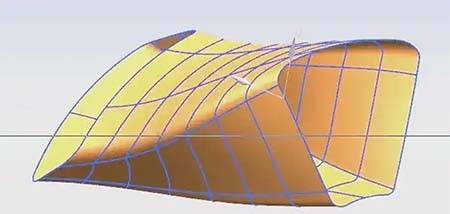
The process begins by extracting guide curves (called isoparametric curves) from the 3D model of the impeller.
-
The initial toolpath is generated. While it may look good at first glance, a gouging check is essential. This simulation verifies if the tool would accidentally cut into a part of the geometry it shouldn’t.
-
In practice, initial checks often reveal problem areas. The solution involves carefully readjusting the tool axis vectors.
-
This cycle of adjustment and re-checking is repeated until all potential for gouging is eliminated. Only after this rigorous verification is the program ready for the machine.

-
Part 2: Machining an Open Centrifugal Impeller – Strategy is Everything
For an open-style impeller, the focus shifts to a high-level strategy that maximizes efficiency, especially during the roughing phase.
-
Fundamental Understanding: The programmer must deeply understand the relationship between the projection method and the tool axis orientation.
-
Key Considerations:
-
Selecting the correct mesh surfaces for the “workpiece” and “cutting area” is vital for a smooth operation without stuttering.
-
More control points for the tool axis are not always better; the goal is to effectively prevent gouging, collisions, and excessive, jerky movements.
-
-
Efficiency Breakthrough: Zoned Roughing Strategy
A highly effective method for roughing a one-piece stainless steel centrifugal impeller involves a 5-axis zoned roughing strategy.-
Analysis: The impeller’s geometry is thoroughly analyzed to create a master machining plan.
-
Division: The impeller is divided into separate zones. Instead of trying to machine the entire part in one complex operation, a suitable solid carbide tool is used to machine each zone individually.
-
Simulation: The entire process is simulated in VERICUT software to detect any errors before any physical metal is cut.
Result: This structured approach has been proven to increase roughing efficiency by approximately three times compared to traditional methods.
-
About Us
 We provide custom machined parts, 5-axis linkage CNC machining, and the design, production, and assembly of machinery and equipment.